Economic Pulse Net | Sources: World Bank World Development Indicators, Government Sources | 2026
Key Takeaways
– Laos remains one of the world’s last communist one-party states, classified as an “authoritarian regime” by The Economist’s Democracy Index, ranking lowest among all nine ASEAN nations included in the 2016 study.
– The country’s economic engine is powered by state-owned utilities and energy exporters, with Electricite du Laos, Nam Theun 2 Power Company, and Lao Holding State Enterprise dominating the corporate landscape.
– Consumer services and goods sectors show surprising vitality, anchored by Lao Brewery Company and three separate airlines — Boun Oum Airways, Lao Airlines, Lao Central Airlines, and Lao Skyway — suggesting a domestic travel and tourism ecosystem.
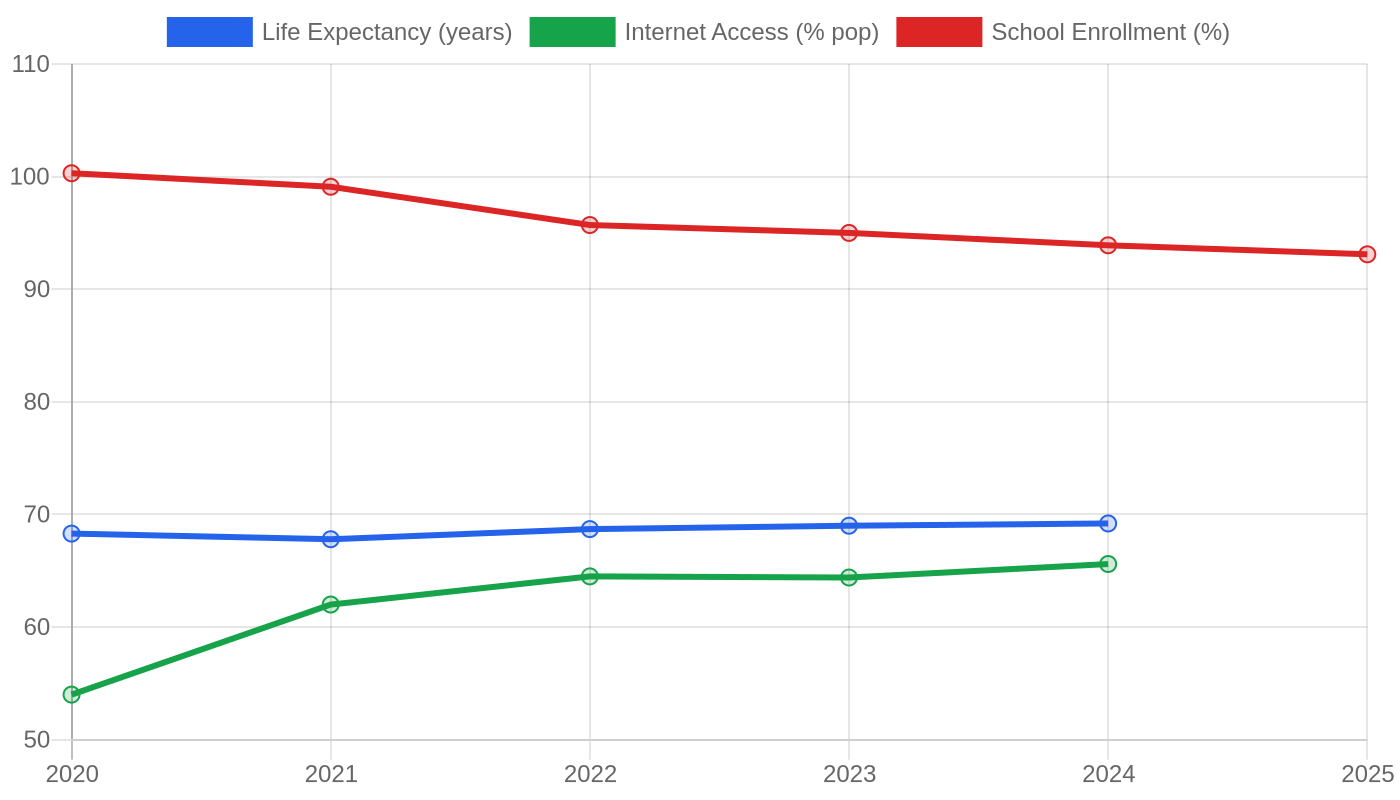
– Despite its strategic position between China, Vietnam, Thailand, and Myanmar, Laos faces significant data transparency gaps, with the World Bank reporting no current figures for GDP growth, inflation, unemployment, or per capita income.
– The country officially describes itself as a “people’s democratic state” in transition from capitalism to socialism, then eventually to communism — a political framework that shapes every aspect of economic life.
The Mekong Paradox — Growth Without Transparency
The Lao People’s Democratic Republic presents an extraordinary challenge for economic analysts. The World Bank, the world’s premier development institution, reports no current data for GDP growth, inflation CPI, unemployment, or GDP per capita. This absence of basic macroeconomic indicators is itself a telling signal about the state of economic governance in this Southeast Asian nation of approximately 7.5 million people.
What can be discerned from the available information is that Laos operates an economic model heavily reliant on state-owned enterprises. The utility sector dominates the corporate landscape, with Electricite du Laos, Nam Theun 2 Power Company, and Lao Holding State Enterprise forming the backbone of industrial activity.
This is consistent with a country that has positioned itself as the “battery of Southeast Asia,” exporting hydroelectric power to its more developed neighbours, particularly Thailand and Vietnam.
The consumer services sector shows surprising depth, with four separate airlines — Boun Oum Airways, Lao Airlines, Lao Central Airlines, and Lao Skyway — indicating either a fragmented aviation market or a country where domestic air travel is essential due to challenging terrain. Lao Brewery Company stands as the sole consumer goods giant, suggesting that beer consumption and production represent a meaningful part of the formal economy.
The absence of World Bank data on GDP growth and inflation makes it impossible to assess whether Laos is experiencing the kind of post-pandemic recovery seen elsewhere in the region. What is clear is that the country’s economic managers operate with a level of opacity that would be unacceptable in most other ASEAN capitals.
Living in the Land of a Million Elephants — The Cost of Daily Life
With no official cost of living data from the World Bank or other international institutions, assessing daily expenses in Laos requires reading between the lines of what is known about the country’s economic structure. The dominance of state-owned utilities suggests that electricity and water costs may be subsidised, though the efficiency of those subsidies remains an open question.
The presence of four domestic airlines points to a country where geography dictates transport costs. Laos is landlocked, mountainous, and sparsely populated outside the Mekong River corridor. Moving goods and people is inherently expensive, and those costs are passed on to consumers in the form of higher prices for everything from food to fuel.
Housing costs in Vientiane, the capital, are likely significantly lower than in Bangkok or Hanoi, but wages are correspondingly lower as well. The absence of GNI per capita data from the World Bank means there is no reliable benchmark for what an average Lao worker earns, making it impossible to calculate housing affordability ratios that analysts use for other countries in the region.
What can be inferred is that the cost of living in Laos is shaped by its position as a small, landlocked economy dependent on imports for many manufactured goods, combined with a state-controlled utility sector that may keep basic service costs artificially low at the expense of long-term infrastructure investment.
The State-Owned Economy — Where to Invest in a One-Party State
The corporate landscape of Laos is dominated by entities that are either wholly state-owned or have significant government involvement. Electricite du Laos, Nam Theun 2 Power Company, and Lao Holding State Enterprise represent the utility sector that generates the country’s primary export revenue — electricity. For investors, this means that the most profitable sectors of the economy are effectively off-limits to private capital unless the government chooses to grant concessions.
The aviation sector is a notable exception. Boun Oum Airways, Lao Airlines, Lao Central Airlines, and Lao Skyway all operate in the consumer services space, suggesting that the government has permitted some competition in air travel. This may reflect the practical necessity of connecting a geographically challenging country rather than any ideological commitment to market liberalisation.
Lao Brewery Company stands out as the lone consumer goods company among the top firms. Beer is a culturally significant product in Laos — Beerlao is a national icon — and the brewery’s position as a top company suggests that domestic consumption and potentially regional exports are meaningful economic activities.
For foreign investors, the business climate in Laos is defined by the political reality described by The Economist’s Democracy Index: this is an “authoritarian regime” where the Communist Party controls all aspects of economic and political life. Contracts, concessions, and business arrangements are subject to political considerations that may not be transparent to outside observers.
Safety in an Authoritarian State — The Politics of Stability
The Crime Index and Safety Index for Laos are both listed as not available, which in itself is a statement about the country’s data environment. However, in the context of a one-party state classified as an “authoritarian regime” by The Economist’s Democracy Index, public safety takes on a different character than in democratic societies.
Laos is generally considered a safe country for visitors and residents in terms of street crime, but this safety comes within a political framework where dissent is not tolerated. The Economist’s Democracy Index 2016 ranked Laos as the lowest of all nine ASEAN nations included in the study, placing it firmly in the category of authoritarian governance.
The country’s official self-designation as a “people’s democratic state” that aims to transition from capitalism to socialism and eventually communism provides the ideological framework for this political structure.
The quality of life in Laos is thus a paradox. Physical safety from crime may be relatively high, but political safety — the freedom to express opinions, change government, or access independent information — is severely constrained. For residents, this creates a stable but limited existence, where economic opportunities are shaped by political connections and the state’s priorities.
The Data Blackout — What Laos Isn’t Telling the World
The most striking current development in Laos is not a policy change or an economic reform — it is the complete absence of current economic data. The World Bank reports no figures for GDP growth, inflation, unemployment, GDP per capita, or GNI per capita. This data blackout is itself a significant story.
In an era when central banks and statistics bureaus around the world release monthly and quarterly data with increasing frequency, Laos’s silence raises questions. Is the government unable to collect reliable statistics? Is it unwilling to release data that might show economic weakness? Or is this simply a reflection of a state that does not feel accountable to international norms of transparency?
The political context provided by The Economist’s Democracy Index — ranking Laos as an authoritarian regime — suggests that data opacity may be a deliberate choice. Authoritarian governments often control information flows as a means of maintaining power, and economic statistics that might reveal inequality, inflation, or stagnation are precisely the kind of information that such regimes prefer to keep hidden.
For businesses and investors considering Laos, this data vacuum is a significant risk factor. Without reliable information on inflation, growth, or employment, making informed decisions about investment, hiring, or expansion becomes a matter of speculation rather than analysis.
The Bottom Line
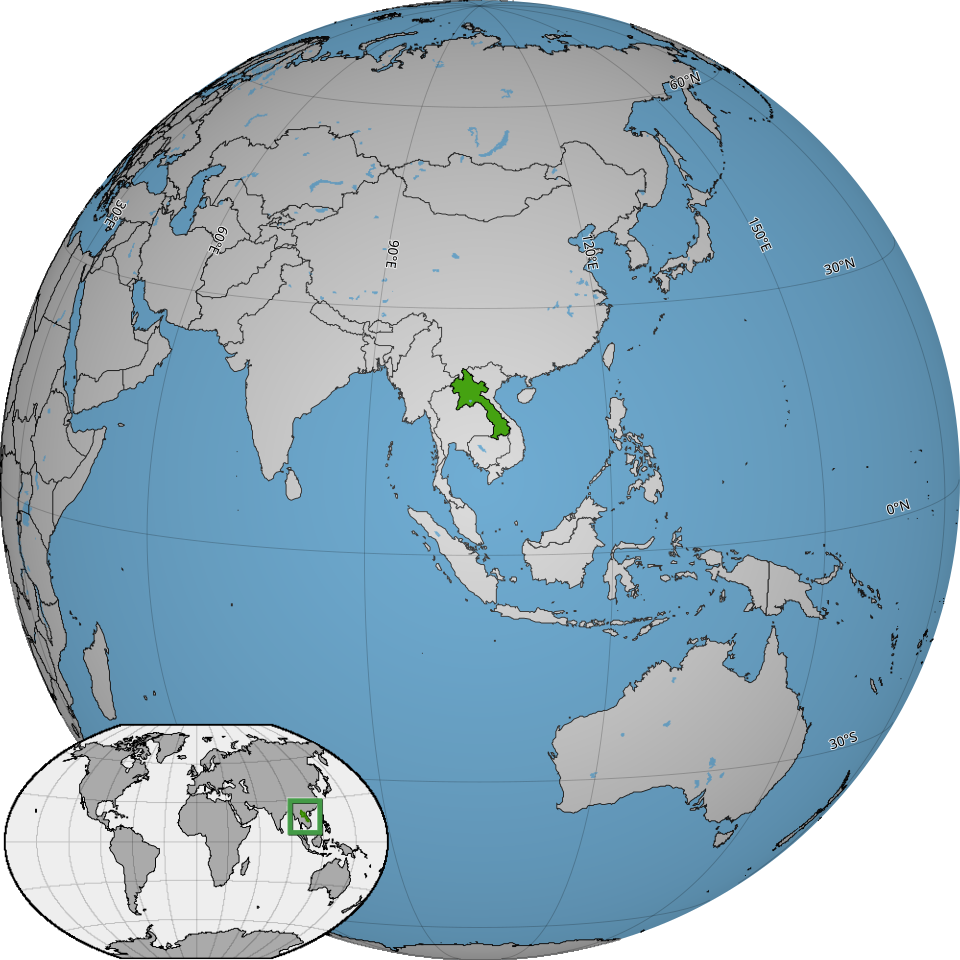
Laos is a country to watch for those interested in the intersection of authoritarian governance and economic development in Southeast Asia. Its position between China, Vietnam, Thailand, and Myanmar gives it strategic importance that outweighs its economic weight. However, the complete absence of basic economic data from the World Bank should serve as a warning signal for investors and analysts.
Until Laos demonstrates a commitment to transparency that matches its neighbours, the country will remain a high-risk proposition for all but the most patient and politically connected observers.
Sources & Methodology
This article is authored by Economic Pulse Net for informational and research purposes. Economic Pulse Net sources its data from multilateral institutions, national statistics bureaus, and proprietary databases. All data is believed to be current as of the date of publication.
Published: July 18, 2026 | Category: Research — Laos
Use these signals in your own platform
Economic Pulse publishes its live signal feed through a documented, read-only API. Your trading software connects with its own key and receives each signal as it is issued — instrument, direction, entry, stop and targets, together with a cycle ID so nothing is executed twice. The feed is independent of this website and cannot change it.
Signals are informational only and are not financial advice.