Economic Pulse Net | Sources: World Bank World Development Indicators, Government Sources | 2026
🇱🇦 Laos 2024 — The Quiet Giant Behind the Mekong’s Power Grid
Key Takeaways
- Political Stability with Authoritarian Constraints: Laos operates as a unitary communist state, classified by *The Economist* as an “authoritarian regime,” which creates a stable but rigid political environment.
- Energy-Driven Economy: The nation’s top companies, including Electricite du Laos and Nam Theun 2 Power Company, highlight a strategic focus on hydropower generation and energy exports.
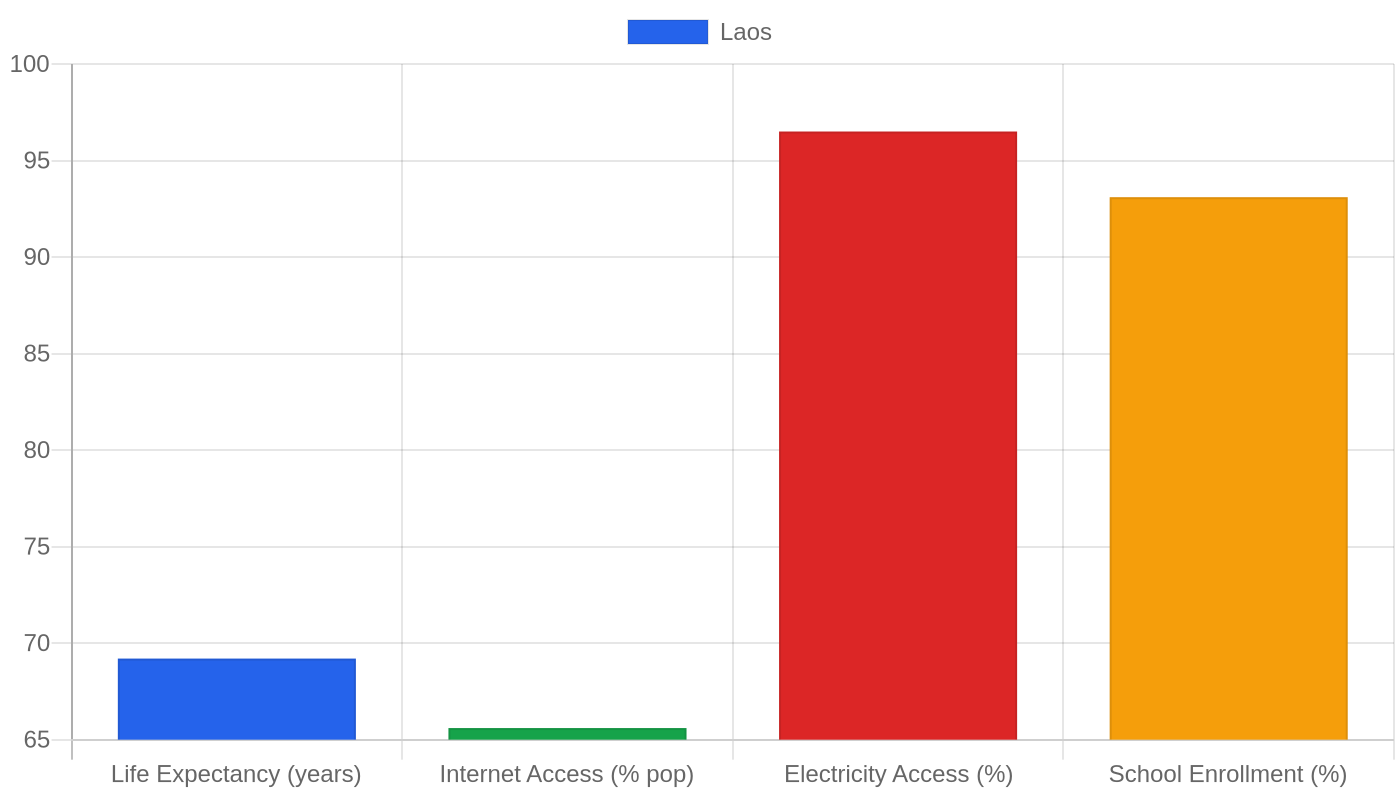
- Data Scarcity Challenge: Critical macroeconomic indicators such as GDP growth, inflation, and unemployment are currently unavailable in the provided World Bank dataset, necessitating a qualitative assessment of the economic landscape.
- Dominant State and Private Sectors: The business environment is anchored by major state-linked entities in utilities and consumer services, particularly in the aviation and brewing sectors.
- Safety and Governance: While specific crime indices are not provided, the political structure suggests a highly controlled social order, ranking lowest among ASEAN nations in democratic freedom metrics.
The Macro Puzzle: Navigating Data Silence
The economic narrative of Laos is currently shrouded in a significant lack of transparent, up-to-the-minute quantitative data from major international bodies.
According to the World Bank, key indicators such as GDP growth, Consumer Price Index (CPI) inflation, and unemployment rates are marked as “N/A,” meaning the latest figures are not available in the current dataset.
This absence of hard numbers makes it difficult to gauge the immediate pulse of the economy, forcing analysts to look beyond the spreadsheet and into the structural pillars of the nation.
Without specific GDP per capita or GNI per capita figures, we cannot definitively place Laos in the global income hierarchy for this period, but the lack of volatility in reported data suggests a period of stagnation or data reporting delays rather than a sudden collapse.
In the absence of inflation data, it is impossible to comment on the purchasing power of the Lao Kip or the cost of living pressures on the average citizen.
However, the fact that these metrics are missing from the primary World Bank feed highlights the challenges of tracking emerging markets with less developed statistical infrastructure.
This data gap serves as a cautionary tale for investors, who must rely on qualitative indicators and sector-specific trends rather than broad macroeconomic forecasts.
The economic reality, therefore, is one of opacity, where the true state of the market is best understood through the performance of its key industrial players rather than aggregate national statistics.
Living Costs and Regional Context
While specific data on housing costs, rent versus buy dynamics, and daily expenses is not provided in the current dataset, the economic structure of Laos offers context for its cost of living profile.
The presence of major consumer goods and services companies, such as Lao Brewery Company and multiple aviation firms like Boun Oum Airways and Lao Skyway, suggests a domestic market with a growing, albeit modest, consumer base.
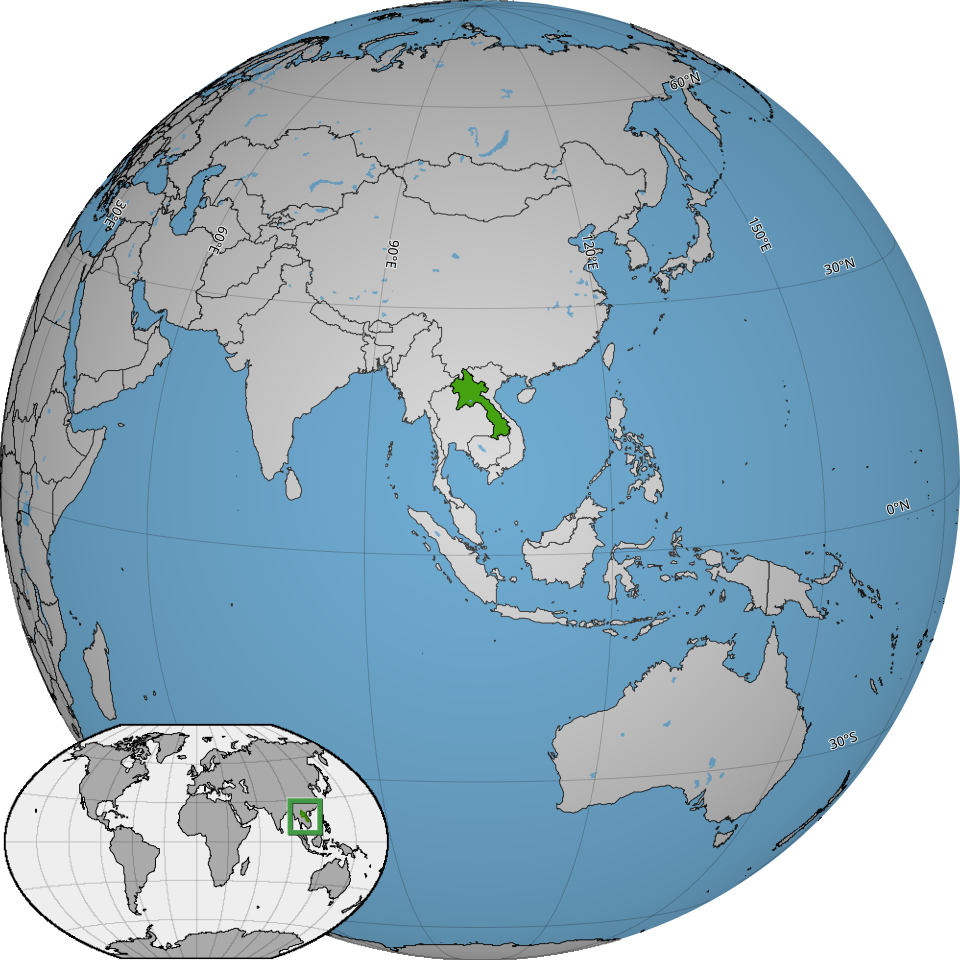
In regional comparisons, Laos is often perceived as a lower-cost destination within Southeast Asia, driven by its landlocked geography and developing infrastructure.
The lack of specific housing data prevents a detailed analysis of real estate markets, but the dominance of state-linked enterprises in utilities implies that basic living costs may be subject to government regulation rather than pure market forces.
Daily expenses for essential goods are likely influenced by the availability of local production, as seen in the prominence of the domestic brewing industry.
Without explicit cost of living indices, residents and visitors must navigate a market where prices are determined by local supply chains and state influence, rather than global commodity fluctuations.
This environment creates a unique economic experience where affordability is relative to the limited range of imported goods and the strength of the local currency.
Power, Brews, and Skies: The Corporate Landscape
The business climate in Laos is heavily defined by a handful of dominant players that control critical sectors of the economy.
The top companies list reveals a strong concentration in the utilities and consumer services sectors, with Electricite du Laos and Lao Holding State Enterprise acting as the backbone of the nation’s energy infrastructure.
Nam Theun 2 Power Company, a major hydropower project, stands out as a critical asset, reflecting Laos’s ambition to become the “battery of Southeast Asia” by exporting electricity to neighboring countries.
On the consumer side, the aviation sector is surprisingly robust, with four distinct airlines listed, including Lao Airlines, Boun Oum Airways, Lao Central Airlines, and Lao Skyway, indicating a competitive domestic and regional travel market.
Lao Brewery Company further cements the local industrial base by producing consumer goods, suggesting a self-sufficient market for beverages and related products.
This corporate landscape is not driven by tech innovation or global finance, but by heavy industry, energy production, and domestic services.
For investors, this suggests that opportunities lie in infrastructure, energy distribution, and local consumer brands rather than in high-growth sectors like software or biotech.
The presence of state enterprises in utilities also implies that business operations may be subject to significant government oversight and policy direction.
Political Reality and Social Fabric
The political landscape of Laos is defined by its status as a unitary communist state, which self-designates as a “people’s democratic state.” According to *The Economist’s* Democracy Index 2016, Laos was classified as an “authoritarian regime,” ranking the lowest of the nine ASEAN nations included in the study.
This political structure prioritizes stability and centralized control, with the government pursuing a theoretical transition from capitalism to socialism before eventually reaching communism, as outlined in its constitutional framework.
While specific crime and safety indices are not available in the current data, the authoritarian nature of the state suggests a tightly managed social environment where public order is maintained through strict governance.
The lack of democratic freedoms, as noted by *The Economist*, impacts the business climate by limiting political risk in one sense (stability) but increasing regulatory risk in another (arbitrary policy changes).
Quality of life is thus inextricably linked to the political system, where individual rights are secondary to national development goals.
This political stability, however, comes at the cost of transparency and civil liberties, creating a society that is orderly but constrained.
For residents, this means a life governed by state directives, while for outsiders, it requires a deep understanding of the non-democratic power dynamics at play.
Current Affairs and the Path Forward
In the absence of recent news items or live economic indicators in the provided data, the current affairs section must focus on the structural implications of the available information.
The classification of Laos as an authoritarian regime by *The Economist* remains a defining feature of its current political trajectory, suggesting that any economic reforms will be implemented through top-down state mechanisms rather than grassroots or market-driven initiatives.
The focus on hydropower, evidenced by the prominence of Nam Theun 2 Power Company, indicates that current economic policy is heavily geared toward energy exports, a strategy that positions Laos as a critical energy supplier to its neighbors.
The competitive landscape in the aviation sector, with multiple airlines operating, suggests an ongoing effort to integrate Laos more deeply into regional travel networks, a move that requires continuous investment in infrastructure.
Without data on recent policy shifts or inflation trends, the “now” is defined by the steady, if slow, execution of long-term state plans.
The lack of recent economic data from the World Bank may itself be a signal of ongoing statistical reforms or challenges in data collection, a common issue in developing economies.
Investors and observers must therefore look for signs of infrastructure development and energy sector expansion as the primary indicators of current economic activity.
The future of Laos will likely be determined by its ability to convert its natural energy resources into sustainable economic growth, all within the rigid framework of its political system.
The Bottom Line
Laos presents a unique case study in emerging market economics, where political stability coexists with data opacity and authoritarian governance.
For international investors, the country offers opportunities in the energy and infrastructure sectors, driven by state-backed giants like Electricite du Laos and Nam Theun 2 Power Company.
However, the lack of transparent macroeconomic data and the low ranking in democratic indices require a cautious approach, with a strong emphasis on understanding local political dynamics.
Those who can navigate the complexities of a communist state with a developing market economy may find value in Laos’s strategic position as a regional energy hub.
Ultimately, Laos is a country where the long-term view is essential, and where the true story is written not in the headlines, but in the steady hum of its power stations and the growth of its local consumer brands.
Sources & Methodology
This article is authored by Economic Pulse Net for informational and research purposes.
Economic Pulse Net sources its data from multilateral institutions, national statistics bureaus, and proprietary databases.
All data is believed to be current as of the date of publication. Published: September 05, 2026 |
Category: Research — Laos
Use these signals in your own platform
Economic Pulse publishes its live signal feed through a documented, read-only API. Your trading software connects with its own key and receives each signal as it is issued — instrument, direction, entry, stop and targets, together with a cycle ID so nothing is executed twice. The feed is independent of this website and cannot change it.
Signals are informational only and are not financial advice.