Economic Pulse Net | Sources: World Bank World Development Indicators, Government Sources | 2026
Key Takeaways
* Leadership Transition: The political landscape has shifted significantly following the end of Nursultan Nazarbayev’s long tenure in 2019, with Kassym-Jomart Tokayev now serving as president.
Resource-Heavy Economy: The industrial base is dominated by basic materials, specifically mining and energy, with key players like Bogatyr Access Komir and KazakhGold leading the sector.
Financial Sector Dominance: Major financial institutions such as Halyk Bank and BTA Bank play a central role in the nation’s economic infrastructure.
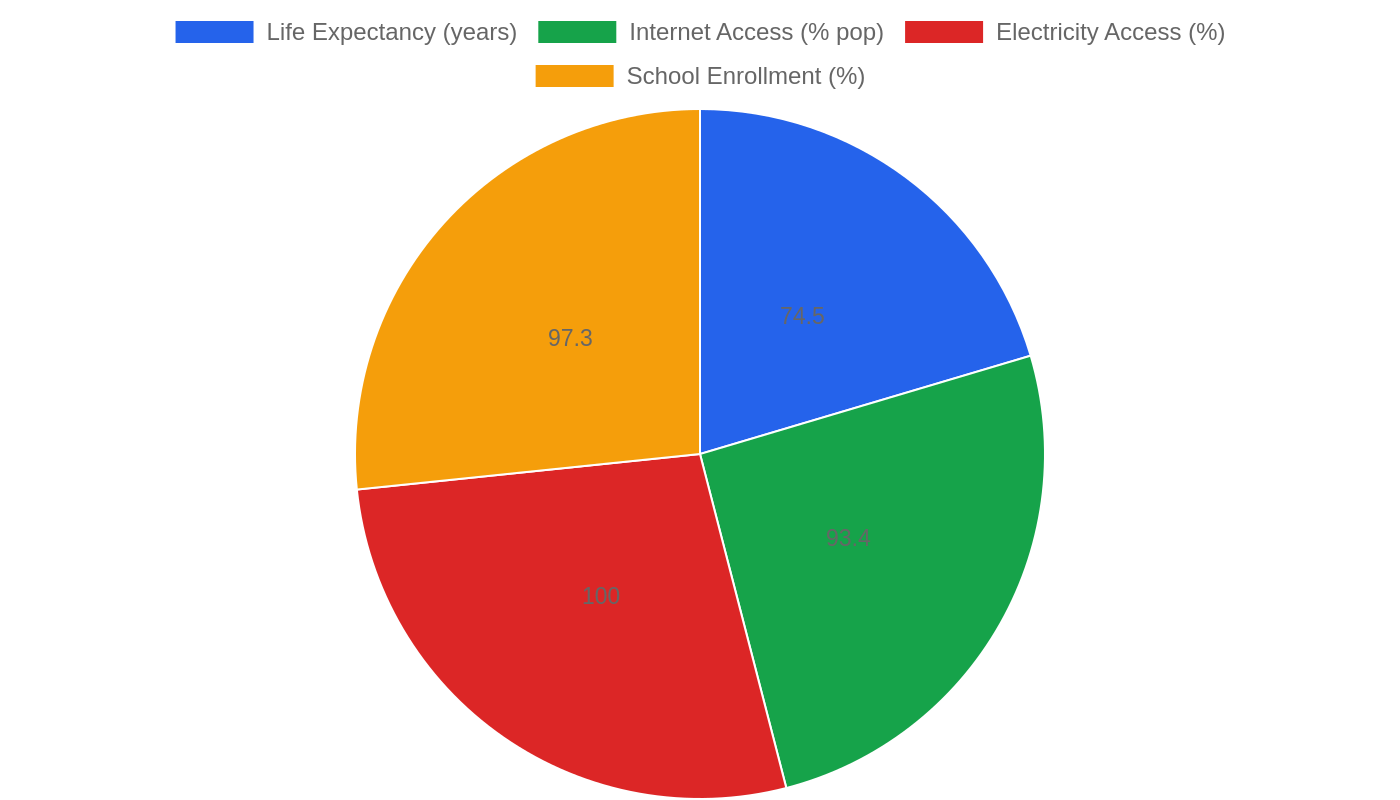
Data Gaps: Current World Bank metrics for GDP growth, inflation, and unemployment are not available, requiring a focus on structural and political indicators rather than immediate macroeconomic snapshots.
Political Structure: The country operates as a democratic, secular, constitutional unitary republic with a strong executive branch headed by the president.
Shifting Tides in a Resource-Rich Republic
Kazakhstan stands at a complex juncture where its vast natural resources intersect with a rapidly evolving political structure. While specific figures for GDP growth, inflation, and unemployment remain unavailable from the latest World Bank data, the underlying architecture of the economy tells a story of deep industrial roots.
The nation’s main industries are heavily weighted toward extraction and utility management, suggesting an economy that is resilient but potentially vulnerable to commodity price fluctuations. Without current data on GDP per capita or national income levels, analysts must look to the corporate landscape to gauge health. The presence of major entities like Ekibastuz GRES-2 Power Station highlights the critical role of utilities in sustaining both domestic consumption and industrial output.
This reliance on basic materials and energy implies that any future economic recovery or stagnation will be closely tied to global demand for metals and power. Understanding Kazakhstan requires looking beyond missing statistical snapshots to the tangible assets that drive daily economic activity.
The Corporate Landscape: Banks, Airlines, and Mines
The business environment in Kazakhstan is defined by a handful of large, influential corporations that dominate their respective sectors. In the consumer services space, Air Astana and Berkut Air provide essential connectivity, while Euro-Asia Air adds further competition in the aviation market. However, the backbone of the economy appears to be the basic materials sector, featuring giants like Kazakhmys and KazakhGold.
These companies are not just local employers; they are integral links in the global supply chain for precious and base metals. The financial sector is equally concentrated, with Halyk Bank and Eurasian Bank acting as primary engines for capital flow and credit availability. BTA Bank rounds out the major financial players, indicating a banking system that is robust but likely subject to the same regulatory pressures affecting regional peers.
For investors and observers, these top companies serve as the most reliable barometers of economic sentiment, even when broader macroeconomic data is obscured.
Political Stability and Executive Power
The political framework of Kazakhstan has undergone significant changes in recent years, moving away from the long-standing era of Nursultan Nazarbayev, who led the country from 1991 to 2019. He was succeeded by Kassym-Jomart Tokayev, marking a new chapter in the nation’s governance. Officially, Kazakhstan remains a democratic, secular, constitutional unitary republic, a status that provides a formal structure for political operations.
The president holds substantial power, including the ability to veto legislation passed by parliament and serving as the commander-in-chief of the armed forces. Day-to-day governance is managed by the prime minister, who chairs the cabinet of ministers. This cabinet consists of sixteen ministers and three deputy prime ministers, creating a layered administrative structure that balances executive authority with bureaucratic oversight.
This political arrangement suggests a system where stability is prioritized, though the concentration of power in the presidency remains a defining feature of the state.
Safety, Crime, and Quality of Life Indicators
Assessing the quality of life and safety in Kazakhstan presents challenges due to the absence of current crime and safety indices. With no data provided for the Crime Index or Safety Index, it is difficult to make precise comparisons regarding personal security or urban safety standards. However, the political context offers some insight into the social fabric.
The transition of power from Nazarbayev to Tokayev occurred within a constitutional framework, suggesting institutional continuity despite leadership changes. Without happiness data or detailed social metrics, the focus shifts to the structural aspects of daily life. The presence of a multi-minister cabinet implies a government apparatus dedicated to managing various aspects of public welfare and infrastructure.
For residents and expatriates alike, the lack of specific safety data means that caution and situational awareness remain prudent, even if the overall political environment appears stable under the current administration.
Navigating Uncertainty in a Data-Void Era
Currently, Kazakhstan presents a unique case study for economists and journalists alike: a nation with clear industrial strengths and political definitions, but lacking real-time macroeconomic data. The “now” of Kazakhstan’s economy is characterized by this informational gap. Investors cannot rely on current GDP growth rates or inflation CPI figures to make short-term decisions.
Instead, the narrative is driven by the enduring presence of state-linked and private enterprises in mining, banking, and utilities. The political landscape, shaped by the post-2019 succession, continues to evolve under President Tokayev’s leadership. This period represents a time of observation rather than rapid quantification. Businesses operating in or entering the market must rely on the solidity of the corporate sector—such as the operations of KazakhGold or Halyk Bank—as proxies for economic health.
The absence of live indicators does not mean economic activity has ceased; it simply means that the pulse of the economy must be felt through structural analysis rather than statistical trends.
The Bottom Line
Kazakhstan is a country of significant industrial weight and political transition, currently viewed through a lens of structural rather than statistical clarity. It should be watched by those interested in emerging markets with strong resource bases and established corporate entities. The shift from Nazarbayev to Tokayev adds a layer of political intrigue to the investment thesis. Until comprehensive economic data becomes available, the focus should remain on the resilience of its major banks and mining firms.
Sources & Methodology
This article is authored by Economic Pulse Net for informational and research purposes. Economic Pulse Net sources its data from multilateral institutions, national statistics bureaus, and proprietary databases. All data is believed to be current as of the date of publication.
Published: September 28, 2026 | Category: Research — Kazakhstan
Use these signals in your own platform
Economic Pulse publishes its live signal feed through a documented, read-only API. Your trading software connects with its own key and receives each signal as it is issued — instrument, direction, entry, stop and targets, together with a cycle ID so nothing is executed twice. The feed is independent of this website and cannot change it.
Signals are informational only and are not financial advice.