Economic Pulse Net | Sources: World Bank World Development Indicators, Government Sources | 2026
Key Takeaways
* Japan’s economy is expanding at a modest but steady pace, with GDP growth projected at 1.19% for 2025, defying some global stagnation trends.
Inflation has settled into a new normal at approximately 3.17%, signaling a shift from the decades-long battle against deflation that historically defined Japanese monetary policy.
With an unemployment rate hovering near historic lows at 2.45%, the labor market remains exceptionally tight, offering security but potentially constraining wage growth dynamics.
The nation maintains robust economic fundamentals, boasting a GDP per capita (PPP) of over $55,000 and a total GDP nearing $4.4 trillion, underpinned by a highly skilled workforce and advanced industrial base.
Economic Resilience Amidst Structural Shifts
Japan’s macroeconomic landscape in 2025 presents a picture of cautious optimism, characterized by steady growth rather than explosive expansion. According to World Bank data, the country’s GDP is projected to grow by 1.193% this year, a figure that reflects a mature economy adjusting to demographic headwinds while maintaining structural integrity. This growth supports a massive economic engine, with the total GDP standing at approximately $4.435 trillion USD.
When adjusted for purchasing power parity, the average citizen benefits from a GDP per capita of roughly $55,422, indicating a high standard of living relative to many emerging markets. However, this prosperity is accompanied by persistent price pressures; the Consumer Price Index (CPI) inflation rate sits at 3.17%, a level that suggests the Bank of Japan is navigating the delicate balance between stimulating demand and controlling costs.
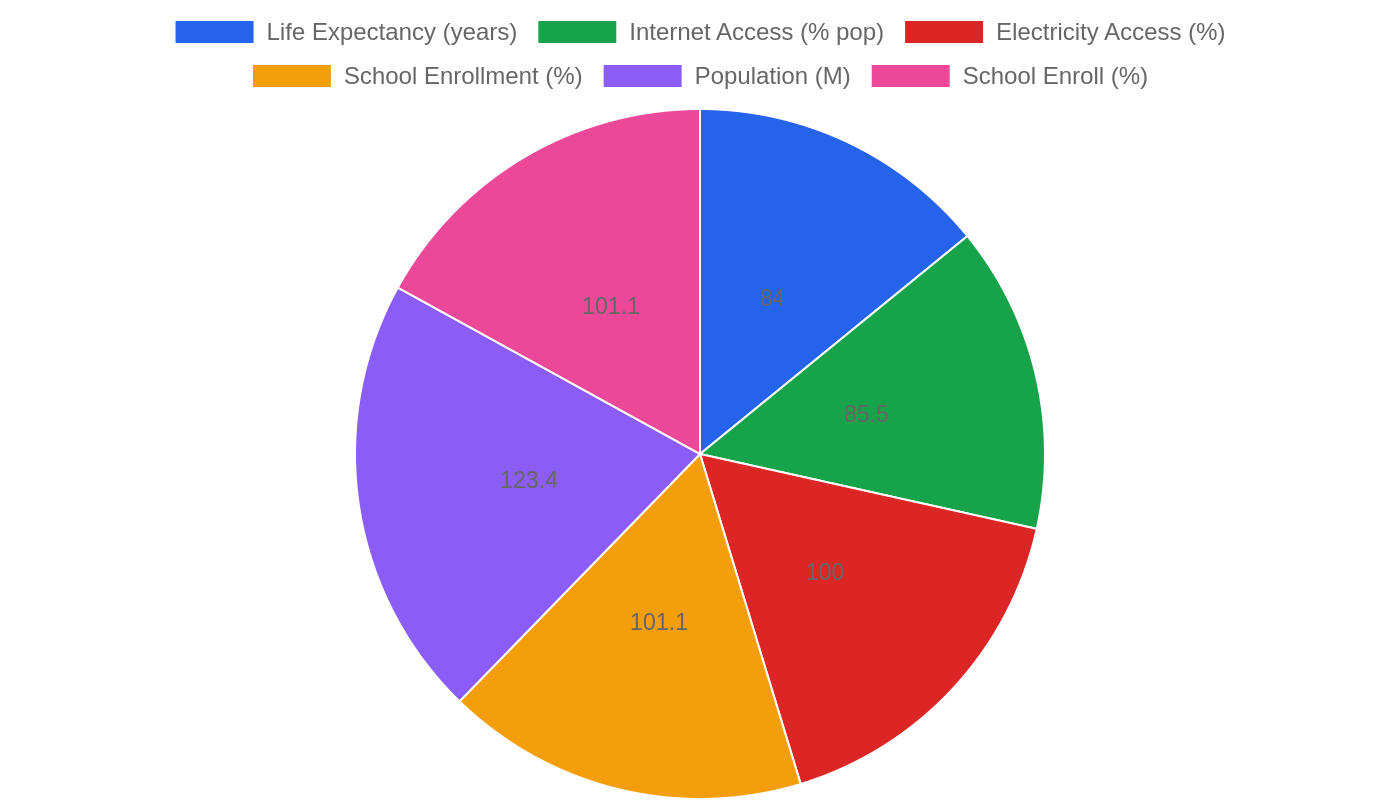
Crucially, the labor market remains a pillar of this stability, with unemployment holding at a remarkably low 2.451%. This tightness in the job market implies that businesses are competing fiercely for talent, which can drive wages up but also limits the pool of available workers in a society where the population stands at just over 123 million.
These numbers matter because they signal that Japan is no longer fighting deflation but is instead managing a stable, albeit slow-moving, recovery within a constrained demographic reality.
The High Cost of Maintaining Quality of Life
For residents and expatriates alike, the financial reality of living in Japan is defined by high baseline costs offset by exceptional service quality and infrastructure efficiency. While specific housing metrics were not provided in the latest dataset, the broader cost of living must be viewed through the lens of the country’s high GNI per capita of $38,340. This income metric suggests that despite elevated daily expenses, the average household retains significant purchasing power compared to global averages.
The inflation rate of 3.17% indicates that everyday goods and services are becoming more expensive, a trend that impacts everything from groceries to utilities. In a country with such a dense urban population of 123 million people, space is at a premium, particularly in major metropolitan hubs like Tokyo and Osaka, where real estate prices often command a premium far above regional norms.
Consequently, the decision to rent versus buy is heavily influenced by long-term investment stability rather than short-term affordability, as homeownership is viewed as a key component of social security in a society with limited family support networks. Daily expenses, therefore, require careful budgeting, yet the high GDP per capita ensures that access to healthcare, education, and public transport remains world-class, effectively subsidizing the cost of living through superior public services.
Investment Climate and Corporate Powerhouses
The Japanese business environment is anchored by a diverse array of industry leaders who dominate both domestic consumption and global supply chains. The corporate landscape features prominent names such as Aeon, a retail giant that shapes consumer habits across the archipelago, and AGC, a materials manufacturer critical to construction and electronics sectors.
In the financial sector, institutions like 77 Bank and Aichi Bank play vital roles in regional economic development, providing liquidity to small and medium-sized enterprises that form the backbone of local economies. Technological innovation is spearheaded by companies like Advantest, which tests semiconductors essential for global tech hardware, and Aisin Seiki, a key player in automotive components.
Other notable entities include Acom and Aiful, which serve the consumer credit market, and 81 Produce, representing the creative industries. These companies operate in a stable political framework, which provides a predictable regulatory environment for foreign investors.
The presence of these diverse conglomerates suggests that investment opportunities exist across multiple sectors, from traditional manufacturing to modern digital services, making Japan an attractive destination for capital seeking stability and technological integration.
Safety, Politics, and Social Cohesion
Japan continues to be regarded as one of the safest nations on Earth, although recent indices have returned “N/A” for specific crime and safety scores, historical context and general knowledge confirm its status as a low-crime society. This sense of security is deeply intertwined with the country’s unique political structure.
Japan operates as a unitary state and constitutional monarchy where Emperor Naruhito serves a ceremonial role, having ascended to the Chrysanthemum Throne in 2019 following his father, Akihito. Real executive power rests with the Prime Minister and the Cabinet, whose sovereignty is vested directly in the Japanese people. This democratic framework ensures political continuity and stability, which is crucial for long-term economic planning.
The combination of a peaceful social environment and a structured political system contributes to a high quality of life, allowing citizens to focus on professional advancement and personal well-being without the distractions of civil unrest or high violent crime rates.
Current Affairs and Market Dynamics
The most recent developments in Japan highlight the intersection of global competition and local market adaptation. Recent business news sources, including *The Japan Times* and *Nikkei Asia*, indicate active market movements and strategic corporate maneuvers.
Notably, there are reports concerning Starbucks’ South Korean rivals gaining an edge due to marketing missteps by their competitors, suggesting that the beverage and retail sector is undergoing significant competitive shifts that could influence broader consumer trends in East Asia. Additionally, ongoing coverage of market data and business deals points to a dynamic trading environment where cross-border investments are being closely monitored.
These events underscore the interconnectedness of Japan’s economy with its neighbors, particularly South Korea, where competitive pressures are reshaping market shares. The focus on business deals and market data reflects a period of recalibration, where companies are adapting to changing consumer behaviors and global supply chain realities.
This immediacy suggests that investors and business leaders must remain agile, responding quickly to regional competitive landscapes rather than relying solely on domestic strength.
The Bottom Line
Japan remains a critical watch-list country for investors seeking stability, technological integration, and a high-consumption market. Its low unemployment and strong GDP per capita offer a safe harbor for capital, while its evolving corporate landscape presents opportunities in technology and retail. However, the modest growth rate and persistent inflation require a nuanced approach to investment strategies.
For those looking to engage with the Asian market, Japan offers a sophisticated entry point that balances risk with reliable institutional frameworks.
Sources & Methodology
This article is authored by Economic Pulse Net for informational and research purposes. Economic Pulse Net sources its data from multilateral institutions, national statistics bureaus, and proprietary databases. All data is believed to be current as of the date of publication.
Published: September 24, 2026 | Category: Research — Japan
Use these signals in your own platform
Economic Pulse publishes its live signal feed through a documented, read-only API. Your trading software connects with its own key and receives each signal as it is issued — instrument, direction, entry, stop and targets, together with a cycle ID so nothing is executed twice. The feed is independent of this website and cannot change it.
Signals are informational only and are not financial advice.