Economic Pulse Net | Sources: World Bank World Development Indicators, Government Sources | 2026
Key Takeaways
– Indonesia’s post-New Order political system has undergone four constitutional amendments, introducing direct presidential elections and granting regional autonomy a constitutional basis, reshaping the country’s governance landscape.
– The nation’s economic pulse is driven by a mix of state-controlled and private conglomerates, with financial institutions like Bank Mandiri, Bank Central Asia, and Bank Rakyat Indonesia dominating the corporate landscape.
– Major industrial players such as Badak LNG and Astra International anchor the country’s resource and manufacturing sectors, though specific GDP and inflation data from the World Bank remain unavailable for this analysis.
– Recent coverage from the Jakarta Post indicates active monitoring of both economy and markets, suggesting ongoing policy adjustments and market dynamics worth watching.
– The political framework, rooted in the 1945 Constitution and the Pancasila principles, continues to evolve as Indonesia navigates its identity as a unitary republic with a presidential system.
The Numbers Gap — Reading Indonesia’s Economic Story Without the Headline Figures
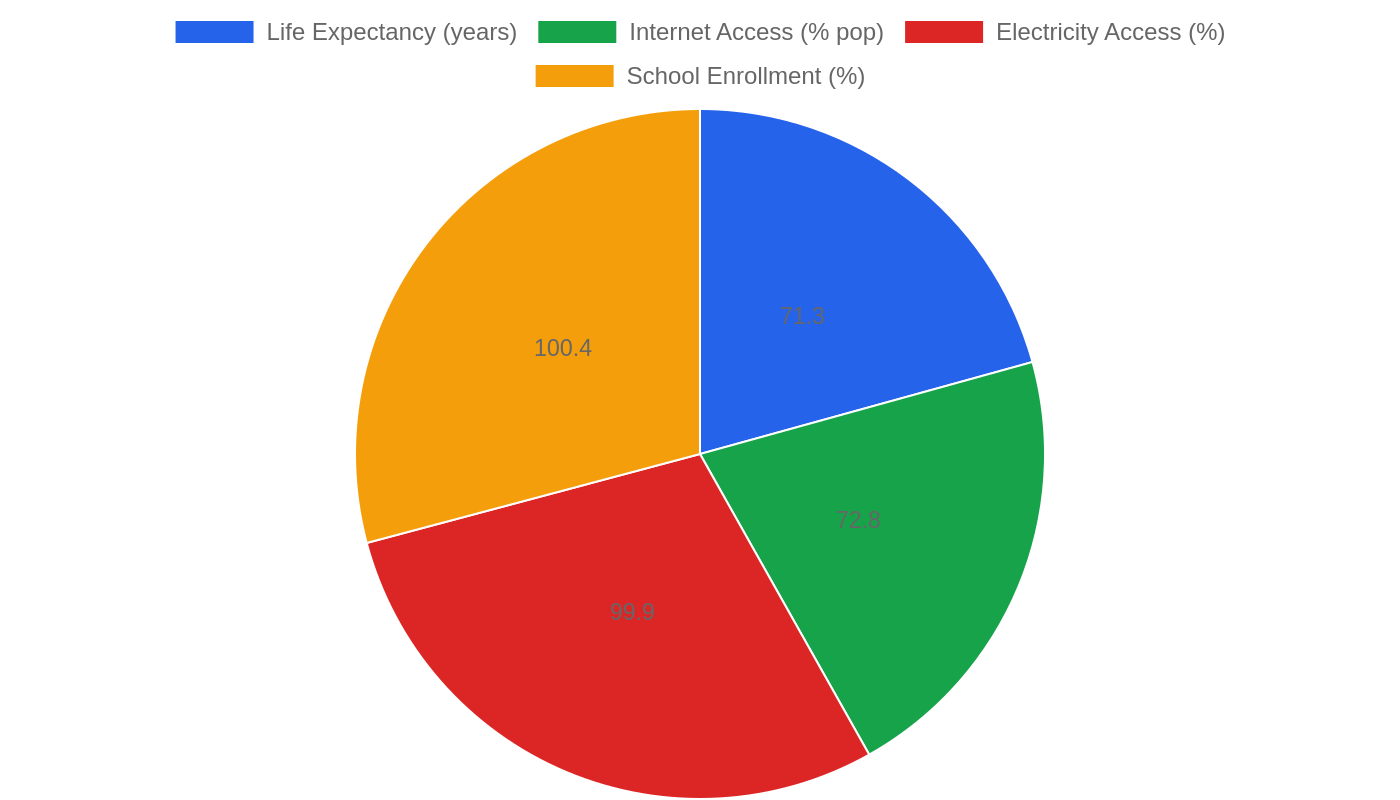
The World Bank’s data set for Indonesia presents an unusual challenge for any economic journalist: the headline indicators — GDP growth, inflation, unemployment, GDP per capita, GNI per capita, and even population — are all listed as unavailable. This absence is itself a story. It speaks to a country where data transparency may lag behind economic activity, or where the sheer scale and diversity of the archipelago’s 17,000-plus islands make national aggregation a herculean task.
Yet, the lack of hard numbers does not mean the economy is silent.
What we do know, from the corporate roster provided, is that Indonesia’s economic backbone is built on a mix of financial might and industrial heft. Banks dominate the list of top companies: Bank Central Asia, Bank Mandiri, Bank Negara Indonesia, Bank Rakyat Indonesia, and Bank Tabungan Negara form a quintet of financial powerhouses that channel capital across the archipelago.
These institutions are not just lenders; they are the circulatory system of an economy that spans from Jakarta’s skyscrapers to the remote villages of Papua. Alongside them, industrial giants like Badak LNG — one of the world’s largest liquefied natural gas facilities — and Astra International, a sprawling conglomerate with interests in automotive, mining, and agribusiness, tell a story of resource wealth and manufacturing ambition.
The presence of Angkasa Pura, the state-owned airport operator, signals the importance of connectivity in a nation built on islands. When the World Bank’s data gaps are filled, these are the sectors that will likely show the real pulse of Indonesian growth.
The Price of Paradise — Living Costs in a Nation of Extremes
Without specific cost-of-living indices from the data provided, one must look to the structural realities of Indonesia to understand daily economic pressure. The country’s geography creates a fragmented market: what it costs to live in Jakarta — a megacity of over 10 million people — bears little resemblance to the cost of life in Makassar, Medan, or the tourist haven of Bali. Jakarta, as the political and commercial capital, likely commands a premium on housing, transportation, and imported goods.
Rent in central Jakarta, for instance, would far outstrip costs in smaller provincial cities, yet wages in the capital may not keep pace proportionally.
The presence of Angkasa Pura among the top companies underscores the importance of domestic air travel, which for many Indonesians is not a luxury but a necessity for connecting family and business across the archipelago. This adds a unique cost burden: transportation is not merely a line item but a structural expense of citizenship. Meanwhile, the dominance of banks like Bank Tabungan Negara, a state-owned mortgage lender, suggests that housing finance is a key policy lever.
For the average Indonesian family, the choice between renting and buying is shaped less by personal preference and more by access to credit — and that credit flows through the very institutions that top the corporate list. Without regional averages to compare against, the takeaway is clear: Indonesia’s cost of living is not a single number but a spectrum defined by geography, infrastructure, and the reach of its financial system.
Where the Money Moves — Investment Climate Under a Presidential System
For investors looking at Indonesia, the corporate landscape offers a clear entry point. The top companies list reads like a who’s who of Southeast Asian business: Astra International, the country’s largest conglomerate, touches nearly every sector from cars to plantations. Badak LNG represents the energy sector, a perennial draw for foreign capital given Indonesia’s vast natural gas reserves. But the real story may be in financial services.
With five major banks — BCA, Mandiri, BNI, BRI, and BTN — dominating the list, the financial sector is both a destination for investment and a gateway to the broader economy.
The political landscape, as described in the data, provides a framework for business confidence. Indonesia is a unitary republic with a presidential system under the 1945 Constitution. The post-New Order reforms introduced direct presidential elections, created new state institutions, and reduced the role of the People’s Consultative Assembly (MPR). Perhaps most importantly for investors, regional autonomy now has a constitutional basis.
This means that doing business in Indonesia is not just about navigating Jakarta — it is about understanding 34 provinces, each with increasing power over local regulations, permits, and taxes. The five principles of Pancasila, taught in civic education as the basis of citizenship values, also shape the business environment, emphasizing social justice and unity.
For foreign investors, this translates into a market where state-owned enterprises like Bank Mandiri and Angkasa Pura coexist with private giants like Astra International, and where political stability is underpinned by a constitution that has proven adaptable through four amendments.
Safety, Stability, and the Pancasila Promise
Crime and safety indices for Indonesia are listed as unavailable in the data, but the political framework offers clues about social stability. The 1945 Constitution and the Pancasila principles — belief in one God, just and civilized humanity, the unity of Indonesia, democracy guided by consensus, and social justice — are not merely philosophical statements. They are taught in schools and embedded in governance.
The fall of the New Order in 1998 and the subsequent constitutional amendments were a watershed moment, transforming Indonesia from an authoritarian regime into a functioning democracy with direct presidential elections.
This political evolution has implications for quality of life. The introduction of regional autonomy means that local governments now have constitutional authority to address safety, education, and healthcare — but it also means that quality of life varies dramatically between regions. A resident of Yogyakarta, a cultural and educational hub, likely enjoys a different standard of public services than someone in a remote province like West Papua.
The absence of a crime index does not mean Indonesia is unsafe; rather, it suggests that safety is localized. What holds the nation together, according to the data, is the constitutional framework and the shared values of Pancasila. For a country of nearly 280 million people spread across thousands of islands, that ideological glue is as important as any police force.
The Jakarta Post Pulse — What’s Happening in Indonesia Right Now
The freshest signals from Indonesia come from the Jakarta Post, the country’s leading English-language newspaper, which is actively covering both the economy and markets. This dual focus suggests that policymakers and business leaders are grappling with real-time challenges: inflation pressures, currency fluctuations, commodity price swings, and the ongoing adjustment to post-pandemic realities.
The Jakarta Post’s business section is not just reporting numbers; it is tracking the decisions that shape the archipelago’s economic trajectory.
Given the corporate landscape, current affairs likely revolve around several key themes. The banking sector, dominated by state-owned giants like Bank Mandiri and Bank Rakyat Indonesia, is probably navigating credit expansion while managing non-performing loans. Badak LNG and other energy players face global pressure to transition toward cleaner energy, even as Indonesia sits on vast fossil fuel reserves.
The political system, with its direct presidential elections and regional autonomy, means that any major policy shift — be it a fuel subsidy reform or a new investment law — must navigate a complex web of national and local interests. The Jakarta Post’s coverage is the window into these dynamics. For anyone tracking Indonesia, the newspaper’s business pages are essential reading, offering the real-time narrative that the World Bank’s static data cannot provide.
The Bottom Line
Indonesia is a country of immense scale and complexity, where the absence of headline economic data from the World Bank does not diminish its significance. For investors, the corporate landscape — anchored by financial giants and industrial behemoths — offers clear entry points into Southeast Asia’s largest economy. For policymakers, the post-New Order political system provides a stable but demanding framework, where regional autonomy and direct elections require constant negotiation.
For the casual observer, Indonesia is a nation in motion, held together by the Pancasila principles and the 1945 Constitution, and chronicled daily by the Jakarta Post. Watch this country not for its current numbers, but for its potential — and for the story its banks, energy companies, and political institutions are writing in real time.
Sources & Methodology
This article is authored by Economic Pulse Net for informational and research purposes. Economic Pulse Net sources its data from multilateral institutions, national statistics bureaus, and proprietary databases. All data is believed to be current as of the date of publication.
Published: July 20, 2026 | Category: Research — Indonesia
Use these signals in your own platform
Economic Pulse publishes its live signal feed through a documented, read-only API. Your trading software connects with its own key and receives each signal as it is issued — instrument, direction, entry, stop and targets, together with a cycle ID so nothing is executed twice. The feed is independent of this website and cannot change it.
Signals are informational only and are not financial advice.