Economic Pulse Net | Sources: World Bank World Development Indicators, Government Sources | 2026
Key Takeaways
– Indonesia’s economy, Southeast Asia’s largest, is anchored by a GDP of over $1.44 trillion (World Bank), but faces a puzzle of modest inflation at 1.91% against a backdrop of unclear growth momentum.
– The country’s financial sector is dominated by a handful of state-owned and private banking giants—Bank Mandiri, Bank Central Asia, Bank Rakyat Indonesia—signaling a concentrated, bank-led capital market.
– Political life has stabilized under a unitary presidential system reformed after the fall of the New Order in 1998, but the legacy of that transition continues to shape institutional trust and regional autonomy.
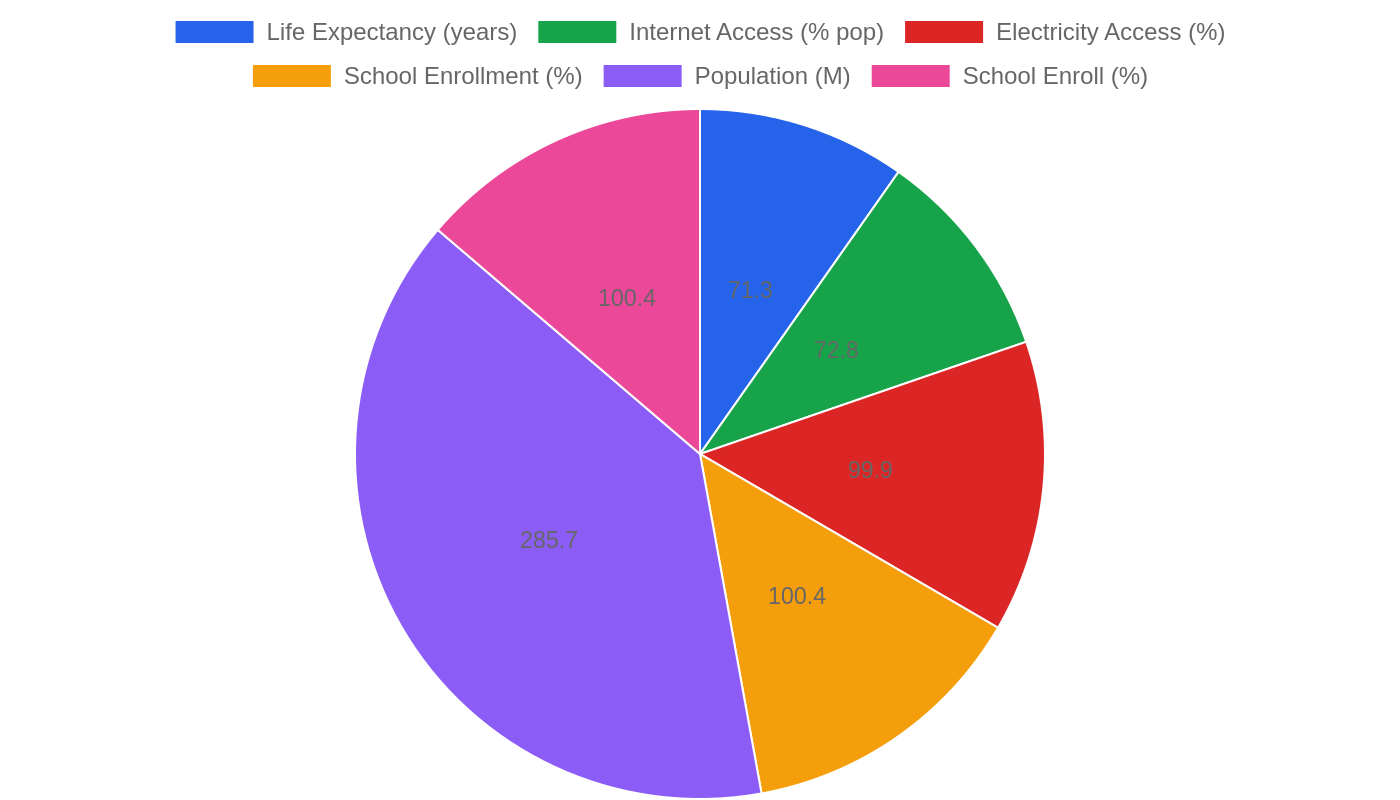
– With a population approaching 286 million, Indonesia is a demographic heavyweight, yet the absence of official unemployment data leaves a critical gap in understanding labor market health.
– Recent coverage from *The Jakarta Post* focuses on business and market developments, suggesting that policymakers and investors are closely watching the intersection of global headwinds and domestic reform momentum.
The $1.44 Trillion Question — Growth Without a Pulse?
The headline figure from the World Bank is arresting: Indonesia’s economy is valued at roughly $1.445 trillion. That places it firmly among the world’s top 20 economies, a status that carries both prestige and expectation. Yet the same dataset is conspicuously silent on GDP growth—marked as not available—which forces a careful reading of what we do know. Inflation, at 1.91% according to the same World Bank data, is remarkably tame.
For a developing economy of Indonesia’s scale, sub-2% inflation is a sign of disciplined monetary policy and relatively stable food and energy prices. But tame inflation does not automatically signal robust expansion. In many emerging markets, low inflation can also reflect weak domestic demand, a caution that analysts following *The Jakarta Post*’s business coverage are likely weighing.
The industrial backbone of the archipelago is diverse but opaque in the data provided. The top companies list tells a revealing story: ten firms, six of which are banks. Bank Mandiri, Bank Central Asia, Bank Rakyat Indonesia, Bank Negara Indonesia, Bank Tabungan Negara—these are the levers of credit allocation, infrastructure financing, and household lending. Alongside them sit Astra International, a sprawling conglomerate, and Badak LNG, a major player in liquefied natural gas.
This concentration suggests that Indonesia’s corporate growth is heavily intermediated by the financial sector, with industrials and energy playing supporting roles. The absence of a dominant tech or consumer brand in the top ten is notable; unlike neighbors such as Singapore or Vietnam, Indonesia’s corporate champions remain rooted in banking, resources, and traditional manufacturing.
For an economy of 286 million people, this raises questions about whether the next wave of growth will come from digitization and services or from deepening the existing industrial base.
The Cost of Living — Where the Rupiah Meets Daily Reality
Without specific cost-of-living indices or housing data from the World Bank, we must rely on inference. Indonesia’s inflation rate of 1.91% suggests that, at a macro level, the purchasing power of the rupiah is relatively stable. For the roughly 286 million citizens, this means that the price of essentials—rice, cooking oil, transport—has not surged dramatically. However, stability is not the same as affordability.
In Jakarta, the capital, housing costs have long been a pressure point for the middle class. Rent for a modest apartment in a decent neighborhood can consume a significant share of a formal-sector salary, while homeownership remains out of reach for many without multi-generational savings or access to subsidized mortgages from banks like Bank Tabungan Negara.
Outside Java, the picture shifts. In Sumatra, Kalimantan, and Sulawesi, housing is cheaper but infrastructure is thinner. The cost of transporting goods across the archipelago—Indonesia contains over 17,000 islands—adds a structural premium to prices that official inflation figures may smooth over. Compared to regional averages in Southeast Asia, Indonesia’s cost of living is moderate, but the gap between Jakarta and the rest of the country is wide.
For a family earning minimum wage, daily expenses hinge on the reliability of subsidized fuel and staple food distribution. The lack of granular data from the World Bank on rent indices or grocery costs is a gap, but the 1.91% inflation figure at least provides a baseline: prices are not spiraling, but neither are they falling, and wage growth remains the unspoken variable.
Investment & Business Climate — Banks, Conglomerates, and the Search for New Engines
The top companies list is a miniature map of Indonesia’s business landscape. Asuransi Jasindo and the constellation of state banks—Mandiri, BRI, BNI, BTN—dominate the financial sector, while Astra International represents the conglomerate model that has shaped Indonesian capitalism for decades. Angkasa Pura, the state-owned airport operator, and Badak LNG, the energy giant, show that infrastructure and natural resources remain pillars.
For an investor, the message is clear: Indonesia’s corporate sector is stable, bank-led, and heavily tied to domestic consumption and state spending. There is no Tesla or Alibaba here; the dynamism is in lending, logistics, and liquefied gas.
The business climate, as reported by *The Jakarta Post*, is under constant scrutiny. The newspaper’s dedicated business and markets sections suggest that both domestic and foreign investors are watching for policy signals—tax reforms, mining export bans, and infrastructure spending under the presidential system. The political structure, a unitary republic with a strong executive, means that business confidence is often tied to the president’s agenda.
Since the post-1998 reforms introduced direct presidential elections, the investment cycle has become more predictable, but also more dependent on the political cycle. For companies like Bank Central Asia or Alumindo, the challenge is navigating regional autonomy—a constitutional change that gave provinces more power—while maintaining national scale.
The sectors to watch are financial services, energy, and consumer goods, but the absence of a vibrant tech IPO market or a deep bond market means that capital formation is still traditional.
Safety, Politics & Quality of Life — Pancasila, Presidentialism, and the Unfinished Reform
Indonesia’s political landscape is defined by its 1945 Constitution and the five principles of Pancasila, which are taught in civic education as the foundation of national values. After the fall of the New Order in 1998, four constitutional amendments reshaped the system: direct presidential elections, new state institutions, a reduced role for the People’s Consultative Assembly (MPR), and constitutional backing for regional autonomy.
This is a polity that has consciously moved away from authoritarian centralism toward a more open, if still imperfect, democracy. The crime index is not available in the provided data, but Indonesia is generally considered safe for travelers and residents in urban centers, with petty crime more common than violent crime. The safety index, while unquantified here, is often cited by expatriate communities as moderate, with security varying significantly between Java and the outer islands.
Quality of life is a mixed picture. The population of 285.7 million is young, urbanizing, and increasingly connected to digital services. Yet the absence of GNI per capita and PPP data from the World Bank makes it difficult to benchmark living standards against regional peers like Thailand or Vietnam. What we can say is that Indonesia’s political stability—underpinned by Pancasila and a functioning presidential system—provides a foundation for gradual improvement.
The challenge is inequality: the concentration of corporate power in a few banking and conglomerate names suggests that wealth generation is not broadly distributed. For the average citizen, quality of life depends on access to the formal economy, which remains a work in progress.
What’s Happening Now — Markets, Business, and the Pulse of Policy
According to *The Jakarta Post*, the most current news out of Indonesia is centered on the economy and markets. This is a country where the business community is acutely aware of global commodity prices, interest rate trends, and the health of China’s economy—Indonesia’s largest trading partner. The 1.91% inflation rate, while low, is being watched for signs of deflationary pressure, which could hurt farmers and small businesses.
At the same time, the banking sector—led by Mandiri, BRI, and BCA—is navigating a period of stable but unspectacular loan growth. The *Jakarta Post*’s coverage likely reflects debates over whether the government should stimulate demand or continue fiscal consolidation.
Politically, the presidential system is in a period of relative calm, but the legacy of the 1998 reforms continues to shape debates over decentralization and corruption. The constitutional amendments that reduced the MPR’s power and introduced direct elections have created a more responsive government, but also one that must balance Jakarta’s authority with provincial demands.
For investors reading *The Jakarta Post*’s business section, the key question is whether the next wave of reform will focus on deregulation, infrastructure, or human capital. The data does not provide specifics on recent legislation, but the newspaper’s focus on “economy” and “markets” suggests that the story right now is one of cautious optimism tempered by structural constraints.
The Bottom Line
Indonesia is a country of immense scale and steady, if unspectacular, economic management. With a $1.44 trillion GDP, low inflation, and a stable political system rooted in the post-1998 reforms, it offers a compelling investment destination for those focused on financial services, energy, and consumer markets. The lack of growth and unemployment data is a significant blind spot, but the presence of dominant banks and conglomerates suggests a resilient corporate sector.
Anyone watching Southeast Asia—whether a portfolio manager, a multinational executive, or a policy analyst—should keep Indonesia on their radar. The archipelago is not a flashy story, but it is a foundational one.
Sources & Methodology
This article is authored by Economic Pulse Net for informational and research purposes. Economic Pulse Net sources its data from multilateral institutions, national statistics bureaus, and proprietary databases. All data is believed to be current as of the date of publication.
Published: July 27, 2026 | Category: Research — Indonesia
Use these signals in your own platform
Economic Pulse publishes its live signal feed through a documented, read-only API. Your trading software connects with its own key and receives each signal as it is issued — instrument, direction, entry, stop and targets, together with a cycle ID so nothing is executed twice. The feed is independent of this website and cannot change it.
Signals are informational only and are not financial advice.