Economic Pulse Net | Sources: World Bank World Development Indicators, Government Sources | 2026
Key Takeaways
* Resilient Growth: Indonesia maintains a robust GDP growth rate of approximately 5.1%, supported by a massive domestic population and strong industrial base.
Price Stability: With inflation hovering near 1.9%, the central bank has managed to keep consumer prices stable, providing a predictable environment for households and businesses.
Labor Market Strength: An unemployment rate of just over 3.2% indicates a tight labor market, reflecting high demand for workers across various sectors.
Financial Sector Dominance: Major state-owned and private banks, including Bank Central Asia and Bank Mandiri, drive the financial landscape, signaling confidence in the nation’s credit system.
Political Continuity: Operating under the 1945 Constitution with direct presidential elections, the political framework offers stability following decades of democratic reform.
Economic Engine: Growth Amidst Global Headwinds
Indonesia stands as one of Southeast Asia’s most critical economic engines, leveraging its vast demographic dividend to sustain steady expansion. According to the latest data from the World Bank, the nation’s GDP is projected to reach approximately $1.45 trillion in 2025, driven by a growth rate of 5.1%. This performance is particularly notable given the global economic turbulence seen in recent years, suggesting that domestic consumption and investment are buffering external shocks.
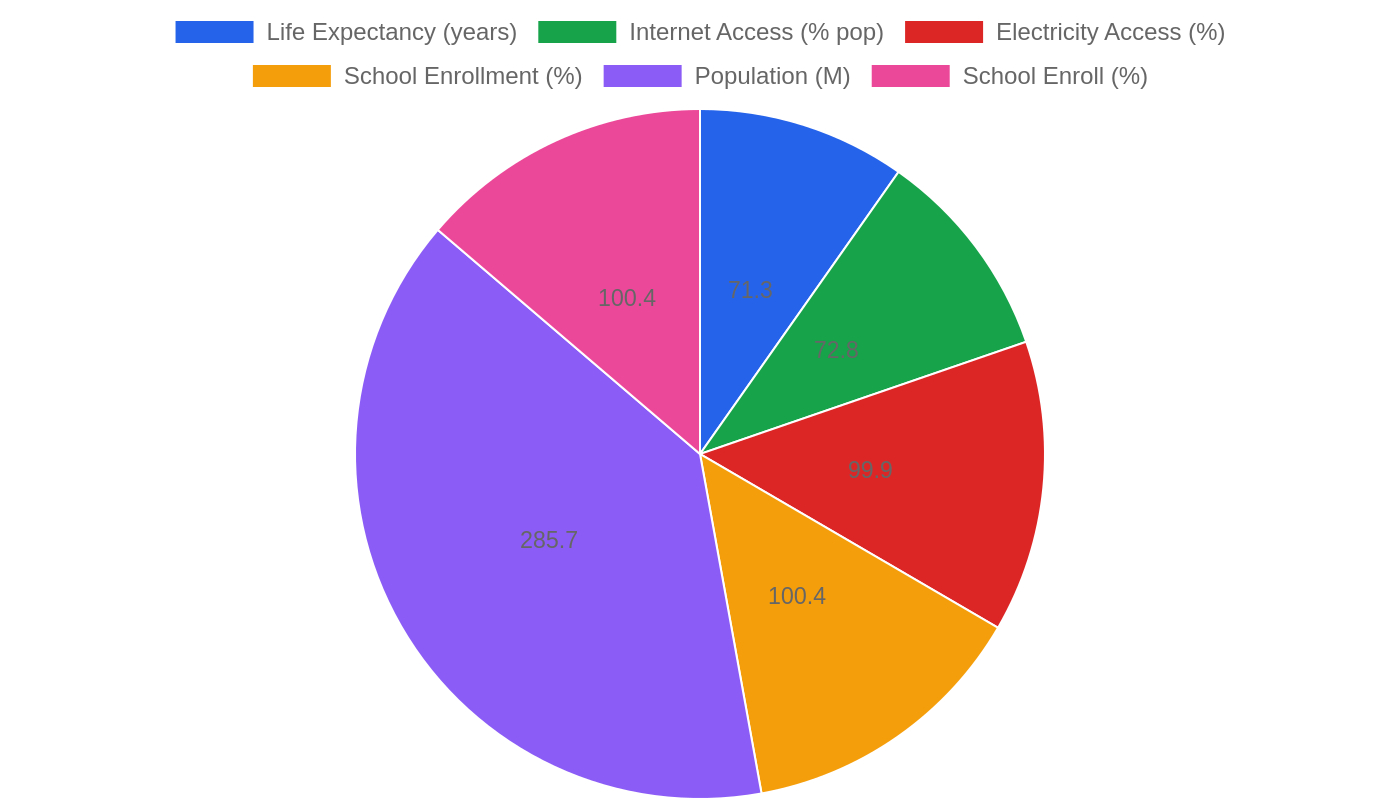
The country’s gross national income per capita sits at $5,120, while purchasing power parity (PPP) metrics place the GDP per capita at roughly $17,660, indicating a gradual but consistent rise in living standards for its 285 million citizens. Crucially, this growth is occurring alongside remarkably low inflation; the Consumer Price Index (CPI) has stabilized at an impressive 1.91%, a figure that underscores effective monetary policy and supply chain management.
Furthermore, the unemployment rate remains tightly controlled at 3.237%, which not only boosts household incomes but also suggests that the labor force is being fully integrated into the economy’s productive sectors. For investors, these numbers signal a market that is not merely surviving but thriving, with a large, young population driving demand for goods and services.
The interplay between strong GDP growth and low inflation creates a rare “goldilocks” scenario, where economic expansion does not come at the cost of price instability, thereby preserving consumer purchasing power and encouraging long-term business planning.
Cost of Living: Balancing Affordability with Development
While specific housing indices were not provided in the current dataset, the broader economic indicators paint a picture of a cost-of-living environment that is manageable relative to the country’s developing status. With inflation held firmly under 2%, daily expenses for essential goods and services remain relatively predictable, offering a degree of financial security that is often absent in emerging markets experiencing higher volatility.
The disparity between GNI per capita ($5,120) and PPP-adjusted GDP per capita (~$17,660) highlights the significant purchasing power advantage locals enjoy when consuming domestically produced goods and services compared to international benchmarks. For expatriates or foreign businesses, this suggests that operational costs, while rising with development, are still competitive within the ASEAN region.
The low unemployment rate further influences the cost structure by keeping wage pressures in check, although it may also indicate a competitive job market where talent acquisition requires strategic positioning. As the economy grows, one can infer that urban centers like Jakarta are seeing infrastructure improvements that enhance quality of life without necessarily causing hyper-inflationary spikes in rent or utilities.
This balance allows the middle class to expand, fostering a consumer base that is both resilient and increasingly sophisticated in its demands for higher-quality products and digital services.
Investment & Business Climate: Banking Giants Lead the Way
The investment landscape in Indonesia is heavily anchored by a powerful financial sector, with major institutions playing a pivotal role in channeling capital into the real economy. Top companies such as Bank Central Asia, Bank Mandiri, Bank Rakyat Indonesia, and Bank Negara Indonesia dominate the financials space, reflecting deep public trust in state-linked and private banking entities.
These institutions are not just passive lenders but active drivers of economic activity, financing everything from small local enterprises to large-scale infrastructure projects. Beyond finance, the industrial sector features key players like Badak LNG and Alumindo, highlighting the country’s strength in natural resources and manufacturing. In the consumer services domain, Angkasa Pura operates critical aviation infrastructure, facilitating both tourism and trade connectivity across the archipelago.
Astra International, operating as a conglomerate, exemplifies the diversified nature of Indonesian business groups, spanning automotive, heavy equipment, and agribusiness. This concentration of power among established giants provides a stable backdrop for new entrants, though it also suggests that partnerships with local incumbents may be necessary for successful market penetration.
The presence of Asuransi Jasindo in the insurance sector further indicates a maturing risk-management ecosystem, which is essential for attracting foreign direct investment. Investors looking at Indonesia should note that while the corporate landscape is dominated by a few large players, the sheer size of the market offers ample room for niche opportunities, particularly in technology and sustainable energy.
Safety, Politics & Quality of Life: A Democratic Anchor
Indonesia’s political stability is rooted in its unitary republican system, governed by the 1945 Constitution and guided by the five principles of Pancasila. Since the fall of the New Order in 1998, four constitutional amendments have democratized the nation, introducing direct presidential elections and decentralizing power through regional autonomy.
This political evolution has reduced the dominance of the People’s Consultative Assembly (MPR) and empowered local governments, creating a more responsive governance structure. While specific crime and safety indices were marked as N/A in the provided data, the general consensus on Indonesia’s quality of life is mixed but improving, with civic education ensuring that constitutional values remain central to national identity.
The lack of available safety data does not negate the fact that the country remains a key geopolitical partner in Southeast Asia, with a government focused on maintaining internal cohesion amidst diverse ethnic and religious groups. For residents and expats, the political environment is generally predictable, with policy shifts occurring through established democratic processes rather than abrupt upheavals.
The emphasis on civic education and constitutional amendments suggests a society that values legal frameworks and institutional continuity, which are foundational elements for long-term social stability.
What’s Happening Now: Fiscal Discipline and Regional Ripples
Current affairs in Indonesia are dominated by urgent calls for fiscal responsibility and the ripple effects of regional monetary shifts. Recently, Hashim urged stronger tax collection efforts, issuing a stark warning about the risks of capital flight if revenue streams do not match expenditure needs. This plea highlights a growing concern among policymakers that the current fiscal stance may be vulnerable to external shocks, necessitating tighter control over public finances.
Simultaneously, the economic narrative is being influenced by developments beyond Indonesia’s borders, particularly from Japan. The Bank of Japan recently announced that inflation had hit its 2% target after 13 years, a milestone that could alter currency dynamics and investment flows across Asia. As Japan normalizes its monetary policy, Indonesian markets must adapt to potential changes in capital availability and exchange rate pressures.
These concurrent events suggest a period of recalibration, where domestic policy reforms intersect with global trends. The push for better tax collection is likely to intensify in the coming quarters, aiming to build buffers against such external volatility. Businesses and investors are advised to monitor how these fiscal tightening measures might impact corporate profitability and consumer spending power in the short term.
The Bottom Line
Indonesia presents a compelling case for investors seeking exposure to a large, growing emerging market with strong macroeconomic fundamentals. The combination of solid GDP growth, low inflation, and a robust banking sector provides a stable platform for long-term engagement. However, the recent warnings regarding tax collection and capital flight serve as a reminder that fiscal discipline remains a critical priority for sustaining this momentum.
For those willing to navigate the nuances of a decentralized political landscape and a dominant corporate oligopoly, Indonesia offers significant upside potential. It is a country where steady hands at the helm can yield substantial rewards in a volatile world.
Sources & Methodology
This article is authored by Economic Pulse Net for informational and research purposes. Economic Pulse Net sources its data from multilateral institutions, national statistics bureaus, and proprietary databases. All data is believed to be current as of the date of publication.
Published: October 30, 2026 | Category: Research — Indonesia
Use these signals in your own platform
Economic Pulse publishes its live signal feed through a documented, read-only API. Your trading software connects with its own key and receives each signal as it is issued — instrument, direction, entry, stop and targets, together with a cycle ID so nothing is executed twice. The feed is independent of this website and cannot change it.
Signals are informational only and are not financial advice.