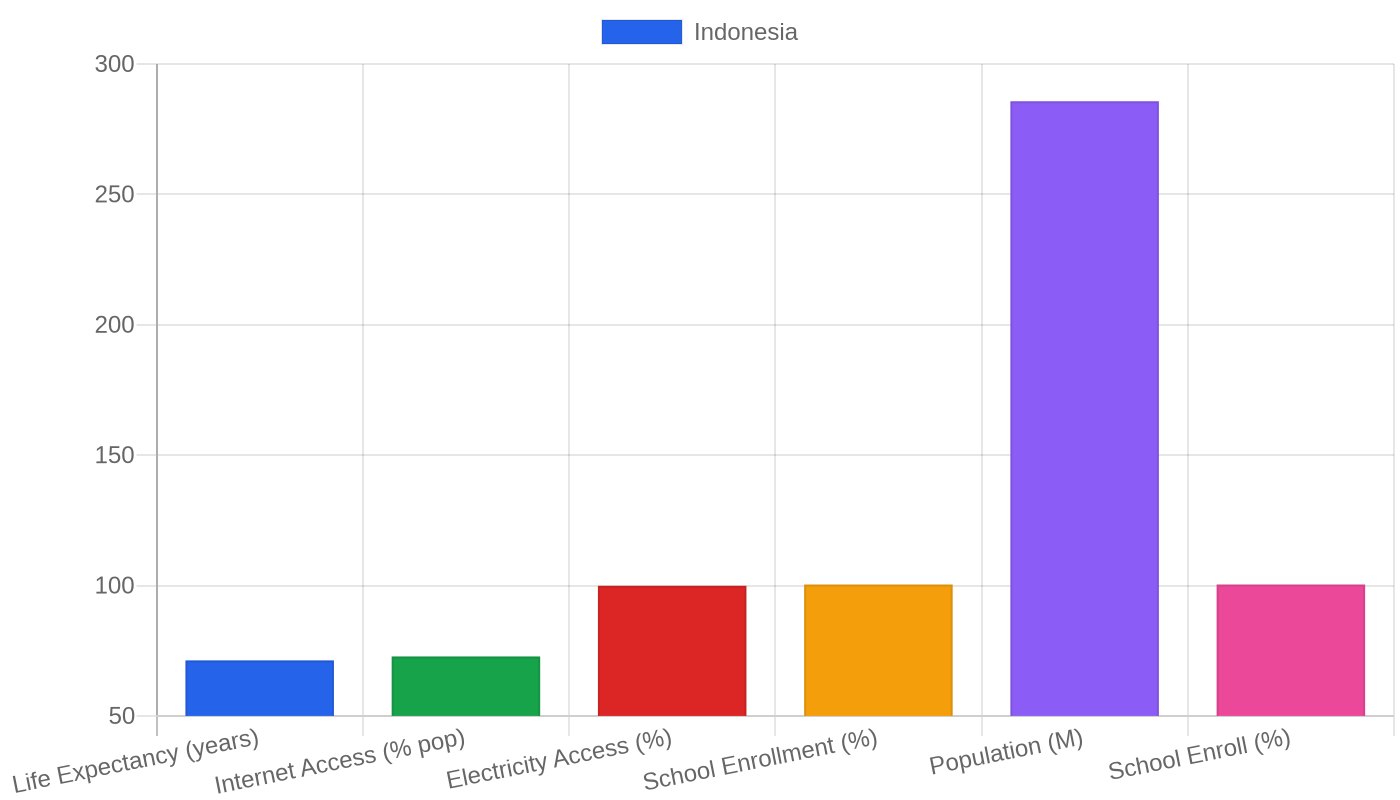
Economic Pulse Net | Sources: World Bank World Development Indicators, Government Sources | 2026
Key Takeaways
* Robust Growth Amidst Stability: Indonesia is projected to achieve a GDP growth rate of over 5.1% in 2025, supported by a low unemployment rate of just 3.24%, signaling a resilient domestic labor market.
Price Stability: With inflation hovering near 1.9%, the central bank has maintained effective control over price stability, providing a favorable environment for both consumers and businesses.
Financial Sector Dominance: The corporate landscape is heavily anchored by major financial institutions, including Bank Central Asia and Bank Mandiri, highlighting the critical role of banking in the national economy.
Strategic Livestock Investment: Recent government initiatives earmark significant capital toward integrated livestock ecosystems, indicating a push to modernize agricultural supply chains.
Economic Engine: Growth and Employment Resilience
Indonesia’s economic trajectory presents a compelling narrative of steady expansion coupled with macroeconomic discipline. According to World Bank data, the nation’s GDP is projected to reach approximately $1.45 trillion in 2025, underpinned by a robust growth rate of 5.108%. This figure is particularly significant for an emerging market of this scale, as it demonstrates the country’s ability to sustain momentum despite global headwinds.
Crucially, this growth is inclusive; the unemployment rate stands at a remarkably low 3.237%, suggesting that job creation is keeping pace with population expansion. For a population exceeding 285 million, such low unemployment reflects strong labor market absorption capabilities. Furthermore, inflation remains well-anchored at 1.913%, indicating that the purchasing power of citizens is being preserved against volatile commodity prices.
This combination of high growth and low inflation creates a rare “sweet spot” for sustainable development, allowing the government to focus on long-term structural reforms rather than crisis management. The GDP per capita in PPP terms, recorded at roughly $17,660, further illustrates the gradual elevation of living standards across the archipelago.
Living Costs: Navigating the Urban-Rural Divide
While specific cost-of-living metrics are not detailed in the current dataset, the broader economic indicators suggest a stable consumer environment. With inflation capped at nearly 2%, daily expenses for households are likely experiencing minimal volatility compared to regional peers facing higher price pressures. The GNI per capita of $5,120 provides a baseline for understanding income distribution, hinting at a growing middle class that is increasingly active in the formal economy.
Housing markets in major urban centers like Jakarta may see varying dynamics, but the overall price stability implied by the CPI suggests that rent and property costs are not spiraling out of control. Consumers can generally expect predictable pricing for essential goods, which supports sustained retail consumption—a key driver of the nation’s internal demand. This stability is vital for a young population entering the workforce, as it allows for better financial planning and savings accumulation.
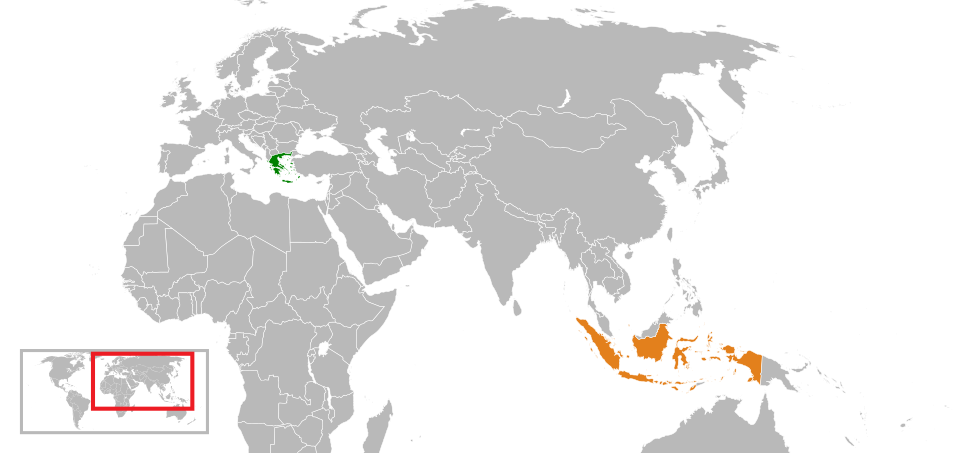
Investment Landscape: Banking Giants and Industrial Powerhouses
The business climate in Indonesia is characterized by the dominance of large-cap conglomerates and state-linked enterprises. The list of top companies reveals a heavy concentration in the financial sector, with giants such as Bank Central Asia, Bank Mandiri, Bank Rakyat Indonesia, and Bank Negara Indonesia leading the charge. These institutions are not only pillars of the domestic economy but also key drivers of credit availability for small and medium-sized enterprises.
In the industrial sector, companies like Alumindo and Badak LNG highlight the nation’s strength in manufacturing and energy resources. Astra International, operating within the conglomerates space, underscores the diversified nature of Indonesian corporate power, spanning automotive, financial services, and agribusiness. Angkasa Pura’s presence in consumer services points to the ongoing development of infrastructure, particularly aviation, which facilitates trade and tourism.
Investors looking at Indonesia should note that while the financial sector is mature, opportunities exist in downstream industries linked to these established players. The interplay between these state-backed entities and private conglomerates creates a unique ecosystem where policy alignment often drives corporate strategy.
Safety, Politics, and Quality of Life
Indonesia operates as a unitary republic with a presidential system defined by the 1945 Constitution, a framework that has evolved significantly since the fall of the New Order in 1998. Political stability is reinforced by constitutional amendments between 1999 and 2002, which introduced direct presidential elections and granted greater regional autonomy.
These changes have decentralized power, allowing local governments to tailor policies to their specific needs, though it also adds complexity to regulatory compliance. The civic education system continues to teach the five principles of Pancasila, fostering a shared national identity across the diverse archipelago. Regarding safety, specific crime and safety indices are currently listed as N/A, making direct comparisons difficult; however, the political continuity suggests a predictable governance structure.
The quality of life is indirectly reflected in the low unemployment and controlled inflation, which contribute to social stability. While detailed happiness data is not provided, the economic resilience implies that citizen welfare is being prioritized through steady job creation and price controls.
Current Affairs: Modernizing Agriculture and Markets
The most immediate developments in Indonesia center on strategic investments in food security and market integration. Recently, the government has earmarked Rp 17 trillion for the development of an integrated livestock ecosystem, a move aimed at boosting productivity and reducing reliance on imports. This substantial allocation signals a shift toward value-added agriculture, moving beyond raw production to processing and distribution efficiency.
Reports from *The Jakarta Post* indicate that these funds are intended to stabilize supply chains and enhance the competitiveness of local farmers. Simultaneously, discussions around broader economic markets suggest that policymakers are keen on maintaining investor confidence amid global uncertainties. The focus on livestock highlights the government’s recognition of food security as a national priority, linking agricultural output directly to economic stability.
As these projects roll out, they are expected to create ripple effects throughout related sectors, from veterinary services to transportation logistics. The timing of these investments coincides with the projected 5.1% GDP growth, suggesting that fiscal policy is actively supporting targeted industrial goals.
The Bottom Line
Indonesia represents a compelling case study in emerging market resilience, balancing rapid economic growth with prudent monetary management. Investors and policymakers should watch this country closely due to its massive domestic market, low unemployment, and stable inflation. The dominance of major banks and strategic government spending in agriculture offer clear avenues for engagement.
For those seeking exposure to Southeast Asia’s largest economy, Indonesia offers a blend of opportunity and relative predictability.
Sources & Methodology
This article is authored by Economic Pulse Net for informational and research purposes. Economic Pulse Net sources its data from multilateral institutions, national statistics bureaus, and proprietary databases. All data is believed to be current as of the date of publication.
Published: September 29, 2026 | Category: Research — Indonesia
Use these signals in your own platform
Economic Pulse publishes its live signal feed through a documented, read-only API. Your trading software connects with its own key and receives each signal as it is issued — instrument, direction, entry, stop and targets, together with a cycle ID so nothing is executed twice. The feed is independent of this website and cannot change it.
Signals are informational only and are not financial advice.