Economic Pulse Net | Sources: World Bank World Development Indicators, Government Sources | 2026
Key Takeaways
– Brunei’s economy remains overwhelmingly dominated by oil and gas, with state-linked giants like Brunei Shell Petroleum and Brunei LNG anchoring the entire national balance sheet.
– The country operates under a unique political system—the Malay Islamic Monarchy (MIB)—where the Sultan appoints all parliament members and no elections are held.
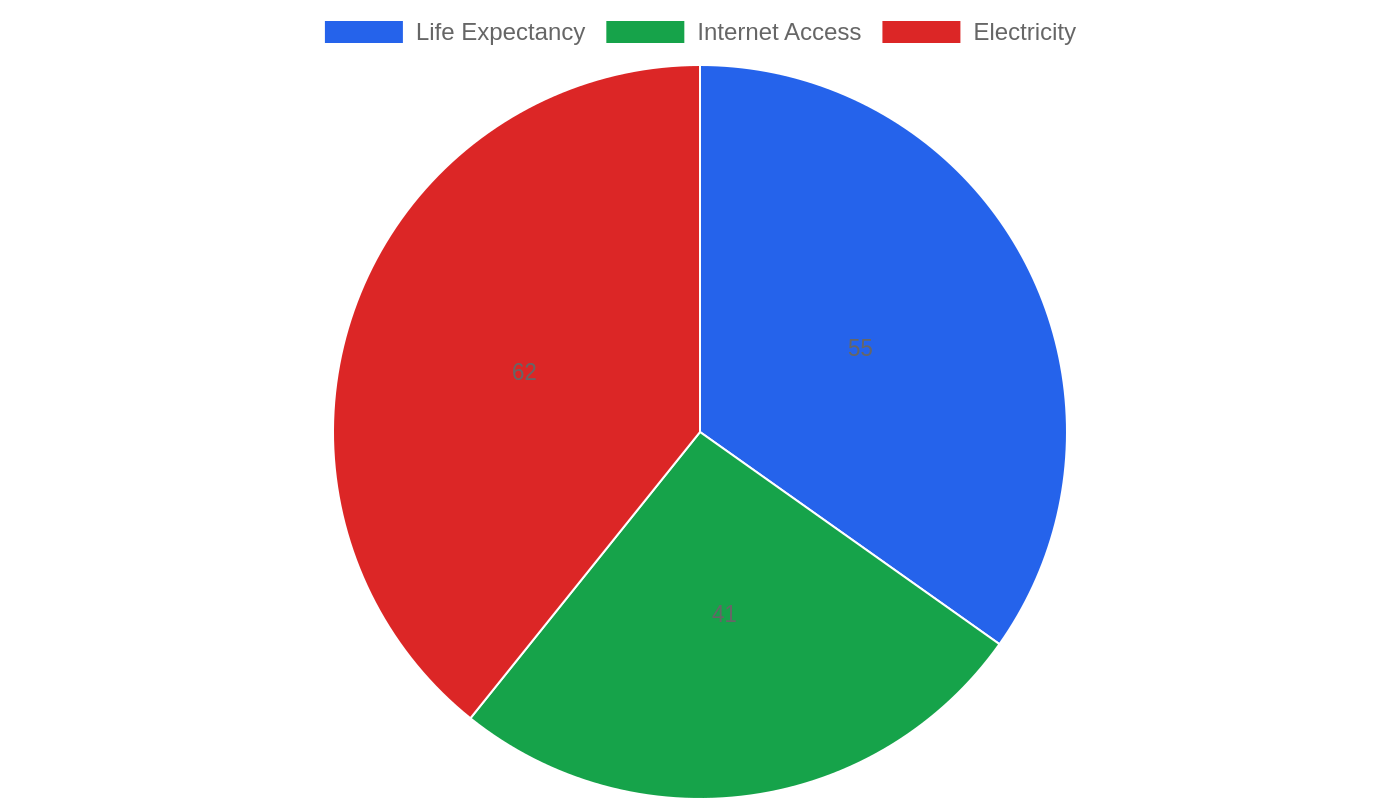
– Despite the lack of standard economic indicators (GDP growth, inflation, unemployment data are all unavailable from the World Bank), the presence of a sovereign wealth fund—the Brunei Investment Agency—signals deep financial reserves.
– Islamic finance is a cornerstone of the economy, with major players like Bank Islam Brunei Darussalam and the Brunei Darussalam Central Bank shaping the financial landscape.
– The cost of living and daily economic experience for citizens is heavily subsidized by the state, but the absence of recent data makes independent assessment difficult.
The Petro-State Paradox — Growth Without Numbers
Brunei Darussalam presents an unusual challenge for any economic journalist: the World Bank, the gold standard for cross-country data, reports no figures for GDP growth, inflation, unemployment, or GDP per capita. This is not a data error—it is a reflection of how Brunei operates. The sultanate, perched on the northern coast of Borneo, has built its entire economic model around hydrocarbon extraction, and when global oil prices move, the entire economy moves with them.
The World Bank’s silence on recent growth figures likely reflects the volatility of that dependence: when oil prices slump, Brunei’s economy contracts; when they surge, so does state revenue. Without the numbers, we must look at the structure.
The main industries tell the story. Brunei Shell Petroleum, a joint venture with the Anglo-Dutch giant, dominates upstream oil and gas. Brunei LNG processes and exports liquefied natural gas to Asian markets, primarily Japan and South Korea. Brunei Methanol Company and Brunei Fertilizer Industries represent downstream diversification—attempts to capture more value from the country’s hydrocarbon wealth before the wells run dry.
These are not entrepreneurial start-ups; they are state-directed enterprises, often with sovereign backing. The Brunei Investment Agency, the country’s sovereign wealth fund, manages the surplus revenues, investing abroad to create a buffer for future generations. This is an economy where the state is the primary actor, the primary employer, and the primary source of capital.
The absence of inflation data is telling. In many emerging economies, inflation is a daily concern for citizens. In Brunei, the state heavily subsidizes fuel, rice, housing, and healthcare. The Sultan’s government can absorb global price shocks through its reserves, meaning the CPI may be artificially stable—or simply not a priority for publication.
Similarly, unemployment data is missing because the labor market is bifurcated: citizens work in the public sector or state-owned enterprises, while migrant workers from Southeast Asia and South Asia fill construction, domestic service, and lower-skilled roles. The unemployment rate for Bruneian citizens may be very low, but the overall labor force participation rate is distorted by the presence of hundreds of thousands of foreign workers who have no path to citizenship.
The Subsidized Life — Cost of Living in a Rentier State
Without specific housing cost data from the World Bank, we must infer from the economic structure. Brunei is a rentier state: the government derives most of its revenue from natural resource exports and redistributes that wealth to citizens through subsidies, free education, free healthcare, and no personal income tax. Housing is a key part of this bargain. The government provides land grants and low-interest loans for citizens to build homes.
For those who do not qualify, the state offers subsidized rental housing through the Housing Development Department. Rent in the private market, particularly in the capital Bandar Seri Begawan, is driven by the expatriate workforce—employees of Brunei Shell Petroleum and other multinationals who receive housing allowances from their employers.
Daily expenses for basic goods are kept low through price controls and subsidies. Rice, cooking oil, and sugar are all subsidized. Petrol is among the cheapest in Southeast Asia, reflecting the country’s status as an oil producer. However, imported goods—electronics, cars, clothing—carry a premium because of Brunei’s small market size and reliance on shipping. The cost of living for a Bruneian citizen is therefore bifurcated: essential goods are cheap, discretionary goods are expensive.
For the migrant worker population, who do not have access to subsidies, the cost of living is higher relative to their wages, and housing is often provided in cramped dormitories by employers.
Investing in the Sultan’s Vision — Business Climate and Key Players
The top companies list reads like a who’s who of state capitalism. Baiduri Bank and Bank Islam Brunei Darussalam dominate the financial sector, both operating under the oversight of the Brunei Darussalam Central Bank. These institutions are not just lenders; they are instruments of the MIB philosophy, promoting Islamic finance and Sharia-compliant products.
The Brunei Investment Agency manages an estimated tens of billions in assets globally, from London real estate to Asian equities, providing a fiscal cushion that few small states enjoy.
For foreign investors, the business climate is stable but constrained. The government welcomes foreign direct investment in downstream oil and gas, petrochemicals, and halal food production—sectors that align with national priorities. The Brunei Economic Development Board offers tax holidays and land grants for approved projects. However, the private sector outside of hydrocarbons is tiny.
Hua Ho Department Store, one of the few consumer services companies on the top companies list, is a family-owned business that has operated for decades. There is no vibrant start-up scene, no tech hub, no stock exchange of significance. The business environment is safe, predictable, and slow-moving. Profits are possible, but only within the parameters set by the state.
The MIB System — Politics, Safety, and Quality of Life
Brunei’s political system is unique in Southeast Asia. The constitution enshrines the Malay Islamic Monarchy (Melayu Islam Beraja, or MIB), which fuses Malay cultural identity, Islamic religious law, and absolute monarchy under the Sultan.
There is a parliament, but the World Bank data notes that “there are no elections; instead, the members are appointed by the sultan.” The last election referenced in the data is not specified, but the implication is clear: Brunei is not a democracy in any conventional sense. Political opposition is effectively non-existent, and civil society is tightly controlled.
Crime and safety indices are not available from the World Bank, but Brunei is widely regarded as one of the safest countries in Asia. Petty crime is low, violent crime is rare, and the police presence is visible but not oppressive. The quality of life for citizens is high by regional standards: free healthcare, free education through university, subsidized housing, and no income tax.
However, the imposition of Sharia law in recent years—including penalties for adultery, theft, and apostasy—has created tension with international human rights norms and discouraged some forms of tourism and foreign investment. For citizens, the trade-off is clear: economic security and social stability in exchange for political silence and religious conformity.
The Succession Question — What Happens Now?
The freshest story in Brunei is not a quarterly GDP number or an inflation spike—it is the question of succession and economic transformation. Sultan Hassanal Bolkiah has ruled since 1967, making him one of the world’s longest-reigning monarchs. At 78, he has begun to delegate more responsibilities to his son, Crown Prince Al-Muhtadee Billah, who serves as Senior Minister in the Prime Minister’s Office.
The transition, when it comes, will be the most significant political event in Brunei’s modern history. Will the Crown Prince maintain the MIB system unchanged, or will he pursue economic liberalization?
The economic imperative for change is clear. Brunei’s oil and gas reserves are finite. The Brunei Methanol Company and Brunei Fertilizer Industries represent attempts to diversify, but they are still hydrocarbon-adjacent. The Brunei Investment Agency’s global portfolio provides a buffer, but it cannot sustain the current level of state spending indefinitely.
The government has talked about developing tourism, halal food exports, and Islamic finance as alternative revenue sources, but progress has been slow. The data provided by the World Bank—or rather, the lack of it—suggests that the government is not yet ready to submit to the scrutiny that comes with transparent economic reporting. That may change under a new generation of leadership, or it may not.
The Bottom Line
Brunei is a country for the patient investor and the geopolitical observer. For energy companies, the upstream oil and gas sector remains the only game in town, with Brunei Shell Petroleum setting the terms. For financial institutions, the Islamic banking sector offers niche opportunities, but only under strict Sharia compliance and state oversight. For the casual reader, Brunei is a reminder that not all economies fit the standard model of GDP growth, inflation targeting, and democratic accountability.
This is a sultanate that has chosen stability over transparency, and for now, that choice is working—but the clock is ticking on the hydrocarbon reserves that make it possible.
Sources & Methodology
This article is authored by Economic Pulse Net for informational and research purposes. Economic Pulse Net sources its data from multilateral institutions, national statistics bureaus, and proprietary databases. All data is believed to be current as of the date of publication.
Published: July 27, 2026 | Category: Research — Brunei
Use these signals in your own platform
Economic Pulse publishes its live signal feed through a documented, read-only API. Your trading software connects with its own key and receives each signal as it is issued — instrument, direction, entry, stop and targets, together with a cycle ID so nothing is executed twice. The feed is independent of this website and cannot change it.
Signals are informational only and are not financial advice.