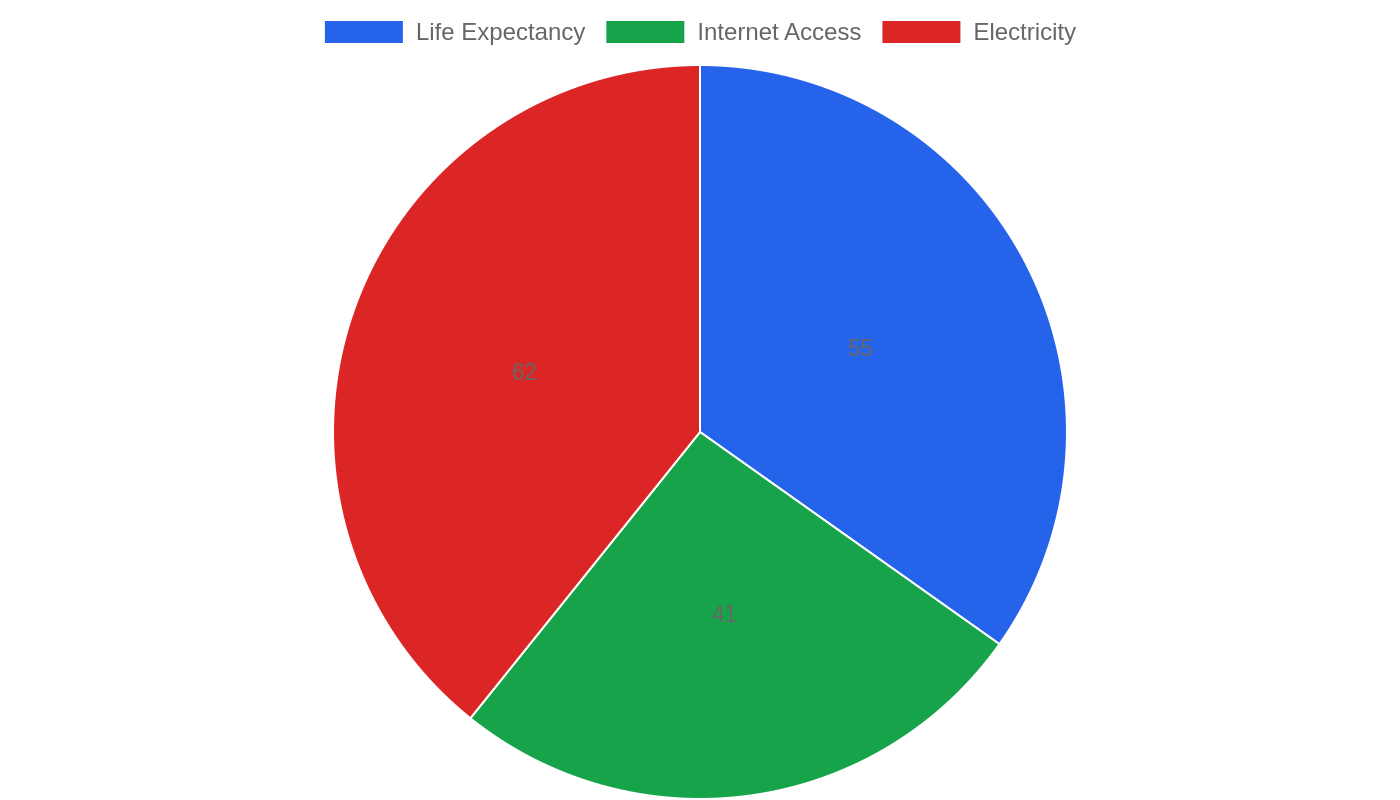
Economic Pulse Net | Sources: World Bank World Development Indicators, Government Sources | 2026
Key Takeaways
– Brunei’s economy remains overwhelmingly dependent on oil and gas, with state-linked giants like Brunei Shell Petroleum and Brunei LNG dominating the corporate landscape.
– The political system is a unique Malay Islamic Monarchy (MIB) with no elections; the sultan appoints all parliament members, ensuring stability but limited democratic input.
– Sharia law operates alongside English common law, creating a dual legal framework that shapes both business and daily life.
– Major state-owned financial institutions — including Brunei Investment Agency and Baiduri Bank — manage the country’s vast sovereign wealth, but transparency remains limited.
– Despite abundant natural resource wealth, the absence of recent World Bank economic data makes it difficult to assess current growth, inflation, or employment trends with precision.
The Hydrocarbon Heart — An Economy Built on Gas and Patience
Brunei’s economic story is written in pipelines and petrochemical plants. The World Bank provides no recent GDP growth, inflation, or unemployment figures for the sultanate, but the country’s industrial structure tells a clear story: this is a petro-state that has yet to fully diversify. The dominant players are all energy-linked — Brunei Shell Petroleum, Brunei LNG, Brunei Methanol Company, and Brunei Energy Services and Trading form the backbone of economic activity.
These are not merely companies; they are the engines that fund the entire state apparatus.
The absence of fresh World Bank data is itself noteworthy. It suggests either reporting lags or a deliberate opacity in a system where the sultan’s office controls most economic information. What we do know is that Brunei Fertilizer Industries and Brunei Methanol Company represent recent attempts to move downstream — adding value to natural gas rather than simply exporting it raw. The petrochemical pivot is modest but real.
Meanwhile, the financial sector — anchored by Baiduri Bank, Bank Islam Brunei Darussalam, and the Brunei Darussalam Central Bank — manages the proceeds of resource wealth. The Brunei Investment Agency, the sovereign wealth fund, is the silent giant that invests oil revenues abroad, but its portfolio details remain state secrets.
The challenge is structural: hydrocarbons are finite, and global energy transitions threaten long-term demand. Without transparent economic data, analysts must rely on corporate activity as a proxy. The presence of a fertilizer plant and a methanol facility suggests Brunei is trying to build industrial capacity that outlasts its gas fields. But the scale is small. This is not Qatar or Norway; this is a very small economy attempting a very difficult transition.
The Cost of Royal Benevolence — Housing, Subsidies, and the Price of Stability
Brunei’s cost of living is shaped less by market forces and more by state policy. The government heavily subsidizes fuel, rice, and housing — a classic petro-state bargain where citizens trade political participation for material comfort. Housing costs are relatively low compared to neighboring Singapore or Malaysia, largely because the state provides land and financing through mechanisms tied to the monarchy.
Rent versus buy calculations favor ownership, as citizens can access subsidized loans from Islamic banks like Bank Islam Brunei Darussalam.
Daily expenses for food and transportation are cushioned by subsidies, but imported goods carry a premium due to the country’s small market and reliance on foreign supply chains. The absence of income tax is another form of state subsidy — salaries go further when nothing is deducted. However, the system creates dependency.
Without recent World Bank data on inflation, it is impossible to say whether the subsidy model is under strain, but global food and energy price volatility would certainly pressure the treasury. The cost of living in Brunei is best understood not as a price list but as a political contract: the sultan provides, and the people remain loyal.
Banking on the Sultan — Investment Climate in a Monarchy Without Elections
The investment climate in Brunei is defined by two realities: stability and control. The top companies list reads like a who’s who of state-linked entities — Baiduri Bank, Bank Islam Brunei Darussalam, the Brunei Darussalam Central Bank, and the Brunei Investment Agency are all either wholly or partially government-owned. Private enterprise exists but operates in the shadow of the palace.
The only non-financial, non-energy company on the list is Hua Ho Department Store, a consumer services firm that serves the local retail market.
For foreign investors, the appeal is political predictability. There are no elections, no opposition parties, no sudden policy reversals from democratic cycles. The sultan’s word is final, and the MIB ideology ensures continuity. But this same stability discourages innovation. The financial sector is deep but narrow — dominated by Islamic banking products that comply with sharia law.
Sectors to watch include petrochemicals downstream, halal food production for regional export, and possibly tourism, though the country has been slow to open.
The business climate is safe but stifling. Without independent media or civil society, due diligence is difficult. The Brunei Investment Agency does not publish regular reports. Foreign firms must navigate a system where personal relationships with the palace matter more than market fundamentals. It is a classic resource-rich authoritarian model: high barriers to entry, low risk of disruption, and limited upside for entrepreneurs who want to scale fast.
The MIB Framework — Safety, Politics, and Life Under Absolute Monarchy
Brunei’s political landscape is unique even by regional standards. The constitution enshrines the Malay Islamic Monarchy (Melayu Islam Beraja), a tripartite ideology that blends Malay cultural identity, Islamic religious law, and absolute monarchical rule.
There is a parliament, but the World Bank data notes that “there are no elections; instead, the members are appointed by the sultan.” The last election was — and the sentence ends there in the data, a fitting metaphor for a system where democratic processes are incomplete or nonexistent.
The legal system is a hybrid: English common law applies in many commercial and civil matters, but sharia law supersedes it in certain cases. This dual system creates uncertainty for businesses and residents alike. The sultan’s government has gradually expanded sharia penalties, including for offenses like adultery and alcohol consumption, which has drawn international criticism but does not appear to have affected domestic stability.
Crime and safety indices are listed as “N/A” by the World Bank, but anecdotal evidence suggests Brunei is extremely safe by global standards. Petty crime is low, violent crime is rare, and the small population — combined with tight state surveillance — ensures order. Quality of life is high for those who conform: subsidized housing, free healthcare, no income tax, and a clean environment.
For those who do not — religious minorities, political dissidents, LGBTQ+ individuals — life can be restrictive. The trade-off is clear: safety and material comfort in exchange for political silence.
The Methanol Moment — Brunei’s Current Economic Pivot
Right now, Brunei is in the middle of a quiet industrial transformation. The presence of Brunei Methanol Company and Brunei Fertilizer Industries on the top companies list signals a shift from crude hydrocarbon exports to processed chemical products. These are not giant projects by global standards, but for a population likely under half a million, they represent meaningful diversification.
The methanol plant, a joint venture with foreign partners, turns natural gas into a chemical used in plastics and fuels — a way to capture more value before the gas leaves the country.
The fertilizer plant is equally strategic. Global food security concerns have pushed up demand for ammonia and urea, and Brunei’s gas gives it a cost advantage. These industrial moves suggest the sultanate is preparing for a post-oil future, even if the pace is slow. The financial sector is also evolving. Baiduri Bank and Bank Islam Brunei Darussalam are expanding digital services, though the central bank’s tight control limits fintech disruption.
The big unknown is the Brunei Investment Agency. As global interest rates shift and asset prices fluctuate, the performance of the sovereign wealth fund matters enormously for the state budget. Without public data, analysts can only guess whether the fund is generating enough returns to offset declining oil revenues. The current moment in Brunei is one of cautious industrialism — building plants, training workers, and hoping that petrochemicals can buy enough time for a more fundamental economic transformation.
The Bottom Line
Brunei is a country to watch for energy analysts, sovereign wealth fund observers, and anyone studying how absolute monarchies manage the transition away from oil. The experiment is small-scale but instructive: can a petro-state with no elections, sharia law, and a tiny population build a post-hydrocarbon economy? The methanol and fertilizer plants suggest the answer might be yes, but slowly. For investors, the appeal is stability; for human rights advocates, the concern is freedom.
Either way, Brunei remains one of the world’s most intriguing economic anomalies — rich, quiet, and slowly changing.
Sources & Methodology
This article is authored by Economic Pulse Net for informational and research purposes. Economic Pulse Net sources its data from multilateral institutions, national statistics bureaus, and proprietary databases. All data is believed to be current as of the date of publication.
Published: July 19, 2026 | Category: Research — Brunei
Use these signals in your own platform
Economic Pulse publishes its live signal feed through a documented, read-only API. Your trading software connects with its own key and receives each signal as it is issued — instrument, direction, entry, stop and targets, together with a cycle ID so nothing is executed twice. The feed is independent of this website and cannot change it.
Signals are informational only and are not financial advice.