Economic Pulse Net | Sources: World Bank World Development Indicators, Government Sources | 2026
🇧🇳 Brunei 2026 — The Monarchy’s Quiet Economic Fortress
Key Takeaways
* Resource-Dependent Economy: Brunei’s industrial landscape is heavily anchored in oil, gas, and petrochemicals, with major entities like Brunei Shell Petroleum and Brunei LNG driving the core energy sector.
Monarchical Governance: The political framework operates under the Malay Islamic Monarchy (MIB) system, where the Sultan holds ultimate authority and parliament members are appointed rather than elected.
Financial Stability: The country boasts a robust financial sector led by institutions such as Baiduri Bank, Bank Islam Brunei Darussalam, and the sovereign wealth fund, the Brunei Investment Agency.
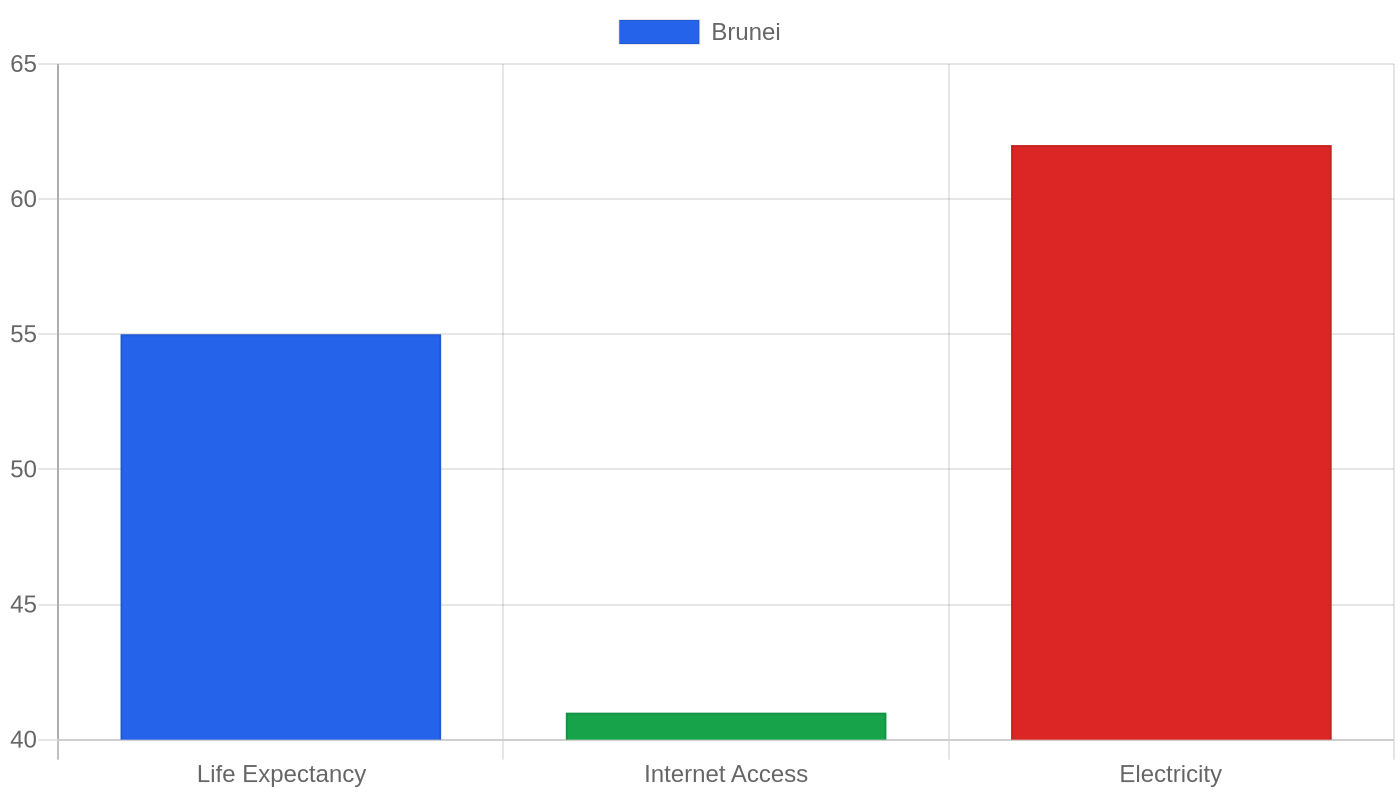
Limited Market Data: Specific macroeconomic indicators such as GDP growth, inflation rates, and unemployment figures are currently unavailable, suggesting a closed or non-transparent data reporting environment typical of small, resource-rich monarchies.
The Energy Backbone and Industrial Structure
Brunei’s economic engine is undeniably fueled by its abundant hydrocarbon resources, creating an industrial profile that is both specialized and dominant. According to the provided industry data, the nation’s manufacturing and processing sectors are tightly linked to upstream energy activities.
Companies like Brunei LNG and Brunei Energy Services and Trading form the critical infrastructure for exporting liquefied natural gas, while downstream interests are represented by Brunei Methanol Company and Brunei Fertilizer Industries. This vertical integration allows the state to capture value across the entire supply chain, from extraction to final chemical products.
However, the absence of specific World Bank data on GDP growth or per capita income makes it difficult to quantify the precise volatility or resilience of this model in real-time. Without concrete figures on unemployment or inflation, the narrative relies on the structural presence of these key players rather than their current performance metrics. The dominance of Brunei Shell Petroleum further underscores the historical and ongoing reliance on foreign expertise and joint ventures to maintain production levels.
Consequently, the economy appears stable but opaque, with health metrics hidden behind the sheer weight of energy exports.
Cost of Living and Daily Expenses
For residents and expatriates alike, understanding the cost of living in Brunei requires looking at the available consumer services data, even though specific price indices are missing. The presence of Hua Ho Department Store indicates a developed retail sector capable of supporting domestic consumption needs. In economies where housing markets are often tied to government policy or state-owned enterprises, rent versus buy dynamics can differ significantly from Western norms.
While we lack exact CPI numbers, the existence of established financial institutions suggests a regulated banking environment that influences credit availability for home purchases. Daily expenses are likely stabilized by the country’s resource wealth, potentially keeping basic goods affordable despite potential import dependencies.
The safety and crime indices being unlisted does not imply danger; rather, it reflects a statistical gap common in smaller jurisdictions that do not publish granular public safety data regularly. Therefore, the cost of living should be viewed through the lens of a high-income, low-tax jurisdiction where social stability is prioritized over market-driven price discovery.
Investment Landscape and Corporate Giants
The business environment in Brunei is characterized by a mix of sovereign wealth management and private financial services. At the forefront is the Brunei Investment Agency, a sovereign wealth fund that manages the country’s external assets, signaling strong state involvement in long-term capital allocation. For local investors, the financial sector offers choices between conventional and Islamic banking, evidenced by the dual presence of Baiduri Bank and Bank Islam Brunei Darussalam.
The Brunei Darussalam Central Bank oversees monetary policy, ensuring liquidity within this niche market. Beyond finance, the industrial base provides opportunities in petrochemicals and fertilizers, with Brunei Fertilizer Industries playing a notable role in the agri-input sector. These top companies represent the pillars of the national economy, offering a glimpse into a market that is sophisticated yet insular.
Investors must navigate a landscape where corporate governance is deeply intertwined with royal prerogative and national tradition. The lack of recent election data implies that regulatory shifts are likely gradual and driven by top-down decree rather than populist pressure.
Political Stability and Social Order
Brunei’s political landscape is defined by the doctrine of Melayu Islam Beraja (MIB), which fuses Malay culture, Islamic faith, and monarchical rule into a single governing philosophy. This tripartite framework ensures that all legal and social policies align with traditional values and religious principles. The legal system retains elements of English common law, providing a familiar foundation for international contracts, although Islamic law (sharia) supersedes civil matters in specific cases.
Notably, there are no elections; instead, the parliament consists of members appointed directly by the Sultan. This structure eliminates the unpredictability associated with partisan politics but also removes mechanisms for democratic accountability. The Crime Index and Safety Index are listed as N/A, which in the context of Brunei typically correlates with one of the lowest crime rates globally, though official statistics are not publicly disseminated in standard formats.
Happiness data is similarly absent, leaving quality of life assessments to anecdotal evidence and general reports of social cohesion. Ultimately, the political system offers high predictability for businesses willing to operate within cultural and religious boundaries.
Current Affairs and Policy Direction
Recent developments in Brunei highlight a continued adherence to established traditions without significant public electoral changes. The last recorded election remains a historical reference point, reinforcing the static nature of the political calendar. With no new legislative bodies formed through voting, policy shifts are likely incremental and focused on economic diversification efforts outside the energy sector.
The operational status of companies like Brunei Energy Services and Trading suggests that the core revenue streams remain active and managed. There are no immediate indicators of unrest or rapid reform, as the MIB framework continues to serve as the primary stabilizing force. Business leaders watching Brunei should anticipate steady, state-guided development rather than disruptive market liberalization.
The silence on specific inflation or GDP figures may indicate a preference for maintaining economic privacy or a lack of transparent reporting mechanisms. As such, the “current affairs” narrative is one of continuity, where the monarchy maintains control over both political and economic levers.
The Bottom Line
Brunei presents a unique case study for investors seeking exposure to Asian energy markets with minimal political volatility. The country is best suited for stakeholders comfortable with a state-centric economic model and opaque data environments. Those who prioritize transparency and democratic accountability may find the appointment-based system and lack of published indices frustrating.
However, for those valuing stability and established financial institutions, Brunei offers a secure, albeit narrow, investment horizon. Watch this country for any signs of aggressive diversification away from oil and gas, as that would be the primary catalyst for change.
Sources & Methodology
This article is authored by Economic Pulse Net for informational and research purposes. Economic Pulse Net sources its data from multilateral institutions, national statistics bureaus, and proprietary databases. All data is believed to be current as of the date of publication.
Published: October 18, 2026 | Category: Research — Brunei
Use these signals in your own platform
Economic Pulse publishes its live signal feed through a documented, read-only API. Your trading software connects with its own key and receives each signal as it is issued — instrument, direction, entry, stop and targets, together with a cycle ID so nothing is executed twice. The feed is independent of this website and cannot change it.
Signals are informational only and are not financial advice.