Economic Pulse Net | Sources: World Bank World Development Indicators, Government Sources | 2026
Key Takeaways
* Bhutan operates under a unique constitutional monarchy that transitioned to a parliamentary democracy in 2008, with King Jigme Khesar Namgyel Wangchuck reigning alongside Prime Minister Tshering Tobgay.
Recent political classifications by V-Dem identify Bhutan as an electoral democracy in 2024, marking a significant evolution from its monarchical roots since 1907.
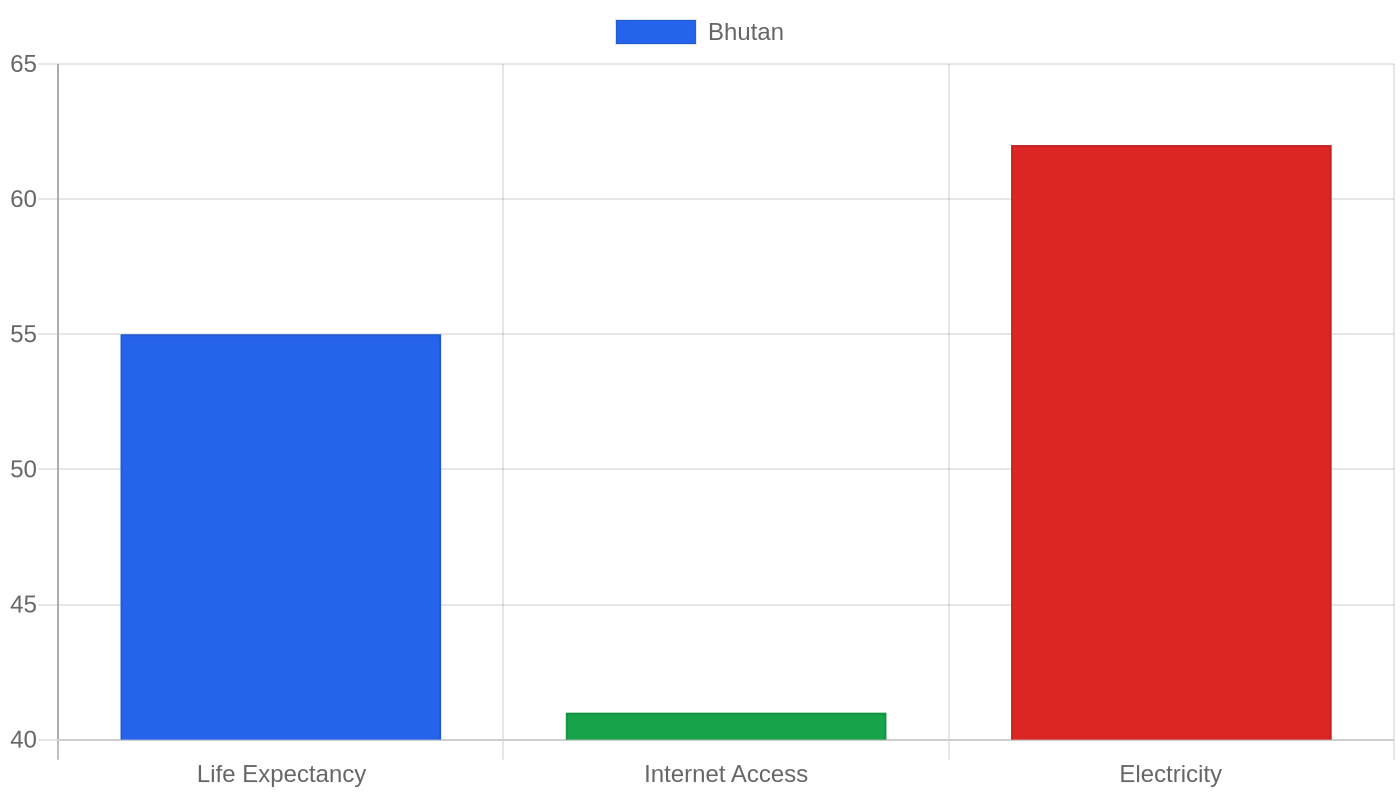
Specific macroeconomic indicators such as GDP growth, inflation rates, and unemployment figures are currently unavailable, presenting a challenge for traditional economic forecasting.
The corporate landscape is dominated by consumer services and media entities, including major players like Druk Air and Bhutan Broadcasting Service, rather than heavy industry or manufacturing giants.
Without concrete data on crime indices or cost-of-living metrics, the nation’s appeal relies heavily on its political stability and distinct social contract rather than quantifiable financial metrics.
A Political Evolution in the Himalayas
Bhutan’s economic narrative cannot be separated from its profound political transformation. The country is currently governed as a constitutional monarchy with a parliamentary form of government, a structure that has stabilized significantly since its democratic transition in 2008. This shift is widely regarded not as a rupture, but as an evolution of the social contract established between the people and the monarchy since 1907.
The current political leadership features King Jigme Khesar Namgyel Wangchuck as the reigning monarch and Tshering Tobgay, leader of the People’s Democratic Party, as the Prime Minister. This dual structure provides a layer of continuity and legitimacy that is rare in emerging markets. According to the V-Dem Democracy Indices in the Regimes of the World classification, Bhutan was officially classified as an electoral democracy for the year 2024.
This designation underscores the maturity of its political institutions and suggests a predictable governance environment, even if specific economic outputs remain opaque to international observers. The stability provided by this political framework serves as the foundational bedrock upon which any future economic activity must rest.
The Data Gap: Navigating Invisible Metrics
When analyzing Bhutan’s economy through the lens of standard global benchmarks, one encounters a significant void. The latest data from the World Bank lists Gross Domestic Product (GDP) growth, Inflation CPI, Unemployment rates, total GDP in USD, GDP per capita in PPP, GNI per capita, and even the total population as “N/A.” For an economic journalist, this absence of data is striking and complicates the assessment of the nation’s health.
Typically, these metrics allow investors to gauge velocity, purchasing power, and labor market dynamics; without them, the economy appears static rather than dynamic. However, the lack of reported figures does not necessarily indicate stagnation, but rather a potential limitation in data reporting infrastructure or a deliberate choice to prioritize non-monetary well-being indicators over raw output. In the absence of hard numbers, the focus shifts entirely to the structural elements of the economy.
The reliance on traditional industries and the unique cultural approach to development mean that standard Western economic models may not fully capture the reality of daily life in the Himalayas. Analysts must therefore look beyond the spreadsheet to understand the actual flow of goods and services within the kingdom.
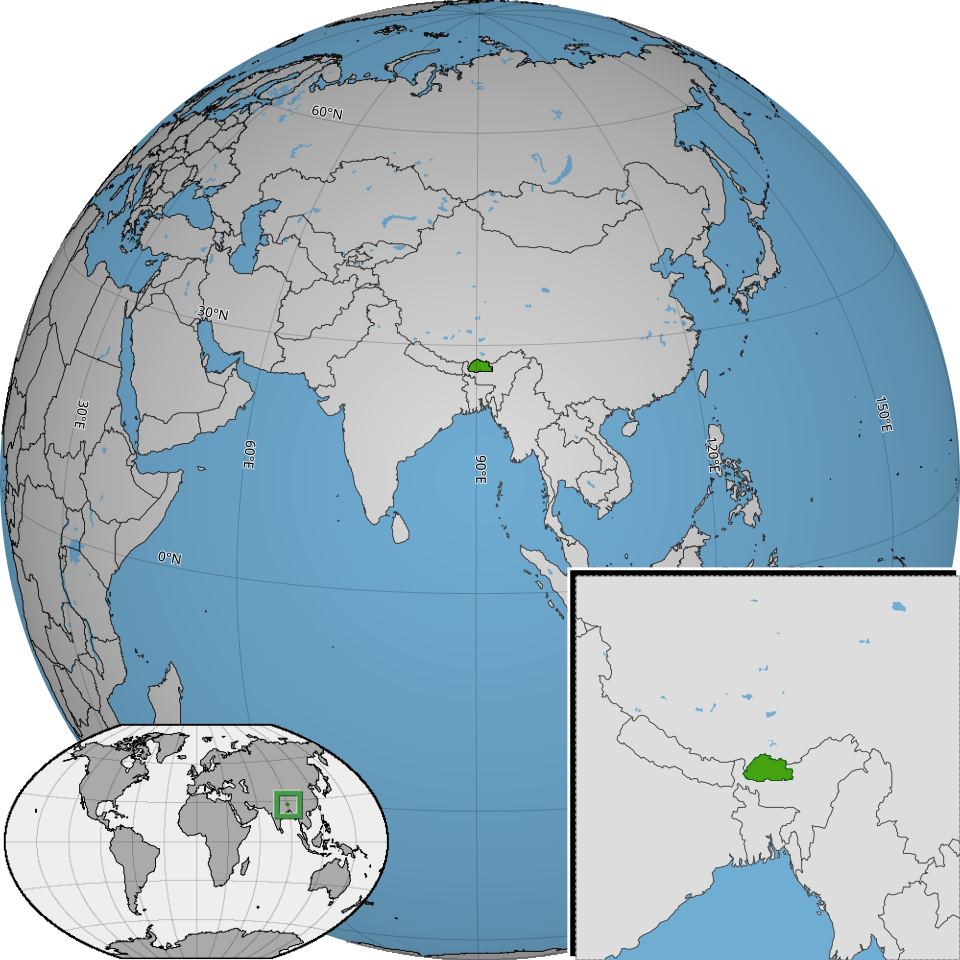
Corporate Landscape: Media and Services Dominate
In the absence of detailed industrial breakdowns, the available company data reveals a business environment heavily skewed toward consumer services and media. The top companies listed include Bhutan Airlines, Bhutan Broadcasting Service, Bhutan Postal Corporation, and several news outlets such as the Bhutan Observer, Bhutan Times, Business Bhutan, Kuensel, and Druk Yoedzer.
Notably, Druk Air stands out as a key player in the consumer services sector, likely serving as both a domestic transport link and a gateway for tourism. The prominence of media organizations like Bhutan Broadcasting Service and multiple newspapers suggests a vibrant information ecosystem that supports public discourse in this young democracy.
Unlike many developing nations where state-owned enterprises in energy or mining dominate the top tier, Bhutan’s visible corporate leaders are focused on communication, logistics, and information dissemination. This indicates that the service sector, particularly those supporting civil society and connectivity, plays a central role in the national economy.
Investors looking at the “Top Companies” list would find opportunities in digital media, aviation, and postal services, rather than heavy manufacturing or resource extraction.
Quality of Life and Safety Indicators
Assessing the safety and livability of Bhutan presents similar challenges regarding quantitative data. The Crime Index and Safety Index are both listed as “N/A,” leaving no statistical baseline for evaluating personal security risks. While the absence of crime statistics might seem alarming, it often reflects either a lack of centralized reporting mechanisms or a societal norm where crime rates are sufficiently low to not require granular tracking.
Coupled with the strong political stability noted earlier, this suggests a society that values cohesion and order. The political landscape, characterized by a peaceful transition of power and recognized electoral democracy, inherently contributes to a sense of safety and predictability. Without specific housing costs or rent comparisons to regional averages, it is difficult to quantify the cost of living precisely.
However, the general consensus surrounding Bhutan’s model of “Gross National Happiness” implies that quality of life metrics are prioritized over pure economic efficiency. Residents and visitors alike operate in an environment where social harmony and political calm are likely more valuable assets than measurable financial wealth.
Current Affairs and Governance Focus
The freshest developments in Bhutan revolve around its political identity and institutional maturity. As of 2024, the recognition of Bhutan as an electoral democracy by the V-Dem Democracy Indices highlights the successful consolidation of its post-2008 reforms. Prime Minister Tshering Tobgay continues to lead the People’s Democratic Party, navigating the complexities of governing a small, landlocked nation.
The ongoing evolution of the social contract since 1907 remains a central theme in national discourse, ensuring that the monarchy and parliament work in tandem. With no recent news items provided regarding specific policy shifts, inflation trends, or new business deals, the current affairs landscape is defined by continuity rather than upheaval. The focus remains on maintaining the integrity of democratic processes and managing the relationship between traditional values and modern governance.
This steady political climate provides a safe harbor for long-term thinking, even if short-term economic headlines are scarce. The nation is currently engaged in the quiet work of sustaining its unique political experiment.
The Bottom Line
Bhutan represents a unique case study in political stability and cultural distinctiveness, offering a stable environment despite the lack of transparent economic data. It is best watched by those interested in the intersection of tradition and modern democracy, rather than by investors seeking high-growth financial metrics. The dominance of consumer services and media in the corporate sector suggests a mature internal market focused on communication and connectivity.
For now, the country’s value lies in its predictable governance and social cohesion, making it a niche interest for specialized geopolitical analysis.
Sources & Methodology
This article is authored by Economic Pulse Net for informational and research purposes. Economic Pulse Net sources its data from multilateral institutions, national statistics bureaus, and proprietary databases. All data is believed to be current as of the date of publication.
Published: October 15, 2026 | Category: Research — Bhutan
Use these signals in your own platform
Economic Pulse publishes its live signal feed through a documented, read-only API. Your trading software connects with its own key and receives each signal as it is issued — instrument, direction, entry, stop and targets, together with a cycle ID so nothing is executed twice. The feed is independent of this website and cannot change it.
Signals are informational only and are not financial advice.