Economic Pulse Net | Sources: World Bank World Development Indicators, Government Sources | 2026
Key Takeaways
* Political Duopoly Defines Governance: The political landscape remains firmly anchored by the historical rivalry between the Awami League (AL) and the Bangladesh Nationalist Party (BNP), operating within a Westminster-style parliamentary democracy that emphasizes checks and balances.
Robust Labor Market Performance: With an unemployment rate recorded at 3.778%, the country demonstrates a relatively tight labor market, suggesting strong demand for workers despite broader macroeconomic data gaps.
Diversified Corporate Landscape: Major economic activity is driven by a mix of conglomerates like A K Khan & Company and Akij, alongside specialized firms in consumer goods such as Aarong and Adamjee Jute Mills.
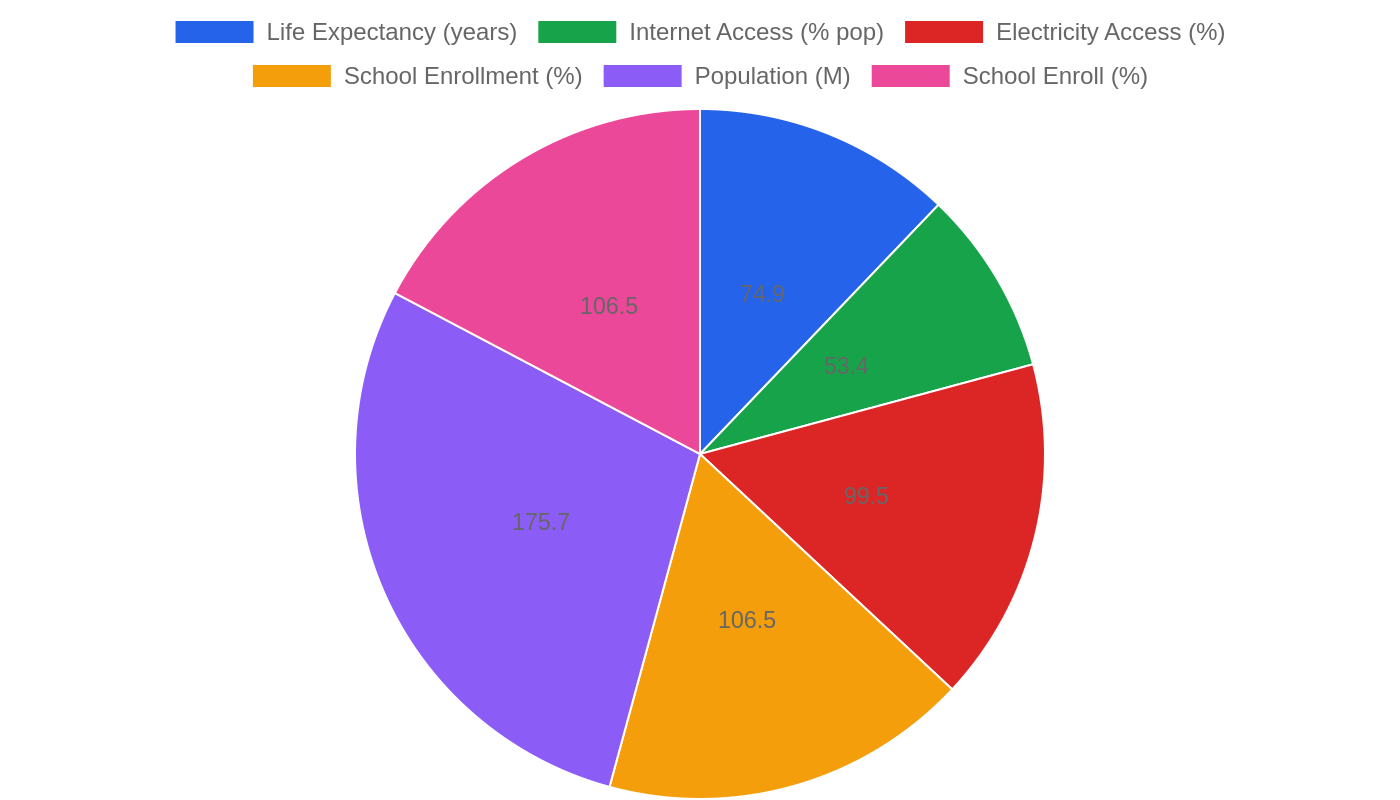
Data Transparency Challenges: While specific GDP growth and inflation figures are currently unavailable, per capita metrics indicate a developing economy with a GNI per capita of $2,840 and a significant population base exceeding 175 million.
Institutional Framework: The government structure is built on three distinct pillars—executive, legislative, and judiciary—designed to ensure accountability and transparency in a unitary state.
Economic Foundations and Labor Dynamics
Bangladesh presents a complex economic picture where granular growth metrics are obscured, yet underlying structural indicators reveal a nation in transition. According to World Bank data, the Gross National Income (GNI) per capita stands at $2,840, while the GDP per capita measured in Purchasing Power Parity (PPP) is significantly higher at approximately $10,153.
This disparity highlights the purchasing power advantages for residents relative to international standards, even as the nominal income levels reflect the challenges of a developing economy. The most striking figure in the current dataset is the unemployment rate, which sits at a low 3.778%. This suggests that the labor market is absorbing a substantial portion of the workforce, likely driven by the industrial and service sectors rather than agricultural stagnation.
However, without specific GDP growth percentages or current inflation CPI readings, it is difficult to assess the velocity of this growth or the cost pressures facing households. The population of roughly 175.7 million provides a massive domestic market and labor pool, but it also places immense pressure on infrastructure and public services. Understanding Bangladesh requires looking beyond missing headline numbers to the resilience of its industrial base and the efficiency of its employment mechanisms.
Cost of Living and Daily Expenses
For expatriates and local residents alike, understanding the cost of living in Bangladesh involves navigating a landscape where housing and daily expenses vary wildly depending on location and lifestyle choices. While precise cost indices are not provided in the current dataset, the moderate GNI per capita of $2,840 implies that local wages must be carefully managed against urban costs, particularly in major commercial hubs.
Housing costs, whether renting or buying, are likely to consume a significant portion of household income in cities, given the high population density and limited urban space. Daily expenses for food, transportation, and utilities are generally lower than in Western economies, but they are rising in tandem with global commodity prices and local demand.
For those earning in foreign currencies or working for multinational entities, the cost differential can offer a high quality of life, whereas locals must balance these rising costs against stagnant nominal incomes. The absence of specific inflation data makes it challenging to predict short-term trends, but the general economic environment suggests that budgeting flexibility is key to maintaining financial stability in this densely populated region.
Investment Climate and Corporate Players
The business environment in Bangladesh is characterized by a vibrant mix of large-scale conglomerates and specialized industry leaders who dominate various sectors. Companies such as A K Khan & Company and Abul Khair Group operate as vast conglomerates, diversifying their holdings across multiple industries to mitigate risk and capture market share.
In the consumer goods sector, brands like Aarong and Adamjee Jute Mills have established strong reputations, leveraging local resources and cultural heritage to build brand loyalty. The presence of Advanced Chemical Industries (ACI) underscores the importance of chemical manufacturing and agribusiness support systems in the national economy.
Meanwhile, the financial and telecommunications sectors are bolstered by institutions like Agrani Bank and Airtel Bangladesh, which provide essential infrastructure for modern commerce. These top companies, including Akij and Alim Industries Limited, serve as anchors for foreign direct investment, offering stable partnerships for international entities looking to enter the South Asian market.
The diversity of these corporate players indicates a mature, albeit evolving, industrial ecosystem that rewards strategic localization and long-term relationship building.
Political Stability and Safety Considerations
Navigating Bangladesh requires an acute awareness of its unique political architecture and social safety metrics. By constitution, the nation is a unitary state and a secular representative democracy featuring a Westminster-style parliamentary system with universal suffrage. The political arena has been historically dominated by two major parties: the Awami League (AL) and the Bangladesh Nationalist Party (BNP).
Their enduring influence shapes policy continuity and opposition dynamics, creating a predictable yet competitive political environment. The government’s three-pillar structure—comprising the executive, legislative, and judiciary—is designed to enforce accountability and maintain checks and balances, which is crucial for legal certainty in business operations.
Regarding personal security, current indices for crime and safety are not available in the provided data, leaving a gap in quantifiable risk assessment. However, the institutional framework suggests a formalized approach to law enforcement and judicial recourse. Investors and travelers should remain vigilant regarding political developments, as shifts in power between the AL and BNP can rapidly alter regulatory landscapes and public order protocols.
Current Affairs and Policy Direction
The immediate future of Bangladesh is being shaped by the interplay of its robust demographic base and its structured democratic institutions. With a population nearing 176 million, the country faces urgent needs in infrastructure development, digital transformation, and job creation to sustain its low unemployment rate of 3.778%. The dominance of the Awami League and BNP ensures that political discourse will remain intense, influencing everything from trade policies to labor regulations.
As the economy operates with a GNI per capita of $2,840, there is significant pressure on the government to implement reforms that boost productivity and reduce poverty. The lack of recent GDP growth and inflation data in the public domain may indicate a period of statistical adjustment or reporting delays, which could affect investor confidence in the short term. Nevertheless, the strength of major conglomerates and consumer brands suggests that private sector momentum continues to drive economic activity.
Policymakers are likely focused on enhancing the efficiency of the judiciary and legislative bodies to improve the ease of doing business and attract higher-quality foreign investment.
The Bottom Line
Bangladesh represents a critical frontier for investors seeking exposure to high-growth potential markets with a young, engaged workforce. While the absence of detailed GDP and inflation data introduces uncertainty, the solid foundation of its corporate giants and low unemployment rate offers a buffer against volatility. Stakeholders should monitor the political dynamics between the AL and BNP closely, as these shifts will directly impact regulatory environments and policy consistency.
Ultimately, this is a country where long-term strategic patience and deep local knowledge are rewarded more than quick speculative gains.
Sources & Methodology
This article is authored by Economic Pulse Net for informational and research purposes. Economic Pulse Net sources its data from multilateral institutions, national statistics bureaus, and proprietary databases. All data is believed to be current as of the date of publication.
Published: October 07, 2026 | Category: Research — Bangladesh
Use these signals in your own platform
Economic Pulse publishes its live signal feed through a documented, read-only API. Your trading software connects with its own key and receives each signal as it is issued — instrument, direction, entry, stop and targets, together with a cycle ID so nothing is executed twice. The feed is independent of this website and cannot change it.
Signals are informational only and are not financial advice.