Economic Pulse Net | Sources: World Bank World Development Indicators, Government Sources | 2026
Key Takeaways
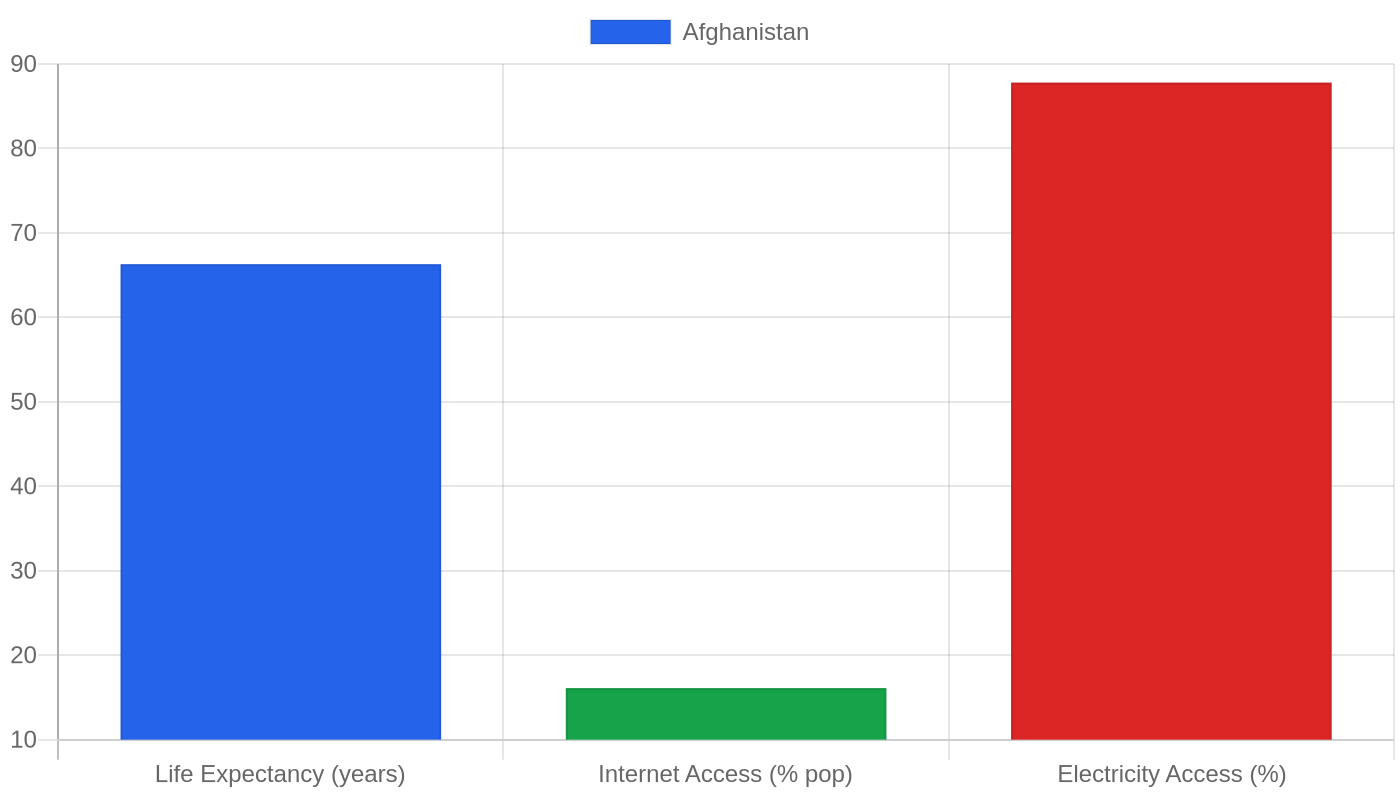
– Afghanistan’s economy operates in a data vacuum, with the World Bank unable to provide GDP, inflation, or employment figures — a stark indicator of institutional collapse.
– The Taliban’s Islamic Emirate remains internationally unrecognized, with only Russia acknowledging it as the legitimate government as of July 2025.
– The country’s corporate landscape is dominated by state-linked entities in telecommunications, aviation, and banking, suggesting a state-centric economic model.
– Afghanistan ranks among the world’s most closed authoritarian systems, placing 176th and 177th out of 179 countries in democracy indices.
– Foreign investment and economic recovery remain contingent on political recognition and stability, neither of which appears imminent.
The Vanishing Baseline — What We Don’t Know Tells Us Everything
When the World Bank publishes a country profile, the absence of data is itself a headline. For Afghanistan, the latest figures for GDP growth, inflation, unemployment, and per-capita income are simply marked as not available. This is not a statistical oversight — it is a symptom of a state apparatus that effectively ceased functioning in its previous form during the 2021 Taliban offensive.
The collapse of the Islamic Republic was not merely a political event; it was an economic rupture. Institutions that once collected data, regulated markets, and enforced contracts have been replaced by a caretaker administration that the international community has largely refused to recognize. Only the Russian Federation has acknowledged the Islamic Emirate as the de jure government, which means Afghanistan remains outside the formal structures of global finance, development aid, and trade agreements.
What can be inferred is that the formal economy has contracted severely. With no reliable GDP figure, economists are left to piece together anecdotal evidence from border trade, remittance flows, and humanitarian reports. The lack of inflation data is equally telling — it suggests that price monitoring systems, typically run by central banks and statistics bureaus, are not operating at functional capacity.
For a country of Afghanistan’s strategic location and agricultural potential, this data void represents an inability to plan, tax, or attract investment.
The main industries that once anchored the economy — agriculture, carpet weaving, and mining — have no official output numbers. The World Bank’s silence on these sectors speaks to the difficulty of conducting surveys and field research under the current administration. For analysts and investors, this means making decisions without a compass, relying on regional trends and humanitarian assessments rather than hard economic indicators.
The Price of Everything — Cost of Living in an Unrecognized State
Without official CPI data from the World Bank, the cost of living in Afghanistan must be understood through the lens of scarcity and humanitarian need. The economic shock of 2021 led to a freezing of international assets and a halt to development funding, which in turn created severe liquidity shortages across the country. Prices for basic goods — wheat, cooking oil, fuel — have been subject to volatile swings, driven less by market fundamentals and more by border closures and the availability of foreign currency.
The banking sector, represented by institutions like Afghanistan International Bank and Azizi Bank, operates under extraordinary constraints. Without correspondent banking relationships and international clearing systems, ordinary transactions become difficult. This pushes many households toward informal economies and barter arrangements, particularly in rural areas.
Housing costs, where they can be measured, reflect a market in which the middle class has shrunk dramatically — many professionals have left the country, reducing demand for urban housing while simultaneously flooding the rental market with vacancies.
Regional comparisons are difficult to draw without hard numbers, but the anecdotal evidence from humanitarian organizations suggests that Afghanistan remains one of the most difficult places in the region to afford basic necessities. The absence of reliable data means that international agencies must rely on rapid assessments and spot checks, which often reveal significant price disparities between provinces.
Business in a Bottleneck — Investment Climate Under the Emirate
The top companies operating in Afghanistan today read as a list of state-affiliated or state-adjacent entities. Afghan Telecom and Afghan Wireless dominate the telecommunications sector, while Ariana Afghan Airlines and Bakhtar Afghan Airlines represent the aviation industry. The financial sector is anchored by Azizi Bank and Afghanistan International Bank. Notably absent are the international mining and construction firms that once explored Afghanistan’s mineral wealth.
This corporate landscape suggests an economy where the state remains the primary economic actor, even as its capacity to govern is questioned internationally. For private investors, the risks are immense: no clear regulatory framework, uncertain contract enforcement, and the constant possibility that international sanctions or recognition decisions will shift the ground beneath any business venture.
The companies that do operate there are largely serving domestic needs — communications, basic banking, and air travel — rather than building export-oriented industries.
Sectors with potential — particularly mining, given Afghanistan’s known deposits of copper, lithium, and rare earth minerals — remain undeveloped. The World Bank’s lack of data on industrial output indicates that these resources are not being extracted at meaningful scale. The business environment is characterized by high barriers to entry, not because of regulation but because of the fundamental uncertainty about the country’s political future.
Security, Sovereignty, and the Cost of Isolation
Afghanistan’s safety indices are marked as not available, which is itself a commentary on the difficulty of conducting such assessments. The V-Dem Democracy Indices place Afghanistan among the lowest-ranked countries globally, describing it as a “closed autocracy” and positioning it at 176th and 177th out of 179 countries. This ranking reflects not just the absence of democratic processes but the consolidation of power within a single authority with limited checks and balances.
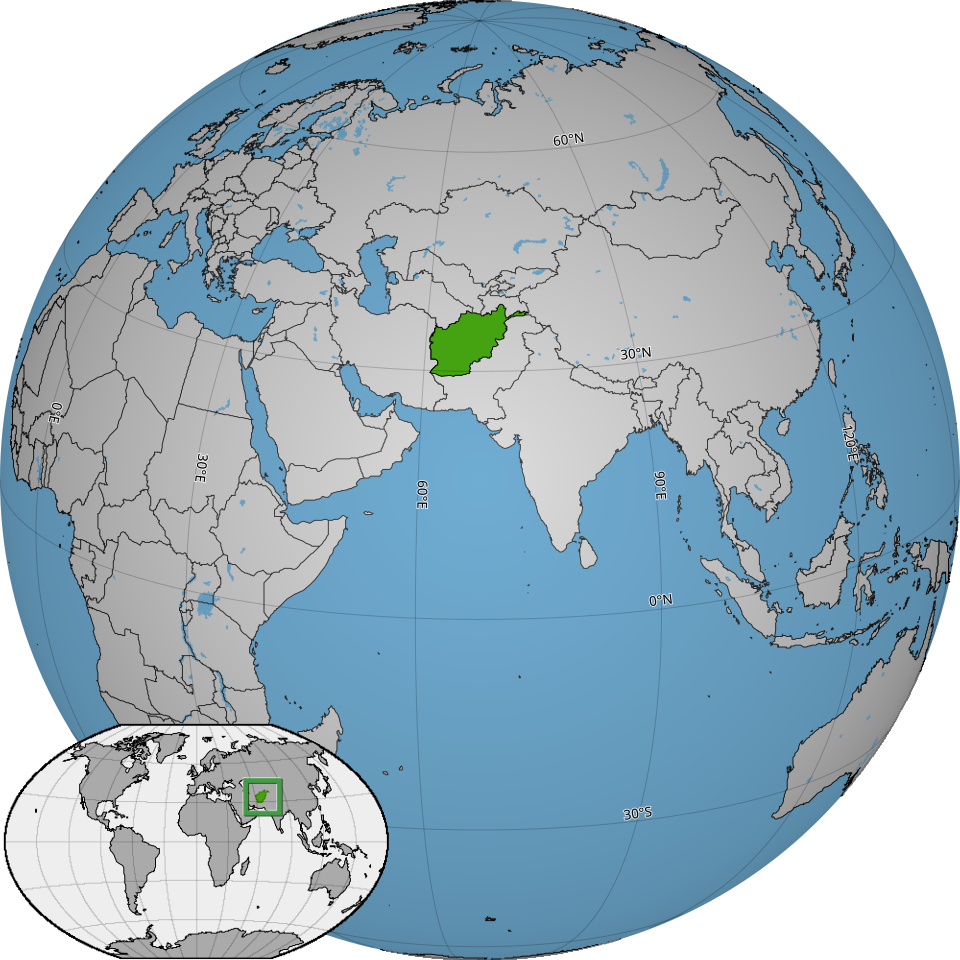
The political landscape is defined by the Taliban’s declaration of an Islamic Emirate and the announcement of a caretaker government on September 7, following the collapse of the Islamic Republic. International recognition remains the central issue — with only Russia recognizing the de jure status of the new government, Afghanistan is effectively excluded from the international legal and financial systems.
This isolation has profound implications for quality of life, as access to international development funds, technical assistance, and even humanitarian aid becomes politically contested.
For ordinary Afghans, the quality of life is shaped by this political limbo. The absence of recognized governance structures means that public services — healthcare, education, infrastructure maintenance — are delivered inconsistently, if at all. The safety situation is a complex mix: while the active conflict between the Taliban and the previous government has ended, the broader security environment remains volatile, with concerns about extremism, internal factionalism, and the potential for renewed instability.
The View From Now — Afghanistan’s Current Moment
As of mid-2025, Afghanistan remains in a holding pattern that shows no clear signs of resolution. The caretaker government continues to administer the country without broad international acceptance, and the economic data vacuum persists. The World Bank’s inability to publish figures for Afghanistan is not a bureaucratic delay — it reflects the reality that the institutions which once produced these statistics are no longer operational in their previous form.
The most significant recent development is the continued diplomatic isolation, with only Russia extending formal recognition. This has practical consequences: Afghanistan cannot access international capital markets, cannot negotiate bilateral trade agreements through normal channels, and cannot participate in the global financial system in a meaningful way. The banking sector, including major institutions like Azizi Bank, must find workarounds for basic operations that other countries take for granted.
There are no meaningful reform initiatives visible from the current administration, at least none that have attracted international attention or support. The business community, both domestic and international, is waiting for clarity on issues ranging from women’s participation in the workforce to the legal framework for foreign investment.
Until those questions are answered, the economy is likely to remain in its current state — functioning at a subsistence level, with the formal sector serving primarily domestic needs.
The Bottom Line
Afghanistan is a country that investors, policymakers, and development agencies should watch closely, but with clear eyes. The absence of World Bank data is a red flag, not an invitation to speculate. For those considering engagement — whether humanitarian, diplomatic, or commercial — the key takeaway is that Afghanistan’s economic future is entirely contingent on its political resolution.
The country has resources, a strategic location, and a resilient population, but these assets are currently locked behind a wall of international non-recognition and institutional collapse. Watch for changes in diplomatic recognition, particularly any movement beyond Russia’s lone endorsement, as the first real signal that the economic landscape is shifting.
Until then, Afghanistan remains a country where the most important economic indicator is not GDP or inflation, but the status of its government in the eyes of the world.
Sources & Methodology
This article is authored by Economic Pulse Net for informational and research purposes. Economic Pulse Net sources its data from multilateral institutions, national statistics bureaus, and proprietary databases. All data is believed to be current as of the date of publication.
Published: August 02, 2026 | Category: Research — Afghanistan
Use these signals in your own platform
Economic Pulse publishes its live signal feed through a documented, read-only API. Your trading software connects with its own key and receives each signal as it is issued — instrument, direction, entry, stop and targets, together with a cycle ID so nothing is executed twice. The feed is independent of this website and cannot change it.
Signals are informational only and are not financial advice.