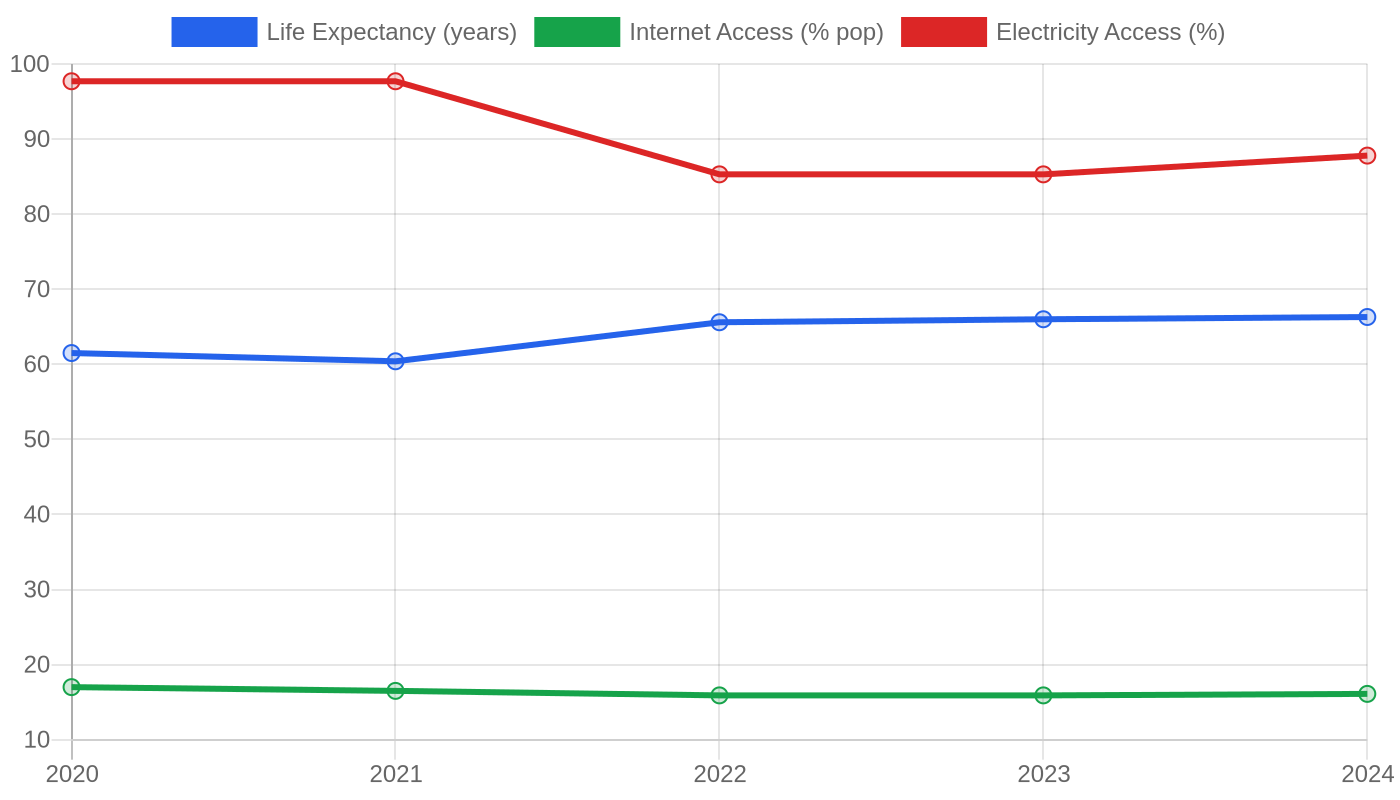
Economic Pulse Net | Sources: World Bank World Development Indicators, Government Sources | 2026
Key Takeaways
* Data Vacuum: Comprehensive economic metrics such as GDP, inflation, and unemployment are currently listed as N/A by the World Bank, creating a significant blind spot for international investors and analysts.
Political Isolation: As of July 2025, Afghanistan remains diplomatically isolated, with only the Russian Federation recognizing the Islamic Emirate as the *de jure* government, while global indices classify it as a “closed autocracy.”
Corporate Landscape: The private sector is dominated by local entities in telecommunications, banking, and consumer services, including major players like Afghan Telecom, Azizi Bank, and Ariana Afghan Airlines.
Security Blind Spots: Official crime and safety indices are unavailable, leaving the human cost of instability unquantified in standard economic reporting frameworks.
The Vanishing Metrics
The most striking feature of Afghanistan’s current economic profile is not what is growing, but what cannot be measured. According to the latest data from the World Bank, critical indicators including GDP growth, inflation rates (CPI), unemployment figures, and total GDP in USD are all recorded as N/A. This absence of hard data suggests a statistical infrastructure that has either collapsed or ceased functioning under the current administration.
Without baseline figures for GDP per capita (PPP) or GNI per capita, traditional models of economic health cannot be applied. Consequently, any assessment of the country’s financial trajectory must rely on qualitative observations rather than quantitative analysis. The lack of population data further complicates efforts to calculate per-capita productivity or labor force participation.
For global economists, this represents a rare scenario where a sovereign nation’s entire macroeconomic output is effectively invisible to international tracking systems.
A Sector Defined by Local Service
In the absence of broad industrial diversity, the operational economy appears concentrated within essential service sectors managed by domestic firms. The list of top companies reveals a landscape heavily skewed toward telecommunications, financial services, and consumer utilities. Entities such as Afghan Telecom and Afghan Wireless dominate the communications space, acting as critical lifelines for connectivity in a fractured state.
Similarly, the financial sector is anchored by institutions like Afghanistan International Bank and Azizi Bank, which likely serve as the primary conduits for remaining capital flows. Consumer services remain vital, represented by carriers like Ariana Afghan Airlines and Bakhtar Afghan Airlines, as well as media outlets such as Ariana TV and Bakhtar News Agency. Industrial presence is minimal, with AZ Corporation standing out as a notable exception in that specific category.
These companies operate within a constrained environment, focusing on maintaining basic societal functions rather than driving export-led growth. Their performance serves as a proxy for the resilience of the informal and semi-formal economies that sustain daily life.
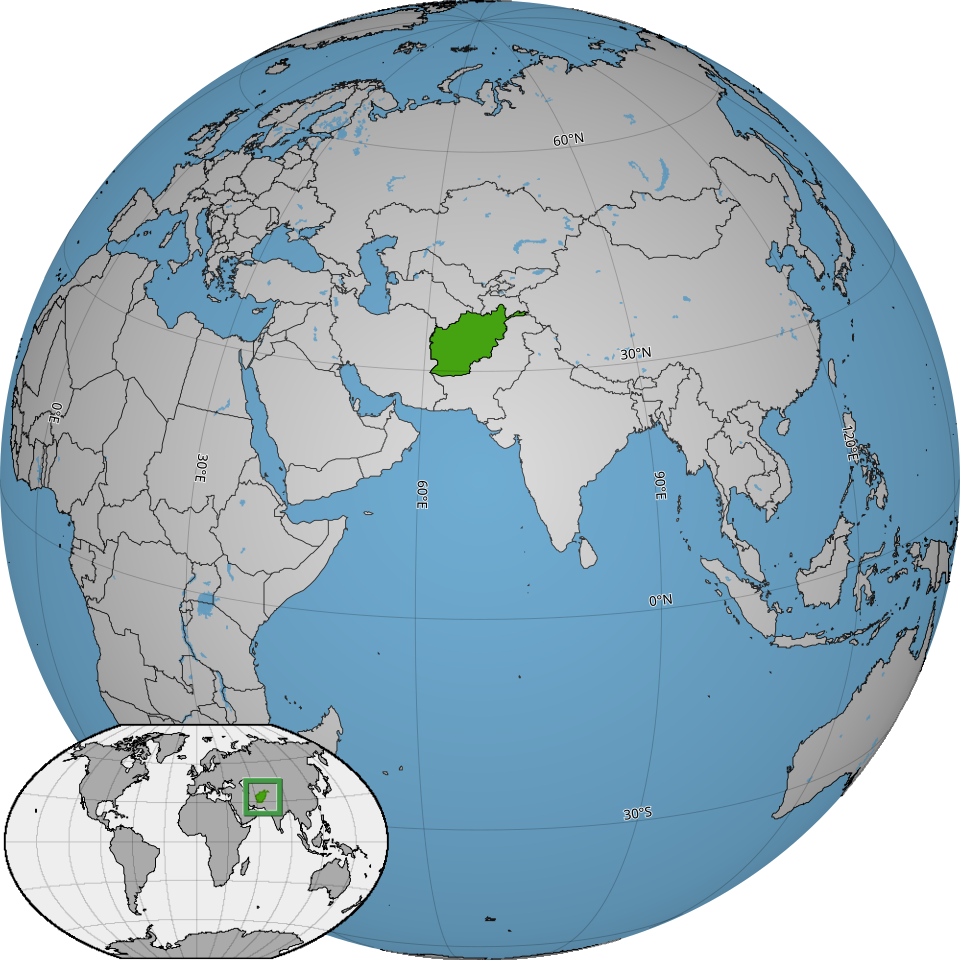
The Unquantified Cost of Living
Assessing the cost of living in Afghanistan presents a unique journalistic challenge due to the complete lack of official housing, rent, or daily expense data provided in the source material. With no indexed figures for inflation or purchasing power parity, it is impossible to compare current expenses against regional averages or historical baselines.
This data void implies that price levels are likely determined by localized market forces, scarcity, and informal currency exchange rates rather than transparent national indices. Consumers may face extreme volatility in the cost of basic necessities, driven by supply chain disruptions and import restrictions typical of sanctioned or isolated economies. Without a Safety Index or Crime Index to contextualize security risks, the premium paid for secure housing or location cannot be economically quantified.
Therefore, the true burden on the average household remains a matter of anecdotal evidence rather than statistical fact.
Business Climate Amidst Diplomatic Freeze
The investment climate in Afghanistan is defined by profound uncertainty and limited international engagement. While major local corporations such as Azizi Bank and Afghan Wireless continue operations, the broader business environment is stifled by political isolation. As noted in recent updates, the V-Dem Democracy Indices rank Afghanistan among the lowest globally as a “closed autocracy,” placing it at 176th and 177th out of 179 countries.
This classification signals severe restrictions on civil liberties and economic freedoms, deterring foreign direct investment. The sole diplomatic recognition from the Russian Federation offers a narrow channel for potential bilateral trade, but it does not open the floodgates for global capital. Companies like Afghan Film and Bakhtar News Agency operate within a tightly controlled media landscape, reflecting the state’s influence over cultural and informational outputs.
For international businesses, the risk profile is exceptionally high, with little legal recourse or regulatory transparency.
Stability and Human Security
The intersection of politics, safety, and quality of life in Afghanistan is marked by authoritarian consolidation and a lack of measurable security data. The political landscape shifted dramatically following the collapse of the Islamic Republic during the 2021 Taliban offensive, leading to the declaration of the Islamic Emirate. A caretaker government was announced in September, yet its legitimacy remains contested by the vast majority of the international community.
Crime and safety indices are reported as N/A, indicating that systematic monitoring of public order has ceased or is not publicly disclosed. This absence of data makes it difficult to assess the day-to-day safety of residents or the effectiveness of law enforcement. Happiness and well-being data are similarly absent, leaving the social fabric of the nation unmeasured by global standards.
The combination of autocratic governance and statistical invisibility creates an environment where human security is presumed to be fragile.
Current Affairs: The Year of Recognition?
As we move through mid-2025, the central narrative in Afghanistan revolves around the thinning ice of international isolation. Recent updates highlight that only the Russian Federation has recognized the Islamic Emirate as the *de jure* government, a stance that underscores the country’s diplomatic quarantine. This singular recognition provides a geopolitical foothold but fails to alleviate the broader economic strangulation caused by non-recognition.
The political structure remains fixed under the leadership established after the 2021 offensive, with no indications of democratic transition or inclusive governance reforms. Media organizations like Ariana TV and Bakhtar News Agency continue to operate under strict state oversight, shaping the internal narrative in line with emirate directives. Meanwhile, the telecommunications sector, led by Afghan Telecom and Afghan Wireless, remains one of the few stable pillars of modern infrastructure.
The coming months will likely focus on whether Moscow’s recognition can be leveraged into tangible economic relief or if it remains a symbolic gesture in a vacuum.
The Bottom Line
Afghanistan in 2025 is a case study in economic opacity and political rigidity. Investors and policymakers must navigate a landscape where traditional metrics are useless and diplomatic options are severely limited. The country should be watched primarily for shifts in Russian engagement and any unexpected openings in humanitarian aid channels. Until statistical systems are restored and political inclusivity improves, Afghanistan remains a closed book to the global economic community.
Sources & Methodology
This article is authored by Economic Pulse Net for informational and research purposes. Economic Pulse Net sources its data from multilateral institutions, national statistics bureaus, and proprietary databases. All data is believed to be current as of the date of publication.
Published: October 26, 2026 | Category: Research — Afghanistan
Use these signals in your own platform
Economic Pulse publishes its live signal feed through a documented, read-only API. Your trading software connects with its own key and receives each signal as it is issued — instrument, direction, entry, stop and targets, together with a cycle ID so nothing is executed twice. The feed is independent of this website and cannot change it.
Signals are informational only and are not financial advice.