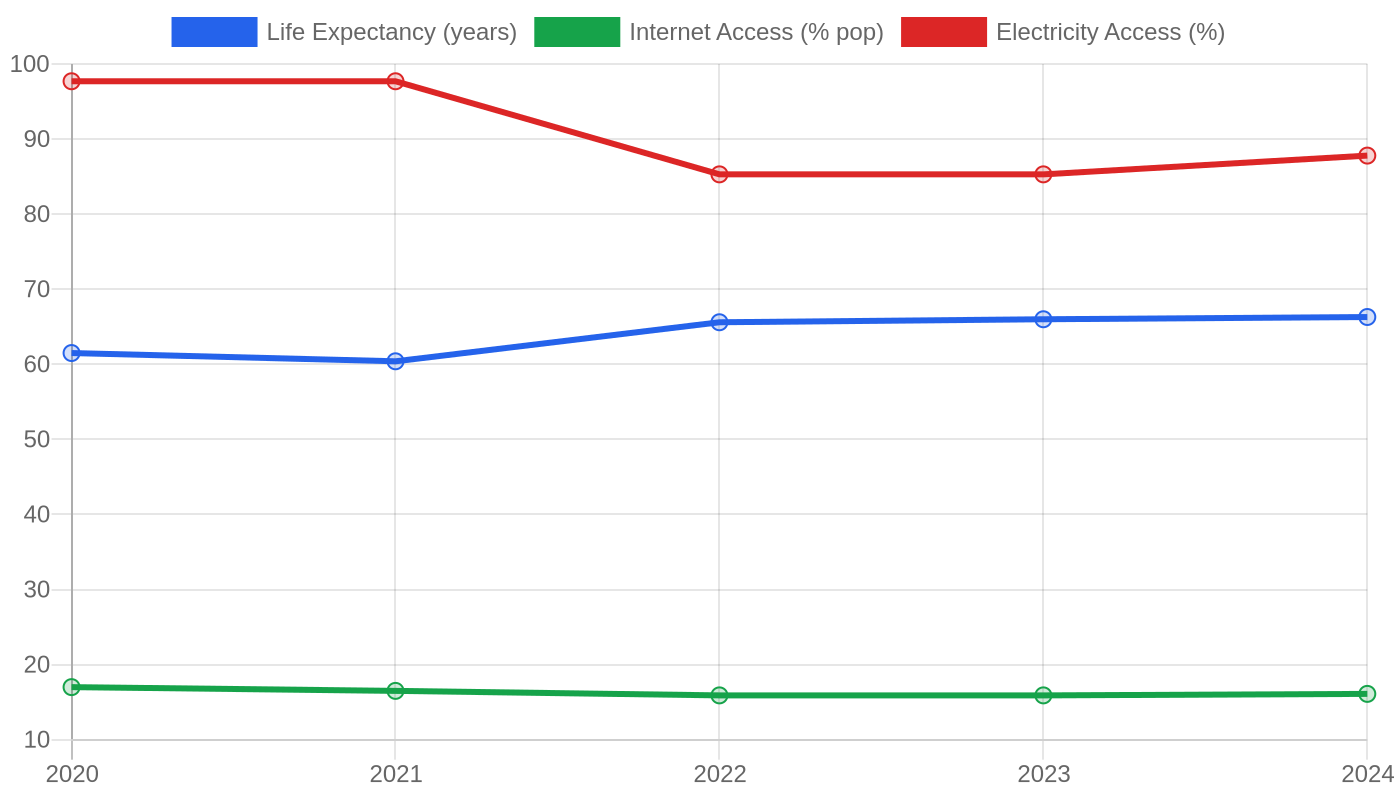
Economic Pulse Net | Sources: World Bank World Development Indicators, Government Sources | 2026
Key Takeaways
- Statistical Blackout: The World Bank reports “N/A” for critical economic indicators including GDP growth, inflation, unemployment, and total GDP, signaling a complete breakdown in reliable national data collection.
- Political Isolation: As of July 2025, the Russian Federation is the only country that has formally recognized the Islamic Emirate of Afghanistan as the *de jure* government, leaving the nation largely cut off from international diplomatic and financial systems.
- Authoritarian Governance: In the V-Dem Democracy Indices, Afghanistan is ranked as a “closed autocracy,” placing it among the lowest-ranked nations globally (176th or 177th out of 179 countries).
- Fragmented Corporate Landscape: Major domestic entities such as Afghan Telecom, Ariana Afghan Airlines, and Azizi Bank remain listed as key companies, yet their operational capacity is constrained by the broader economic collapse.
- Safety Uncertainty: Official crime and safety indices are unavailable, leaving the true state of public order and personal security to anecdotal evidence rather than verified statistics.
The Unmeasurable Economy: When Data Disappears
In the normal course of economic reporting, one relies on the World Bank’s quarterly updates to gauge the health of a nation’s output, the cost of living, and the employment rate.
However, for Afghanistan, the most telling statistic is the absence of one.
The latest available data from the World Bank lists GDP growth, inflation (CPI), unemployment, total GDP, GDP per capita (PPP), and GNI per capita all as “N/A.” This is not merely a gap in reporting; it is a symptom of a systemic failure in economic measurement and governance.
When a country’s core economic metrics become unquantifiable, it suggests that the formal economy has either shrunk to a negligible size or has retreated entirely into the informal, unrecorded sectors.
Without reliable data on inflation, citizens and policymakers alike are flying blind, unable to distinguish between stable prices and hyperinflationary trends.
The lack of a defined population figure further complicates any attempt to calculate per-capita wealth or poverty levels, rendering standard economic comparisons with neighboring regions impossible.
This statistical blackout reflects the effective collapse of the previous institutional framework following the 2021 Taliban offensive, where the machinery of state data collection was dismantled or rendered non-operational.
Consequently, the “economy” as understood by international institutions is effectively a black box, where the real economic activity—likely driven by subsistence agriculture, informal trade, and humanitarian aid—remains invisible to global markets.
Living in the Gray: A Cost of Living Without Benchmarks
For residents and potential visitors, the cost of living in Afghanistan is a mystery shrouded in uncertainty.
With the World Bank providing no data on inflation or consumer price indices, it is impossible to determine whether the price of basic staples like rice, wheat, or fuel has stabilized or skyrocketed in the current period.
Housing markets, which typically serve as a barometer for economic health, are similarly opaque; there are no available figures to compare rent versus purchase prices against regional averages, leaving individuals to navigate a market that operates largely on cash and local negotiation rather than formal listings.
The absence of reliable unemployment data means that the purchasing power of the average Afghan citizen is unknown, making it difficult to assess whether wages, if they exist in the formal sector, can keep pace with the cost of daily necessities.
In such an environment, the “cost of living” is less about official statistics and more about survival, where access to clean water, electricity, and security becomes the primary economic concern.
Without a transparent currency exchange rate or a functioning banking sector to anchor prices, the true economic burden on households is felt rather than measured, creating a landscape where economic anxiety is a daily reality for the majority of the population.
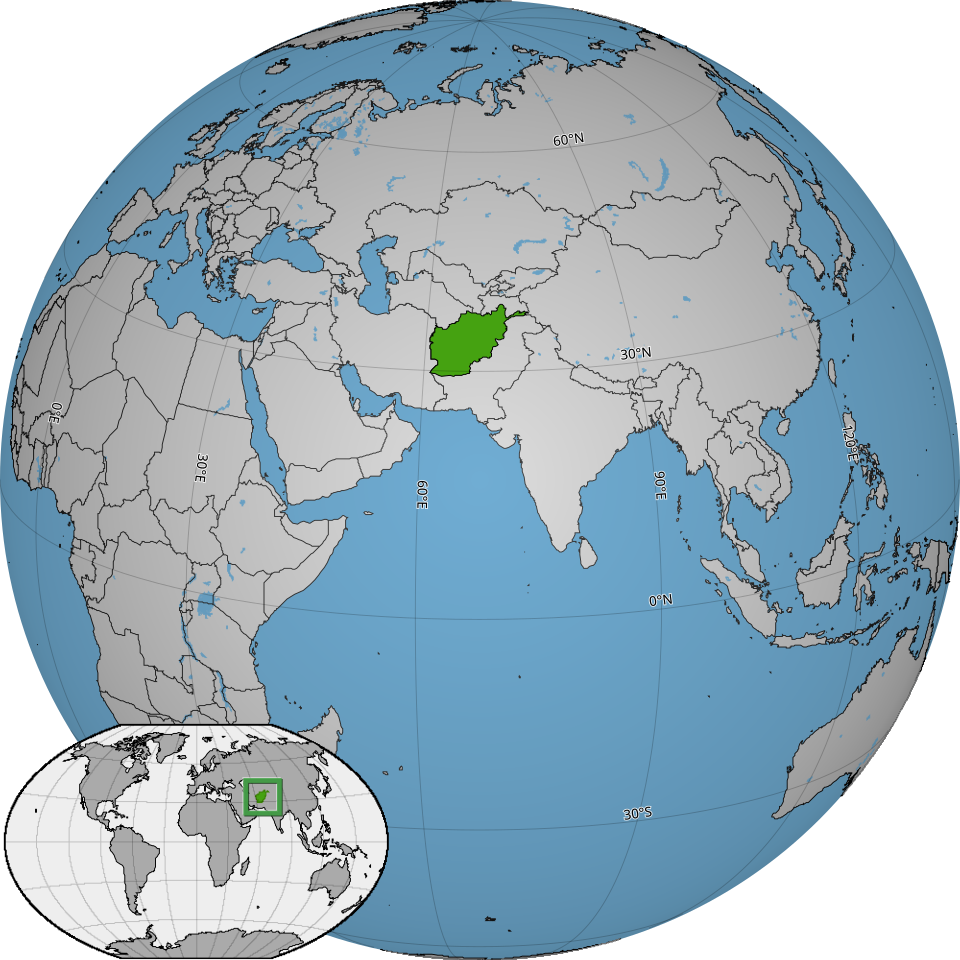
Corporate Giants in a Shrunken Market
Despite the macroeconomic void, a list of major companies still exists on paper, offering a glimpse into the sectors that once defined the Afghan economy.
Key players include Afghan Telecom and Afghan Wireless in the telecommunications sector, and Azizi Bank and Afghanistan International Bank in financial services.
These entities represent the backbone of the formal economy, yet their ability to function effectively is severely hampered by the lack of international recognition and financial integration.
In the consumer services sector, companies like Ariana Afghan Airlines, Bakhtar Afghan Airlines, and Ariana TV suggest a persistent, if diminished, domestic demand for travel, media, and entertainment.
However, without reliable data on their revenue or operational status, it is unclear how much of their former capacity remains intact.
The presence of AZ Corporation in industrials hints at a manufacturing or construction sector that may be struggling to find consistent supply chains or export markets.
For investors or observers, these companies serve as markers of potential future growth, but currently, they operate in a vacuum, lacking the regulatory certainty and financial flows needed to thrive.
The business climate is thus defined by high risk and low visibility, where even the largest domestic firms are subject to the whims of a political environment that offers no clear legal protections for private enterprise.
Safety and Sovereignty: A Closed Autocracy
The political landscape of Afghanistan is the most defined aspect of its current reality, even as its economic and safety data remain elusive.
Following the 2021 Taliban offensive and the collapse of the Islamic Republic, the Taliban declared the country an Islamic Emirate and announced a caretaker government on September 7.
As of July 2025, the diplomatic isolation is profound: the Russian Federation is the only country that has recognized the Islamic Emirate of Afghanistan as the *de jure* government.
This lack of international recognition has severe implications for the country’s standing in the global community, limiting its access to foreign aid, development loans, and diplomatic channels.
In terms of governance structure, the V-Dem Democracy Indices rank Afghanistan as a “closed autocracy,” placing it at 176th or 177th out of 179 countries.
This ranking underscores the suppression of political freedoms, civil liberties, and democratic participation.
Regarding public safety, both the Crime Index and Safety Index are listed as “N/A,” meaning there is no official, verified data on the levels of crime or the sense of security among the populace.
In the absence of these indices, the quality of life is largely determined by the extent of state control and the ability of individuals to navigate a society where legal rights are subordinate to religious and political authority.
The combination of a closed autocracy and a lack of safety data creates an environment where personal security is not a guaranteed right but a variable to be constantly assessed.
The Current Reality: Isolation and Stagnation
The most pressing issue facing Afghanistan today is not a specific policy shift or market fluctuation, but the ongoing entrenchment of its isolation.
With only Russia recognizing the current government, the country remains locked out of the global financial system, which hampers any potential for economic recovery or foreign direct investment.
The “N/A” status of all major economic indicators from the World Bank serves as a constant reminder that the international community has effectively ceased to monitor Afghanistan’s economic performance, a stark contrast to the pre-2021 era.
There are no recent reports of significant reform packages, election timelines, or inflation trends that could signal a change in direction; instead, the status quo of a closed, unrecognized state persists.
The lack of live indicators or recent news updates in the provided data further reinforces the sense of economic stagnation, where the day-to-day operations of the state and its businesses are proceeding in a shadow economy that is invisible to the outside world.
For now, the “current affairs” of Afghanistan are defined by absence: the absence of data, the absence of diplomatic recognition, and the absence of clear economic pathways forward.
This period of silence is not neutral; it is a period of deepening uncertainty that will likely have long-term consequences for the country’s development trajectory.
The Bottom Line
Afghanistan presents a case study in economic opacity and political isolation that demands careful observation from those interested in fragile states.
For investors, the country is currently a “no-go” zone due to the lack of legal recognition, data reliability, and financial integration.
For researchers and policymakers, it offers a critical example of how the collapse of institutional frameworks can lead to a total breakdown in economic measurement.
The only way to monitor this country is through qualitative assessments of political stability and humanitarian conditions, rather than quantitative economic metrics.
Watching Afghanistan now means watching the consequences of exclusion, as the nation continues to operate on the periphery of the global economy, defined more by its absence from international data sets than by its presence in them.
Sources & Methodology
This article is authored by Economic Pulse Net for informational and research purposes.
Economic Pulse Net sources its data from multilateral institutions, national statistics bureaus, and proprietary databases.
All data is believed to be current as of the date of publication. Published: September 03, 2026 |
Category: Research — Afghanistan
Use these signals in your own platform
Economic Pulse publishes its live signal feed through a documented, read-only API. Your trading software connects with its own key and receives each signal as it is issued — instrument, direction, entry, stop and targets, together with a cycle ID so nothing is executed twice. The feed is independent of this website and cannot change it.
Signals are informational only and are not financial advice.