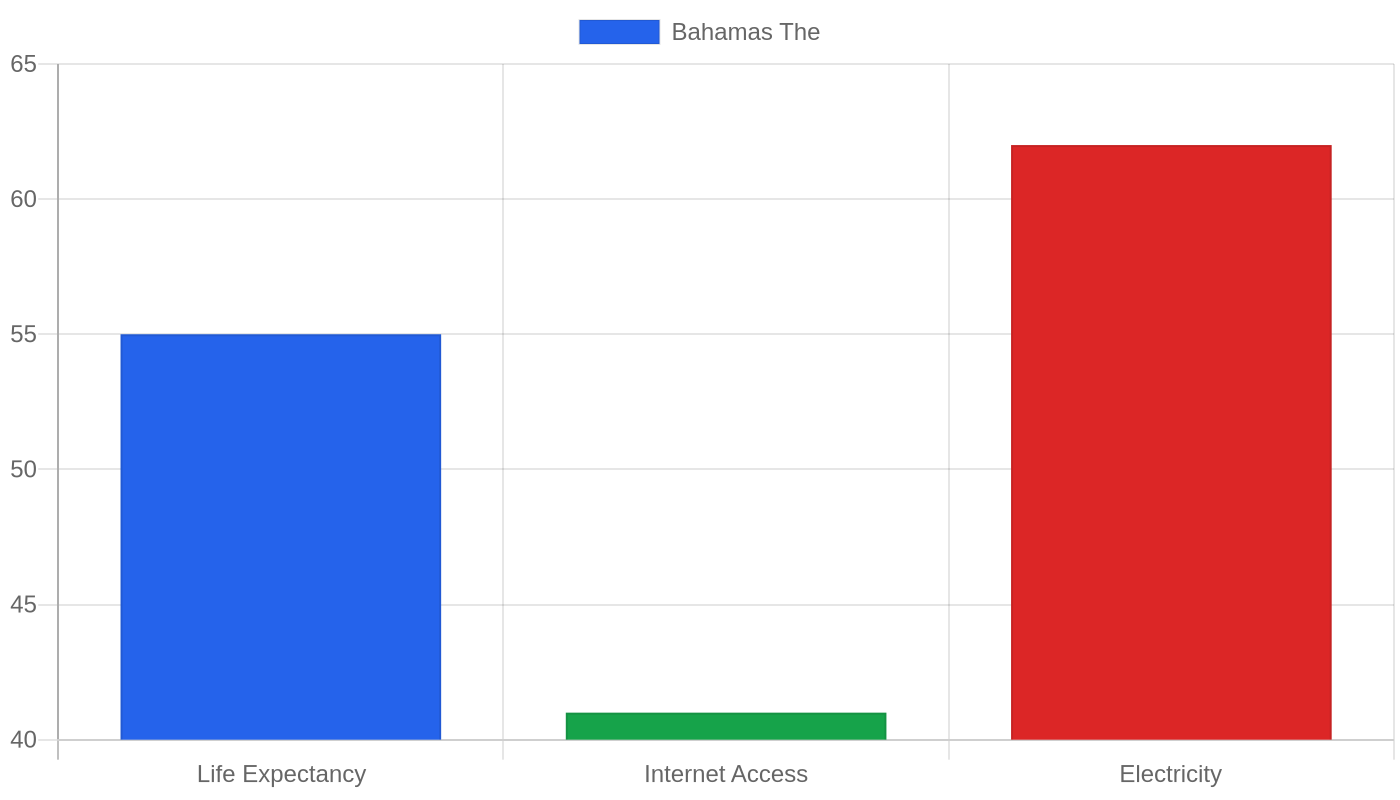
Economic Pulse Net | Sources: World Bank World Development Indicators, Government Sources | 2026
Key Takeaways
– The Bahamas, a premier Caribbean financial hub, faces a defining moment as it navigates global economic headwinds with a strategy centered on tourism, offshore finance, and hurricane-resilient infrastructure.
– The nation’s economic trajectory is heavily tied to the health of its tourism sector, which remains the primary engine of employment and foreign exchange earnings.
– With a high-income status and a sophisticated financial services industry, the country’s business climate is a beacon for international investment, yet it is also exposed to external shocks.
– The government’s focus is on fiscal discipline and diversifying the economy beyond traditional pillars to ensure long-term stability.
– The country’s overall quality of life is a blend of high-end prosperity and the persistent vulnerabilities of a small island developing state.
The Economic Engine: Tourism, Offshore Finance, and the Push for Resilience
The Bahamas’ economic narrative is one of striking contrasts—a high-income nation with a GDP per capita that places it among the wealthiest in the region, yet one that remains acutely sensitive to the whims of global travel trends and the fury of Atlantic hurricanes. The World Bank’s latest data on GDP growth and inflation is currently a blank slate, but the underlying structural reality is clear: this is an economy built on two foundational pillars.
The first is tourism, which directly and indirectly accounts for a significant portion of national output and employment. The second is the international financial services sector, a sophisticated network of banks and legal firms that have made the archipelago a global leader in wealth management.
The absence of fresh World Bank figures on inflation and unemployment makes it difficult to pinpoint the exact temperature of the economy at this moment. However, the focus for policymakers remains on managing the delicate balance between stimulating growth and maintaining price stability. The high reliance on imports for everything from food to construction materials means that global supply chain pressures can quickly translate into domestic cost-of-living increases.
The government’s economic strategy, therefore, is not just about courting tourists but also about building a more resilient fiscal framework that can withstand external pressures.
The Price of Paradise: Navigating Housing and Daily Costs
Living in the Bahamas carries a premium that reflects its island geography and its status as a luxury destination. The cost of living is undeniably high, particularly in the capital, Nassau, and the tourist-centric islands of Paradise Island and Grand Bahama. Housing is the most significant burden for residents.
The market is bifurcated: there is a top tier of luxury oceanfront villas and condominiums aimed at foreign buyers and wealthy expatriates, and a more constrained local market struggling with limited supply and high construction costs, which are exacerbated by the need to import most building materials.
Renting is a common choice for many, but yields are often high, and finding affordable accommodation is a challenge for the middle class. Daily expenses, from groceries to utilities, are also elevated due to import duties and the logistics of shipping goods across the islands.
While the World Bank does not provide a specific cost-of-living index in this data set, the anecdotal and structural evidence points to a reality where the “Bahamian dream” is increasingly expensive to maintain, forcing many families to allocate a larger share of their income to basic needs than their counterparts in less isolated markets.
Investment & Business Climate: A Gateway for Capital
For investors, The Bahamas presents a compelling, if complex, proposition. It is a mature, politically stable democracy with a legal system based on English common law, making it a familiar and reassuring environment for international capital. The top companies operating here are predominantly in the financial services, hospitality, and real estate development sectors, with major international banks and hotel chains playing a dominant role.
The business climate is generally open and welcoming to foreign direct investment, with no restrictions on foreign ownership of businesses, a significant advantage for those looking to establish a presence in the region.
The sectors to watch are the continued expansion of high-end tourism, particularly the development of new resorts and the enhancement of cruise ship facilities, and the ongoing evolution of the digital asset and fintech space, where the government has taken proactive steps to create a regulatory framework. However, doing business here also requires navigating a slower, more relationship-driven pace and a degree of bureaucracy that can be challenging for those accustomed to faster-moving jurisdictions.
The key is long-term commitment, as the rewards for those who successfully navigate the landscape can be substantial.
Safety, Politics & Quality of Life: The Social Fabric
The quality of life in The Bahamas is a study in duality. On one hand, the natural beauty, the warm climate, and the laid-back island culture offer an enviable lifestyle. On the other, the nation grapples with social challenges common to many Caribbean states. The World Bank data does not provide a specific crime index, but it is widely acknowledged that crime, particularly in urban centers like Nassau, remains a concern for both residents and visitors.
The government has consistently prioritized law enforcement and community programs as part of its mandate, but the issue persists as a social and economic drag.
Politically, the country is a stable parliamentary democracy, alternating power between its two main political parties, with a strong tradition of peaceful transitions. This political stability is a cornerstone of its attractiveness as an investment destination. The social fabric is rich and vibrant, with a strong sense of national identity rooted in music, art, and community.
Yet, the high cost of living and the economic disparities between the wealthy and the working class create a subtle but persistent tension that shapes the national conversation about prosperity and opportunity.
What’s Happening Now: Charting a Course Through 2026
The current moment in The Bahamas is defined by a proactive push toward economic diversification and fiscal resilience. The government is actively steering policy toward strengthening the country’s position as a hub for climate finance and sustainable investment, recognizing that the nation is on the front lines of climate change. This is not just a moral imperative but an economic one, as the insurance and reinsurance sectors are critical to the national balance sheet.
We are seeing policy shifts focused on modernizing the financial services sector to meet new global standards of transparency and taxation, a delicate dance to maintain competitiveness while adhering to international pressure.
On the ground, the business development focus is on upgrading tourism infrastructure and expanding into new source markets to reduce reliance on any single region. There is also a noticeable push to support the “Blue Economy”—leveraging the country’s vast ocean territory for sustainable fisheries, marine biotechnology, and renewable energy.
These are not just buzzwords; they are the pillars of the government’s stated strategy to build an economy that is less vulnerable to the boom-and-bust cycles of traditional tourism. The success of these initiatives will define the country’s trajectory for the next decade, making the current period one of intense strategic planning and cautious optimism.
The Bottom Line
The Bahamas is not a market for the faint-hearted; it is a country of immense opportunity but also of inherent vulnerability. Investors and businesses should watch this nation for its strategic position in the Caribbean, its sophisticated financial infrastructure, and its high-net-worth consumer base. The ongoing shift toward climate resilience and the blue economy presents a unique frontier for forward-thinking capital.
For the casual observer, it remains a testament to the enduring appeal of island life, but for the astute economist, it is a fascinating case study in how a small nation adapts to a rapidly changing global order.
Sources & Methodology
This article is authored by Economic Pulse Net for informational and research purposes. Economic Pulse Net sources its data from multilateral institutions, national statistics bureaus, and proprietary databases. All data is believed to be current as of the date of publication.
Published: August 01, 2026 | Category: Research — Bahamas The
Use these signals in your own platform
Economic Pulse publishes its live signal feed through a documented, read-only API. Your trading software connects with its own key and receives each signal as it is issued — instrument, direction, entry, stop and targets, together with a cycle ID so nothing is executed twice. The feed is independent of this website and cannot change it.
Signals are informational only and are not financial advice.