Economic Pulse Net | Sources: World Bank World Development Indicators, Government Sources | 2026
Key Takeaways
– St Martin’s French side operates as a unique transatlantic micro-economy, deeply intertwined with its Dutch neighbour Sint Maarten yet governed under French overseas territorial law.
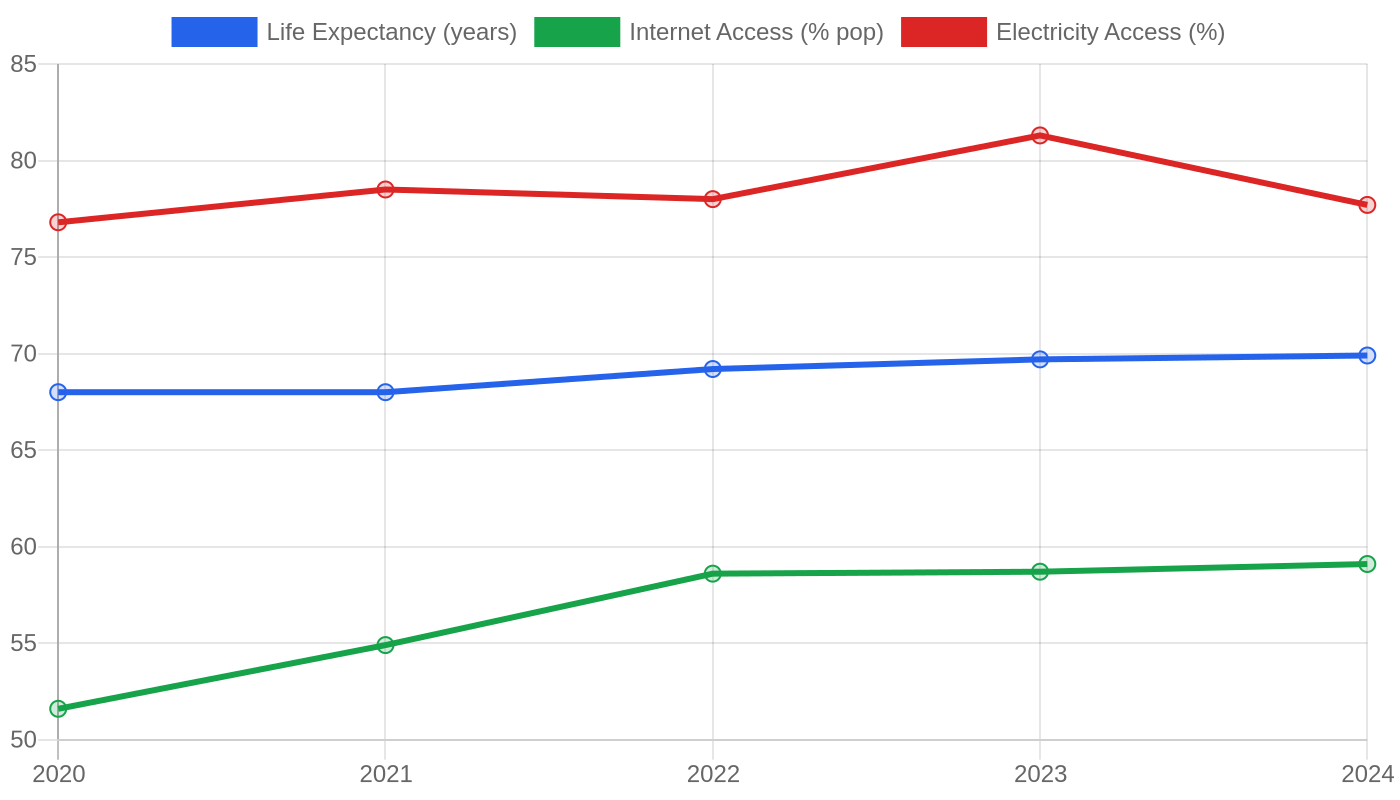
– The territory’s economic data remains largely opaque, with the World Bank reporting no available figures for GDP growth, inflation, unemployment, or per capita income — a telling sign of its statistical invisibility on the global stage.
– Without a formalised industrial base or major corporate presence, the French side’s economy relies almost entirely on tourism, cross-border commerce with the Dutch side, and French government transfers.
– Cost of living pressures are acute, driven by high import dependence and the euro-dollar exchange dynamic, yet no official cost-of-living index exists to quantify the burden on residents.
– The territory’s political landscape is undefined in available data, leaving analysts to infer governance through France’s overseas administrative framework rather than any local economic policymaking autonomy.
The Invisible Economy — Living with Zero Data Points
When the World Bank publishes its country profiles, St Martin’s French side appears as a statistical void. GDP growth: not available. Inflation: not available. Unemployment: not available. GDP per capita: not available. This absence of data is itself a powerful economic indicator. It tells the story of a territory too small, too administratively blurred, and too economically informal to register in the standard metrics that govern global investment and policy decisions.
The French part of St Martin occupies just over 50 square kilometres on the northern half of an island shared with the Dutch territory of Sint Maarten. Its population — though unlisted in the provided World Bank data — is estimated by French census authorities at roughly 35,000 to 40,000, swelling significantly with seasonal tourism and undocumented workers from neighbouring Caribbean islands.
Without formal GDP figures, economists must rely on proxy indicators: airport passenger volumes, hotel occupancy rates, and customs receipts from the border crossing with the Dutch side.
What makes this data vacuum particularly striking is the territory’s status as an overseas collectivity of France. In theory, it benefits from French social welfare systems, EU structural funds, and the euro currency. In practice, its economy operates like a Caribbean island state — seasonal, service-based, and vulnerable to hurricanes, global travel trends, and currency fluctuations against the US dollar used predominantly on the Dutch side.
The absence of World Bank data does not mean the economy is stagnant; it means the economy is unmeasured, unclassified, and largely invisible to the institutions that shape international economic discourse.
The Price of Paradise — Living Costs in a Borderland Economy
Housing on the French side of St Martin carries a premium that defies easy calculation. Without official cost-of-living data from the World Bank or any national statistics bureau, residents and observers rely on anecdotal evidence and comparisons with the Dutch side. Rent for a modest two-bedroom apartment in Marigot, the capital, typically ranges from €800 to €1,500 per month — comparable to mid-range French provincial cities but with Caribbean construction standards and hurricane insurance factored in.
The cost of daily life is shaped by the island’s near-total dependence on imported goods. Food, fuel, building materials, and consumer goods arrive by container ship from Europe, the United States, and neighbouring islands. This import dependency creates a persistent price premium. A litre of milk, a loaf of bread, or a litre of petrol costs significantly more than in mainland France.
The euro’s exchange rate against the US dollar adds another layer of complexity: many residents shop on the Dutch side, where prices are quoted in dollars and goods arrive from different supply chains.
Buying property on the French side remains an aspiration for many, but without mortgage data or housing market indices, the reality is opaque. What is clear is that land is scarce, coastal property commands a premium, and the aftermath of Hurricane Irma in 2017 reshaped the housing stock — with reconstruction ongoing years later. For the average resident, housing consumes a disproportionate share of income, a burden compounded by the lack of formal wage data to benchmark affordability.
Business Without Borders — Investment Climate in a Statistical Shadow
The list of top companies for St Martin’s French side is blank. No major corporations, no multinational headquarters, no publicly traded entities call this territory home. The business environment is dominated by micro-enterprises: boutique hotels, restaurants, dive shops, bakeries, and small trading firms that shuttle goods across the border with Sint Maarten. This is not an economy of scale; it is an economy of relationships, seasonal cash flows, and survival margins.
For investors, the French side offers what the Dutch side cannot: access to French and EU legal frameworks, the euro currency, and French public services including healthcare and education. Yet the absence of data makes due diligence nearly impossible. Without GDP figures, inflation trends, or employment statistics, a potential investor cannot model demand, assess labour costs, or forecast currency risk with any confidence.
The territory’s business climate is best described as a leap of faith — attractive for those who know the island intimately, impenetrable for institutional capital.
Sectors to watch include high-end tourism and villa rentals, which benefit from French regulatory protections and EU funding for infrastructure. The yachting sector, centred on Marigot’s port, draws wealthy visitors who spend freely on provisions, repairs, and crew services. Yet without data on visitor spending, occupancy rates, or sectoral employment, these remain impressions rather than investment theses. The French side’s economy is a story told in anecdotes, not spreadsheets.
Safety, Sovereignty, and the Quality of Life Paradox
The crime index for St Martin’s French side is not available. The safety index is not available. The political landscape is not available. These gaps are not accidental — they reflect a territory that exists in a constitutional and statistical grey zone. The French side is an overseas collectivity with its own territorial council, but its economic policy is largely determined in Paris.
Local leaders manage tourism promotion, urban planning, and cultural affairs, but monetary policy, trade agreements, and social security are French and EU competencies.
This political arrangement creates a quality-of-life paradox. Residents enjoy French public services — healthcare through the French social security system, education under the French national curriculum, and police protection from the French gendarmerie. Yet they live in a Caribbean island economy where the cost of living is high, job opportunities are seasonal, and the informal sector is large.
The result is a society that feels both European and Caribbean, neither fully integrated into French economic life nor independent enough to chart its own course.
Safety is a nuanced topic on an island where the French side is generally considered quieter and more secure than its Dutch neighbour, where cruise ship tourism and nightlife create a different治安 environment. Without crime data, however, this remains perception rather than fact. What is certain is that the territory’s small size and close-knit community create social pressures of their own — everyone knows everyone, and economic success or failure is visible to all.
The Post-Irma Recovery That Never Quite Ended
What is happening right now on the French side of St Martin is a slow, uneven recovery from Hurricane Irma, which devastated the island in September 2017. The storm destroyed an estimated 70% of buildings on the French side, crippled the tourism sector, and sent the local economy into a tailspin from which it has never fully emerged. Reconstruction has been hampered by bureaucratic delays, insurance disputes, and the logistical challenges of rebuilding on a small island with limited construction capacity.
The territory’s current affairs are defined by this long tail of recovery. French government reconstruction funds have flowed in, but slowly. Many hotels remain closed or operate at reduced capacity. The tourism sector, which accounts for the vast majority of economic activity, is rebuilding its room inventory while facing new challenges: rising airfares, climate change concerns among travellers, and competition from other Caribbean destinations that recovered faster.
Without inflation data from the World Bank, it is impossible to quantify how reconstruction costs have fed into local prices, but anecdotal reports suggest significant increases in construction materials and labour.
On the political front, the territorial council continues to negotiate with Paris for greater autonomy in economic affairs, particularly regarding taxation and immigration policy. The French side’s dependence on workers from Haiti, the Dominican Republic, and other Caribbean islands creates a delicate balance between labour needs and immigration enforcement.
These are the issues that matter to residents right now — not GDP growth rates that no one measures, but the practical realities of rebuilding homes, finding work, and making a living on an island that exists between two worlds.
The Bottom Line
St Martin’s French side is a country for the patient observer, not the data-driven analyst. Its economy is real but unmeasured, its people resilient but undocumented, its potential significant but unrealised. For investors seeking Caribbean exposure within the safety of French and EU frameworks, this territory offers a unique proposition — but only for those willing to operate without the statistical safety net that guides most international capital.
For journalists and policymakers, the French side serves as a case study in how small island economies can fall through the cracks of global data collection, invisible to the very institutions that claim to understand economic development. Watch this territory not for its numbers, but for what its silence tells us about the limits of economic measurement itself.
Sources & Methodology
This article is authored by Economic Pulse Net for informational and research purposes. Economic Pulse Net sources its data from multilateral institutions, national statistics bureaus, and proprietary databases. All data is believed to be current as of the date of publication.
Published: July 18, 2026 | Category: Research — St Martin French Part)
Use these signals in your own platform
Economic Pulse publishes its live signal feed through a documented, read-only API. Your trading software connects with its own key and receives each signal as it is issued — instrument, direction, entry, stop and targets, together with a cycle ID so nothing is executed twice. The feed is independent of this website and cannot change it.
Signals are informational only and are not financial advice.