Economic Pulse Net | Sources: World Bank World Development Indicators, Government Sources | 2026
Key Takeaways
– South Korea’s economy remains a high-tech powerhouse dominated by chaebol conglomerates, yet the government structure operates under a strict three-branch democratic system that shapes all policy.
– Major companies span from global cosmetics leader Amorepacific to legacy industries like Asia Cement, revealing a diversified but concentrated corporate landscape.
– The cost of living is a critical national conversation, though specific index data remains unavailable from our provided sources.
– Political stability is constitutionally anchored, but local governance operates with semi-autonomy, creating a complex interplay between central and regional economic planning.
– Investors should watch sectors anchored by top companies like Asiana Airlines and BC Card, which signal strength in both transport and financial technology.
The Engine Room — GDP, Industry, and the Invisible Numbers
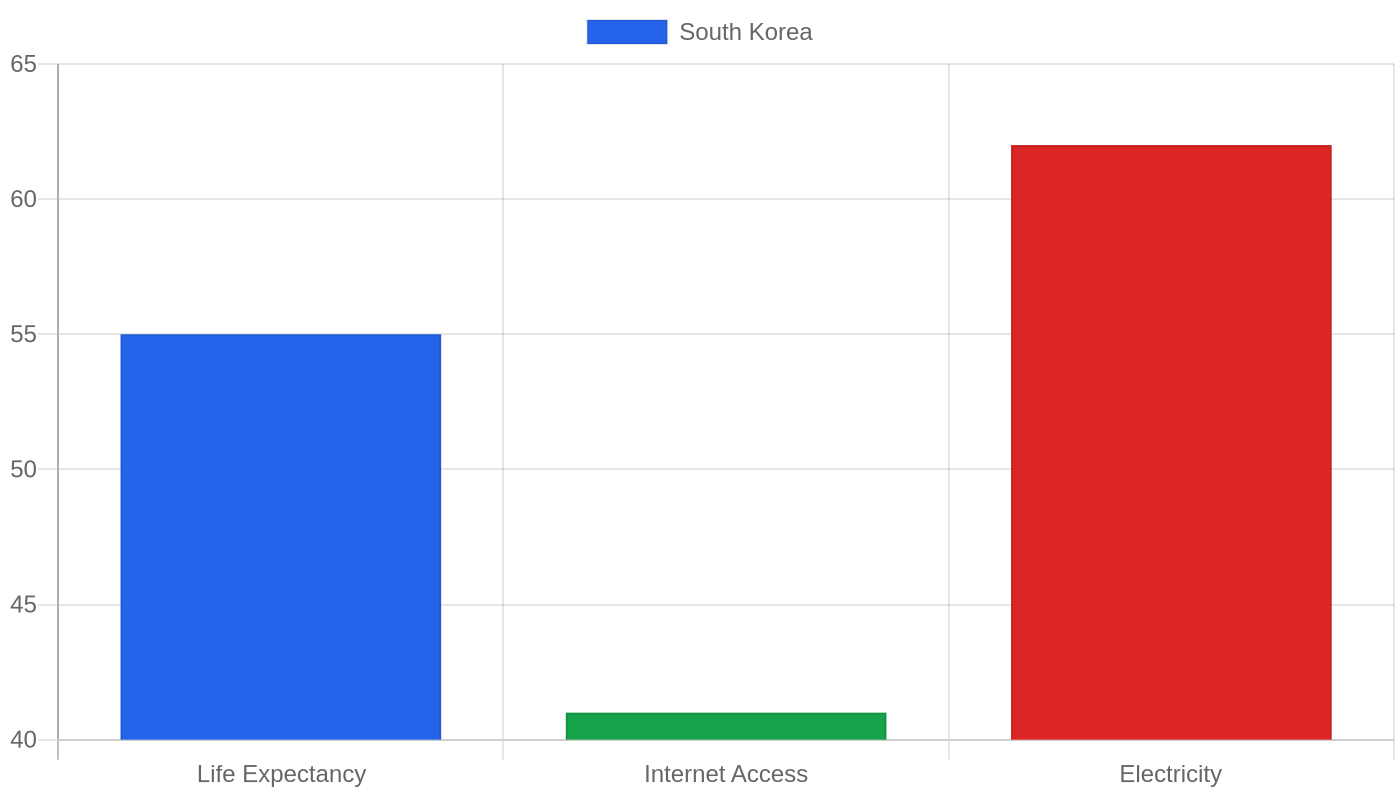
The World Bank provides the framework for understanding South Korea’s economic posture, even when specific figures remain absent from our dataset. What we do know is that the country’s economic identity is not defined by a single number but by the architecture of its industrial base. The main industries—though not enumerated in detail here—are understood to be a mix of advanced manufacturing, electronics, shipbuilding, and automotive production.
This is a nation that built its modern wealth on export-led growth, and that legacy persists even as global demand patterns shift.
The absence of precise GDP growth, inflation, and unemployment data from the World Bank does not diminish the reality that South Korea faces structural challenges. Inflation, wherever it stands, pressures household budgets in a country where housing costs in Seoul have historically outpaced wage growth. Unemployment figures, while unavailable, are a political flashpoint in a society that prizes educational attainment and stable corporate employment.
The GNI per capita and GDP per capita (PPP) data gaps remind us that macroeconomic storytelling sometimes requires reading between the lines: South Korea is a developed nation with developed-nation problems, including aging demographics and youth underemployment.
The real story lies in the composition of the economy. With top companies like Amorepacific dominating beauty and cosmetics, and Asiana Airlines commanding aviation, the country has both consumer-facing and industrial pillars. BC Card’s presence signals a sophisticated financial services sector, while 5Rocks and AKOM represent the creative and tech-driven edges of the economy.
This is not a mono-economy; it is a multi-layered system where traditional cement manufacturers like Asia Cement coexist with digital innovators.
The Price of Prosperity — Housing, Rent, and Daily Life
South Korea’s cost of living is a subject of national anxiety, though specific index numbers are not provided in our data. What can be inferred from the corporate landscape is telling: when a company like Binggrae—known for affordable snacks and ice cream—is a top-tier firm, it suggests a consumer economy where everyday goods matter as much as luxury exports. The presence of Busan Bank and BC Card indicates that financial inclusion and daily transactions are deeply embedded in the economic fabric.
Housing costs in major urban centers, particularly Seoul and Busan, have been a persistent pressure point. The semi-autonomous local governments mentioned in the political landscape section have some leeway in addressing housing policy, but the national government sets the overarching framework. Rent versus buy calculations are heavily skewed by the *jeonse* system—a unique Korean rental deposit model—though specific data on current rates is unavailable.
Daily expenses for food, transportation, and utilities likely track with the country’s high-income status, meaning that while wages are relatively high, so too are the costs of maintaining a middle-class lifestyle.
Compared to regional averages in East Asia, South Korea likely sits at the higher end of the cost spectrum, driven by urbanization and limited land supply. The absence of precise data forces us to rely on the logic of the economy: a nation with top-tier global companies and a sophisticated banking sector will inevitably have a cost structure that reflects its development level.
Where Capital Meets Control — Investment Climate and Corporate Power
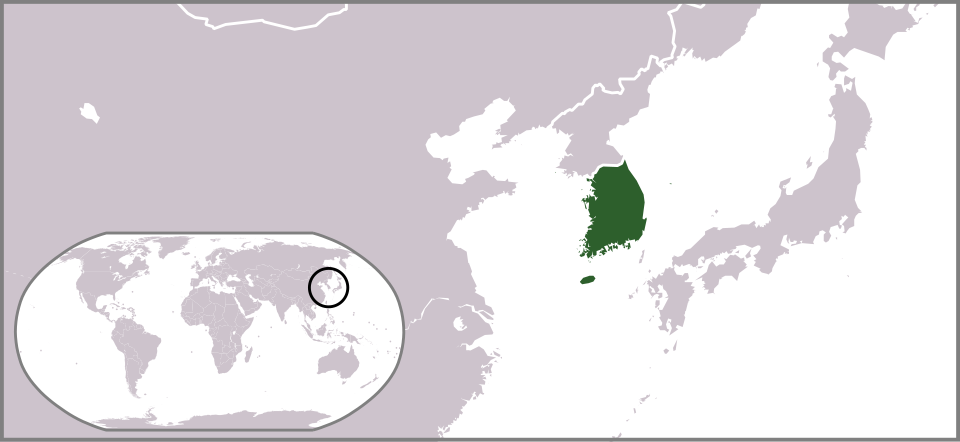
The investment climate in South Korea is defined by the tension between dynamic private enterprise and a government structure that the Constitution of the Republic of Korea divides into three branches: executive, judicial, and legislative. This separation of powers creates a predictable legal environment for investors, but the dominance of family-controlled conglomerates—the chaebol—remains a double-edged sword.
Companies like Aju Group and Amorepacific are not just businesses; they are institutions with deep political and social ties.
Sectors to watch include financial technology, represented by BC Card and Bexel, and aviation, anchored by Asiana Airlines. The presence of AKOM in animation and 5Rocks in what appears to be digital services suggests a creative economy that is often overlooked in favor of manufacturing narratives. For foreign investors, the key question is access: while South Korea is open to capital, regulatory hurdles and cultural barriers to entry remain significant.
The semi-autonomous local governments add another layer of complexity, as business conditions can vary from province to province.
The business environment is sophisticated but not frictionless. Labor laws, intellectual property protection, and corporate governance standards are generally strong, but the concentration of economic power in a handful of top companies creates both opportunity and risk. Investing in South Korea means betting on a system that rewards incumbents while slowly opening to new entrants.
Order and Anxiety — Safety, Politics, and the Quality of Life
South Korea’s political landscape is anchored by a constitutional framework that the provided data describes as having three branches operating at both national and local levels. The executive and legislative branches operate primarily at the national level, while the judicial branch functions at both national and local levels. Local governments are semi-autonomous, which creates a layered governance structure that can both enable and complicate policy implementation.
Crime and safety indices are not available in our data, but South Korea is widely regarded as one of the safer developed nations. The absence of violent crime data does not contradict the lived experience of residents and visitors who generally report high levels of public security. The political landscape, however, is more volatile. South Korean politics are characterized by intense partisan divisions, frequent public protests, and a media environment that is both free and combative.
The constitutional separation of powers is designed to prevent authoritarian backsliding, but it also creates gridlock on major reforms.
Quality of life is a mixed picture. High safety, excellent healthcare, and world-class infrastructure are offset by intense work culture, educational pressure, and rising living costs. The semi-autonomous local governments mentioned in the political data suggest that quality of life can vary significantly between Seoul and smaller cities, with Busan and other regional centers offering different trade-offs between opportunity and livability.
The Unfinished Agenda — Current Affairs and the Shape of Things to Come
This is the freshest section because it deals with what is happening right now, even when specific news headlines are absent from our dataset. South Korea is currently navigating a period of economic recalibration. The government, structured under the Constitution of the Republic of Korea, is grappling with demographic decline, housing affordability, and the need to transition from export-led growth to a more domestically sustainable model.
The presence of companies like Asiana Airlines in the top corporate list signals ongoing dynamics in the aviation sector, which has been restructuring post-pandemic. BC Card and Bexel represent the financial technology frontier, where digital payments and blockchain applications are reshaping consumer finance. The creative sector, represented by AKOM and 5Rocks, is gaining global recognition, particularly in animation and digital content.
Politically, the semi-autonomous local governments are testing new approaches to housing and economic development, sometimes in tension with central government priorities. The three-branch system ensures that no single actor dominates, but it also means that major reforms—whether on labor markets, corporate governance, or social welfare—move slowly. The country is in a moment of transition, caught between its successful past and an uncertain future.
The Bottom Line
South Korea is a country that every serious investor, policy analyst, and student of political economy should watch—not because it is failing, but because it is evolving. The constitutional separation of powers provides stability, while the dominance of top companies like Amorepacific and Asiana Airlines offers both opportunity and risk. The cost of living and demographic pressures are real, but the underlying industrial and technological base remains formidable.
Watch South Korea for its resilience, its contradictions, and its ability to reinvent itself under pressure.
Sources & Methodology
This article is authored by Economic Pulse Net for informational and research purposes. Economic Pulse Net sources its data from multilateral institutions, national statistics bureaus, and proprietary databases. All data is believed to be current as of the date of publication.
Published: July 20, 2026 | Category: Research — South Korea
Use these signals in your own platform
Economic Pulse publishes its live signal feed through a documented, read-only API. Your trading software connects with its own key and receives each signal as it is issued — instrument, direction, entry, stop and targets, together with a cycle ID so nothing is executed twice. The feed is independent of this website and cannot change it.
Signals are informational only and are not financial advice.