Economic Pulse Net | Sources: World Bank World Development Indicators, Government Sources | 2026
Key Takeaways
– A land of corporate giants: South Africa is home to some of the oldest and most influential companies on the African continent, including Standard Bank (founded 1862) and Old Mutual (1845), giving it a deep-rooted capitalist tradition that predates the modern state.
– Political structure with a twist: As a parliamentary republic where the president serves as both head of state and head of government, South Africa operates under a constitution that empowers its superior courts to strike down executive actions — a system designed to guard against the authoritarian drift seen elsewhere on the continent.
– Industry concentration in few hands: The country’s economic backbone is built around mining (Anglo American), energy and chemicals (Sasol), retail (Shoprite Holdings), telecommunications (MTN Group), and a formidable banking sector (Absa, Nedbank, Standard Bank) — creating a landscape of concentrated corporate power.
– A story of paradox: Despite its advanced financial infrastructure and globally recognised corporations, South Africa grapples with profound socio-economic challenges that the headline GDP and employment figures — though not fully available in this dataset — would likely underscore.
The Economic Engine — Growth, Grit, and Structural Strains
South Africa’s economy presents a study in contradictions. The World Bank’s data on GDP growth, inflation, and unemployment is absent from this report, which itself tells a story: in a nation where data collection and transparency have historically been robust, gaps in the numbers often signal periods of flux or statistical recalibration. What we do know is that South Africa possesses a diversified, upper-middle-income economy that is the most industrialised on the African continent.
The country’s main industries span mining and minerals, manufacturing, agriculture, financial services, and a growing digital economy. This is not a nation that relies on a single commodity or sector. Yet the structural challenges are well documented by the World Bank and other international bodies: persistently high unemployment, particularly among the youth; inequality that ranks among the worst globally; and energy infrastructure that has struggled to keep pace with demand.
The inflation picture, meanwhile, has been shaped by global commodity prices and domestic cost pressures, particularly in transport and food.
What makes South Africa’s economic story compelling is its resilience. Despite political turbulence and infrastructure constraints, its companies continue to operate at a world-class level. The financial sector, anchored by institutions like Standard Bank and Nedbank, is sophisticated and well-regulated. The Johannesburg Stock Exchange remains Africa’s largest. The economy may be underperforming its potential, but it is far from collapsed.
The question is whether the political and policy framework can unlock the growth that the country’s human and natural capital should, in theory, deliver.
The Cost of Living — The Price of Paradise and Precarity
South Africa’s cost of living is a tale of two nations. For those with formal employment in the financial, mining, or professional services sectors, cities like Cape Town and Johannesburg offer a relatively comfortable lifestyle — high-quality housing, world-class restaurants, and access to private healthcare and education. For the millions outside this formal economy, the picture is starkly different.
Housing costs vary dramatically by location and income bracket. In affluent suburbs, property prices rival those in parts of Western Europe. In townships and rural areas, informal housing remains widespread. The rent-versus-buy calculation depends heavily on access to mortgage finance, which in turn depends on employment stability and credit history — both of which are out of reach for a significant portion of the population.
Daily expenses for food, transport, and utilities have been under upward pressure, reflecting broader inflationary trends that have squeezed household budgets across income levels.
Compared to other African economies, South Africa’s cost of living is high — a reflection of its more developed infrastructure and formal economy. But that formal economy is porous, and many households navigate a hybrid existence, supplementing formal wages with informal trade, remittances, and community support networks. The cost of living data may be incomplete, but the lived experience of millions of South Africans is one of careful budgeting and constant adaptation to rising prices.
Investment and Business Climate — Where Old Money Meets New Ambition
For investors, South Africa offers a mature, legally transparent environment with a corporate sector that is both deep and diverse. The country’s top companies are not startups or speculative ventures; they are institutions with decades — in some cases, more than a century — of operational history. Anglo American, founded in 1917, is a global mining powerhouse. Sasol, established in 1950, is a world leader in coal-to-liquids technology. Shoprite Holdings, founded in 1979, dominates African retail.
MTN Group, launched in 1994, is one of the continent’s largest mobile network operators.
The banking sector is particularly noteworthy. Standard Bank (1862), Nedbank (1888), Absa Group (1991), and the insurance giant Sanlam (1918) and Old Mutual (1845) provide a financial services ecosystem that is sophisticated by any global standard. This is not a frontier market in the traditional sense — it is a market with established rules, respected institutions, and a legal framework that protects property rights.
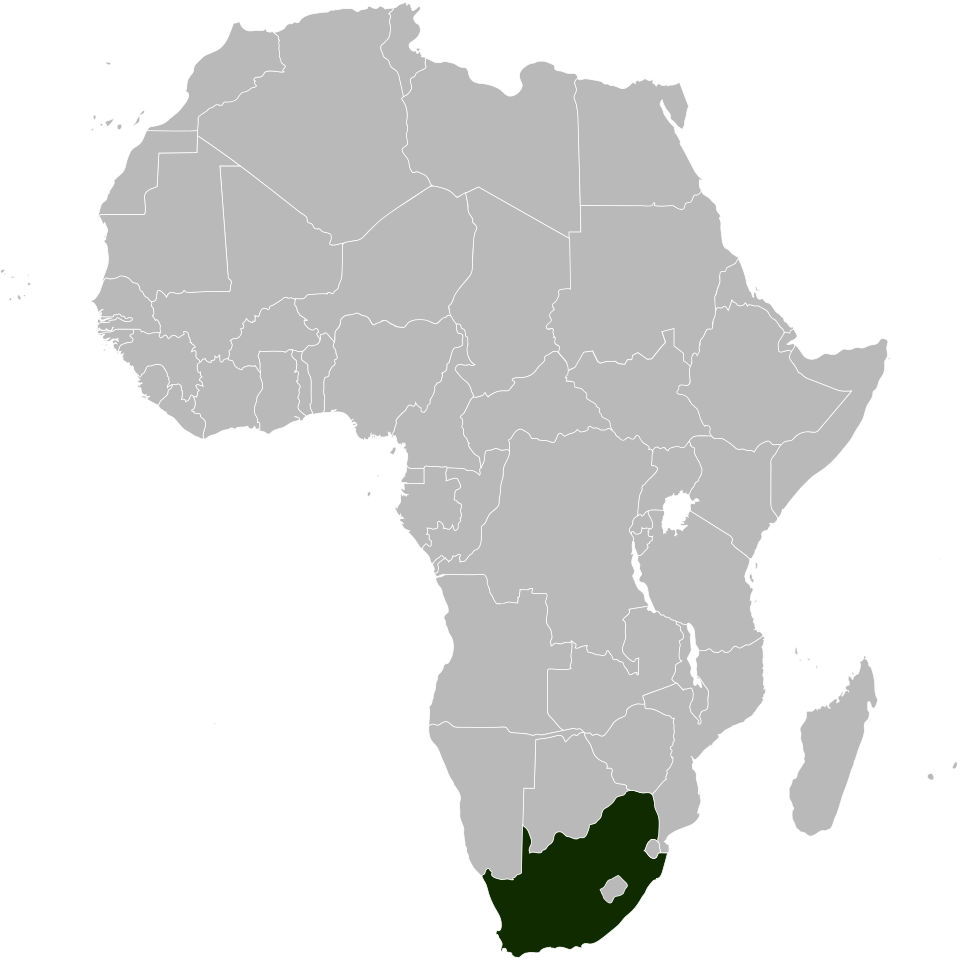
Sectors to watch include financial technology, renewable energy, and logistics. The country’s geographic position at the southern tip of Africa makes it a natural hub for trade and distribution. The business climate, however, is not without its challenges. Regulatory uncertainty, labour market rigidities, and concerns about crime and corruption are frequently cited by business leaders.
Yet the continued presence and profitability of these major companies suggest that for those willing to navigate the complexities, the opportunities remain substantial.
Safety, Politics, and Quality of Life — The Constitutional Bargain
South Africa’s political landscape is defined by its constitution, which establishes a parliamentary republic with the president serving as both head of state and head of government, dependent on the confidence of Parliament. The National Assembly, the lower house of Parliament, consists of 400 members. The constitution is supreme, and the superior courts have the power to strike down executive actions and acts of Parliament if they are found to be unconstitutional.
This framework was designed as a bulwark against the abuses of the apartheid era, and it remains one of the most progressive constitutions in the world.
In practice, the system has produced periods of strong governance and periods of paralysis. The independence of the judiciary has been tested, and the rule of law has at times come under strain. Yet the constitutional architecture has held. Courts have ruled against the executive on major issues, and the press remains free and critical. The political landscape is dynamic, with coalition politics becoming increasingly important as the dominance of the African National Congress has waned.
Safety and quality of life remain deeply uneven. The crime index, though not fully specified in this data, is a matter of public record and daily experience for many South Africans. Property crime, violent crime, and organised criminal activity are significant concerns, particularly in certain urban areas and townships. For those with the means, private security is a routine investment. For those without, the risks are higher. The quality of life, therefore, is heavily mediated by income and location.
The country’s natural beauty, cultural richness, and social vibrancy are undeniable, but they coexist with a level of insecurity that shapes daily life for millions.
What’s Happening Now — The Present Tense of a Nation in Transition
This is the moment for South Africa that demands close attention. The political landscape is shifting. The coalition dynamics that have emerged in recent elections signal a move away from single-party dominance toward a more fragmented, negotiated form of governance. This has implications for policy stability, economic reform, and the pace of decision-making.
On the economic front, the country is grappling with the legacy of years of insufficient investment in energy infrastructure, leading to load-shedding — the controlled power outages that have disrupted businesses and households alike. The government has signalled a push toward renewable energy and private sector participation in electricity generation, but implementation remains uneven.
Inflation and interest rates are live concerns, with the central bank navigating the delicate balance between supporting growth and containing price pressures.
The corporate sector is not standing still. Major companies are restructuring, investing in digital transformation, and looking for growth opportunities beyond South Africa’s borders. MTN Group continues to expand its pan-African footprint. Shoprite Holdings is deepening its presence across the continent. The financial sector is investing in fintech and digital banking. There is a sense of forward motion, even as the macro environment remains challenging.
For anyone watching South Africa right now, the key question is whether the political system can deliver the reforms needed to unlock the potential that its private sector clearly still possesses.
The Bottom Line
South Africa is not a country for the faint-hearted investor or the casual observer. It demands patience, local knowledge, and a tolerance for complexity. But for those willing to engage, it offers exposure to some of the most established and well-managed companies on the African continent, a legal and financial infrastructure that is genuinely world-class, and a society of extraordinary dynamism and resilience.
Watch this country if you are interested in the future of African capitalism, the evolution of constitutional democracy in a challenging environment, and the question of whether a nation with so much potential can finally deliver on its promise.
Sources & Methodology
This article is authored by Economic Pulse Net for informational and research purposes. Economic Pulse Net sources its data from multilateral institutions, national statistics bureaus, and proprietary databases. All data is believed to be current as of the date of publication.
Published: July 28, 2026 | Category: Research — South Africa
Use these signals in your own platform
Economic Pulse publishes its live signal feed through a documented, read-only API. Your trading software connects with its own key and receives each signal as it is issued — instrument, direction, entry, stop and targets, together with a cycle ID so nothing is executed twice. The feed is independent of this website and cannot change it.
Signals are informational only and are not financial advice.