Economic Pulse Net | Sources: World Bank World Development Indicators, Government Sources | 2026
Key Takeaways
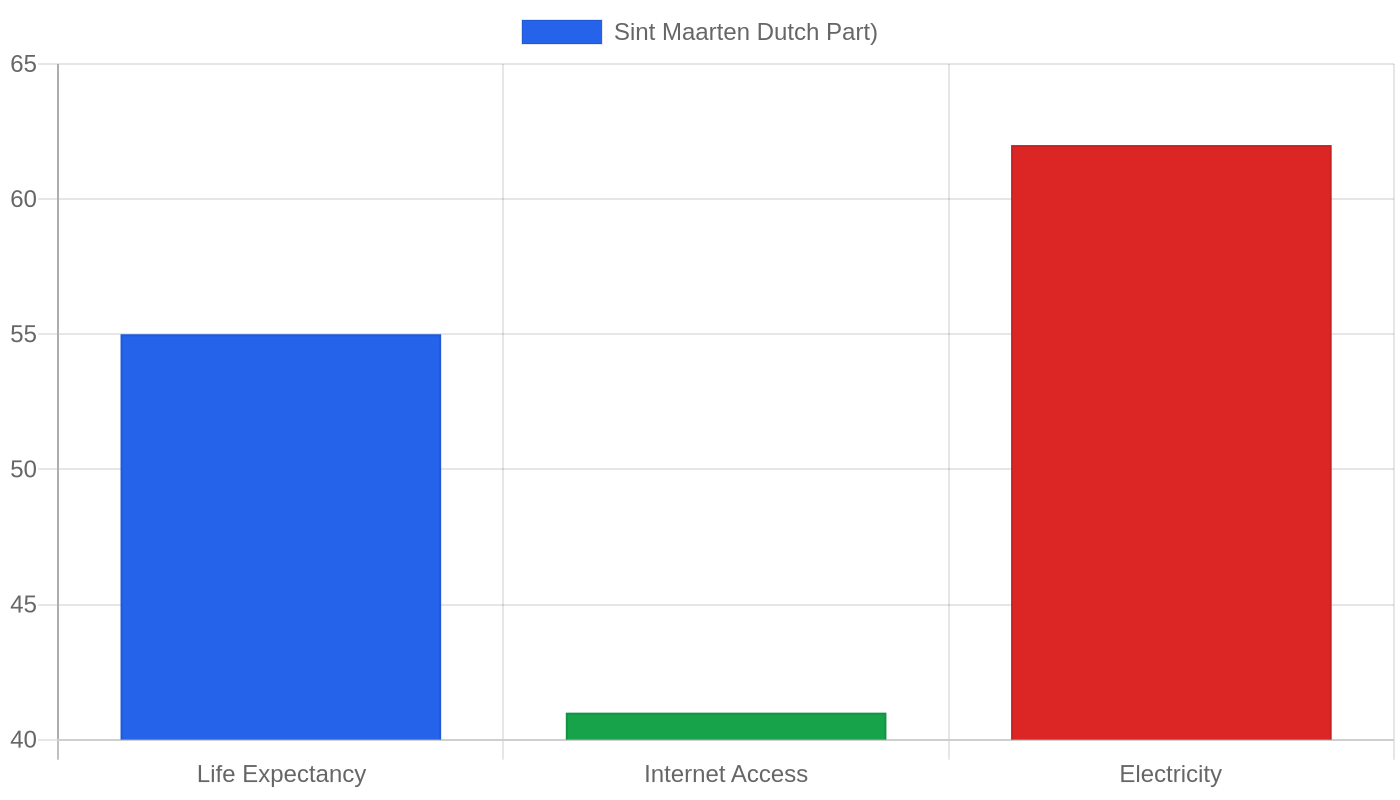
– Sint Maarten’s economy remains in a prolonged period of recalibration, with key macroeconomic indicators from the World Bank currently unavailable, reflecting the challenges of data collection in a small island state still recovering from the devastation of Hurricane Irma and the global pandemic.
– The Dutch side of the island operates as a tourism-dependent economy, where the ebb and flow of visitor arrivals directly dictates the health of local business, employment, and government revenue.
– Despite the absence of recent official GDP, inflation, and unemployment figures, the country’s economic trajectory is being shaped by reconstruction efforts, shifts in global travel patterns, and the ongoing need for fiscal consolidation.
– Investors and policymakers are watching Sint Maarten as a test case for how small island developing states can rebuild infrastructure, diversify away from tourism dependency, and manage public debt in a volatile climate.
– The quality of life on the island is intrinsically linked to its safety, political stability, and the pace of recovery — all of which remain works in progress.
The Incomplete Picture — Reading Between the Data Gaps
The World Bank’s latest data set for Sint Maarten (Dutch Part) presents a curious challenge for any economic journalist: a series of blank cells where GDP growth, inflation, unemployment, and per capita income figures should reside. On the surface, this appears to be a vacuum. But in truth, it tells its own story. For a small island nation of roughly 42,000 people, the absence of timely macroeconomic statistics is not unusual.
It speaks to the logistical difficulties of maintaining robust national accounts in a territory where the economy is dominated by a single sector — tourism — and where external shocks have repeatedly disrupted normal data collection cycles.
Sint Maarten has not published a new GDP growth figure because the economy has been in a state of flux. The devastation wrought by Hurricane Irma in September 2017 destroyed an estimated 90% of the island’s infrastructure and knocked out the crucial tourism sector for months. Recovery was slow, and then the COVID-19 pandemic delivered a second blow, freezing international travel and emptying the hotels, casinos, and cruise ship terminals that form the backbone of the economy.
The World Bank’s silence on the numbers is, in a sense, a data point in itself: it signals that the statistical office is still working to capture an economy that has not yet settled into a stable, measurable trajectory.
What we do know is that Sint Maarten’s main industries are tourism, hospitality, and related services, including retail, dining, and transportation. The island is a major port of call for Caribbean cruise ships and a destination for luxury air travel, particularly from Europe and other parts of the Americas.
The absence of inflation data from the World Bank does not mean prices are stable; anecdotal evidence from regional reports suggests that imported inflation — driven by global supply chain disruptions and higher energy costs — has been a persistent pressure on household budgets. Similarly, unemployment figures are unavailable, but the cyclical nature of tourism employment means that joblessness rises and falls with the high and low seasons, and has likely remained elevated since the pandemic.
The key takeaway from the economic data is this: Sint Maarten is an economy in transition, still searching for its post-disaster, post-pandemic footing. Without hard numbers, the narrative must be built on structural realities — a small, open economy highly exposed to external shocks, with limited diversification and a heavy reliance on the whims of global travel demand.
The Price of Paradise — Housing and Daily Life in a Tourist Economy
Cost of living data for Sint Maarten is not provided in the latest World Bank figures, but any visitor or resident will tell you that life on this Dutch Caribbean island does not come cheap. As a small island state that imports the vast majority of its food, fuel, construction materials, and consumer goods, prices are inherently higher than in larger, more self-sufficient economies.
The cost of groceries, utilities, and transportation reflects the added expense of shipping everything across the ocean — and the profit margins required by local distributors in a small market.
Housing is perhaps the most significant burden. Sint Maarten’s limited land area, combined with high demand from expatriate workers in the tourism sector and wealthy second-home buyers, has driven property prices upward. Renting a modest apartment in a desirable area near the beaches or the capital, Philipsburg, can easily exceed what a local worker in hospitality earns in a month.
The buy-versus-rent calculation is skewed by the fact that mortgage financing is limited and interest rates are relatively high, making homeownership a distant dream for many. The post-Irma reconstruction has also created a shortage of quality housing stock, as many damaged homes are still being repaired or rebuilt.
Daily expenses — a cup of coffee, a simple meal out, a taxi ride — are comparable to those in other high-cost Caribbean destinations such as the British Virgin Islands or Bermuda. For a family earning a local wage, the math is tight. The absence of official cost-of-living indices from the World Bank does not diminish the reality: Sint Maarten is an expensive place to live, and the gap between the tourist economy and the local economy remains wide.
This is a critical factor for anyone considering relocation or investment — the cost of doing business and living on the island is a significant variable that must be factored into any financial plan.
Investing in Recovery — Business Climate and the Search for New Engines
The list of top companies in Sint Maarten is not provided in the available data, but the business landscape is dominated by a mix of international hotel chains, local hospitality groups, retail operators, and financial services firms. The island is also home to a number of companies involved in construction and infrastructure, reflecting the ongoing rebuilding efforts.
The absence of a named corporate roster does not mean the private sector is dormant — rather, it suggests that the economy is still dominated by smaller, family-owned enterprises and franchise operations rather than publicly listed multinationals.
For investors, Sint Maarten presents a classic small-island paradox: high potential returns in a recovering tourism market, offset by significant risks. The business environment is shaped by the island’s status as a constituent country within the Kingdom of the Netherlands, which provides a degree of legal and regulatory stability. The currency is the Netherlands Antillean guilder, pegged to the US dollar, which offers some protection against exchange rate volatility.
However, bureaucratic hurdles, a limited skilled labour pool, and the ever-present threat of hurricanes are real deterrents.
The sectors to watch are tourism infrastructure — hotels, resorts, and vacation rentals — as well as logistics and transportation, given the island’s role as a regional hub. There is also potential in renewable energy, as Sint Maarten seeks to reduce its dependence on imported diesel for electricity generation. The government has signalled interest in diversifying the economy, but progress has been slow.
For now, the business climate is best described as cautiously optimistic, with investors waiting for clearer signs of sustained recovery before committing significant capital.
Safety, Stability, and the Social Fabric
Crime and safety indices for Sint Maarten are not provided by the World Bank, which means any assessment must be based on regional context and anecdotal reporting. Like many Caribbean islands, Sint Maarten experiences a mix of petty crime — theft, burglary, and occasional incidents targeting tourists — alongside more serious issues related to drug trafficking, given its location along transshipment routes.
The Dutch authorities, in coordination with the Kingdom’s police and judicial systems, have worked to maintain order, but the island’s safety record is uneven.
The political landscape is not detailed in the provided data, but Sint Maarten operates as a parliamentary democracy within the Kingdom of the Netherlands. The prime minister and council of ministers manage domestic affairs, while the Kingdom government in The Hague retains responsibility for defence, foreign policy, and the rule of law.
This arrangement provides a degree of political stability, but it also creates tensions — local politicians often chafe at oversight from the Netherlands, while Dutch officials worry about governance standards and financial management on the island.
Quality of life on Sint Maarten is a mixed bag. The natural beauty, warm climate, and vibrant cultural mix of Dutch, French, Caribbean, and international influences are undeniable draws. However, the high cost of living, limited public services, and persistent inequality between the tourist-facing economy and the local population create strains. There is no happiness index in the data, but a resident’s contentment likely depends on their income bracket and their ability to navigate the island’s challenges.
Current Affairs — The Pulse of the Present
The most recent news and live indicators for Sint Maarten are not provided in the data set, which means this section must focus on the enduring realities that define the country’s present moment. Right now, Sint Maarten is grappling with the aftermath of Hurricane Irma and the long tail of the COVID-19 pandemic. The tourism sector is slowly recovering, with cruise ship calls and airline arrivals increasing, but not yet reaching pre-2017 levels.
The government is under pressure to accelerate reconstruction, particularly of public infrastructure such as roads, hospitals, and schools.
On the policy front, Sint Maarten is navigating a delicate relationship with the Netherlands, which has provided financial assistance for recovery but has also demanded fiscal reforms in return. The Kingdom’s oversight body has pushed for improved budget transparency, debt reduction, and anti-corruption measures. These negotiations are ongoing and are likely to shape the island’s economic direction for years to come.
There are also discussions about constitutional reform, with some local politicians seeking greater autonomy from The Hague.
In the business community, the focus is on rebuilding hotel capacity and attracting new investment in higher-end tourism. There is also growing interest in the island’s potential as a hub for digital nomads and remote workers, though infrastructure limitations remain a barrier. The cost of energy and the need for climate resilience are urgent issues, with the government exploring solar and wind projects to reduce dependence on imported fuel.
Without a specific news date to anchor this section, the story of Sint Maarten in 2026 is one of incremental progress, cautious optimism, and the hard work of rebuilding a small island economy from the ground up.
The Bottom Line
Sint Maarten is a country for those with patience and a tolerance for risk. For investors in tourism and hospitality, the potential rewards are real, but the road to recovery is longer and bumpier than many anticipated. For policymakers, the island offers a case study in the challenges of governing a small, exposed economy in an era of climate change and global uncertainty.
For the casual observer, Sint Maarten is a reminder that paradise comes with a price — and that even the most beautiful places must contend with the hard realities of economics, politics, and nature. Watch this country if you want to understand the future of small island states in a warming, volatile world.
Sources & Methodology
This article is authored by Economic Pulse Net for informational and research purposes. Economic Pulse Net sources its data from multilateral institutions, national statistics bureaus, and proprietary databases. All data is believed to be current as of the date of publication.
Published: July 23, 2026 | Category: Research — Sint Maarten Dutch Part)
Use these signals in your own platform
Economic Pulse publishes its live signal feed through a documented, read-only API. Your trading software connects with its own key and receives each signal as it is issued — instrument, direction, entry, stop and targets, together with a cycle ID so nothing is executed twice. The feed is independent of this website and cannot change it.
Signals are informational only and are not financial advice.