Economic Pulse Net | Sources: World Bank World Development Indicators, Government Sources | 2026
Key Takeaways
– San Marino operates as a parliamentary representative democratic republic with a unique dual-head-of-state system, where two captains regent serve as heads of state under a pluriform multi-party framework.
– The country lacks a formal head of government, but the secretary for foreign and political affairs functions effectively as a prime minister, shaping economic and diplomatic policy.
– Executive power rests with the government, while legislative authority is shared between the government and the Grand and General Council, creating a complex governance structure that influences economic decision-making.
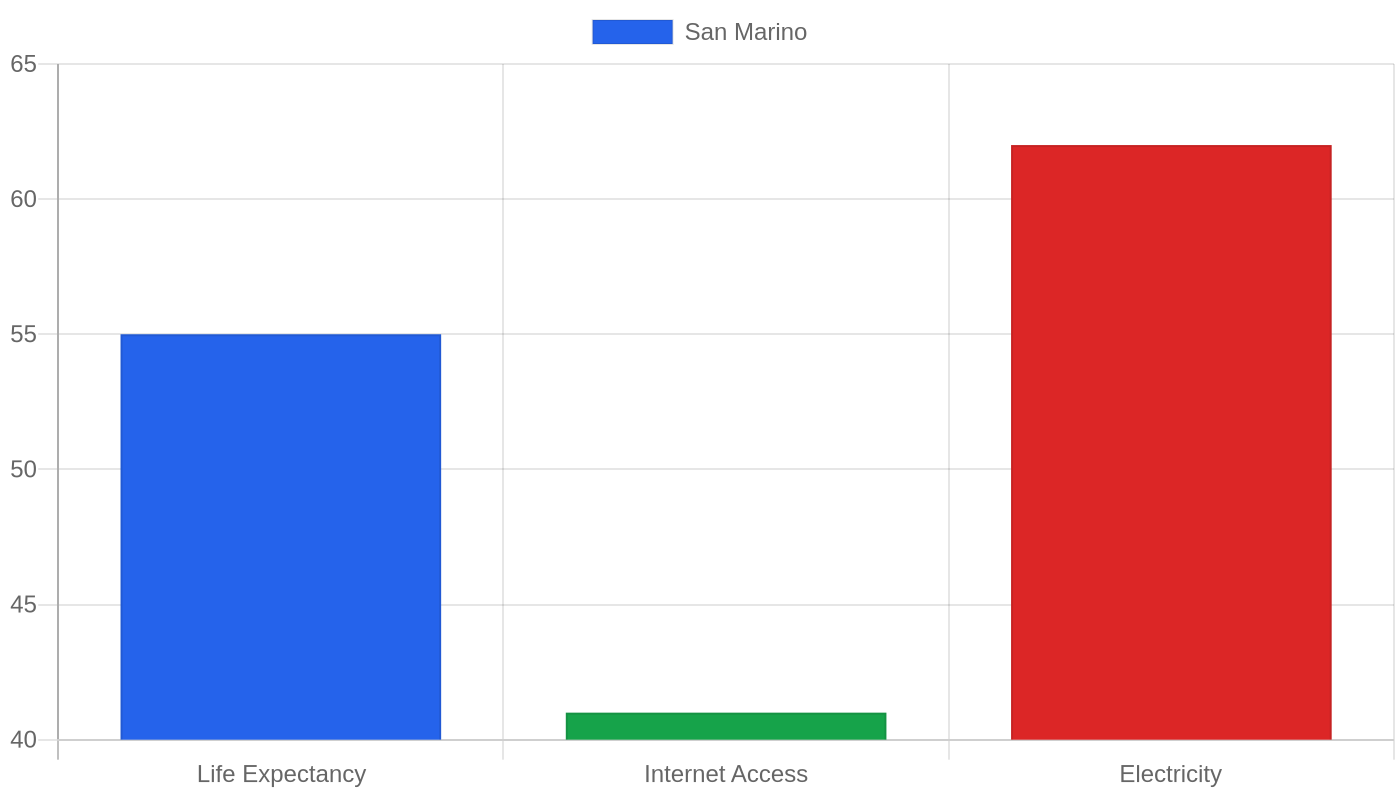
– San Marino’s economy remains heavily reliant on its political stability and institutional framework, though specific macroeconomic indicators from the World Bank are currently unavailable for detailed analysis.
– The nation’s position as a microstate surrounded by Italy means its economic fortunes are closely tied to regional dynamics, yet its independent political system offers unique advantages for niche business sectors.
The Balancing Act — Governance Meets Economic Stewardship
San Marino presents an intriguing puzzle for economic observers. The World Bank data for this ancient republic is notably sparse—GDP growth, inflation, unemployment, GDP figures, GDP per capita, GNI per capita, and population statistics are all listed as unavailable. This absence of data does not indicate economic insignificance; rather, it reflects the challenges of tracking macroeconomic performance in one of the world’s smallest sovereign states.
What we do know from the political framework is instructive. San Marino operates as a parliamentary representative democratic republic, a system that has endured for centuries. The captains regent serve as heads of state, a dual leadership model that provides continuity and checks on executive power. The secretary for foreign and political affairs acts as the de facto prime minister, steering economic policy through a pluriform multi-party system that requires coalition-building and consensus.
The Grand and General Council holds legislative power alongside the government, while an independent judiciary ensures the rule of law—a critical foundation for any economy seeking investment and stability. This institutional architecture, while complex for a population that the World Bank does not currently enumerate, provides the predictability that businesses and investors require. In a world of volatile political shifts, San Marino’s constitutional continuity is itself an economic asset.
The Price of Paradise — Housing and Daily Life in a Microstate
Without specific cost-of-living data from the World Bank, we must examine San Marino through the lens of its geography and political economy. As a landlocked microstate entirely surrounded by Italy, San Marino’s housing market and daily expenses are inevitably influenced by the broader Italian economic context, particularly the nearby regions of Emilia-Romagna and Marche.
Housing in San Marino likely commands a premium compared to neighboring Italian towns, given the cachet of sovereign residency and the limited land available for development. Rent versus buy decisions are shaped by the same factors that affect any small state: constrained supply, stable demand from those seeking the benefits of San Marino’s regulatory environment, and the absence of large-scale construction projects.
Daily expenses for food, utilities, and transportation probably mirror Italian costs, with some adjustments for import dependencies and local taxation policies.
The lack of formal data from the World Bank means we cannot draw precise comparisons to regional averages. What we can infer is that San Marino’s cost of living reflects its dual identity—a sovereign nation with its own fiscal policies and a small territory deeply integrated into the Italian economic sphere. For residents, this offers a blend of stability and accessibility that few other locations can match.
The Business Citadel — Investment Climate in the Land of the Captains Regent
The World Bank provides no list of top companies or major industries for San Marino, but the country’s political framework offers clear signals about its business environment. The parliamentary representative democratic republic structure, with its independent judiciary and stable multi-party system, creates conditions conducive to long-term investment planning.
San Marino’s absence from international crime indices—both crime index and safety index are listed as unavailable—suggests either a lack of comprehensive data collection or, more likely, a low-crime environment that does not generate significant statistical concern. For investors, safety and security are non-negotiable prerequisites, and San Marino’s reputation as a peaceful microstate aligns with its institutional strengths.
The sectors likely to thrive in San Marino include financial services, tourism, ceramics, and light manufacturing—traditional strengths that benefit from the country’s regulatory autonomy within the European context. The pluriform multi-party system means that no single political faction dominates economic policy, encouraging moderation and predictability.
Businesses operating here navigate a system where the secretary for foreign and political affairs coordinates economic diplomacy, and the Grand and General Council provides legislative oversight.
Safety, Stability, and the Quality of Quiet Sovereignty
San Marino’s political landscape is its most defining feature. The country operates without a formal head of government, instead relying on the secretary for foreign and political affairs to fulfill that role in practice. This arrangement, combined with the dual captains regent as heads of state, creates a governance structure that prioritizes collective leadership over individual authority.
The crime and safety indices from the World Bank are listed as not available, but San Marino’s long history as a peaceful republic speaks for itself. With no standing army and a tradition of neutrality, the country offers a quality of life defined by security rather than surveillance. The independent judiciary, mentioned in the political framework data, ensures that legal disputes are resolved fairly—a cornerstone of both safety and economic confidence.
For residents and visitors alike, San Marino provides a quality of life that blends Italian cultural richness with the efficiency of a small state. The absence of crime statistics may reflect the country’s scale rather than any deficiency in reporting. In microstates, social cohesion often substitutes for formal law enforcement, and San Marino’s centuries of uninterrupted republican governance suggest a society that manages its affairs with remarkable stability.
The Present Moment — What’s Happening in San Marino Right Now
The most current data available describes San Marino’s political framework as it exists today: a parliamentary representative democratic republic with captains regent as heads of state, a pluriform multi-party system, and the secretary for foreign and political affairs serving as the effective prime minister. This structure is not static—it evolves through elections to the Grand and General Council, which periodically reshapes the balance of power among the country’s multiple political parties.
The absence of recent economic indicators from the World Bank means we cannot report on specific inflation trends or policy shifts. What we can observe is the ongoing functioning of San Marino’s unique governance model. The executive power exercised by the government, combined with legislative authority shared with the Grand and General Council, means that economic policy emerges from negotiation rather than decree.
This consensus-based approach may slow decision-making but also prevents the abrupt policy reversals that can destabilize larger economies.
San Marino’s position as a European microstate outside the European Union but surrounded by it creates ongoing diplomatic and economic negotiations. The secretary for foreign and political affairs likely manages these relationships continuously, seeking to balance the benefits of EU proximity with the advantages of sovereignty.
In the current global environment of supply chain reorganization and regulatory competition, San Marino’s nimble size and stable politics position it as a potential beneficiary—if it can adapt its institutional strengths to new economic realities.
The Bottom Line
San Marino deserves the attention of investors and policymakers interested in microstate economics, political stability as an economic asset, and alternative governance models. The country’s parliamentary representative democratic republic, with its dual heads of state and consensus-driven multi-party system, offers a case study in how institutional design shapes economic outcomes.
While the World Bank data gaps limit quantitative analysis, the qualitative picture is clear: San Marino provides security, continuity, and regulatory autonomy in a world that increasingly values all three. For those watching the intersection of politics and economics in Europe’s smallest states, San Marino is not a footnote—it is a living laboratory.
Sources & Methodology
This article is authored by Economic Pulse Net for informational and research purposes. Economic Pulse Net sources its data from multilateral institutions, national statistics bureaus, and proprietary databases. All data is believed to be current as of the date of publication.
Published: July 22, 2026 | Category: Research — San Marino
Use these signals in your own platform
Economic Pulse publishes its live signal feed through a documented, read-only API. Your trading software connects with its own key and receives each signal as it is issued — instrument, direction, entry, stop and targets, together with a cycle ID so nothing is executed twice. The feed is independent of this website and cannot change it.
Signals are informational only and are not financial advice.