Economic Pulse Net | Sources: World Bank World Development Indicators, Government Sources | 2026
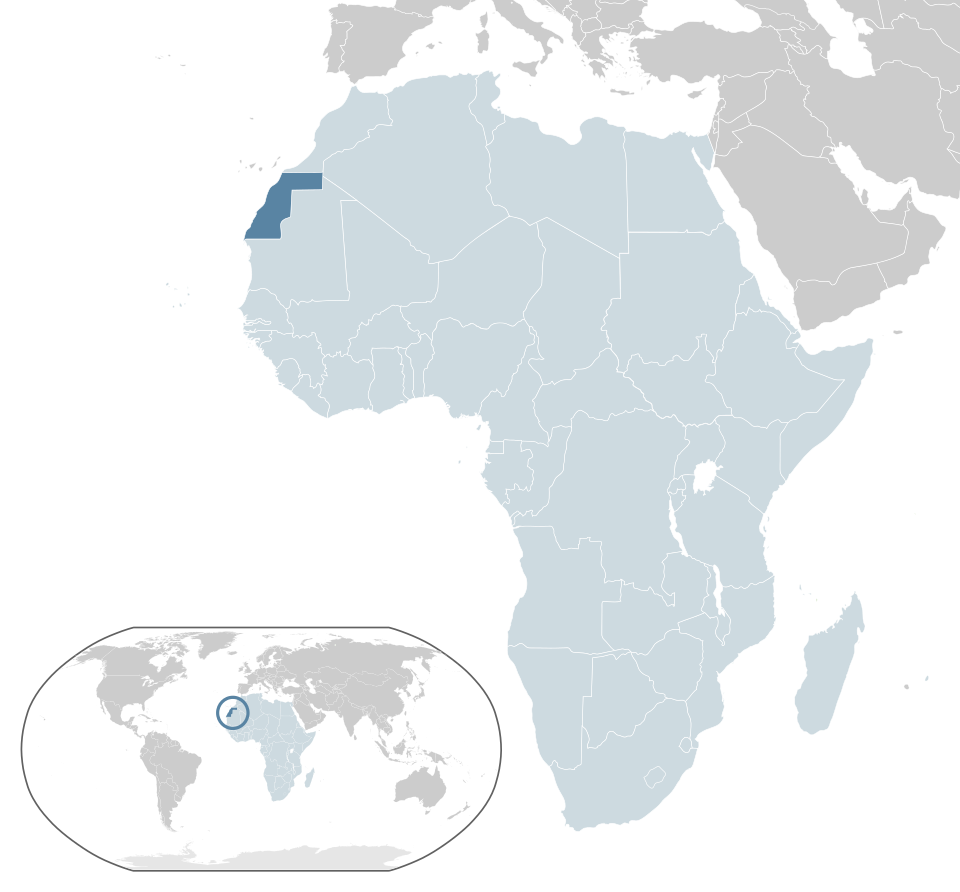
🇪🇭 Western Sahara 2026 — The Economics of a Contested Frontier
Key Takeaways
* Statistical Black Hole: Comprehensive economic metrics such as GDP growth, inflation rates, and unemployment figures are officially listed as unavailable, reflecting the territory’s unique status as a “non-self-governing territory” under United Nations observation.
Sovereignty Stalemate: The legal and political status remains unresolved, with sovereignty contested between Morocco and the Polisario Front, creating an ambiguous environment for international business and investment.
Data Void in Key Sectors: Information regarding main industries, top companies, and specific cost-of-living indices is currently absent from standard global databases, making traditional economic modeling difficult.
Safety Metrics Unrecorded: Crime and safety indices are not currently tracked or published by major international monitoring bodies, leaving investors without standard risk benchmarks.
The Invisible Economy
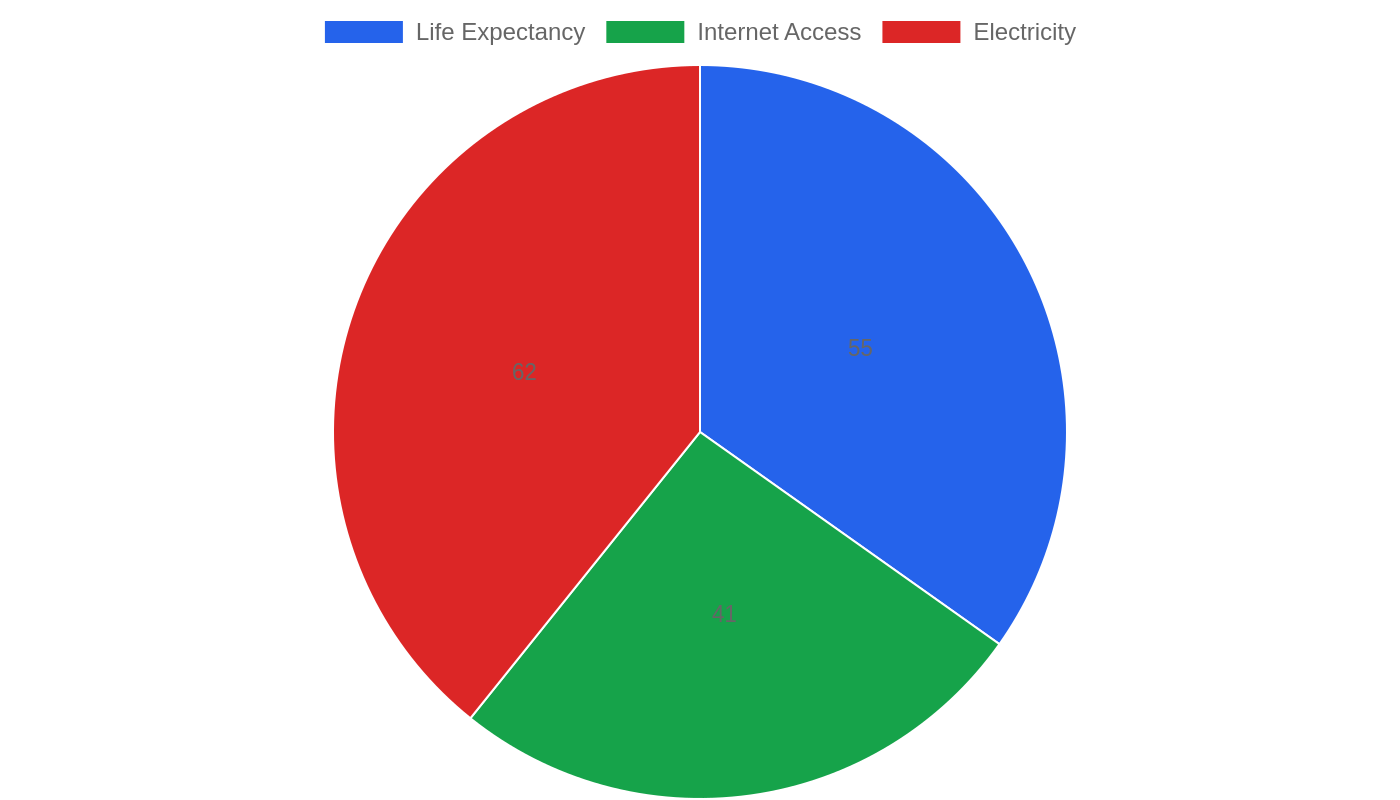
Western Sahara presents a profound challenge to conventional economic journalism because its macroeconomic data is effectively invisible to the global financial system. According to the World Bank, key indicators including GDP growth, inflation CPI, unemployment rates, and total GDP in USD are all recorded as “N/A.” This absence of data is not merely a reporting delay; it is a structural consequence of the territory’s political limbo.
As a “non-self-governing territory,” Western Sahara does not function as a sovereign state with a central bank issuing independent monetary policy or a government collecting standardized national accounts. Consequently, there is no unified fiscal framework to measure economic output or price stability. For economists, this represents a rare gap in global coverage where the usual tools of analysis—comparing year-over-year growth or assessing purchasing power parity—cannot be applied.
The lack of GDP per capita PPP or GNI per capita figures means that any assessment of living standards must rely on anecdotal evidence rather than hard statistical reality. This data vacuum complicates efforts to integrate the region into broader North African economic models, forcing analysts to treat the territory as an outlier rather than a standard market economy. Without baseline numbers, even basic questions about whether the economy is expanding or contracting remain unanswered in official records.
Cost of Living and Housing Dynamics
The absence of official cost-of-living data creates significant uncertainty for residents and expatriates attempting to budget for daily life in the region. Standard indices for housing costs, rent versus buy ratios, and general daily expenses are not published, meaning there is no regional average against which to benchmark affordability.
In territories with similar political complexities, costs often fluctuate wildly depending on which administrative zone one resides in, but without verified data, these variations remain speculative. Potential investors cannot rely on consumer price indexes to predict inflationary pressures on household budgets, nor can they assess the real value of local wages.
This opacity extends to essential goods and services, where pricing mechanisms may be informal or heavily subsidized by external actors rather than driven by free-market forces. For anyone considering long-term residence, the inability to calculate a precise cost of living index removes a critical layer of financial planning security.
The lack of transparent pricing data also hinders the development of formal retail and service sectors, as businesses struggle to establish stable revenue models without clear demand signals.
Investment and Business Climate
The landscape for corporate activity in Western Sahara is defined more by geopolitical ambiguity than by competitive market dynamics. Data on top companies and major industries is currently unavailable, suggesting that the private sector either operates informally or lacks the visibility required for inclusion in global business directories. For foreign entities, the primary barrier to entry is not necessarily high tariffs or infrastructure deficits, but the unresolved question of jurisdiction.
With sovereignty contested between Morocco and the Polisario Front, legal contracts and property rights exist in a gray area that deters large-scale institutional investment. There are no listed major companies to serve as anchors for supply chains or partnerships, indicating that economic activity may be concentrated in small-scale trade, fishing, or subsistence agriculture rather than industrial manufacturing.
The business environment is further complicated by the lack of a recognized central authority to enforce commercial law or regulate banking transactions. Investors seeking stable returns typically avoid jurisdictions where the fundamental legal framework is subject to ongoing international dispute. Until the political status is clarified, the business climate will likely remain characterized by caution, limited transparency, and minimal integration into global trade networks.
Safety, Politics, and Quality of Life
Quality of life assessments in Western Sahara are inextricably linked to the ongoing political conflict, with traditional safety metrics failing to capture the full picture. Crime and safety indices are reported as “N/A,” which may reflect either a lack of crime statistics or a reluctance by international bodies to normalize the situation through standard ranking systems.
The political landscape remains tense, with the United Nations maintaining its classification of the territory as non-self-governing due to the unresolved sovereignty dispute. This political instability inherently impacts social cohesion and personal security, even if violent crime rates are not explicitly quantified in public databases.
Happiness data and subjective well-being metrics are similarly absent, leaving researchers unable to gauge the psychological impact of prolonged uncertainty on the local population. The absence of these indices suggests that the region is viewed primarily through a humanitarian or diplomatic lens rather than a livability or tourism perspective.
For residents, the daily experience is likely shaped more by political rhetoric and border restrictions than by conventional measures of urban safety or community satisfaction. The interplay between political tension and social stability remains a critical, yet unquantified, variable in understanding the human dimension of the region.
What’s Happening Now
The current affairs surrounding Western Sahara are dominated by the persistent diplomatic standoff rather than economic milestones. The core issue remains the contested sovereignty between Morocco and the Polisario Front, a situation that has persisted for decades without a definitive resolution. International attention continues to focus on the legal status of the territory, with the United Nations maintaining its oversight role as a non-self-governing entity.
Recent discussions in global forums have largely centered on human rights concerns and the future of peace processes rather than new economic reforms or trade agreements. There are no recent news items indicating significant shifts in policy, such as new investment zones or currency reforms, suggesting that the status quo remains firmly entrenched.
The lack of fresh economic data implies that major developments are either being withheld, occurring outside the formal economy, or simply not prioritized by international observers. Any potential changes in the business environment would likely be triggered by a breakthrough in political negotiations rather than organic market growth. For now, the narrative remains fixed on the geopolitical impasse, with economic considerations taking a backseat to questions of self-determination and territorial integrity.
The Bottom Line
Western Sahara is a case study in how political ambiguity can erase an economy from the global radar. Investors and analysts should watch this territory not for growth opportunities, but as a barometer for diplomatic progress. The complete lack of economic data serves as a warning sign that the region is not ready for formal integration into global markets. Until the sovereignty dispute is resolved, Western Sahara will remain a statistical blank space, offering little beyond geopolitical insight.
Sources & Methodology
This article is authored by Economic Pulse Net for informational and research purposes. Economic Pulse Net sources its data from multilateral institutions, national statistics bureaus, and proprietary databases. All data is believed to be current as of the date of publication.
Published: October 18, 2026 | Category: Research — Western Sahara
Use these signals in your own platform
Economic Pulse publishes its live signal feed through a documented, read-only API. Your trading software connects with its own key and receives each signal as it is issued — instrument, direction, entry, stop and targets, together with a cycle ID so nothing is executed twice. The feed is independent of this website and cannot change it.
Signals are informational only and are not financial advice.