Economic Pulse Net | Sources: World Bank World Development Indicators, Government Sources | 2026
Key Takeaways
– A Financial Hub in the Making: Uganda’s corporate landscape is overwhelmingly dominated by financial institutions, with major players like Bank of Uganda, Barclays Bank of Uganda, and Bank of Baroda Uganda Limited anchoring the economy.
– A Concentrated Banking Sector: The top companies list reads like a roll-call of regional and international lenders, suggesting that finance—not manufacturing or tech—is the engine room of formal business activity.
– Centralised Executive Power: The political structure places the president firmly at the helm as both head of state and head of government, with a vice-president and prime minister serving in supporting roles—a system that shapes everything from policy speed to investor confidence.
– A Services-Led Economy: With telecommunications giants like Africell and conglomerates such as Aya Group in the mix, Uganda’s growth story is increasingly about services and connectivity rather than traditional agriculture alone.
The Quiet Revolution: Finance, Telecoms, and the Shape of Uganda’s Economy
Ask most outsiders what drives Uganda’s economy, and they might guess coffee, tea, or gold. But look at the companies that actually dominate the formal sector, and a very different picture emerges: this is a country being built on banking and connectivity. According to the World Bank, Uganda’s economic fundamentals remain a work in progress, but the composition of its top companies tells a compelling story about where the real momentum lies.
The financial sector is the undisputed heavyweight. From ABC Bank (Uganda) to BRAC Uganda Bank Limited, from Cairo International Bank to Bank of Africa Uganda Limited, the list of major employers and economic contributors reads like a directory of regional and international lenders. This concentration matters because banks are both a symptom and a cause of economic development—they reflect existing wealth while also enabling future investment.
When Bank of Baroda Uganda Limited or Bank of India (Uganda) expands its branch network or digitises its services, that’s not just corporate news; it’s a signal about how capital is flowing through the wider economy.
Yet the presence of Africell in the telecommunications sector points to another crucial dimension. Mobile money and digital financial services have revolutionised East Africa, and Uganda is no exception. A robust telecom sector doesn’t just connect people—it enables payments, remittances, and small business transactions that might otherwise remain informal.
The Aya Group’s presence as a conglomerate adds further texture, suggesting that diversified business interests are finding fertile ground in Uganda’s expanding market.
What the World Bank data doesn’t tell us—at least not yet—is the headline growth figures, inflation rates, or employment numbers for the latest period. That absence of hard data is itself notable. For investors and policymakers, it underscores the importance of looking beyond aggregate statistics to the structural signals embedded in the corporate landscape.
The real story of Uganda’s economy is not just about GDP growth rates but about the institutions being built to sustain that growth over the long term.
The Cost of Living Puzzle: What It Takes to Live and Work in Kampala
For the Ugandan professional class, the cost of living is a daily negotiation between aspiration and reality. Housing, as in most emerging markets, absorbs the largest share of household income. In Kampala, the capital, rental prices for modern apartments and houses in desirable neighbourhoods have historically commanded a significant premium over the national average, while more affordable options exist on the city’s periphery and in regional towns.
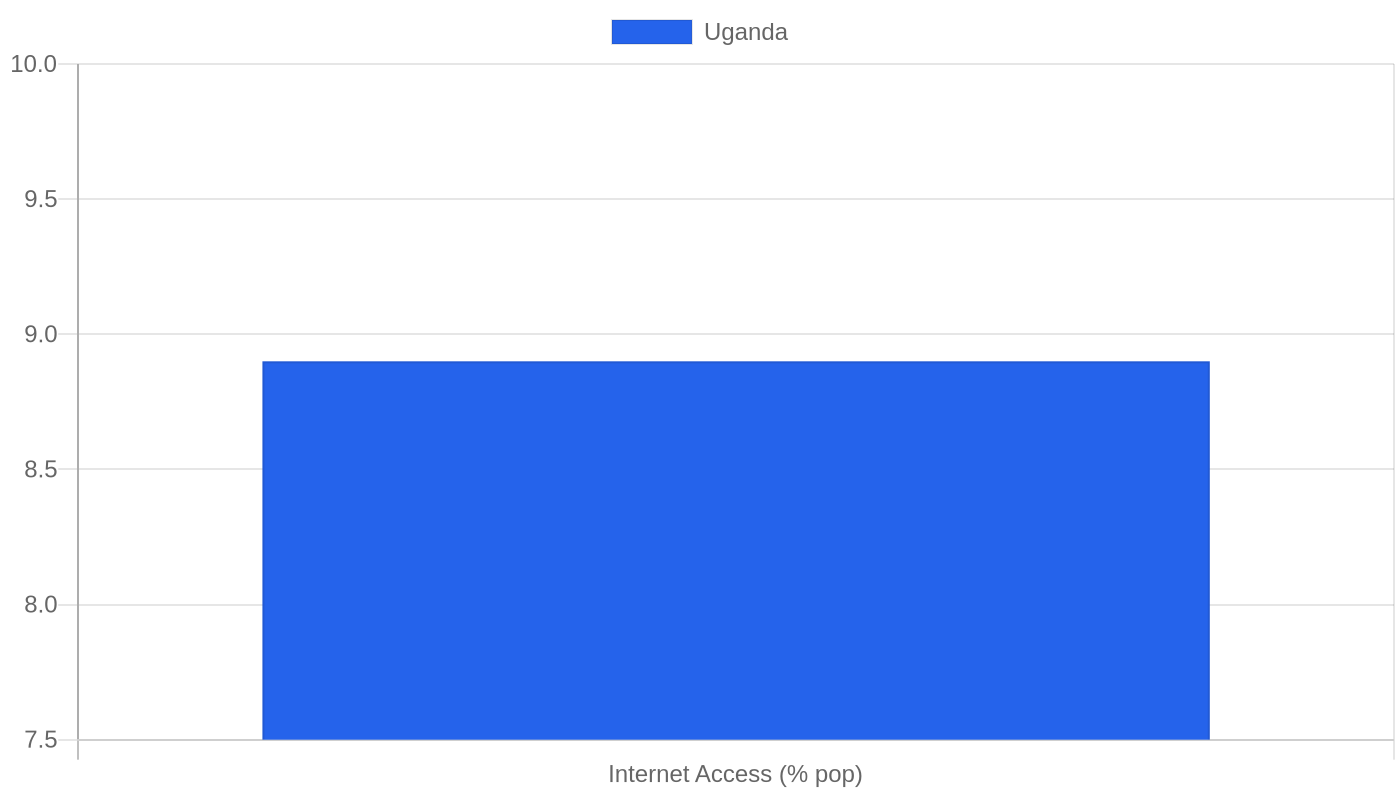
The absence of comprehensive cost-of-living indices in the available World Bank data makes precise comparisons difficult, but the broader East African context offers useful reference points. Uganda has traditionally been considered one of the more affordable markets in the region, particularly when compared to neighbouring Kenya and Tanzania. For expatriates and returning Ugandans, this relative affordability can be a draw—but it comes with caveats.
Infrastructure gaps, from unreliable power to patchy internet outside major urban centres, mean that the true cost of living isn’t always captured in rental prices and grocery bills.
What is clear is that the banking sector’s dominance has a direct impact on daily life. With institutions like Bank of Africa Uganda Limited and BRAC Uganda Bank Limited competing for retail customers, access to credit and savings products has expanded significantly. For the average Ugandan household, this means more options for managing money, financing small businesses, or simply storing savings safely.
The cost of living, in other words, is increasingly mediated by the cost of banking—and that’s a story worth watching.
The Business Climate: Where Capital Meets Opportunity
If Uganda’s top companies are any indication, the investment climate is defined by a curious mix of international confidence and domestic ambition. The sheer number of foreign banks operating in the country—Barclays, Bank of Baroda, Bank of India, Bank of Africa—speaks to a regulatory environment that, while not without its challenges, has historically been open enough to attract serious international players.
The telecommunications sector, anchored by Africell, represents another frontier. Mobile penetration in Uganda has grown steadily, and the intersection of telecoms and financial services—through mobile money platforms—has created opportunities that didn’t exist a decade ago. For investors, this convergence is arguably the most exciting development in the Ugandan market: a chance to participate in financial inclusion at scale.
Yet the business climate is not without its hurdles. The dominance of banking in the top companies list also suggests a certain narrowness in the formal economy. Manufacturing, agribusiness, and technology startups are present but less prominently represented. The conglomerate Aya Group helps diversify the picture, but the overall impression is of an economy where finance leads and other sectors follow.
For entrepreneurs looking to break into Uganda’s market, the key question is whether the banking sector’s strength will translate into broader credit availability for non-traditional industries.
Politics, Safety, and the Business of Governance
Uganda’s political system is one of centralised authority. The president serves as both head of state and head of government, wielding significant executive power. A vice-president and a prime minister are appointed to support the president’s agenda, but ultimate decision-making authority rests at the top.
This structure has implications for business: policies can move quickly when the executive branch is aligned, but it also means that political stability and investor confidence are closely tied to the fortunes of a single individual.
The available data does not include specific crime or safety indices for Uganda, and the absence of such metrics makes definitive claims difficult. What can be said is that Uganda’s political landscape has been relatively stable compared to some of its regional neighbours, which has historically been a point in its favour for foreign investors. The presence of so many international banks is, in itself, a vote of confidence in the country’s long-term stability.
Quality of life, for both Ugandans and expatriates, is shaped by these political realities. The centralisation of power can create predictability, but it also concentrates risk. When the political weather changes—whether through elections, succession debates, or policy shifts—the business climate can shift with it. For those watching Uganda, the interplay between political structure and economic opportunity is perhaps the most important dynamic to track.
What’s Happening Now: Uganda at a Crossroads
Right now, Uganda is in a moment of cautious optimism tempered by structural realities. The banking sector continues to expand and modernise, with institutions like BRAC Uganda Bank Limited and Cairo International Bank pushing into new markets and digital services. This is not just corporate news; it’s evidence that the financial infrastructure underpinning the economy is getting stronger, more inclusive, and more competitive.
At the same time, the political landscape remains defined by the executive’s dominant role. With the president serving as both head of state and head of government, policy direction is clear but succession questions loom in the background. For investors, this creates a paradox: the current environment is stable and business-friendly, but the medium-term outlook depends heavily on political transitions that have yet to unfold.
The telecommunications sector, led by Africell, continues to be a bright spot. As mobile connectivity expands and digital financial services become more sophisticated, Uganda is positioning itself as a serious player in East Africa’s digital economy. The challenge now is whether the rest of the economy—manufacturing, agriculture, technology—can catch up to the financial and telecom sectors that are currently carrying the flag.
The Bottom Line
Uganda is a country where the formal economy is being built, quite literally, by its banks and telecom companies. For investors and businesses looking at East Africa, the message is clear: this is a market with real financial infrastructure, genuine international participation, and a political system that offers both stability and concentration of power.
The absence of recent headline economic data from the World Bank should be read not as a lack of activity but as a reminder that the most important signals are often found in the private sector, not the statistics bureau. Watch Uganda for its banking sector, its digital ambitions, and its ability to translate financial strength into broader economic development. For those with a long-term horizon, the opportunity is real—but so are the risks of a system that depends so heavily on a single branch of government.
Sources & Methodology
This article is authored by Economic Pulse Net for informational and research purposes. Economic Pulse Net sources its data from multilateral institutions, national statistics bureaus, and proprietary databases. All data is believed to be current as of the date of publication.
Published: August 07, 2026 | Category: Research — Uganda
Use these signals in your own platform
Economic Pulse publishes its live signal feed through a documented, read-only API. Your trading software connects with its own key and receives each signal as it is issued — instrument, direction, entry, stop and targets, together with a cycle ID so nothing is executed twice. The feed is independent of this website and cannot change it.
Signals are informational only and are not financial advice.