Economic Pulse Net | Sources: World Bank World Development Indicators, Government Sources | 2026
Key Takeaways
* Stagnant Growth: With GDP growth projected at just 1.11% for 2025, the economy is struggling to regain momentum despite structural reforms.
The Employment Crisis: A staggering unemployment rate of 32.39% remains the country’s most pressing social and economic challenge, overshadowing other macroeconomic indicators.
Monetary Tightening: Recent interest rate hikes have been implemented to combat price shocks from global geopolitical conflicts, specifically citing impacts from the Iran war.
Corporate Stability: Despite macroeconomic headwinds, legacy giants like Standard Bank (1862) and Anglo American (1917) continue to anchor the financial and mining sectors.
Economic Headwinds and Structural Stagnation
South Africa’s economic landscape in 2025 is defined by a tense equilibrium between modest recovery attempts and persistent structural bottlenecks. According to World Bank data, the nation’s GDP growth is projected at a meager 1.11462608103956%, a figure that signals an economy operating well below its potential capacity.
This sluggish expansion occurs against a backdrop of relatively controlled inflation, with the Consumer Price Index (CPI) holding at 3.20550474112603%, suggesting that while price stability is being maintained, it comes at the cost of dynamic market activity. The human cost of this stagnation is visible in the labor market, where unemployment stands at a critical 32.391%, indicating that nearly one-third of the workforce is excluded from formal economic participation.
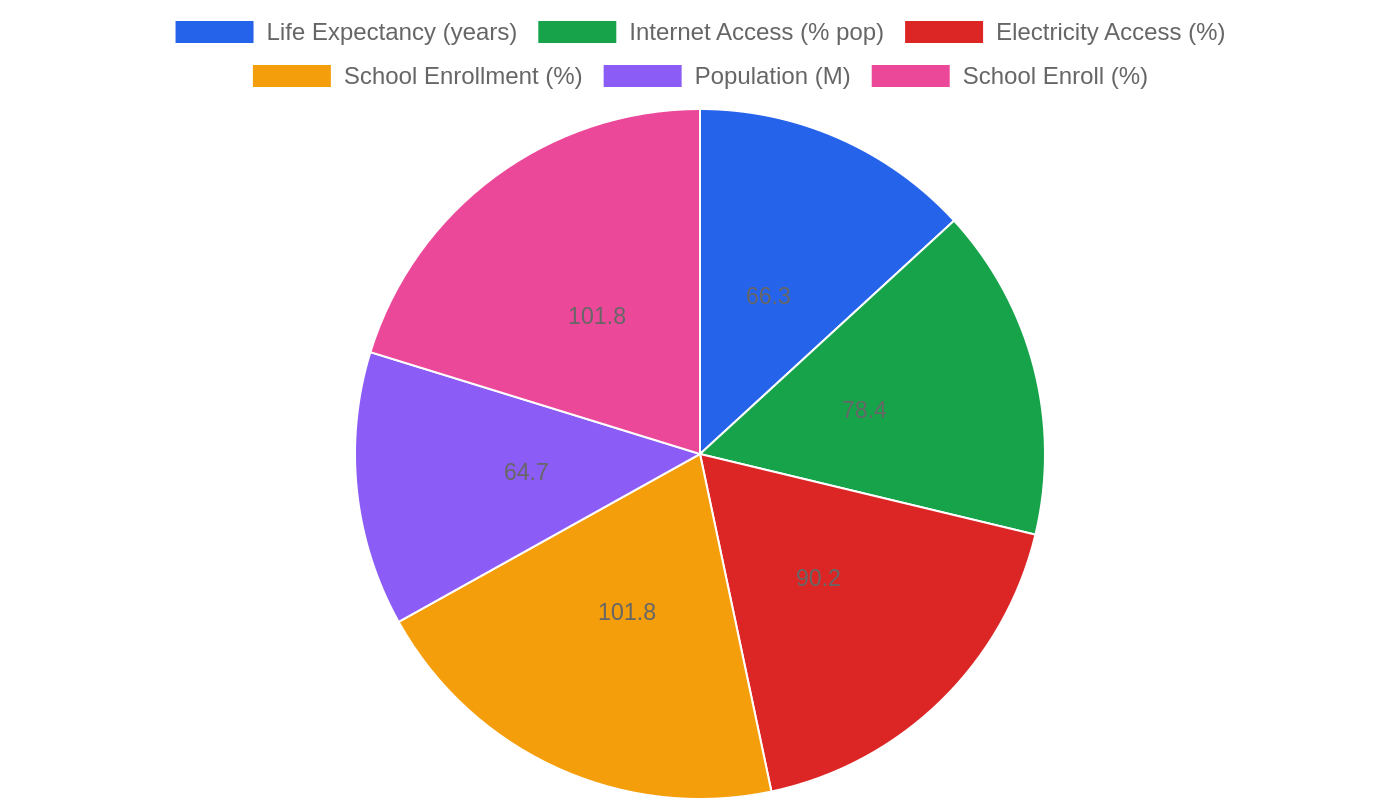
While the total GDP in USD is recorded at 427,184,325,997.307, the per capita reality tells a different story; with a population of 64,747,319, the GNI per capita sits at 6,270.0, highlighting significant wealth disparity. Even when adjusting for purchasing power parity, the GDP per capita of 15,905.6794419658 reflects a middle-income status that is increasingly difficult to sustain without higher productivity.
These numbers matter because they illustrate a country trapped in a low-growth trap, where demographic pressure outpaces job creation and income generation.
Cost of Living and Housing Realities
For residents and expatriates alike, navigating the daily expenses in South Africa requires careful budgeting amidst the broader economic constraints. While specific rental indices are not provided in the current dataset, the interplay between the 3.2% inflation rate and stagnant wage growth suggests that household budgets are under considerable strain.
The cost of living is heavily influenced by the performance of key retail and service providers, such as Shoprite Holdings, which plays a pivotal role in determining food security and daily expenditure for millions. For those considering property investment, the housing market is likely reflecting the broader economic caution, with buyers weighing the stability of currency against rising utility and maintenance costs.
Compared to regional averages, the affordability of entry-level housing may appear attractive in USD terms due to currency fluctuations, but local purchasing power remains limited by the high unemployment rate. Consequently, the decision to rent versus buy is often dictated by job security rather than pure investment logic, with many families opting for flexibility in response to the volatile employment landscape.
Daily expenses, from transport to groceries, are subject to the same inflationary pressures that drive the national CPI, making efficient resource management essential for financial health.
Investment Landscape and Corporate Powerhouses
The business environment in South Africa is anchored by a robust suite of multinational corporations that have demonstrated remarkable longevity and adaptability. Investors looking at the market must consider heavyweights like Anglo American, established in 1917, which continues to dominate the mining sector, a traditional pillar of the economy.
In the financial services space, the dominance of banks such as Standard Bank Group (1862), Nedbank (1888), and Absa Group Limited (1991) provides a stable, albeit competitive, ecosystem for capital deployment. The telecommunications sector is represented by MTN Group (1994), which facilitates digital connectivity crucial for modern business operations, while Sanlam (1918) and Old Mutual (1845) offer extensive insurance and asset management solutions.
Retail resilience is evident through entities like Bidvest (1988) and Shoprite Holdings (1979), which keep consumer goods flowing despite economic headwinds. Sasol (1950) adds another layer of complexity, representing the energy and chemical sectors that are vital for industrial output. These companies are not just passive participants but active drivers of policy dialogue and infrastructure development, shaping the regulatory environment in which smaller businesses operate.
Their presence offers foreign investors a gateway into the African continent, leveraging South Africa’s advanced legal and financial frameworks.
Safety, Politics, and Quality of Life
Living in South Africa involves navigating a complex political and social fabric that directly impacts quality of life. Politically, the nation operates as a parliamentary republic where the president serves as both head of state and head of government, deriving tenure from the confidence of the National Assembly.
This system ensures that the executive, legislature, and judiciary are all subject to the supremacy of the Constitution, with superior courts retaining the power to strike down unconstitutional actions—a critical safeguard for rule of law. However, safety remains a nuanced issue; while specific Crime and Safety Indices are listed as N/A in current datasets, the general discourse around urban security influences daily mobility and business operations.
The political stability provided by constitutional checks and balances offers a degree of predictability for long-term planning, even if short-term policy shifts occur. For expatriates and locals, the quality of life is often bifurcated, with access to high-quality private services contrasting sharply with public infrastructure challenges. Understanding this duality is essential for anyone assessing the non-financial risks associated with residing or investing in the country.
What’s Happening Now: Monetary Shifts and Market Reactions
The most immediate developments in South Africa revolve around monetary policy adjustments driven by external geopolitical shocks. As reported by CNBC Africa, the South African Reserve Bank has recently raised interest rates, explicitly citing price shocks resulting from the Iran war. This move underscores how global conflicts directly impact local inflation and borrowing costs, forcing the central bank to prioritize price stability over growth stimulation.
In contrast to neighboring Nigeria, which surprised markets with a rate cut due to divergence with market rates, South Africa’s approach highlights a more cautious stance toward imported inflation. Meanwhile, domestic business news from BusinessLive indicates a strategic pivot among insurers, with companies like Liberty targeting the middle-market segment with leaner, meaner products. This suggests that businesses are adapting to tighter credit conditions by optimizing their operational models and risk profiles.
The intersection of these factors—global energy prices, regional monetary divergence, and domestic corporate restructuring—creates a volatile but opportunity-rich environment for agile investors.
The Bottom Line
South Africa presents a compelling case for long-term investors who can tolerate short-term volatility and navigate complex regulatory landscapes. The country’s strong institutional framework, backed by historic financial and mining giants, offers a solid foundation for capital allocation. However, the high unemployment rate and sensitivity to global geopolitical shocks require a cautious, well-diversified approach.
It is a market best suited for those seeking exposure to African growth stories while mitigating risk through established, blue-chip enterprises.
Sources & Methodology
This article is authored by Economic Pulse Net for informational and research purposes. Economic Pulse Net sources its data from multilateral institutions, national statistics bureaus, and proprietary databases. All data is believed to be current as of the date of publication.
Published: September 26, 2026 | Category: Research — South Africa
Use these signals in your own platform
Economic Pulse publishes its live signal feed through a documented, read-only API. Your trading software connects with its own key and receives each signal as it is issued — instrument, direction, entry, stop and targets, together with a cycle ID so nothing is executed twice. The feed is independent of this website and cannot change it.
Signals are informational only and are not financial advice.