Economic Pulse Net | Sources: World Bank World Development Indicators, Government Sources | 2026
Key Takeaways
* Stagnant Growth: With GDP growth projected at just 1.11% for 2025, the economy is struggling to gain momentum despite a large population base.
Crisis Unemployment: A staggering unemployment rate of 32.39% highlights a severe structural labor market failure that threatens social stability.
Resilient Inflation: Consumer price inflation remains relatively controlled at 3.2%, offering some breathing room for monetary policy.
Corporate Giants: The business landscape is dominated by historic financial and industrial titans like Standard Bank, Anglo American, and Sasol, which anchor the formal economy.
Political Stability via Constitution: The parliamentary republic system ensures executive power is checked by Parliament and the judiciary, maintaining constitutional supremacy.
Economic Headwinds and Structural Bottlenecks
South Africa’s economic trajectory in 2025 presents a complex picture of modest expansion hampered by deep-seated structural issues. According to World Bank data, the country’s GDP growth is projected at a mere 1.11462608103956%, indicating an economy that is barely keeping pace with its demographic pressures. While the total GDP stands at a substantial USD 427,184,325,997.307, this aggregate figure masks significant disparities in wealth distribution and productivity.
The inflation CPI is recorded at 3.20550474112603%, suggesting that while prices are rising, they are doing so at a manageable rate compared to many emerging markets, which helps preserve some consumer purchasing power. However, the most alarming metric is the unemployment rate, which sits at a crippling 32.391%. This level of joblessness not only suppresses domestic demand but also creates long-term social risks that could undermine future investment.
For every person employed, nearly half the working-age population is out of work, creating a massive drag on potential GDP growth. The GDP per capita (PPP) of USD 15,905.68 reflects a middle-income status, yet the GNI per capita of USD 6,270 reveals that much of the income generated within the borders is leaving the country through repatriated profits or external debt servicing.
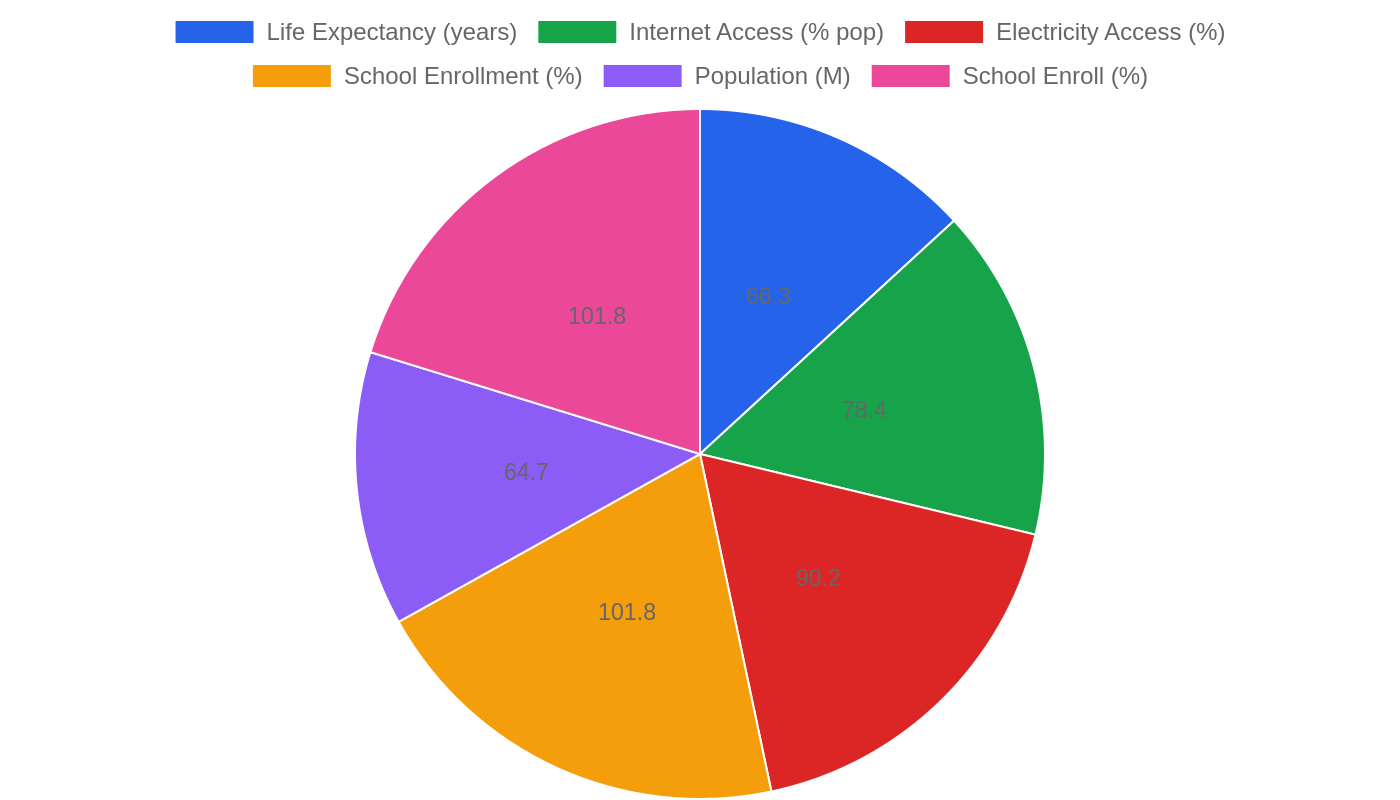
With a population of 64,747,319.0, the sheer scale of human capital available is vast, but the inability to absorb this labor force into productive employment remains the primary bottleneck for sustainable development.
Cost of Living and Daily Realities
For residents and expatriates alike, navigating the cost of living in South Africa requires a nuanced understanding of the divide between formal and informal economies. While specific housing indices are not provided in the current dataset, the broader economic indicators suggest a bifurcated reality where urban centers offer world-class amenities alongside significant challenges.
The moderate inflation rate of 3.2% implies that daily essentials are not spiraling out of control, allowing households to plan their budgets with relative predictability compared to high-inflation peers. However, the high unemployment rate suggests that for a significant portion of the population, “cost of living” is less about luxury spending and more about basic survival.
Rent versus buy decisions are heavily influenced by credit availability and interest rates, which are indirectly shaped by the central bank’s response to the 3.2% inflation target. In areas with strong corporate presence, such as Johannesburg and Cape Town, property markets may reflect global standards, whereas rural areas face different dynamics driven by agricultural output and local infrastructure.
Without precise rental yields or housing price indices, it is clear that the average citizen must balance the need for secure shelter against the pressure of stagnant wage growth. The disparity between the GNI per capita and the actual lived experience of the unemployed underscores the importance of social grants and informal sector activities in subsidizing the cost of living for millions.
Investment Landscape and Corporate Powerhouses
The South African business environment is anchored by a robust set of legacy companies that have evolved from colonial-era foundations into modern multinationals. These entities form the backbone of the JSE (Johannesburg Stock Exchange) and attract significant foreign portfolio investment. Anglo American, established in 1917, remains a global leader in mining, leveraging the country’s rich mineral resources.
Similarly, Sasol, founded in 1950, represents the nation’s expertise in energy and chemical production, particularly in coal-to-liquids technology. The financial sector is equally dominant, with giants like Standard Bank Group (1862), Nedbank (1888), Absa Group Limited (1991), and Sanlam (1918) providing critical banking and insurance services across the continent. Old Mutual (1845) adds another layer of historical depth to the financial services mix, showcasing the longevity of these institutions.
Beyond finance and resources, the consumer and service sectors are represented by Shoprite Holdings (1979), which dominates retail, and Bidvest (1988), which offers facility management solutions. MTN Group (1994) highlights the growing importance of telecommunications and digital connectivity in the economy. Investors looking at South Africa are essentially betting on the resilience of these established conglomerates, which have proven capable of adapting to political changes and global market shifts over decades.
Their international exposure provides a hedge against local volatility, making them key indicators of broader economic health.
Safety, Politics, and Quality of Life
South Africa operates as a parliamentary republic with a unique executive structure where the president serves as both head of state and head of government, deriving tenure from the confidence of Parliament. This system places a premium on legislative cooperation and constitutional adherence. The supremacy of the Constitution of South Africa is a defining feature of the political landscape, ensuring that the executive, legislature, and judiciary are all bound by legal frameworks.
Superior courts possess the power to strike down unconstitutional acts of Parliament or executive actions, providing a crucial check on potential authoritarian drift. The National Assembly, comprising 400 members, serves as the lower house where these democratic processes play out. Regarding safety, specific Crime and Safety Indices are listed as N/A in the current data, preventing a quantitative assessment of personal security risks.
However, the quality of life is often discussed in tandem with economic opportunity; high unemployment can correlate with higher crime rates in certain demographics, though this link is not explicitly quantified here. The political stability derived from constitutional rule offers a degree of predictability for long-term planning, even if day-to-day governance faces challenges.
Citizens navigate a complex environment where legal rights are strongly protected, but socioeconomic outcomes vary widely based on access to education and formal employment.
What’s Happening Now: Current Affairs and Market Moves
Recent developments indicate a dynamic shift in both local business success and global market influences affecting South Africa. Business leaders are increasingly recognizing that commercial success is intrinsically linked to social prosperity, as noted in recent commentary by Nompilo Morafu, highlighting a growing emphasis on inclusive economic models.
On the global stage, external factors continue to shape local markets; for instance, oil prices have slid over 2% as traders weigh geopolitical risks in Saudi Arabia against demand destruction concerns, impacting South Africa’s energy import costs. Within the telecom sector, Airtel Money reported a impressive 25% growth in first-half revenue in its maiden results, signaling strong adoption of mobile money services and digital financial inclusion.
Meanwhile, international political narratives, such as former President Trump’s predictions regarding the US economy and midterms, are being closely watched by South African investors who monitor global sentiment shifts. Markets remain reactive to these global cues, with CNBC Africa tracking real-time movements that influence capital flows into and out of the region.
These events suggest a period of adjustment where local businesses are innovating (like Airtel Money) while remaining vulnerable to external commodity price shocks and global political rhetoric. The interplay between local entrepreneurial success and global macroeconomic trends defines the current news cycle.
The Bottom Line
South Africa is a country of stark contrasts, offering immense resource wealth and sophisticated corporate structures alongside severe unemployment and slow growth. It should be watched by investors seeking exposure to African financial and mining sectors, provided they account for the high risk associated with labor market instability. Policymakers must address the 32.39% unemployment rate to unlock the potential of the 64 million-strong population.
Ultimately, the nation’s constitutional strength provides a stable foundation, but economic performance will depend on converting human capital into productive employment.
Sources & Methodology
This article is authored by Economic Pulse Net for informational and research purposes. Economic Pulse Net sources its data from multilateral institutions, national statistics bureaus, and proprietary databases. All data is believed to be current as of the date of publication.
Published: October 27, 2026 | Category: Research — South Africa
Use these signals in your own platform
Economic Pulse publishes its live signal feed through a documented, read-only API. Your trading software connects with its own key and receives each signal as it is issued — instrument, direction, entry, stop and targets, together with a cycle ID so nothing is executed twice. The feed is independent of this website and cannot change it.
Signals are informational only and are not financial advice.