Economic Pulse Net | Sources: World Bank World Development Indicators, Government Sources | 2026
Key Takeaways
* Growth Stagnation with Inflation Control: South Africa’s economy is projected to grow by just over 1.1% in 2025, indicating a fragile recovery that struggles to gain momentum despite successfully keeping inflation near the lower end of target ranges.
The Employment Crisis: With an unemployment rate hovering around 32.4%, the labor market remains one of the most challenging in the world, posing a significant barrier to inclusive economic growth and social stability.
Corporate Strength Amidst Macro Weakness: Despite macroeconomic headwinds, legacy giants like Standard Bank, Anglo American, and Shoprite continue to dominate local markets, showcasing the resilience of specific sectors even as broader growth stalls.
Trade Surplus Stability: Recent data highlights a trade surplus of 20.47 billion rand in August, suggesting that external demand for South African goods remains a critical pillar supporting the current account balance.
Economic Headwinds and Slow-Motion Recovery
South Africa’s economic trajectory in 2025 is defined by a narrow margin between stagnation and modest expansion. According to World Bank data, the country’s GDP growth is projected at 1.11462608103956%, a figure that underscores the structural bottlenecks holding back the continent’s most industrialized nation.
While this number represents positive territory, it is insufficient to rapidly reduce the staggering unemployment rate of 32.391%, which remains a chronic drag on consumer spending and social welfare systems. On the price stability front, the Central Bank has managed to keep inflation (CPI) relatively tame at 3.20550474112603%, providing some breathing room for households and businesses planning long-term investments.
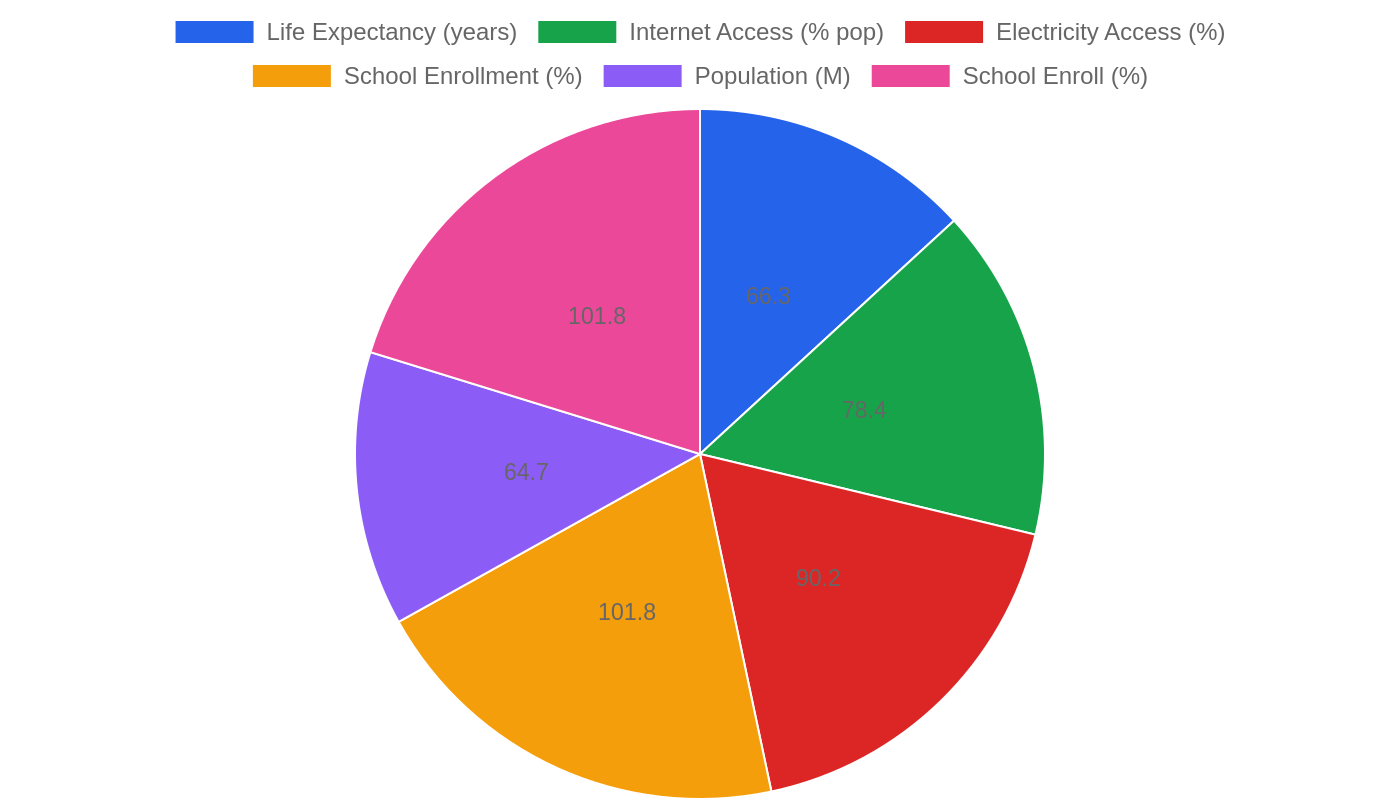
However, the disparity between this controlled inflation and high joblessness reveals a disconnect: prices are stable, but opportunities are scarce. For a population of nearly 64.7 million, the GDP per capita in PPP terms stands at 15905.6794419658, while the GNI per capita sits at 6270.0, highlighting a significant gap between what is produced within the borders and what actually accrues to citizens.
This data suggests an economy that is technically functioning but failing to generate broad-based prosperity, leaving the majority of the workforce excluded from formal economic gains.
The Cost of Living and Housing Dynamics
Navigating the cost of living in South Africa requires understanding the divergence between urban corporate hubs and broader residential realities. While specific nationwide housing indices are not provided in the current dataset, recent market signals indicate that rental growth is outpacing initial guidance, according to reports from Business Live. This trend suggests that tenants in major urban centers are facing increasing pressure, as landlords adjust rates upward faster than anticipated.
For the average citizen, balancing daily expenses against income levels becomes increasingly difficult when rent climbs while wage growth remains stagnant. The contrast between the high-end commercial real estate market and the needs of the 32.4% unemployed population creates a dual economy where housing security is a premium service rather than a guaranteed right.
Investors watching these trends must recognize that rental yields may be attractive, but they come with the risk of tenant affordability crises in a market already strained by high unemployment.
Investment Landscape and Corporate Giants
South Africa boasts a sophisticated financial and industrial sector anchored by some of the oldest and most robust companies on the continent. The business environment is dominated by legacy institutions such as Standard Bank Group (established in 1862), Old Mutual (1845), and Nedbank (1888), which provide deep capital markets liquidity and banking services essential for economic activity.
Beyond finance, resource and retail titans like Anglo American (1917) and Shoprite Holdings (1979) drive significant portions of the GDP, leveraging South Africa’s mineral wealth and extensive distribution networks. Newer entrants and tech-focused firms, including MTN Group (1994) and Sasol (1950), add diversity to the market, bridging telecommunications and energy sectors. Bidvest (1988) and Sanlam (1918) further round out a corporate landscape that is highly concentrated but globally competitive.
For investors, these entities offer exposure to a market that, while small in absolute size, is mature and regulated, though they must navigate the operational risks associated with the broader political and labor environment.
Political Framework and Social Safety
The political structure of South Africa is unique among parliamentary republics, featuring a president who serves as both head of state and head of government, dependent entirely on the confidence of Parliament. This system ensures that the executive branch is directly accountable to the legislature, operating under the supremacy of the Constitution, which empowers superior courts to strike down unconstitutional acts.
While the legal framework provides strong checks and balances, the social fabric is tested by high crime levels; however, specific Crime and Safety Indices are not currently available in the provided data. The absence of these specific metrics does not negate the importance of safety in assessing quality of life, but it shifts the focus to the institutional strength of the judiciary and the rule of law as primary stabilizers.
Citizens and expatriates alike rely on this constitutional order to protect property rights and civil liberties, even as they navigate the challenges of a society with deep historical inequalities. The interplay between a strong constitutional democracy and a struggling labor market creates a complex environment where political stability exists alongside economic precarity.
Current Affairs and Market Movements
Right now, the South African economy is being closely watched by traders and policymakers alike as key indicators flash mixed signals. CNBC Africa reports that the South African rand has firmed up as traders assess a raft of local economic data, suggesting that currency markets are reacting positively to short-term stability or improved trade flows.
This sentiment is reinforced by news that South Africa’s trade surplus reached 20.47 billion rand in August, a figure that demonstrates the country’s ability to export more than it imports during this period, thereby supporting the currency and foreign reserves. Simultaneously, the property sector is seeing shifts, with Business Live noting that PHP rental growth stays ahead of guidance, indicating persistent demand in specific housing segments.
These developments point to a market that is finding pockets of strength amidst broader uncertainty. As noted in market updates from CNBC Africa, investor attention is currently fixed on how these trade figures and currency movements will influence future monetary policy decisions. The convergence of a strong trade balance and a firming currency offers a glimmer of optimism, even as underlying structural issues like unemployment remain unresolved.
The Bottom Line
South Africa presents a compelling case for investors and analysts who understand that surface-level stability can mask deeper structural challenges. The combination of low inflation and a trade surplus offers a foundation for recovery, but the 32.4% unemployment rate remains a critical vulnerability that no amount of corporate profitability can fully offset.
Those looking to engage with the South African market should focus on established players in finance and resources, while remaining cautious about consumer-facing sectors sensitive to wage stagnation. Ultimately, South Africa is a country of contrasts—rich in institutional history and natural resources, yet constrained by slow growth and social inequality—making it a high-risk, high-potential environment for those willing to navigate its complexities.
Sources & Methodology
This article is authored by Economic Pulse Net for informational and research purposes. Economic Pulse Net sources its data from multilateral institutions, national statistics bureaus, and proprietary databases. All data is believed to be current as of the date of publication.
Published: October 01, 2026 | Category: Research — South Africa
Use these signals in your own platform
Economic Pulse publishes its live signal feed through a documented, read-only API. Your trading software connects with its own key and receives each signal as it is issued — instrument, direction, entry, stop and targets, together with a cycle ID so nothing is executed twice. The feed is independent of this website and cannot change it.
Signals are informational only and are not financial advice.