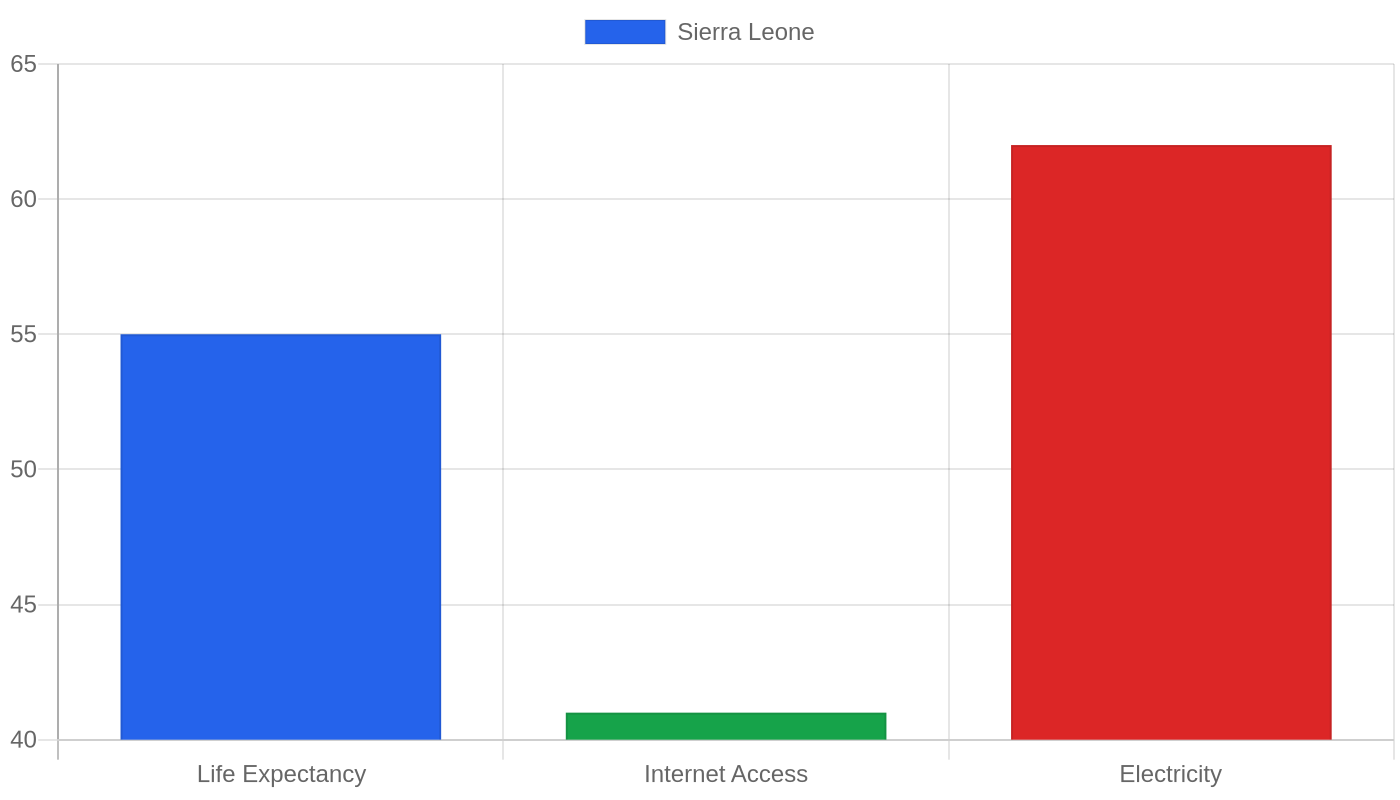
Economic Pulse Net | Sources: World Bank World Development Indicators, Government Sources | 2026
Key Takeaways
* Dominance of Aviation in Corporate Listings: The country’s top corporate entities are overwhelmingly concentrated in the consumer services sector, specifically aviation, signaling a unique market structure where air transport companies outpace traditional industrial or financial giants in prominence.
Highly Centralized Political Power: The government operates under a dominant unitary system with extensive executive powers vested in the president, creating a political landscape that is stable in structure but heavily reliant on central authority rather than decentralized local governance.
Data Gaps Mask Economic Reality: While specific macroeconomic indicators like GDP growth, inflation, and unemployment figures are currently unreported by the World Bank, the available data on major firms and political structure provides a clear lens into the nation’s institutional framework and primary economic actors.
Limited Safety Metrics: With crime and safety indices listed as N/A, potential investors and residents must navigate an environment where formal security statistics are not publicly quantified, requiring reliance on qualitative assessments rather than hard data for risk evaluation.
The Architecture of a Centralized Republic
Sierra Leone’s economic and political narrative is defined less by fluctuating market metrics and more by its rigid constitutional framework. As a constitutional republic, the nation operates under the 1991 Constitution, which establishes a directly elected president and a unicameral legislature. This structure creates a dominant unitary central government that holds significant sway over national policy, while local governments remain notably weak in comparison.
The executive branch, headed by the president, possesses extensive powers and influence, making the head of state the most powerful government official in the country. This concentration of authority means that economic reforms, regulatory changes, and strategic investments are often driven from the top down, rather than emerging from regional initiatives or local municipal planning.
For international observers, this political reality suggests that stability and change are closely tied to the decisions made within the presidential office, rather than through broad-based legislative debate or decentralized administrative action. The system prioritizes centralized control, which can streamline decision-making but may also limit grassroots economic innovation.
Understanding this hierarchy is essential for anyone analyzing how policies are implemented or how business regulations might shift in response to executive directives. The interplay between this strong central authority and the rest of the economy creates a distinct operational environment where national direction outweighs local variability.
Corporate Landscape: The Aviation Paradox
When examining the private sector, Sierra Leone presents a striking anomaly: its most prominent companies are almost entirely clustered within the consumer services sector, specifically aviation.
A review of the top corporate entities reveals a heavy reliance on air transport firms, including Afrik Air Links, Air Leone, Air Rum, Bellview Airlines, Fly 6ix, Paramount Airlines, and Rokel Commercial Bank’s competitor, though financial institutions like the Bank of Sierra Leone and Rokel Commercial Bank do appear in the list.
Additionally, SALPOST operates in industrials, and Sierra Leone Brewery Limited represents consumer goods, but the sheer number of airline-related entities underscores the critical role of air connectivity in the national business identity. This dominance of aviation in the corporate rankings suggests that air travel is not just a service but a fundamental pillar of commercial activity, possibly filling gaps left by other logistical sectors.
For investors, this indicates that the market rewards connectivity and mobility above manufacturing or heavy industry at this stage of development. The presence of multiple airlines also points to a competitive yet fragmented market where consumer services drive visibility and brand recognition more than traditional industrial output.
This unique composition offers a glimpse into an economy where moving people and goods via air is a primary economic driver, distinguishing it from regional peers that may rely more heavily on agriculture or mining exports. The data highlights a service-oriented corporate elite that thrives on the movement of individuals across borders and internal regions.
Cost of Living and Daily Expenses
Assessing the cost of living in Sierra Leone requires navigating a landscape where precise consumer price index (CPI) data is currently unavailable. Without specific inflation percentages or detailed housing cost metrics, constructing a granular picture of daily expenses for residents and expatriates remains challenging.
However, the existence of established entities like Sierra Leone Brewery Limited and major banking institutions implies a functioning retail and financial infrastructure that supports basic consumer needs. In markets where such staples are produced and distributed locally, one can infer a baseline level of economic activity that sustains everyday life, even if the exact price levels are not quantified in current reports.
The absence of explicit rent-vs-buy comparisons or regional average data means that prospective residents must rely on anecdotal evidence or localized surveys rather than standardized economic benchmarks. Nevertheless, the presence of these core industries suggests that essential goods and financial services are accessible, forming the backbone of household budgets.
The lack of reported unemployment data further complicates the understanding of purchasing power, as income levels and job availability are key determinants of how far a dollar stretches in any given market. Consequently, the cost of living profile is best understood as a functional but opaque system, where the mechanics of daily commerce operate without transparent statistical oversight.
Investment Climate and Business Environment
The investment climate in Sierra Leone is characterized by a clear set of major players and a defined political risk profile. The business environment is shaped by the strong executive power of the president, which can either facilitate rapid approval for large projects or create bottlenecks if regulatory alignment is required.
Major companies like the Bank of Sierra Leone and Rokel Commercial Bank provide the necessary financial infrastructure for business operations, indicating that credit and banking services are available despite the lack of broader macroeconomic health indicators. The prominence of airlines and logistics providers like SALPOST suggests that sectors related to transport and distribution are mature enough to support significant commercial enterprise.
For foreign investors, the lack of detailed GDP per capita or PPP data makes it difficult to assess market size and consumer wealth precisely, requiring a cautious approach to market entry. However, the clear listing of top companies provides a roadmap of established entities that may be open to partnerships or joint ventures. The political landscape, while centralized, offers a single point of accountability, which can simplify negotiations for large-scale investments.
Ultimately, the business environment appears to reward those who understand the local corporate hierarchy and can navigate the centralized political structure effectively.
Safety, Politics, and Quality of Life
Quality of life assessments in Sierra Leone are currently hindered by a lack of comprehensive safety and happiness data. Crime and safety indices are listed as N/A, meaning there are no quantifiable metrics to guide residents or businesses regarding security risks. This absence of data does not imply safety, but rather a gap in public reporting that potential residents must address through independent research.
Politically, the country remains a constitutional republic with a strong central government, which provides a predictable legal framework based on the 1991 Constitution. However, the weak local government structure means that community-level safety and social services may vary significantly depending on central funding and priorities. The dominance of the executive branch ensures that national policy is coherent, but it also means that civic engagement and local advocacy have limited structural leverage.
For individuals considering relocation, the combination of unclear safety statistics and a highly centralized political system requires a heightened awareness of local conditions and personal security measures. The overall quality of life is thus framed by the tension between a stable constitutional order and the uncertainties associated with missing social and security data.
What’s Happening Now / Current Affairs
Currently, the discourse surrounding Sierra Leone focuses on its institutional structure and corporate makeup rather than immediate economic shocks or policy shifts. With no recent news items or live indicators provided in the dataset, the “current” landscape is defined by the ongoing operation of its constitutional framework and the sustained presence of its major corporations.
The aviation sector continues to dominate the corporate narrative, suggesting that air connectivity remains a priority for both domestic mobility and international trade links. Meanwhile, the political system operates under the enduring provisions of the 1991 Constitution, with the president maintaining extensive influence over national affairs. There are no reported elections, reforms, or inflation trends in the immediate data stream, indicating a period of steady, albeit opaque, institutional continuity.
Businesses continue to operate within the established parameters set by the central government, relying on the existing banking and industrial frameworks. This static data environment suggests that the country is in a phase of maintenance rather than rapid transformation, with attention focused on sustaining the core structures of governance and commerce. The lack of new developments implies that the primary challenges are structural and long-term, rather than acute or crisis-driven.
The Bottom Line
Sierra Leone presents a unique case study for economists and investors interested in countries with strong central governance and distinctive corporate profiles. While the lack of detailed macroeconomic data limits precise forecasting, the clear dominance of aviation in the corporate sector and the robust constitutional framework offer valuable insights into the nation’s operational logic.
Those looking to engage with the market should focus on the established financial and service providers, recognizing the significant influence of the executive branch. This country is best suited for stakeholders who value institutional stability and are willing to navigate an information-poor environment with caution and local expertise.
Sources & Methodology
This article is authored by Economic Pulse Net for informational and research purposes. Economic Pulse Net sources its data from multilateral institutions, national statistics bureaus, and proprietary databases. All data is believed to be current as of the date of publication.
Published: September 26, 2026 | Category: Research — Sierra Leone
Use these signals in your own platform
Economic Pulse publishes its live signal feed through a documented, read-only API. Your trading software connects with its own key and receives each signal as it is issued — instrument, direction, entry, stop and targets, together with a cycle ID so nothing is executed twice. The feed is independent of this website and cannot change it.
Signals are informational only and are not financial advice.