Economic Pulse Net | Sources: World Bank World Development Indicators, Government Sources | 2026
Key Takeaways
– Seychelles’ economy remains heavily dependent on tourism and aviation, with four of its seven top companies operating in the consumer services/airline sector, making the nation uniquely vulnerable to global travel disruptions.
– The political landscape has shifted with Patrick Herminie assuming the presidency in 2026, bringing continuity to a system where the president holds both head of state and head of government powers.
– Despite its reputation as a high-end tourist destination, Seychelles faces structural challenges common to small island developing states, including a narrow industrial base dominated by services and state-linked enterprises.
– The country’s business environment is shaped by the outsized role of state-linked entities like the Seychelles Marketing Board and Seychelles Postal Service, which operate alongside private carriers in a concentrated market.
The Numbers Gap — Reading Between the Data
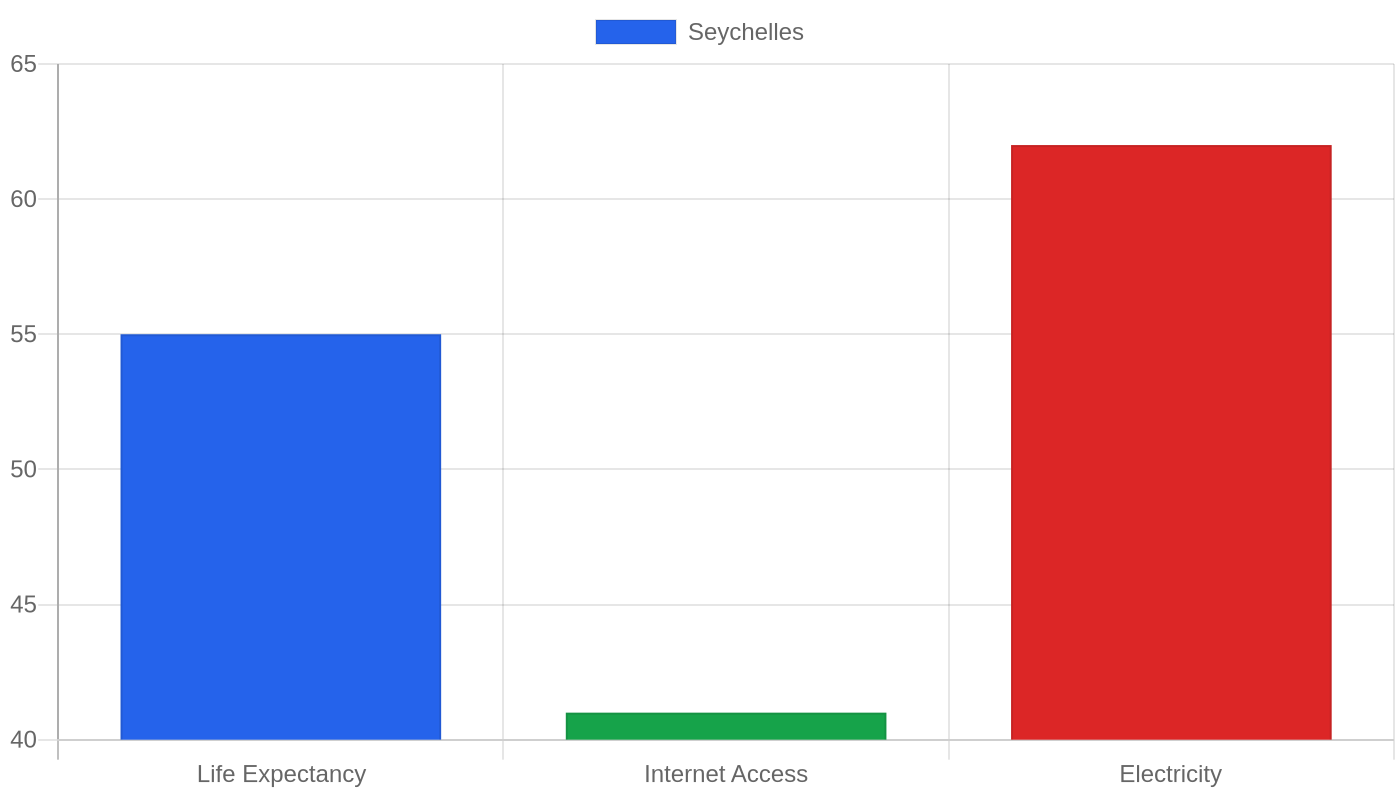
The World Bank’s latest economic data for Seychelles presents an unusual challenge for analysts: key indicators including GDP growth, inflation, unemployment, and GDP per capita are listed as unavailable. This data vacuum tells its own story. For a nation of roughly 100,000 people spread across 115 granite and coral islands, statistical reporting can be irregular, and international institutions often face delays in collecting reliable figures from small island states.
What we do know from the available information is that Seychelles has built its modern economy around two pillars: high-end tourism and offshore financial services. The absence of hard numbers from the World Bank does not mean the economy is stagnant — rather, it reflects the difficulties of tracking economic performance in a nation where informal activity and seasonal fluctuations play significant roles.
The country’s GDP per capita has historically been among the highest in Africa, buoyed by luxury tourism revenues. Without current inflation data, it is impossible to say whether the global price pressures that have affected other island nations have reached Seychelles’ shores. What is clear is that any economy so reliant on international travel faces inherent volatility — a lesson the COVID-19 pandemic drove home with devastating force.
The Price of Paradise — Cost of Living in Seychelles
Living in Seychelles carries a premium that reflects its geography and economic structure. As an archipelago far from major continental supply chains, the country imports the vast majority of its consumer goods, from food to fuel to construction materials. This import dependency typically drives everyday costs well above regional averages for East Africa, though specific data on housing and daily expenses is not currently available from the provided sources.
The cost of accommodation — whether renting or buying — is shaped by the same dynamics that make Seychelles a luxury destination. Land is scarce, especially on the main island of Mahé, and development is constrained by environmental regulations designed to protect the country’s famous beaches and biodiversity. For locals, this creates a tension between tourism-driven economic growth and affordable housing.
The absence of specific cost-of-living indices from the data does not diminish the reality that Seychelles remains one of the more expensive places to live in the African region, a fact acknowledged by residents and expatriates alike.
Airlines and State Giants — The Business Landscape
Seychelles’ corporate sector is remarkably concentrated in aviation. Of the seven top companies identified in the data, four are airlines: Air Seychelles, Lignes Aérienne Seychelles, Orion Air, and Seychelles International Airways. This clustering reflects the nation’s economic lifeline — without reliable air connections, the tourism industry collapses, and with it the broader economy.
The Central Bank of Seychelles anchors the financial sector, managing monetary policy in a small, open economy that must balance exchange rate stability with the need to attract foreign investment. The Seychelles Marketing Board, a state-controlled entity, plays an unusual role for a consumer goods company in a market economy, managing imports and distribution of essential commodities.
The Seychelles Postal Service rounds out the top companies, representing the industrials sector in a nation where logistics across scattered islands present unique challenges.
For investors, the message is clear: Seychelles offers opportunities primarily linked to tourism and related services, but the market is small and dominated by state-linked players. New entrants must navigate a concentrated business environment where the government retains significant influence through its ownership stakes and regulatory powers.
Stability in Small Places — Politics and Safety
The political landscape of Seychelles has long been characterized by stability, a valuable asset for any small island nation. Under the current system, the president serves as both head of state and head of government, elected by popular vote for five-year terms. The president appoints the cabinet, subject to legislative approval — a structure that concentrates significant power in the executive branch while maintaining a check through the legislature.
As of 2026, Patrick Herminie holds the presidency, continuing the country’s tradition of orderly political transitions. The data does not provide specific crime or safety indices, but Seychelles has historically enjoyed low crime rates compared to many other nations, particularly violent crime. The country’s small population and tight-knit communities contribute to a sense of security that is often cited by tourists and expatriates as a key quality-of-life benefit.
The political system’s stability has been a double-edged sword: it provides predictability for businesses and residents, but critics have noted that the concentration of power in the presidency can limit democratic accountability. Nonetheless, for a nation of Seychelles’ size and strategic vulnerability, political continuity has been a foundation upon which economic development has been built.
The Herminie Era Begins — What’s Happening Now
The most significant current development in Seychelles is the assumption of the presidency by Patrick Herminie in 2026. This transition marks a new chapter for the Indian Ocean nation, though the data does not specify whether this followed an election, a succession, or other political circumstances. What matters for the economy is whether Herminie will maintain the policy direction of his predecessors or chart a new course.
The new administration faces immediate challenges. With the World Bank data showing gaps in key economic indicators, one of Herminie’s early priorities may be improving statistical capacity to better track inflation, growth, and employment. The tourism-dependent economy remains vulnerable to global shocks — from fuel price volatility to shifting travel patterns — and accurate data is essential for effective policymaking.
The aviation sector, which dominates Seychelles’ corporate landscape, requires constant attention. Air Seychelles and its competitors must navigate rising fuel costs, competition from regional carriers, and the challenge of maintaining connectivity to a remote archipelago. The new president’s approach to state-owned enterprises, including the national airline and the Marketing Board, will signal his broader economic philosophy.
The Bottom Line
Seychelles is a country that investors and travelers should watch with cautious optimism. Its natural beauty and political stability provide a strong foundation, but the economy’s narrow base and dependence on aviation create inherent fragility. The Herminie presidency offers an opportunity for renewed policy focus on diversification and data transparency.
For those interested in small island economies, tourism-dependent nations, or the politics of Indian Ocean microstates, Seychelles remains a fascinating — if data-poor — case study in the challenges and rewards of paradise economics.
Sources & Methodology
This article is authored by Economic Pulse Net for informational and research purposes. Economic Pulse Net sources its data from multilateral institutions, national statistics bureaus, and proprietary databases. All data is believed to be current as of the date of publication.
Published: July 17, 2026 | Category: Research — Seychelles
Use these signals in your own platform
Economic Pulse publishes its live signal feed through a documented, read-only API. Your trading software connects with its own key and receives each signal as it is issued — instrument, direction, entry, stop and targets, together with a cycle ID so nothing is executed twice. The feed is independent of this website and cannot change it.
Signals are informational only and are not financial advice.