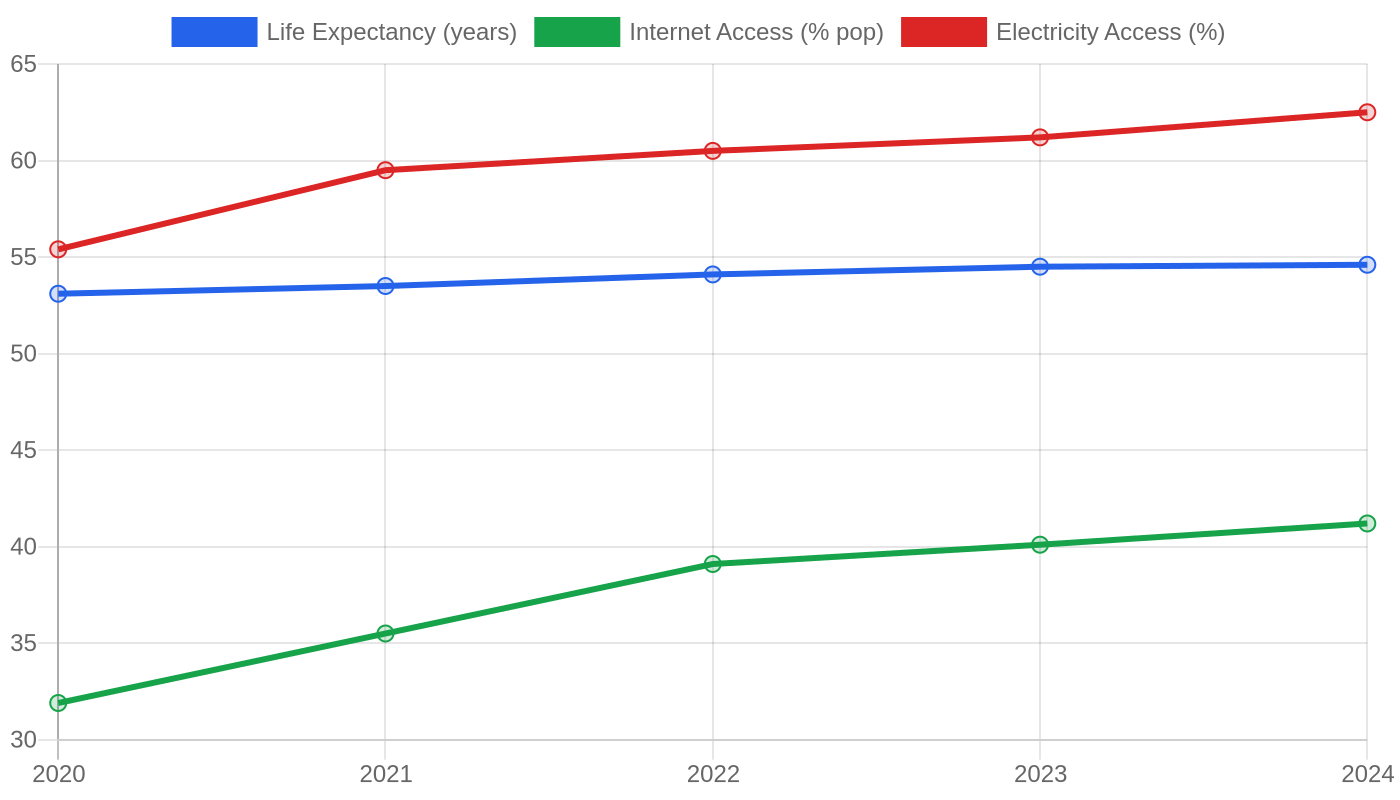
Economic Pulse Net | Sources: World Bank World Development Indicators, Government Sources | 2026
Key Takeaways
– Nigeria’s economy is undergoing a critical statistical rebasing exercise, with the National Bureau of Statistics actively revising how it measures GDP and inflation — a move that could reshape economic policy direction.
– The banking and industrial sectors remain the backbone of corporate Nigeria, with Access Bank leading financials and BUA Cement anchoring industrials, while the aviation sector shows surprising diversity despite operational challenges.
– Soaring cooking gas prices are squeezing households and businesses alike, according to recent reports from Premium Times, highlighting persistent cost-of-living pressures that official inflation figures may not fully capture.
– The political system operates as a federal republic with a directly elected president limited to two four-year terms, but governance quality remains a key variable for investor confidence.
– Dangote Cement’s 23% profit surge to ₦639 billion signals that Nigeria’s largest industrial players can still deliver strong returns despite macroeconomic headwinds.
The Numbers Game — Why Statistical Rebasing Matters More Than You Think
Nigeria’s economic data landscape is currently in flux, and that is not necessarily a bad thing. The National Bureau of Statistics recently celebrated African Statistics Day 2024, but the more significant development came from the Statistician General’s keynote address at a sensitisation workshop for stakeholders on the GDP and CPI rebasing exercise.
This technical process — essentially updating the basket of goods and the base year used to calculate economic growth and inflation — has profound implications. When Nigeria last rebased its GDP in 2014, the economy suddenly became Africa’s largest, overtaking South Africa. The current exercise could similarly recalibrate how policymakers, investors, and international institutions view the country’s economic trajectory.
The World Bank data provided for this profile is largely incomplete, with key indicators like GDP growth, inflation, unemployment, and GDP per capita marked as unavailable. This data gap is itself a story. It underscores the opacity that has long plagued Nigeria’s statistical infrastructure and explains why the National Bureau of Statistics is prioritising the rebasing exercise. Without reliable, timely data, the Central Bank of Nigeria and the Ministry of Finance are essentially navigating blind.
The rebasing effort, if executed transparently, could restore credibility to Nigeria’s official statistics and attract more serious foreign investment analysis.
What we do know from recent business reporting is that Nigeria’s corporate sector remains resilient. Dangote Cement’s half-year profit climbing 23% to ₦639 billion on sales growth, as reported by Premium Times, suggests that demand for construction materials remains robust despite broader economic challenges. This is consistent with a country that still has enormous infrastructure deficits to address.
The main industries identified in the data — financials, industrials, consumer goods, and aviation — reflect an economy that is diversifying beyond oil, though oil revenues still dominate government accounts. The challenge remains translating corporate profitability into broad-based employment and wage growth for ordinary Nigerians.
The Cost of Living Squeeze — Cooking Gas and the Invisible Tax
The most telling recent story about daily life in Nigeria comes not from official statistics but from Premium Times’ special report on how soaring cooking gas prices are squeezing Nigerian households and businesses. Cooking gas, known locally as LPG, has become a staple fuel for millions of urban households who have moved away from charcoal and kerosene.
The price surge represents what economists call a regressive tax — it hits lower-income families hardest because they spend a larger share of their income on essential energy.
Housing costs in major cities like Lagos and Abuja remain among the highest in sub-Saharan Africa, though the data provided does not include specific rental figures. What is clear is that the combination of high energy costs, rising food prices, and stagnant wages creates a cost-of-living crisis that official inflation numbers may struggle to capture.
The Federal Competition and Consumer Protection Commission (FCCPC), alongside the Lagos consumer agency, has been forced to intervene, warning businesses on price tags, refunds, and product labelling. This regulatory crackdown suggests that price gouging and opaque pricing practices have become widespread enough to warrant government attention.
The absence of official CPI data makes it impossible to quantify the inflation rate precisely, but the qualitative evidence from business reporting is unambiguous: Nigerian households are under severe financial strain. The cooking gas story is particularly instructive because it connects global energy markets to local kitchen tables. When international LPG prices rise, Nigerian consumers feel it immediately, and there is limited government capacity to cushion the blow through subsidies or price controls.
Investment Landscape — Banking, Cement, and the Aviation Puzzle
Nigeria’s corporate landscape is dominated by a handful of heavyweight sectors. Access Bank leads the financials category, reflecting the consolidation that has reshaped Nigerian banking over the past decade. The bank’s prominence is no accident — Nigeria’s financial sector has undergone rigorous regulatory reforms that have created larger, more resilient institutions capable of weathering economic cycles.
BUA Cement and BUA Foods represent the industrial and consumer goods pillars respectively, alongside Dangote Cement’s continued dominance.
What is more surprising is the aviation sector’s representation in the top companies list. Aero Contractors, Arik Air, and Chanchangi Airlines all feature, alongside C&I Leasing Group PLC in the industrials category. This suggests that air travel and aviation services remain a significant part of Nigeria’s economic fabric, despite the well-documented challenges facing the sector — high fuel costs, foreign exchange shortages for aircraft maintenance, and regulatory hurdles.
The presence of Cassava Republic Press and Chocolate City Records in the consumer services category is a reminder that Nigeria’s creative economy, from publishing to music, punches above its weight on the continental stage.
The business environment, however, remains challenging. The FCCPC’s recent warnings to businesses about compliance with pricing and labelling regulations indicate that the regulatory landscape is becoming more active, if not necessarily more predictable. For investors, the key question is whether Nigeria’s statistical rebasing will translate into genuine policy reform or remain a technical exercise.
The Central Bank of Nigeria’s role as both a listed company in the data and the country’s monetary authority is itself noteworthy — it reflects the blurred lines between regulatory and commercial functions that investors must navigate.
Politics, Safety, and the Quality of Life Equation
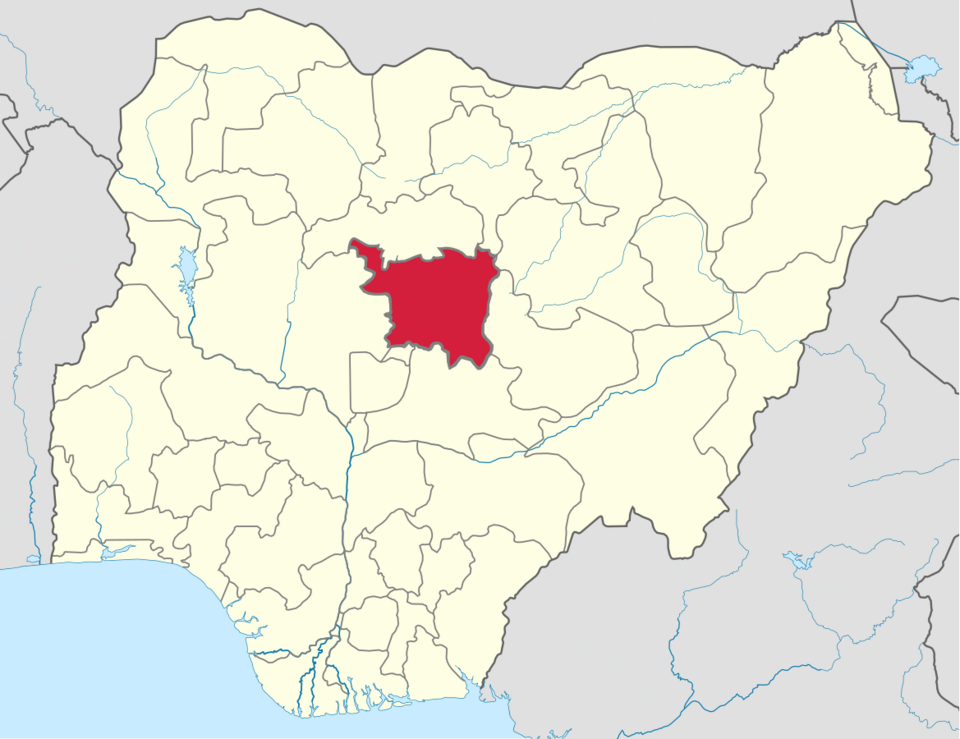
Nigeria’s political system is modelled on the United States federal structure, with 36 states and the Federal Capital Territory of Abuja. The president is directly elected by popular vote for a maximum of two four-year terms, and state governors operate under similar term limits.
This structure was designed to prevent the concentration of power that plagued Nigeria’s earlier military regimes, but it has created its own challenges — powerful state governors who control significant resources and often operate as political fiefdoms.
The data provided does not include crime or safety indices, but any discussion of quality of life in Nigeria must acknowledge the security challenges that affect daily existence. From kidnapping for ransom in the northwest to oil theft and militant activity in the Niger Delta, and from separatist tensions in the southeast to the ongoing battle against insurgents in the northeast, security remains a patchwork of regional crises.
The federal government’s capacity to project force and maintain order varies dramatically across the country.
Political stability, however, has improved since the return to civilian rule in 1999. The peaceful transfer of power between parties, while not always smooth, has become more routine. The current administration faces the dual challenge of implementing economic reforms that are necessary but painful, while maintaining the political cohesion required to see them through.
For ordinary Nigerians, quality of life is determined less by abstract political structures and more by the price of cooking gas, the reliability of electricity, and the safety of their neighbourhoods.
What’s Happening Now — Statistical Reform Meets Market Reality
The most current developments in Nigeria centre on two parallel tracks: statistical modernisation and consumer protection. The National Bureau of Statistics’ celebration of African Statistics Day 2024 might seem like a bureaucratic formality, but it signals a commitment to improving data quality that could have real economic consequences. The Statistician General’s keynote address at the GDP and CPI rebasing workshop is the technical heart of this effort.
If successful, the rebasing could reveal an economy that is larger, more diverse, and growing faster than current estimates suggest — or it could confirm that Nigeria’s growth has been overstated.
Simultaneously, the FCCPC’s collaboration with the Lagos consumer agency to enforce pricing and labelling regulations represents a shift toward more active consumer protection. This matters because consumer confidence is a leading indicator of economic health. When households believe they are being treated fairly in the marketplace, they are more likely to spend and invest. When they feel exploited, they hoard cash and reduce economic activity.
The Dangote Cement profit announcement is the most concrete positive signal in the recent news. A 23% profit increase to ₦639 billion in the first half of the year suggests that Nigeria’s largest companies are finding ways to grow even in a challenging environment. This profitability creates tax revenue for the government, dividends for shareholders, and potential for reinvestment. The question is whether this corporate success is trickling down to the broader economy or remaining concentrated at the top.
The Bottom Line
Nigeria remains Africa’s most important economic story — a country of enormous potential trapped in a web of structural challenges. The current statistical rebasing exercise could be a turning point, providing policymakers and investors with the reliable data needed to make better decisions. But data alone cannot fix the cost-of-living crisis, improve security, or create jobs.
For now, Nigeria is a market for patient, risk-tolerant investors who understand that the country’s demographic dividend and entrepreneurial energy will eventually overcome its governance deficits. The cooking gas squeeze and the cement boom are two sides of the same coin — Nigeria’s economy is growing, but not everyone is invited to the party.
Sources & Methodology
This article is authored by Economic Pulse Net for informational and research purposes. Economic Pulse Net sources its data from multilateral institutions, national statistics bureaus, and proprietary databases. All data is believed to be current as of the date of publication.
Published: July 30, 2026 | Category: Research — Nigeria
Use these signals in your own platform
Economic Pulse publishes its live signal feed through a documented, read-only API. Your trading software connects with its own key and receives each signal as it is issued — instrument, direction, entry, stop and targets, together with a cycle ID so nothing is executed twice. The feed is independent of this website and cannot change it.
Signals are informational only and are not financial advice.