Economic Pulse Net | Sources: World Bank World Development Indicators, Government Sources | 2026
Key Takeaways
– Nigeria’s economic narrative is currently defined by what is *not* being measured: the country is in the midst of a major rebasing exercise for both GDP and Consumer Price Index, a process that could fundamentally reshape how its economy is understood.
– The nation’s corporate landscape is dominated by financial services, aviation, and consumer goods giants like Access Bank, Arik Air, and BUA Cement, pointing to an economy still heavily reliant on banking, construction, and domestic consumption.
– Soaring cooking gas prices are delivering a painful squeeze on Nigerian households and small businesses, a live indicator of persistent inflationary pressure that the upcoming CPI rebasing may capture more accurately.
– Politically, Nigeria operates as a federal republic modelled after the United States, with a powerful presidency, a bicameral legislature, and 36 states — a structure that can both enable and complicate economic reform.
The Great Unmeasured: GDP, Inflation, and the Numbers That Aren’t There
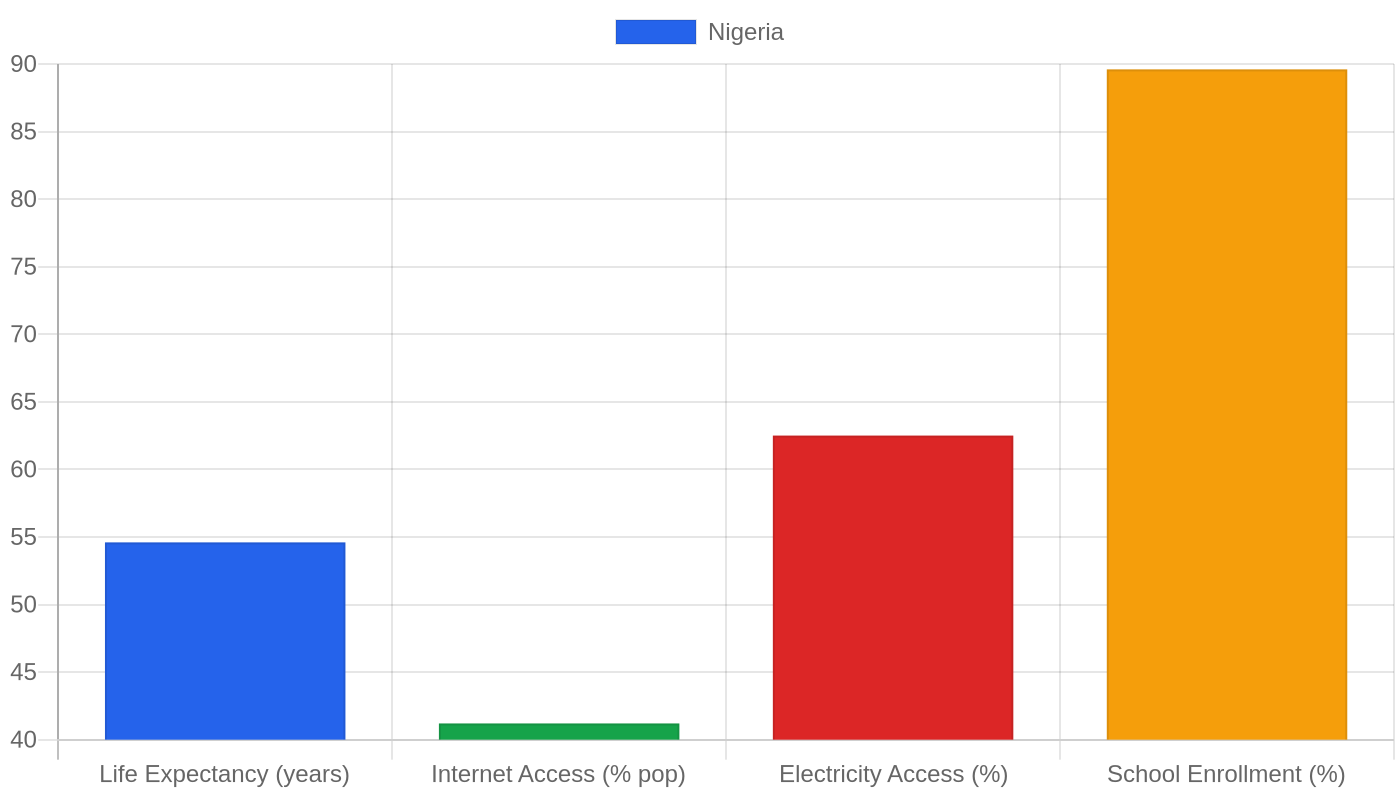
There is a curious paradox at the heart of Nigeria’s economic story right now. The World Bank data sheet for Africa’s most populous nation offers a sea of “N/A” entries — no GDP growth figure, no inflation rate, no unemployment number, not even a population total. This is not a data failure. It is a moment of transition.
As the National Bureau of Statistics recently announced in its celebration of African Statistics Day 2024, and as the Statistician General of the Federation made clear in a keynote address at a sensitisation workshop for stakeholders, Nigeria is in the midst of a comprehensive rebasing of both its Gross Domestic Product and its Consumer Price Index.
This matters enormously. Rebasing is not a technical footnote; it is a reckoning. When a country rebuilds its economic yardsticks, it is admitting that the old ones no longer capture reality. Nigeria’s last GDP rebasing, in 2014, famously catapulted the country past South Africa to become the continent’s largest economy, revealing a services sector and a tech scene that the old model had simply missed.
The current exercise could do something similar — or it could reveal a different, more sobering picture.
What we do know, from the corporate landscape and from news reports, is that the Nigerian economy remains a story of duality. On one side sit heavyweight industrial and consumer goods firms like BUA Cement and BUA Foods, companies that benefit from the country’s massive infrastructure needs and its 200-million-plus population.
On the other side sit aviation firms like Arik Air, Aero Contractors, and Chanchangi Airlines, sectors that are acutely sensitive to fuel costs, currency volatility, and consumer confidence. The financial sector, anchored by Access Bank and the Central Bank of Nigeria itself, remains the circulatory system of the economy — but it is pumping through arteries that are often clogged by foreign exchange shortages and regulatory uncertainty.
The absence of hard numbers from the World Bank should not be mistaken for an absence of economic activity. Nigeria’s economy is moving, trading, struggling, and in some places, thriving. The data gap is, in itself, the story: a nation preparing to measure itself anew.
The Price of Living: Cooking Gas, Rent, and the Squeeze on Daily Life
If you want to understand the texture of everyday economic pain in Nigeria right now, look to the kitchen. A special report from *Premium Times*, a national newspaper, documents how soaring cooking gas prices are squeezing Nigerian households and businesses. This is not an abstract inflation statistic. It is a concrete, monthly burden that families have to navigate — choosing between a full cylinder of gas and other necessities.
The cost of living in Nigeria is a story of compounding pressures. While the World Bank data does not provide specific housing or rental figures, the anecdotal evidence from the ground is consistent: rent in major cities like Lagos and Abuja consumes a significant portion of household income, and the gap between what people earn and what they spend on shelter, food, and fuel is widening.
The cooking gas crisis is emblematic of a broader pattern: when global energy prices shift, the impact is felt directly in Nigerian homes, with little buffer from subsidies or social safety nets.
Compared to regional averages, Nigeria has long been an expensive place to live for what it offers. The country’s infrastructure deficits — unreliable electricity, poor road networks, inadequate public transport — mean that households often have to spend more on private solutions: generators, bottled water, private schooling, private healthcare. This “poverty premium” is a hidden tax on daily life, and it is getting heavier.
Titans of the Economy: The Companies That Move Nigeria
Nigeria’s corporate landscape is a mix of homegrown giants and state-backed institutions. At the top of the list sits Access Bank, a financial powerhouse that has expanded aggressively across Africa. Alongside it is the Central Bank of Nigeria, not a commercial entity but an institution whose monetary policy decisions ripple through every sector of the economy.
The presence of both a commercial bank and the central bank on the list of top companies underscores how deeply financial services permeate Nigerian life — and how dependent the economy is on the health of its banking system.
The aviation sector is disproportionately represented. Arik Air, Aero Contractors, and Chanchangi Airlines all feature, which is striking given the well-documented struggles of the Nigerian airline industry: high fuel costs, foreign exchange shortages that make it difficult to lease aircraft or buy spare parts, and a regulatory environment that has seen multiple carriers collapse over the years.
Their presence suggests resilience, or perhaps simply that the market is so large and underserved that even troubled airlines remain significant.
In the industrial and consumer goods space, BUA Cement and BUA Foods are the standout names. BUA Cement is a direct beneficiary of Nigeria’s infrastructure deficit — the country needs roads, bridges, housing, and commercial buildings on a vast scale. BUA Foods taps into the huge domestic market for processed food and staples. These are companies that are betting on Nigeria’s long-term growth, even as the short-term picture remains murky.
Then there are the cultural players: Cassava Republic Press, a publishing house that has become a force in African literary fiction, and Chocolate City Records, a music label that has helped shape the sound of contemporary Nigerian pop. Their presence on the list is a reminder that Nigeria’s economy is not just about oil, cement, and banking. It is also about creativity, intellectual property, and soft power — sectors that the GDP rebasing exercise may finally begin to measure properly.
The Political Architecture: Federalism, Power, and the Limits of Reform
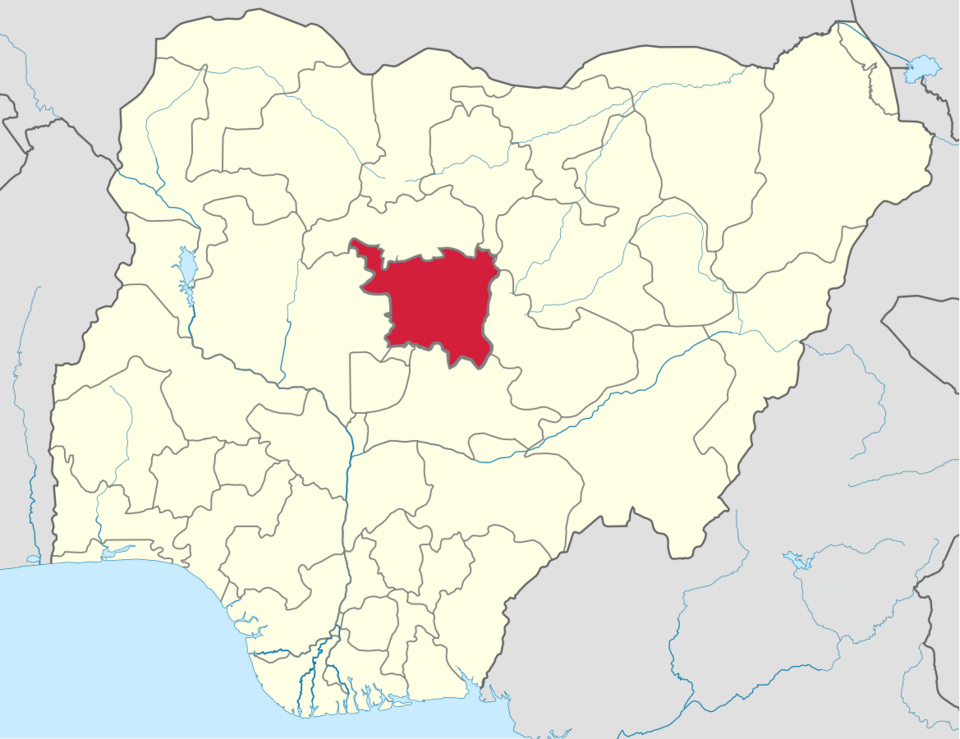
Nigeria’s political system is a federal republic modelled after the United States, with 36 states and the Federal Capital Territory of Abuja operating as an independent unit. Executive power rests with the President, who is both head of state and head of government, elected by popular vote to a maximum of two four-year terms. State governors operate under the same term limits, elected for four years with a maximum of two terms.
The president’s power is checked by a Senate and a House of Representatives, a bicameral legislature that can slow or block reforms.
This structure matters for the economy. Nigeria’s federal system means that economic policy is not made solely in Abuja. State governments have significant control over land, agriculture, internal security, and infrastructure. A reform that works in Lagos — a wealthy, commercially-driven state with high tax collection capacity — may fail in Yobe or Zamfara, where state capacity is weaker and economic activity is more informal. The political landscape is therefore a patchwork, not a monolith.
The quality of governance varies enormously. Some states have become hubs of innovation and revenue generation; others are mired in corruption, inefficiency, and insecurity. This unevenness is a major constraint on national economic growth. Even if the federal government gets its macroeconomic policy right — and that is a big if — the execution depends on 36 governors, 36 state assemblies, and thousands of local government officials.
Crime and safety data are not available in the provided information, but it is no secret that insecurity — from banditry in the northwest to separatist agitation in the southeast to oil theft in the Niger Delta — imposes a significant economic cost. Businesses have to spend on private security. Farmers are driven off their land. Supply chains are disrupted. The political landscape and the economic landscape are, in Nigeria, inseparable.
What’s Happening Now: The Rebasing, the Gas Crisis, and the Search for Clarity
This is a moment of anticipation in Nigeria. The National Bureau of Statistics, in celebrating African Statistics Day 2024, signalled its commitment to modernising the country’s data infrastructure. The Statistician General of the Federation, in a keynote address at a sensitisation workshop for stakeholders on the GDP and CPI rebasing exercise, laid out the technical and political stakes of the process. This is not just a bureaucratic exercise.
It is a chance for Nigeria to tell a more accurate story about itself to investors, to international institutions, and to its own citizens.
The cooking gas crisis, documented in detail by *Premium Times*, is the counterpoint to this optimistic narrative. While statisticians prepare new measurement tools, households are struggling with the here and now. The price of gas has soared, forcing families to cut back on cooking, switch to cheaper but more polluting fuels, or simply eat less. For small businesses — restaurants, street food vendors, bakeries — the gas price shock is existential. Margins that were already thin are being wiped out.
These two stories — the technical, forward-looking work of the National Bureau of Statistics and the immediate, painful reality of the cooking gas squeeze — capture the tension at the heart of Nigeria’s current moment. The country is trying to measure itself better, to understand its own economy more clearly, even as that economy is delivering hardship to millions. The rebasing may eventually produce a more accurate picture. But accuracy does not, by itself, ease the burden.
The Bottom Line
Nigeria is a country that demands attention — from investors willing to navigate complexity, from policymakers who understand that data reform is a prerequisite for good governance, and from anyone who wants to understand where Africa’s largest economy is heading. The current data gaps are frustrating, but they are also an invitation: to watch, to wait, and to recognise that Nigeria is in the middle of a story, not at the end of one.
The rebasing of GDP and CPI, when completed, will give the world a clearer window into this giant. Until then, the signals are mixed, the pressures are real, and the potential remains vast.
Sources & Methodology
This article is authored by Economic Pulse Net for informational and research purposes. Economic Pulse Net sources its data from multilateral institutions, national statistics bureaus, and proprietary databases. All data is believed to be current as of the date of publication.
Published: July 20, 2026 | Category: Research — Nigeria
Use these signals in your own platform
Economic Pulse publishes its live signal feed through a documented, read-only API. Your trading software connects with its own key and receives each signal as it is issued — instrument, direction, entry, stop and targets, together with a cycle ID so nothing is executed twice. The feed is independent of this website and cannot change it.
Signals are informational only and are not financial advice.