Economic Pulse Net | Sources: World Bank World Development Indicators, Government Sources | 2026
Key Takeaways
– Nigeria’s economic story is currently defined by what is *not* being measured, as the National Bureau of Statistics undertakes a critical rebasing exercise for both GDP and CPI.
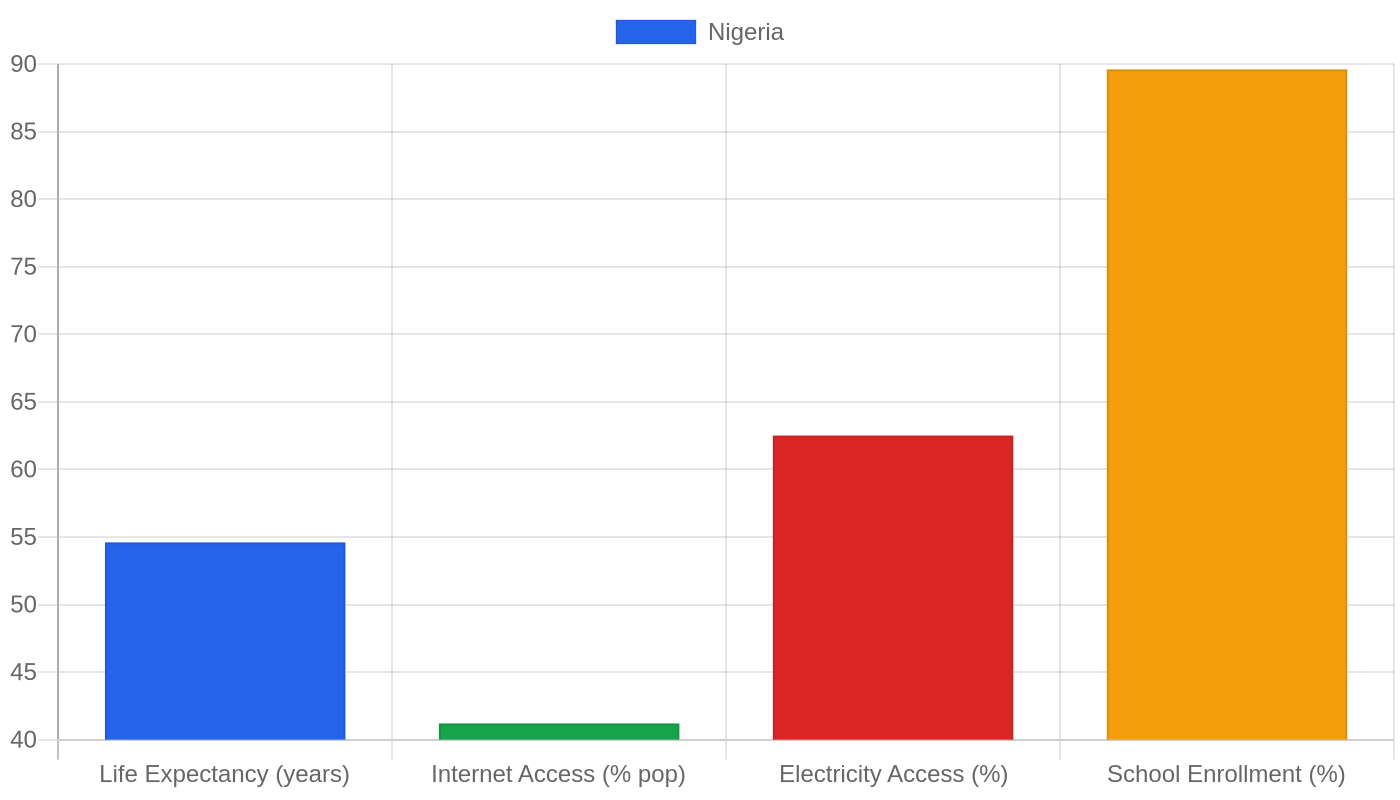
– With a GDP per capita (PPP) of $9,531.61 according to the World Bank, Nigeria remains Africa’s most populous economy, but inflation and currency pressures are squeezing households and businesses alike.
– The country operates as a federal republic with 36 states and a presidential system, but political stability and governance quality remain central concerns for investors.
– A diverse corporate landscape spans financial services (Access Bank, Central Bank of Nigeria), aviation (Arik Air, Aero Contractors), industrials (BUA Cement), and consumer goods (BUA Foods), alongside cultural exports like Cassava Republic Press and Chocolate City Records.
– Soaring cooking gas prices, as reported by Premium Times, are emblematic of the cost-of-living crisis currently gripping Nigerian households.
The Numbers That Aren’t There — And Why That Matters
The most striking feature of Nigeria’s current economic data landscape is what it *doesn’t* tell us. The World Bank’s latest figures show GDP growth, inflation, unemployment, and total GDP all listed as “N/A” — a statistical silence that speaks volumes. This is not merely a data collection failure; it reflects a country in the midst of a fundamental statistical recalibration.
The National Bureau of Statistics, as revealed in recent official communications, is actively undertaking a GDP and CPI rebasing exercise — a process that will fundamentally reshape how Nigeria’s economic health is measured and understood.
What we do know, courtesy of the World Bank, is that Nigeria’s GDP per capita (PPP) stands at $9,531.61. This figure places Nigeria in a complex position: it is neither a low-income outlier nor a middle-income success story. It is a nation of vast wealth and deep poverty, where oil revenues have historically masked structural weaknesses in agriculture, manufacturing, and services.
The rebasing exercise, when completed, could reveal an economy significantly larger — or differently structured — than previously understood.
The absence of inflation and unemployment data is particularly troubling. Nigeria has faced persistent double-digit inflation in recent years, driven by currency depreciation, fuel subsidy removal, and supply chain disruptions. Without current CPI figures, policymakers and businesses are flying blind.
The National Bureau of Statistics’ celebration of African Statistics Day 2024, reported on their official website, underscores the agency’s awareness that robust data is the foundation of sound economic governance. Until the rebasing is complete, analysts must rely on anecdotal evidence and sectoral reports to gauge the temperature of Africa’s largest economy.
The Cost of Living Squeeze — Cooking Gas and Daily Survival
The most visceral evidence of Nigeria’s economic pressures comes not from spreadsheets but from kitchen stoves. A special report by Premium Times has documented how soaring cooking gas prices are “squeezing Nigerian households and businesses” — a phrase that captures the daily reality for millions. Cooking gas, once a relatively affordable alternative to charcoal and firewood, has become a luxury for many urban families.
This is not merely a convenience issue; it is a health, education, and productivity crisis. Families forced to revert to biomass fuels face respiratory risks, while small businesses — from street food vendors to restaurants — see their margins evaporate.
Housing costs, while not precisely quantified in the available data, are widely understood to be rising in major cities like Lagos, Abuja, and Port Harcourt. The rent-versus-buy calculation in Nigeria heavily favors renting for the vast majority of the population, given high interest rates, land title complexities, and the sheer cost of construction materials. Daily expenses for a typical Nigerian household — food, transportation, electricity, and now cooking fuel — consume an outsized share of income.
The absence of formal inflation data does not diminish the lived reality: prices are rising, wages are not keeping pace, and the social contract is fraying.
Titans of Industry — The Companies Shaping Nigeria’s Economy
Nigeria’s corporate landscape is a study in contrasts, blending traditional financial powerhouses with cultural innovators. Access Bank, listed under Financials, represents the dominant force in Nigerian banking — a sector that has weathered multiple crises and emerged as one of Africa’s most sophisticated.
The Central Bank of Nigeria itself appears as a listed entity, a reminder of the unique role monetary policy plays in a country where the central bank has often been the lender of last resort and the primary driver of economic intervention.
The aviation sector is notably prominent, with Arik Air, Aero Contractors, and Chanchangi Airlines all appearing on the list of top companies. This reflects both the vast geography of Nigeria — where air travel is essential for business connectivity — and the sector’s chronic instability, marked by fuel shortages, maintenance challenges, and regulatory turbulence.
BUA Cement and BUA Foods, both in the industrial and consumer goods categories respectively, represent the manufacturing backbone of the economy, producing essential materials and food products for the domestic market.
Perhaps most intriguing is the presence of Cassava Republic Press and Chocolate City Records. These are not traditional economic powerhouses, but their inclusion signals the growing importance of Nigeria’s creative economy. Cassava Republic has become a leading publisher of African literature, while Chocolate City Records has shaped the global rise of Afrobeats.
These companies are cultural ambassadors, generating soft power and foreign exchange earnings that rarely appear in GDP calculations — another argument for why the rebasing exercise matters.
Governance, Security, and the Quality of Life Equation
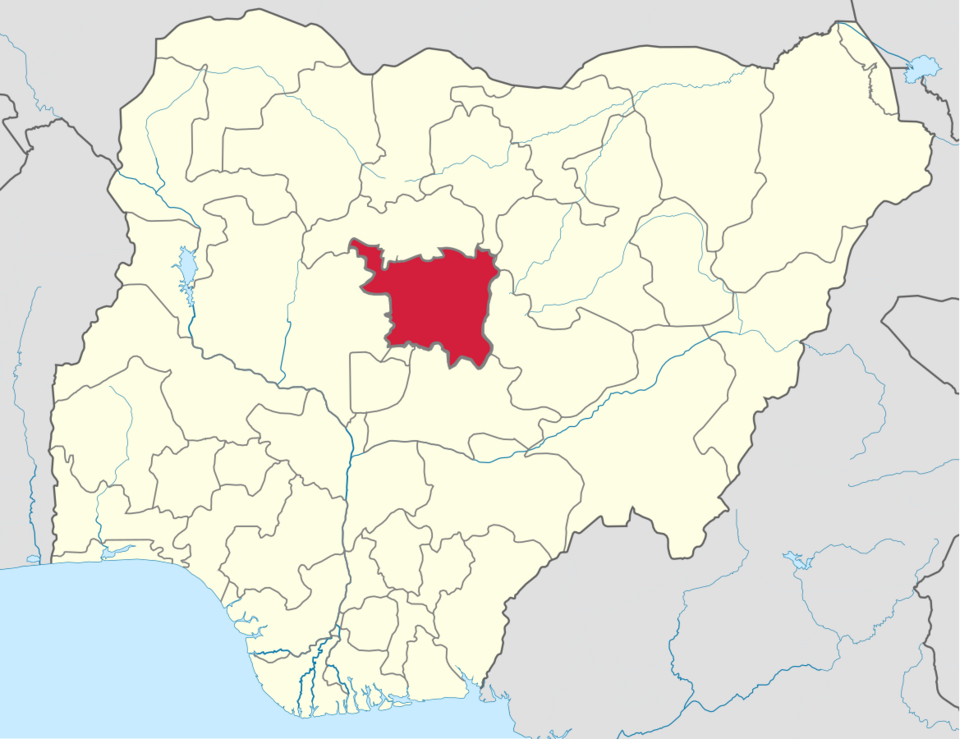
Nigeria’s political system, as described in the available data, is a federal republic modelled on the United States, with 36 states plus the Federal Capital Territory of Abuja. The president is both head of state and head of government, elected by popular vote to a maximum of two four-year terms. State governors operate under similar term limits.
This structure was designed to balance power between the central government and Nigeria’s diverse regions, but in practice, governance has been challenged by corruption, ethnic tensions, and the sheer difficulty of managing a country of over 200 million people.
The available data does not provide a crime index or safety index, but these are questions that any potential resident or investor must consider. Nigeria faces well-documented security challenges, including banditry in the northwest, separatist movements in the southeast, and the ongoing insurgency in the northeast.
Quality of life, as measured by happiness or well-being indices, is not captured in the provided data, but anecdotal evidence suggests that economic pressures, infrastructure deficits, and security concerns weigh heavily on daily life. For all its dynamism and cultural richness, Nigeria remains a country where resilience is a survival skill.
What’s Happening Now — The Rebasing and the Reality
The most significant development in Nigeria’s economic story right now is the National Bureau of Statistics’ rebasing exercise, as detailed in the keynote address by the Statistician General of the Federation. This is not a dry technical matter; it is a political and economic event of the first order. When Nigeria last rebased its GDP in 2014, the economy suddenly became the largest in Africa, overtaking South Africa.
That rebasing revealed previously uncounted sectors — telecommunications, Nollywood, retail — and changed the narrative about Nigeria’s economic potential.
The current exercise, which covers both GDP and the Consumer Price Index, could be equally transformative. It may show that Nigeria’s economy is larger and more diversified than official figures suggest, or it may reveal that the informal sector — which employs the vast majority of Nigerians — is even more dominant than previously thought. The timing is critical: Nigeria is navigating the aftermath of fuel subsidy removal, currency devaluation, and persistent inflation.
The rebasing will provide a new baseline from which to measure progress — or lack thereof.
Meanwhile, the Premium Times report on cooking gas prices serves as a stark reminder that statistical exercises, however important, do not put food on the table. The squeeze on households and businesses is real, and it is happening now. The question for Nigeria is whether the rebasing will lead to better policy — or merely better numbers.
The Bottom Line
Nigeria is a country of immense potential and persistent challenges, a place where economic data is in flux and daily life is a struggle for millions. The ongoing rebasing exercise by the National Bureau of Statistics offers the promise of clarity, but clarity alone does not bring relief. Investors should watch Nigeria for its scale, its youthful population, and its vibrant corporate and creative sectors — but they should also understand that the gap between what is measured and what is lived remains vast.
For policymakers, development economists, and anyone with a stake in Africa’s future, Nigeria is the story that matters most, precisely because it is the hardest to tell.
Sources & Methodology
This article is authored by Economic Pulse Net for informational and research purposes. Economic Pulse Net sources its data from multilateral institutions, national statistics bureaus, and proprietary databases. All data is believed to be current as of the date of publication.
Published: July 20, 2026 | Category: Research — Nigeria
Use these signals in your own platform
Economic Pulse publishes its live signal feed through a documented, read-only API. Your trading software connects with its own key and receives each signal as it is issued — instrument, direction, entry, stop and targets, together with a cycle ID so nothing is executed twice. The feed is independent of this website and cannot change it.
Signals are informational only and are not financial advice.