Economic Pulse Net | Sources: World Bank World Development Indicators, Government Sources | 2026
Key Takeaways
– Niger’s economy is heavily concentrated in uranium mining, with state-owned and international firms like SOMAIR and COMINAK dominating the basic materials sector, creating a narrow economic base vulnerable to commodity price swings.
– The political landscape remains defined by the 2010 constitution, which restored a semi-presidential system, but governance stability continues to shape investor confidence and development prospects.
– Public utilities and infrastructure remain underdeveloped, with NIGELEC (the national electricity company) struggling to meet demand, constraining industrial growth and quality of life.
– Consumer services dominate the list of top companies, suggesting a service-oriented economy emerging alongside traditional extractive industries.
– The absence of recent GDP, inflation, and unemployment data from the World Bank points to significant data transparency challenges that complicate economic planning and foreign investment decisions.
The Numbers Gap — What Niger’s Economic Silence Tells Us
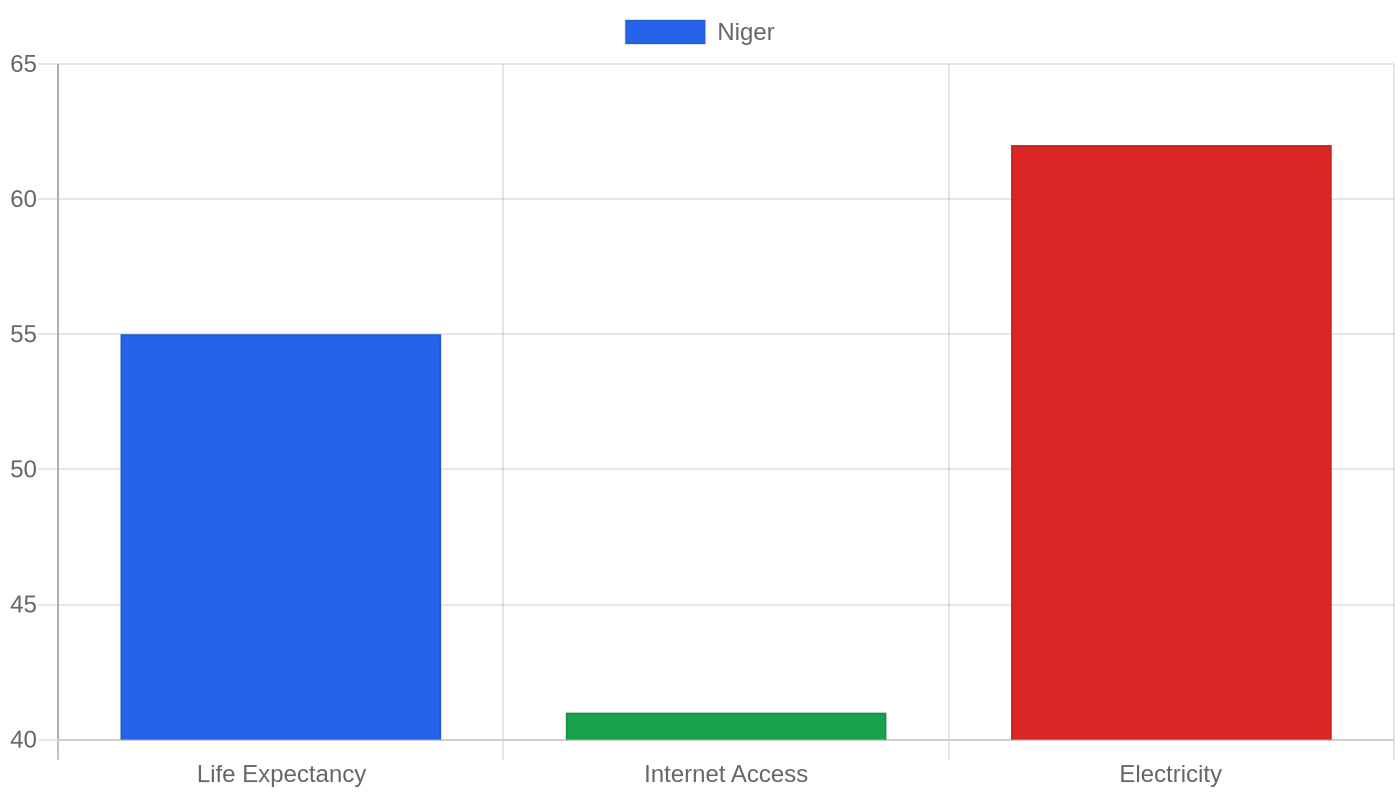
The World Bank’s latest data on Niger presents an unusual challenge for any economic journalist: a blank canvas. GDP growth, inflation, unemployment, GDP per capita, GNI per capita, and population figures are all listed as “N/A” — not available. This absence of data is itself a story.
For a country that sits on some of the world’s most strategic uranium deposits, the lack of timely economic statistics raises fundamental questions about transparency, statistical capacity, and the real state of the nation’s finances.
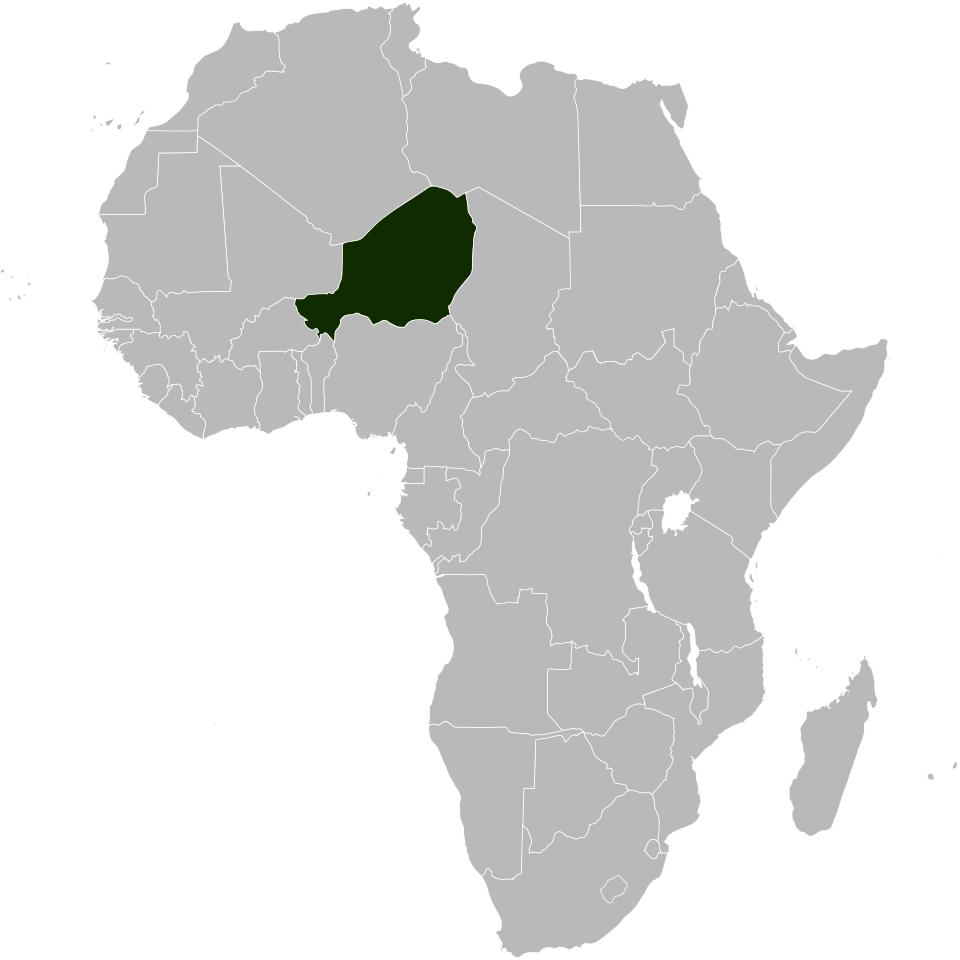
What we do know, from the World Bank’s classification, is that Niger remains one of the world’s poorest countries, landlocked in the Sahel region, dependent on a narrow range of extractive industries. The country’s economic narrative has long been dominated by uranium — the fuel that powers nuclear reactors in France and beyond.
SOMAIR (Société des Mines de l’Air) and COMINAK (Compagnie Minière d’Akouta) stand as the twin pillars of this industry, both listed as major companies in the basic materials sector. These operations have historically accounted for a significant share of export revenues and government budgets.
Yet the absence of GDP figures means we cannot quantify how the economy has performed in recent years. We cannot say whether the post-pandemic recovery has reached Niamey’s markets or whether inflation is eroding household purchasing power.
This data vacuum forces analysts to rely on anecdotal evidence, regional trends, and the observable structure of the economy — a structure built on mining, basic services, and a growing consumer sector that includes companies like Arik Niger, Dounia TV, and the Office of Radio and Television of Niger.
The World Bank’s silence on these metrics suggests either a lag in data collection, political instability affecting statistical agencies, or simply the challenges of measuring economic activity in a largely informal economy where cash transactions and subsistence agriculture dominate. For investors and policymakers, this is a red flag: you cannot manage what you cannot measure.
Living in the Gap — Housing and Daily Life in Niger’s Informal Economy
Without official cost-of-living data from the World Bank, painting a precise picture of household finances in Niger requires reading between the lines. What we can observe is that the country’s top companies are overwhelmingly in consumer services — Arik Niger, Dounia TV, Escadrille Nationale du Niger, and the Office of Radio and Television of Niger.
This suggests that the formal economy is increasingly oriented toward serving urban populations, particularly in the capital Niamey, where media, transportation, and retail services cluster.
Housing in Niger’s urban centers, particularly Niamey, has historically been characterized by a stark divide. The expatriate and elite neighborhoods — such as the Plateau district — command rents that are high by West African standards, while the majority of the population lives in informal settlements with limited access to reliable electricity, running water, and sanitation.
NIGELEC, the national utility company, struggles with generation capacity and grid reliability, meaning that even those who can afford housing often face daily power outages.
For the average Nigerien household, daily expenses are dominated by food, which is largely imported or grown locally in a climate increasingly threatened by desertification and erratic rainfall. Transportation costs are significant, with the Société Nigérienne de Transports de Voyageurs providing public bus services that are often overcrowded and irregular.
The cost of living in Niger is likely lower than in coastal West African economies like Ghana or Côte d’Ivoire, but this reflects not affordability but rather the limited availability of goods and services — and the prevalence of subsistence livelihoods that operate outside the cash economy entirely.
Extractives and Enterprise — Niger’s Business Landscape Under the Microscope
Niger’s corporate landscape is a study in contrasts. On one hand, the basic materials sector is dominated by SOMAIR and COMINAK, both involved in uranium extraction — a strategic industry that ties Niger directly to global nuclear energy markets. On the other hand, the consumer services sector is crowded with media and transportation companies, suggesting a domestic economy that is finding its feet in services rather than manufacturing.
The presence of SONIDEP, the national oil and gas company, points to ambitions in the hydrocarbon sector. Niger has significant oil reserves in the Agadem region, and production has been ramping up in recent years, with a pipeline to Benin offering a potential export route. This could transform the country’s economic profile, reducing dependence on uranium and broadening the revenue base.
However, the World Bank data does not provide production figures or export values, so the scale of this transformation remains unclear.
For investors, Niger presents a high-risk, high-potential proposition. The political landscape, governed by the 2010 constitution that restored a semi-presidential system, has provided a measure of stability after years of coups and political turmoil. But the security situation in the Sahel — with jihadist insurgencies spreading across the region — remains a major deterrent to foreign direct investment outside the extractive sector.
The companies listed in the data are overwhelmingly state-owned or parastatal entities: Niger Poste, NIGELEC, SONIDEP. This suggests that the private sector remains shallow, and that the state continues to dominate strategic industries.
Politics, Safety, and the Fragile Social Contract
Niger’s political system, as defined by the 2010 constitution, is a semi-presidential republic — a model that shares executive power between a president elected for five years and a prime minister appointed by the president. This system was designed to prevent the concentration of power that had characterized earlier regimes and to provide checks and balances. The constitution was approved by referendum on 31 October 2010, marking a fresh start after a period of military rule.
Yet the quality of life in Niger is shaped as much by insecurity as by political institutions. The country sits at the epicenter of the Sahel crisis, with attacks from jihadist groups spilling over from Mali and Burkina Faso. The Crime Index and Safety Index are listed as “N/A” by the World Bank, which is itself telling: systematic crime data is either not collected or not released, reflecting the challenges of governance in a vast, sparsely populated territory where the state’s reach is limited.
For ordinary Nigeriens, safety is a daily concern — not just from terrorism, but from banditry, cattle rustling, and communal conflicts over land and water. The presence of Escadrille Nationale du Niger, a consumer services company that appears to be involved in aviation, hints at the importance of air travel in a country where road networks are poor and distances are vast.
The social contract between citizens and the state is fragile, with the government struggling to provide basic services, security, and economic opportunity to a rapidly growing population.
The Wait for Data — What’s Happening Now in Niger
The most striking feature of Niger’s current economic moment is the absence of current data. The World Bank’s “N/A” entries for GDP growth, inflation, and unemployment mean that we cannot say with certainty whether the economy is expanding or contracting, whether prices are stable or spiraling, whether jobs are being created or destroyed. This is not merely an academic problem — it affects budget planning, aid allocation, and investment decisions.
What we do know is that Niger is at a crossroads. The completion of the oil pipeline to Benin could unlock significant revenues, but it also exposes the country to the volatility of global energy markets. The uranium sector faces long-term uncertainty as nuclear energy’s share of global power generation evolves. And the security crisis in the Sahel shows no signs of abating, with the government relying on international military support to hold back insurgent groups.
The political landscape remains stable on paper, but the 2010 constitution has yet to face its most serious test. Presidential elections have been held, transitions have occurred, but the underlying tensions — between north and south, between ethnic groups, between urban elites and rural populations — remain unresolved. Without reliable economic data, it is impossible to say whether living standards are improving or deteriorating, and whether the political system is delivering tangible benefits to the population.
The Bottom Line
Niger is a country of enormous strategic importance — as a uranium supplier, as an emerging oil producer, and as a frontline state in the fight against Sahelian jihadism. Yet it remains one of the world’s least documented economies, with the World Bank unable to provide even basic growth and inflation figures. This data gap should concern anyone watching the country: investors, aid donors, and regional policymakers alike.
Niger deserves attention not just for what it produces, but for what it reveals about the limits of economic transparency in fragile states. Until the numbers become available, the story of Niger will remain one of potential waiting to be measured.
Sources & Methodology
This article is authored by Economic Pulse Net for informational and research purposes. Economic Pulse Net sources its data from multilateral institutions, national statistics bureaus, and proprietary databases. All data is believed to be current as of the date of publication.
Published: July 18, 2026 | Category: Research — Niger
Use these signals in your own platform
Economic Pulse publishes its live signal feed through a documented, read-only API. Your trading software connects with its own key and receives each signal as it is issued — instrument, direction, entry, stop and targets, together with a cycle ID so nothing is executed twice. The feed is independent of this website and cannot change it.
Signals are informational only and are not financial advice.