Economic Pulse Net | Sources: World Bank World Development Indicators, Government Sources | 2026
Key Takeaways
– Niger’s economy remains heavily dependent on uranium mining and basic materials, with state-owned and foreign joint ventures dominating the corporate landscape
– The country operates under a semi-presidential system restored by a 2010 constitution, but political stability remains fragile
– Consumer services and utilities form the backbone of Niger’s formal economy, with companies like NIGELEC and SONIDEP playing critical roles
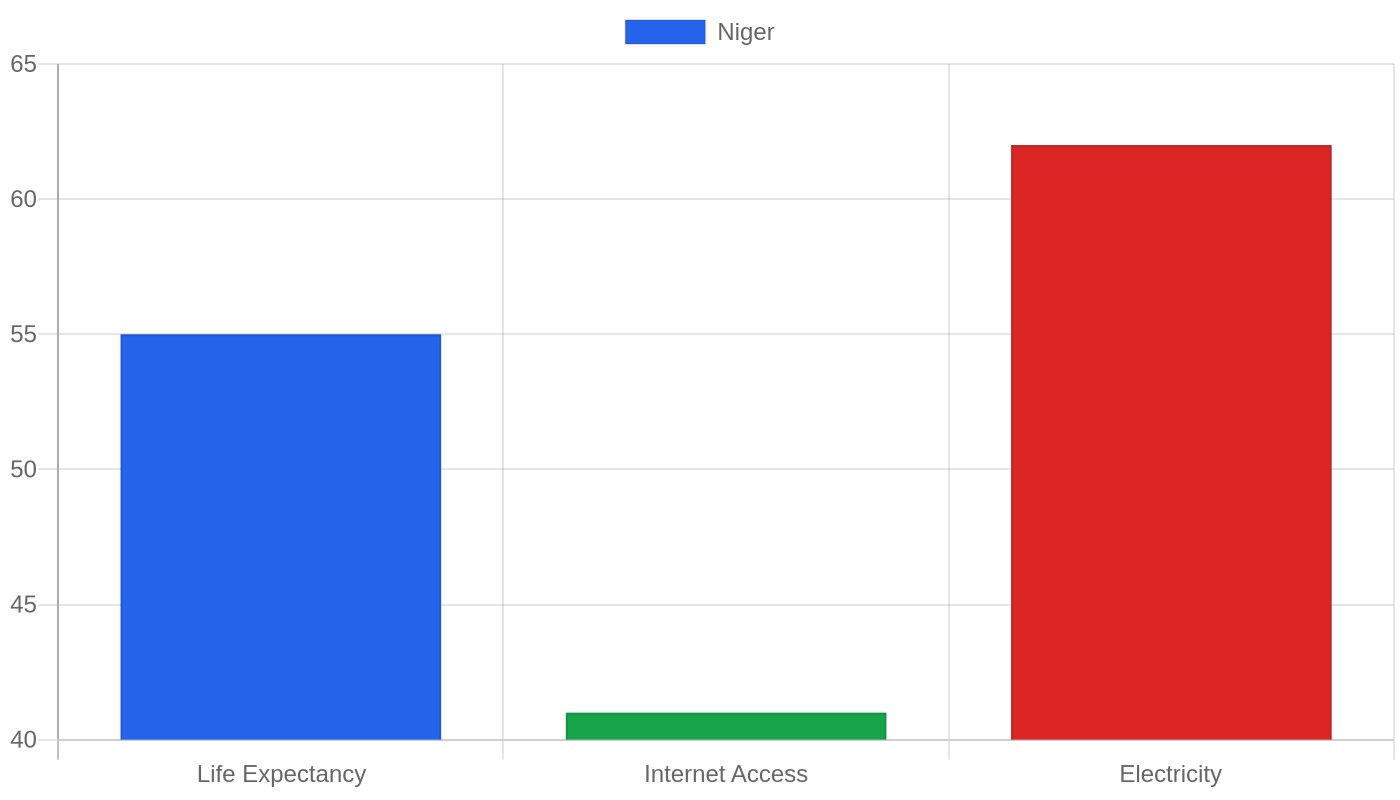
– Despite significant mineral wealth, comprehensive economic data from the World Bank is unavailable, suggesting transparency and data collection challenges
– Niger’s position in the Sahel region makes it strategically important for energy security and regional stability
The Uranium Paradox — An Economy Built on Shifting Sands
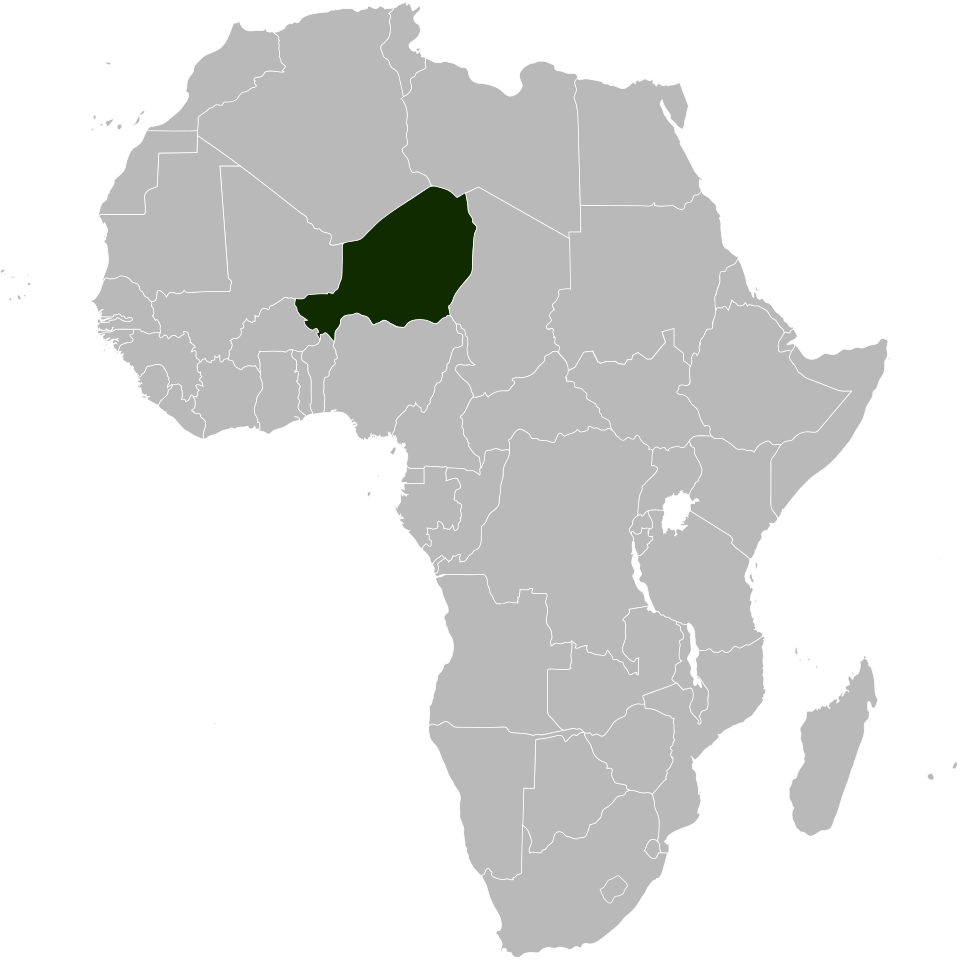
Niger’s economic story is written in the radioactive glow of uranium. The country is home to some of the world’s highest-grade uranium deposits, and the presence of companies like SOMAIR and COMINAK — both basic materials giants — tells you everything about where the economic gravity lies. SOMAIR, a joint venture between the state and foreign partners, has been extracting uranium from the Arlit region since the 1970s, while COMINAK operated the Akouta mine until its closure in 2021.
These operations have historically accounted for a significant portion of Niger’s export revenues and government budgets, making the country a critical supplier to France’s nuclear energy grid and other international markets.
Yet the World Bank data provides no GDP growth figures, no inflation rates, no unemployment statistics. This absence is itself a story. It speaks to a nation where economic data collection is either underfunded, politically sensitive, or simply not prioritized. What we can infer is that Niger’s economy is small, vulnerable to commodity price shocks, and structurally undiversified.
The dominance of basic materials and consumer services in the top companies list suggests a dual economy: a formal sector revolving around mining and state services, and an informal sector that likely employs the vast majority of the population but remains uncounted.
The oil and gas sector, represented by SONIDEP, adds another layer. Niger began crude oil production in 2011 and completed a pipeline to Benin in 2023, offering a potential new revenue stream. But the volatility of global energy markets and the logistical challenges of landlocked Sahelian states mean this is no silver bullet.
Without reliable GDP or inflation data from the World Bank, we cannot measure how these shifts are affecting ordinary Nigeriens — only that the economic foundation remains narrow and precarious.
The Price of Daily Life in the Sahel
Cost of living data for Niger is conspicuously absent from the available information, but the structure of the economy provides clues. With NIGELEC as the dominant utility company and Niger Poste handling industrial logistics, basic services are state-controlled or state-adjacent, which often means prices are subsidized but service quality is erratic.
In Niamey, the capital, housing costs are likely lower than in coastal West African cities like Abidjan or Lagos, but the trade-off comes in infrastructure — unreliable electricity, limited running water in many areas, and poor road networks.
For the average Nigerien, daily expenses are dominated by food staples like millet, sorghum, and rice, with imported goods carrying a premium due to the country’s landlocked position. Rent in urban areas probably consumes a smaller share of income than in more developed economies, but that is cold comfort when incomes themselves are among the lowest in the world.
The absence of formal cost of living indices from the World Bank or other sources underscores a deeper problem: Niger’s economy is so cash-based and informal that standard metrics of household expenditure struggle to capture reality.
Corporate Niger — State Giants and Private Pioneers
The list of Niger’s top companies reads like a roll call of state capitalism. NIGELEC controls electricity distribution. SONIDEP dominates oil and gas. Niger Poste handles mail and logistics. The Office of Radio and Television of Niger and Dounia TV control the airwaves. Even Arik Niger, a consumer services company, and the Escadrille Nationale du Niger — which provides air transport services — are either state-owned or heavily state-influenced.
This is an economy where the government is not just a regulator but the primary economic actor.
For investors, this creates a challenging environment. The basic materials sector, led by SOMAIR and COMINAK, offers the clearest entry points, but these are capital-intensive, politically sensitive, and subject to renegotiation of terms with the government. The consumer services sector — including transport companies like Société Nigérienne de Transports de Voyageurs — suggests opportunities in logistics and retail, but the small formal market limits scalability.
Foreign direct investment has historically flowed to uranium and, more recently, oil, but the broader business climate suffers from bureaucratic hurdles, corruption risks, and the constant shadow of regional insecurity.
Politics, Safety, and the Fragile Social Contract
Niger’s political landscape is defined by its 2010 constitution, approved by referendum on 31 October of that year, which restored a semi-presidential system. In this framework, a president elected by universal suffrage for five-year terms shares executive power with a prime minister appointed by the president. This system, borrowed from the 1999 constitution of the Fifth Republic, was designed to balance power after a series of coups that had plagued the country since independence.
The crime and safety indices from the available data are blank, but the regional context fills in some gaps. Niger faces threats from jihadist groups operating across its borders with Mali, Burkina Faso, and Nigeria. The Lake Chad Basin and the Liptako-Gourma region have seen repeated attacks on civilians and security forces. In urban areas, petty crime is a concern, but violent crime rates are generally lower than in some neighboring states.
The real safety challenge is not crime in the traditional sense but the broader instability that disrupts livelihoods, displaces populations, and undermines state authority.
Quality of life in Niger is shaped by these political and security realities. The country consistently ranks near the bottom of the UN Human Development Index, with low life expectancy, high maternal mortality, and limited access to education. The semi-presidential system provides a framework for governance, but its effectiveness depends on the willingness of political actors to play by the rules — a willingness that has been tested repeatedly in Niger’s post-independence history.
Current Affairs — The Pipeline, the Junta, and the Uranium Question
As of late 2024 and into 2025, Niger is navigating one of its most turbulent periods in recent memory. The military junta that seized power in July 2023 has consolidated control, suspended the constitution, and expelled French forces that had been conducting counterterrorism operations. This shift has real economic consequences. The uranium contracts with French company Orano (formerly Areva) are under review, and relations with Western partners have soured dramatically.
Meanwhile, the new military leaders have pivoted toward Russia and Iran for security and economic cooperation, raising questions about the future of Niger’s traditional export markets.
The Niger-Benin oil pipeline, inaugurated in late 2023, represents a rare bright spot. It gives Niger direct access to international markets for the first time, potentially transforming the country’s fiscal position. But the pipeline’s operation depends on cooperation with Benin, and the political fallout from the coup has strained diplomatic relations. On the ground, the security situation remains dire.
Attacks by armed groups continue in the Tillabéri and Tahoua regions, and the junta’s promise to restore security has yet to materialize. For ordinary Nigeriens, the cost of living is rising as imported goods become more expensive and the informal economy struggles under the weight of instability.
The Bottom Line
Niger is a country of immense contradictions — rich in uranium and oil yet home to some of the world’s poorest people, strategically vital yet chronically unstable, politically resilient yet perpetually on the edge of crisis. For investors with high risk tolerance and a long time horizon, the mining and energy sectors offer potential, but only if political risk can be managed.
For policymakers, Niger represents a test case of whether resource wealth can be translated into broad-based development in the absence of strong institutions. For the casual observer, it is a reminder that economic data tells only part of the story — and that the stories not told in GDP figures are often the most important ones.
Sources & Methodology
This article is authored by Economic Pulse Net for informational and research purposes. Economic Pulse Net sources its data from multilateral institutions, national statistics bureaus, and proprietary databases. All data is believed to be current as of the date of publication.
Published: July 18, 2026 | Category: Research — Niger
Use these signals in your own platform
Economic Pulse publishes its live signal feed through a documented, read-only API. Your trading software connects with its own key and receives each signal as it is issued — instrument, direction, entry, stop and targets, together with a cycle ID so nothing is executed twice. The feed is independent of this website and cannot change it.
Signals are informational only and are not financial advice.