Economic Pulse Net | Sources: World Bank World Development Indicators, Government Sources | 2026
Key Takeaways
– Niger’s economy remains heavily dependent on uranium mining and basic materials, with state-owned and joint-venture companies dominating the industrial landscape.
– The country’s political framework, restored to a semi-presidential system via a 2010 referendum, provides a degree of institutional stability but governance challenges persist.
– Consumer services companies make up the majority of the nation’s top firms, reflecting a domestic economy still largely oriented toward local consumption rather than export diversification.
– Key extractive players like SOMAIR and COMINAK anchor the formal economy, while oil and gas sector development through SONIDEP signals potential shifts in the country’s energy profile.
– With significant data gaps in GDP, inflation, and employment metrics, Niger remains one of the world’s most statistically opaque economies, complicating investment decisions.
The Uranium Paradox — Mining Wealth in a Data Vacuum
Niger’s economic story is written in uranium ore and regulatory uncertainty. The World Bank data paints a frustratingly incomplete picture: GDP growth, inflation, and unemployment figures are all unavailable. This statistical silence is itself a telling indicator. It speaks to a nation where formal economic data collection remains chronically underfunded, where vast swaths of economic activity occur in informal markets beyond the reach of official surveys.
What we do know comes from examining the corporate landscape. SOMAIR and COMINAK — both classified under basic materials — represent the backbone of Niger’s extractive economy. These companies are joint ventures between the Nigerien state and foreign partners, primarily French nuclear giant Orano (formerly Areva).
Uranium mining has historically accounted for a significant share of Niger’s export earnings, though fluctuating global uranium prices and the gradual shift toward renewable energy in Europe create an uncertain demand horizon.
SONIDEP, the state oil and gas company, signals Niger’s ambitions to diversify beyond uranium. The country sits atop modest hydrocarbon reserves, and exploration efforts have accelerated in recent years. Yet the transition from resource endowment to functional energy production requires infrastructure investment that the state struggles to finance.
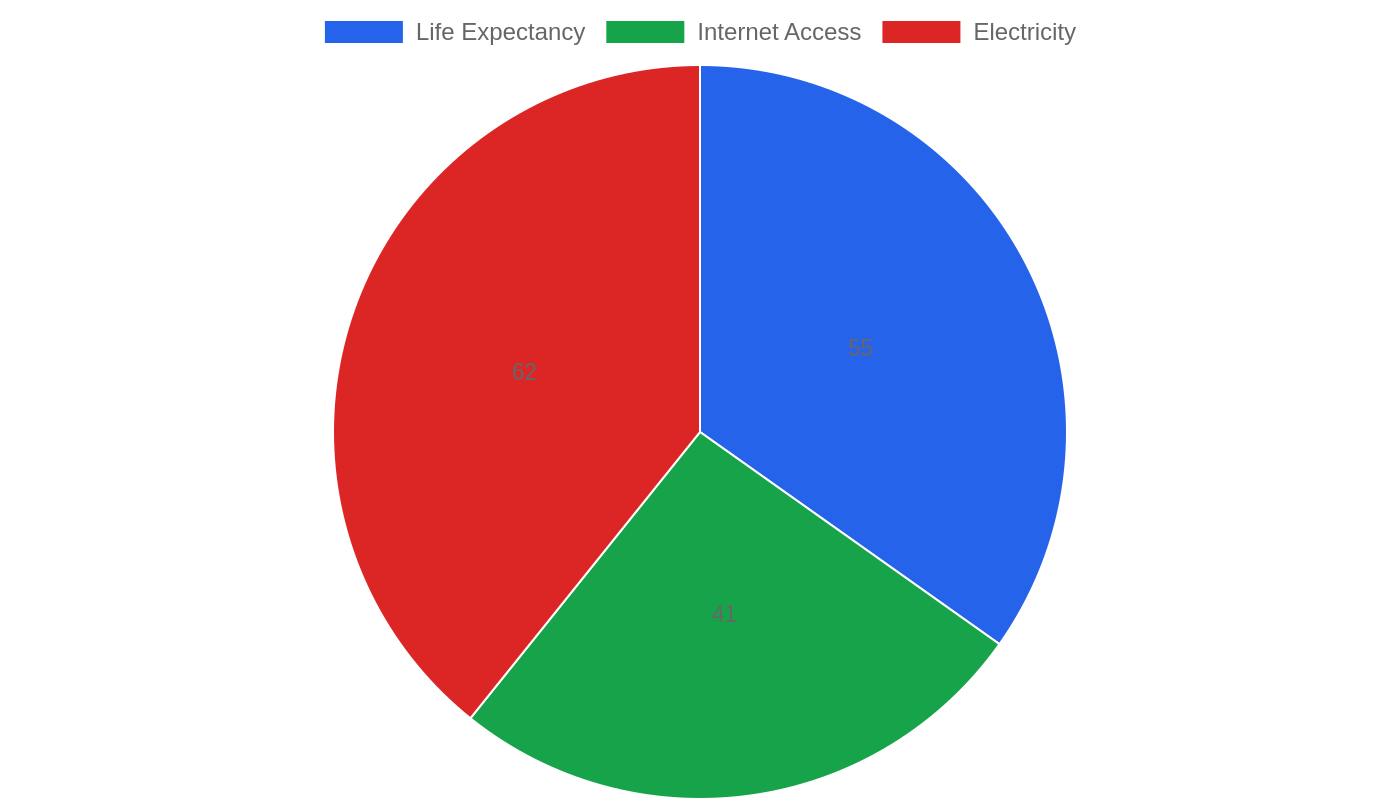
NIGELEC, the national utility, underscores this challenge — electricity access remains among the lowest in West Africa, constraining both industrial development and quality of life.
The heavy presence of consumer services companies — Arik Niger, Dounia TV, Escadrille Nationale du Niger, the Office of Radio and Television of Niger, and Société Nigerienne de Transports de Voyageurs — reveals an economy still oriented toward domestic service provision rather than export-led growth. This is not inherently problematic, but it limits foreign exchange earnings and leaves the country vulnerable to shocks in its narrow commodity export base.
Living in the Informal Economy — The Cost of Survival
Without official cost-of-living data from the World Bank, one must read between the lines of Niger’s corporate and demographic reality. The dominance of consumer services companies suggests that most Nigeriens spend their incomes on basic necessities — transportation, media, and essential goods. The presence of Niger Poste indicates that remittances, both domestic and from the diaspora, play a crucial role in household budgets.
Housing in Niger’s capital, Niamey, is a tale of two cities. A small formal housing market exists for civil servants, expatriate workers, and the business elite connected to companies like SOMAIR or SONIDEP. These properties command prices comparable to other West African capitals. But the vast majority of Nigeriens live in informal settlements or traditional compounds, where housing costs are largely unrecorded and unregulated.
Rent-to-income ratios in these areas can be punishing, with families spending upwards of half their earnings on shelter.
Daily expenses are dominated by food imports. Niger is a Sahelian nation, subject to recurrent droughts and desertification. The country cannot feed itself, and reliance on imported rice, millet, and cooking oil makes households acutely vulnerable to global commodity price swings. The absence of inflation data from the World Bank is particularly concerning — it means policymakers, investors, and humanitarian organizations are navigating blind in a country where food price volatility can trigger social unrest.
A Corporate Landscape Dominated by the State
For investors looking at Niger, the message from the top companies list is unambiguous: the state remains the dominant economic actor. Of the ten largest firms identified, at least half are either wholly state-owned or state-controlled joint ventures. NIGELEC controls electricity. Niger Poste manages logistics and communications. SONIDEP holds the keys to hydrocarbon development. SOMAIR and COMINAK are joint ventures where the state maintains significant influence.
This creates a challenging business environment for private sector entrants. The state’s heavy hand in basic materials and utilities means that new players must navigate complex regulatory frameworks, joint venture requirements, and sometimes opaque licensing processes. The consumer services sector — Arik Niger, Dounia TV, and the transportation company — offers more accessible entry points, but these markets are small and saturated.
The sectors to watch are those where the state lacks capacity or interest. Agribusiness, despite the climatic challenges, holds potential if irrigation and drought-resistant crops can be scaled. Digital services and mobile money represent a frontier where Nigerien entrepreneurs are already innovating, often leapfrogging traditional banking infrastructure.
And logistics — given Niger’s landlocked position and reliance on ports in Benin and Nigeria — remains a perennial bottleneck and thus a potential opportunity.
Stability on Paper, Volatility in Practice
The political landscape, according to the provided data, rests on a constitution approved by referendum on 31 October 2010. This document restored a semi-presidential system in which an elected president and a prime minister share executive power. On paper, this provides checks and balances. In practice, Niger’s political history has been marked by coups — the 2010 constitution itself was a response to the overthrow of President Mamadou Tandja the previous year.
The crime and safety indices are listed as unavailable, which is itself a concern. In the absence of reliable data, anecdotal evidence and regional reports suggest that Niger faces significant security challenges, particularly in its border regions. The country sits at the intersection of the Sahel’s jihadist insurgencies, with attacks attributed to groups affiliated with both Al-Qaeda and ISIS.
The presence of Escadrille Nationale du Niger — essentially the national air squadron — on the list of top companies is a reminder that the state maintains a significant security apparatus.
Quality of life in Niger is constrained by factors beyond safety. The country consistently ranks near the bottom of the UN Human Development Index. Life expectancy, literacy, and access to clean water all lag regional averages. The absence of happiness or well-being data from the provided materials is unsurprising — for most Nigeriens, daily existence is a struggle for survival rather than a pursuit of fulfillment.
The Uranium Reckoning and the Sahel’s Shifting Sands
The most pressing current reality for Niger is the evolving relationship with its former colonial power, France. The uranium mines operated by SOMAIR and COMINAK have long been a source of tension — Nigeriens have questioned whether they receive fair value for a resource that powers French nuclear reactors. Recent geopolitical shifts in the Sahel, including coups in neighboring Mali and Burkina Faso, have emboldened Nigerien voices calling for resource sovereignty.
SONIDEP’s oil and gas operations represent the most significant near-term economic development. A pipeline connecting Niger’s oil fields to the Benin coast is under construction, promising to transform the country from a landlocked importer of refined products into a crude exporter. This could reshape the entire economic landscape, providing foreign exchange earnings that dwarf current uranium revenues.
Yet the security situation remains precarious. The Nigerien military, supported by international partners including European nations, continues to battle insurgent groups in the Tillabéri and Tahoua regions. These conflicts disrupt agricultural cycles, displace populations, and deter the foreign direct investment that the country desperately needs.
The consumer services companies on the top firms list — Dounia TV, the radio and television office — serve as reminders that information warfare and propaganda are also fronts in this conflict.
The Bottom Line
Niger is a country of paradoxes: a uranium giant with an energy-poor population, a constitutional democracy with a history of military intervention, an agricultural society that cannot feed itself. For commodity investors with long time horizons and high risk tolerance, the uranium and oil sectors offer potential rewards.
For development organizations and humanitarian actors, Niger represents one of the world’s most pressing challenges — a nation where data gaps mirror governance gaps, and where the gap between resource wealth and human welfare remains vast. Watch this country not for what it is today, but for what it could become if its mineral wealth were ever translated into broad-based prosperity.
Sources & Methodology
This article is authored by Economic Pulse Net for informational and research purposes. Economic Pulse Net sources its data from multilateral institutions, national statistics bureaus, and proprietary databases. All data is believed to be current as of the date of publication.
Published: July 22, 2026 | Category: Research — Niger
Use these signals in your own platform
Economic Pulse publishes its live signal feed through a documented, read-only API. Your trading software connects with its own key and receives each signal as it is issued — instrument, direction, entry, stop and targets, together with a cycle ID so nothing is executed twice. The feed is independent of this website and cannot change it.
Signals are informational only and are not financial advice.