Economic Pulse Net | Sources: World Bank World Development Indicators, Government Sources | 2026
Key Takeaways
– Cameroon’s economy, Central Africa’s largest by most measures, operates with significant data gaps that obscure the true picture of its growth trajectory and inflation pressures
– The political system concentrates enormous power in the presidency, creating both stability and uncertainty for investors navigating a complex regulatory environment
– State-owned enterprises dominate key sectors from telecommunications to transportation, while the banking sector shows signs of private sector dynamism
– The country’s dual French and English heritage creates unique economic linkages but also underlying social tensions that occasionally disrupt business activity
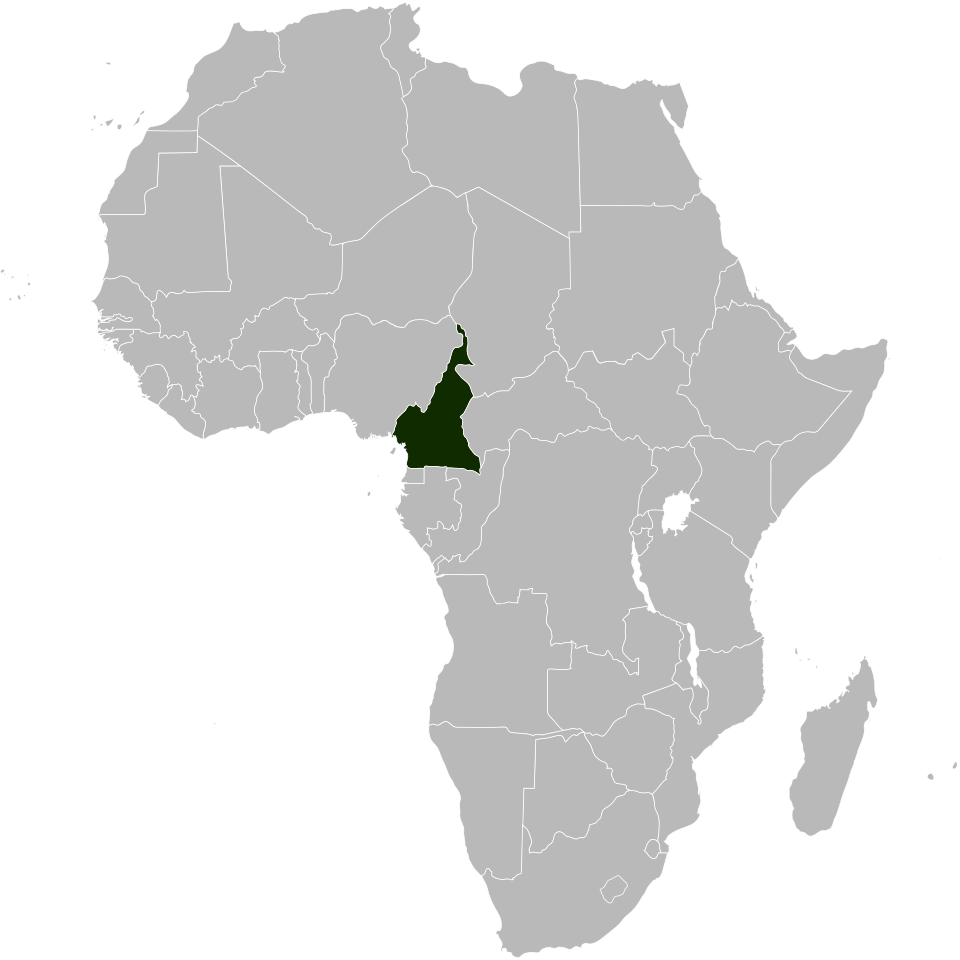
– Cameroon’s strategic location as a gateway to Central Africa positions it as a potential logistics hub, though infrastructure constraints remain a binding bottleneck
The Missing Numbers — What the Data Silence Tells Us
When the World Bank’s latest economic data for Cameroon returns a string of “N/A” entries across GDP growth, inflation, unemployment, and even population, it tells a story in itself. This is not merely a bureaucratic oversight. It reflects the profound challenges facing data collection and economic governance in a country where formal and informal economies operate in parallel universes.
Cameroon’s economy has historically been anchored by agriculture — coffee, cocoa, cotton, and bananas — alongside a growing oil and gas sector. The country sits on significant natural resources, including bauxite, iron ore, and timber. Yet without current growth figures from the World Bank, analysts must rely on regional context.
Central Africa has struggled with commodity price volatility, security challenges in the Lake Chad Basin, and the lingering effects of the Anglophone crisis that has disrupted activity in the country’s English-speaking regions.
The absence of inflation data is particularly telling. Across much of Africa, food price inflation has been the silent tax on household welfare. Cameroon, which imports substantial quantities of rice and wheat, would have felt the ripple effects of global supply chain disruptions and currency pressures. The Central African CFA franc, pegged to the euro, provides monetary stability but also means Cameroon cannot independently adjust its exchange rate to boost exports or manage inflation.
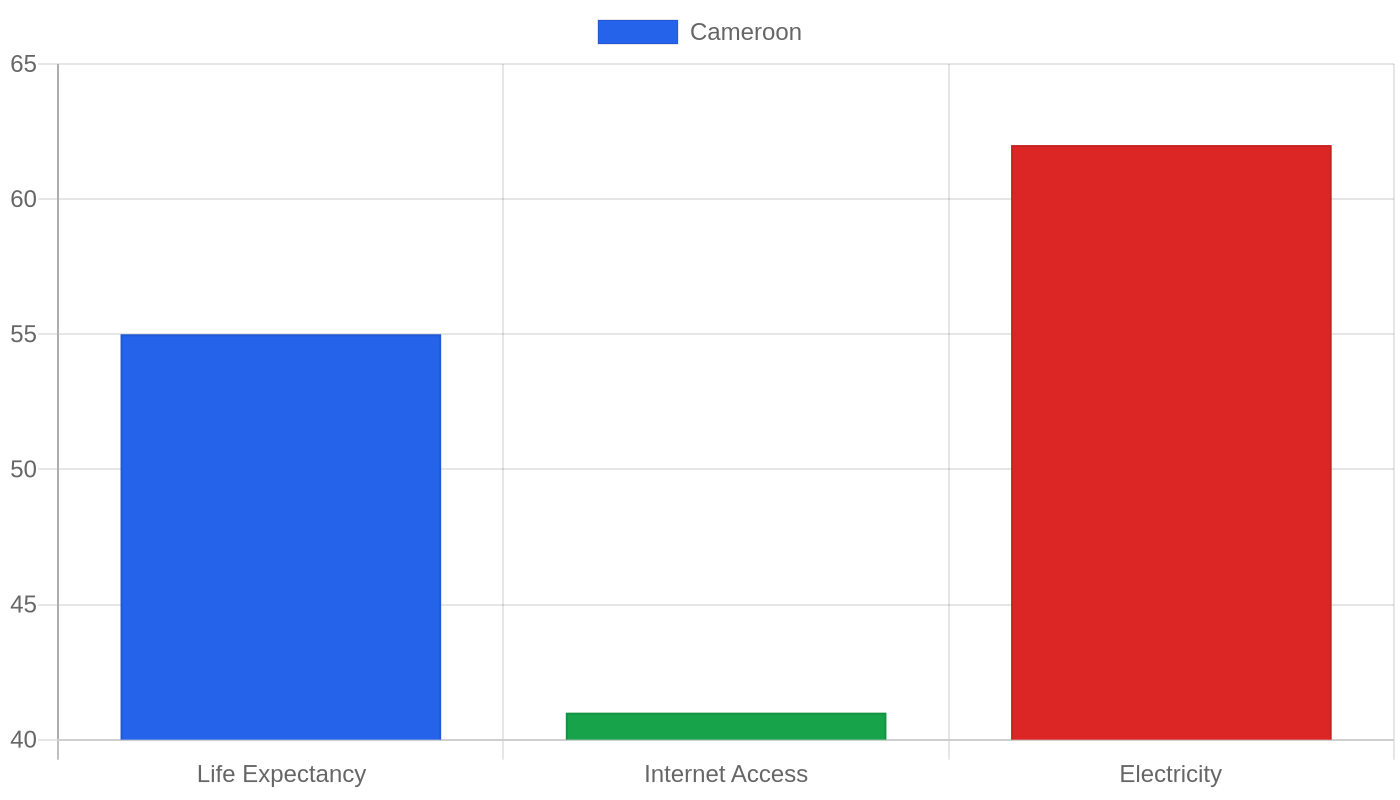
Employment data gaps mask what is likely a story of underemployment rather than outright joblessness. Like many African economies, Cameroon’s formal sector employs only a fraction of the workforce. The vast majority scratch out livelihoods in markets, small farms, and informal services — economic activity that rarely appears in official statistics but constitutes the real engine of daily survival.
The Price of Living — Housing, Markets, and Daily Survival
Housing in Cameroon’s economic capital Douala and political capital Yaoundé presents a stark divide. Formal, modern apartments in secure neighborhoods command premium rents that rival secondary cities in Europe, while the majority of urban residents live in densely packed quartiers where land tenure is often informal and services unreliable. The cost of living has risen perceptibly in recent years, driven by imported inflation on basic goods like cooking oil, rice, and fuel.
Transportation costs eat deeply into household budgets. The dominance of Camrail for intercity rail and Camair-Co for air travel means limited competition, with state-owned enterprises setting prices that often reflect operational inefficiencies rather than market dynamics. For most Cameroonians, bush taxis and motorbike taxis remain the lifeline, their fares fluctuating with fuel prices that the government periodically subsidizes or adjusts.
Food markets in Cameroon are vibrant, chaotic, and surprisingly resilient. The country’s agricultural potential means that fresh produce — plantains, cassava, tomatoes, peppers — remains relatively affordable compared to processed goods. But the margin between subsistence and hardship is thin. A poor harvest season or disruption to transport routes can send prices soaring in urban markets, testing the social fabric in ways that official cost-of-living indices rarely capture.
Banking on the Future — Business Climate and Corporate Landscape
Cameroon’s corporate sector tells a story of cautious modernization within inherited structures. The top companies list reads like a directory of state influence and colonial legacy: Afriland First Bank and Commercial Bank Cameroon dominate financial services, while Brasseries du Cameroun controls the beverage market that touches every corner of society. The Cameroon Development Corporation, a state-owned agro-industrial giant, remains a major employer in the plantation sector.
The telecommunications sector, anchored by Camtel, has seen gradual liberalization but still bears the marks of monopoly-era pricing and service quality. Mobile money has exploded across Cameroon, as it has across Africa, creating a parallel financial system that is more accessible than traditional banking. This fintech revolution may be the most dynamic force in the economy, operating largely outside the orbit of the companies listed in formal registries.
For foreign investors, Cameroon offers access to a market of significant size — the population data may be unavailable from the World Bank, but estimates consistently place Cameroon as one of the most populous countries in Central Africa. The challenges are equally real: bureaucratic opacity, infrastructure deficits that raise logistics costs, and a legal system where contract enforcement can be unpredictable.
The political stability provided by President Paul Biya’s long tenure has been a double-edged sword — predictable in its continuity, but stifling in its resistance to reform.
Power and Precarity — Politics, Safety, and Daily Life
The political landscape in Cameroon is defined by concentration. The President of Cameroon, as the data notes, is elected and creates policy, administers government agencies, commands the armed forces, negotiates and ratifies treaties, and declares a state of emergency. This is not a system of checks and balances but of centralization. The president appoints government officials at all levels, from the prime minister considered the official head of government, to provincial governors and divisional officers.
Elections every seven years provide a veneer of democratic process, but opposition figures operate under constraints, and the Anglophone regions have seen armed conflict that the government labels a security operation.
Crime and safety indices are marked as unavailable, which itself communicates something important. In the absence of reliable data, perception becomes reality. Douala and Yaoundé have reputations for street crime, particularly at night, but the security situation varies dramatically by neighborhood. The presence of military checkpoints in Anglophone regions and parts of the Far North reflects a country where the state projects force unevenly.
Quality of life in Cameroon is shaped by resilience and community networks. Extended family obligations, religious institutions, and ethnic associations provide social safety nets that the state does not. Electricity supply remains unreliable, with frequent outages that businesses must work around with generators. Healthcare access is limited, with many Cameroonians relying on traditional medicine or cross-border travel to neighboring countries for serious treatment.
Yet the vibrancy of Cameroonian culture — its music, its football, its cuisine — persists as a counterweight to these structural challenges.
What’s Happening Now — The Pulse of a Nation in Motion
The most current story in Cameroon is the tension between continuity and change. President Paul Biya, now in his ninth decade, has been in power since 1982 — longer than most Cameroonians have been alive. The question of succession hangs over every political calculation, even as the president maintains his grip on the levers of power. The 2025 presidential election, when it comes, will be the most consequential in a generation, with implications for economic policy, foreign investment, and regional stability.
On the economic front, Cameroon is navigating the aftershocks of global commodity price swings and the ongoing transition away from fossil fuels. The country’s oil revenues, which have long funded the state budget, face an uncertain long-term future. This has put pressure on the government to diversify and to improve the business environment for non-oil sectors. The IMF and World Bank have programs in place, but implementation of reforms has been uneven.
The Anglophone crisis continues to simmer, with sporadic violence and displacement affecting the country’s English-speaking regions. This conflict has disrupted agricultural production, closed schools, and created a humanitarian situation that ReliefWeb and other organizations have documented. For businesses operating in or trading with these regions, the risk premium has increased substantially.
The government’s response has oscillated between military crackdowns and calls for dialogue, with no durable resolution in sight.
The Bottom Line
Cameroon is a country of immense potential held back by governance constraints that have proven remarkably persistent. For investors with high risk tolerance and long time horizons, the opportunity lies in sectors like agribusiness, logistics, and financial technology, where the gap between current reality and possible future is widest.
For policymakers and development institutions, Cameroon represents a test case: can a resource-rich, strategically located African nation overcome the political inertia that has kept it from realizing its potential? The answer will matter not just for Cameroonians, but for the stability and prosperity of Central Africa as a whole.
Sources & Methodology
This article is authored by Economic Pulse Net for informational and research purposes. Economic Pulse Net sources its data from multilateral institutions, national statistics bureaus, and proprietary databases. All data is believed to be current as of the date of publication.
Published: July 22, 2026 | Category: Research — Cameroon
Use these signals in your own platform
Economic Pulse publishes its live signal feed through a documented, read-only API. Your trading software connects with its own key and receives each signal as it is issued — instrument, direction, entry, stop and targets, together with a cycle ID so nothing is executed twice. The feed is independent of this website and cannot change it.
Signals are informational only and are not financial advice.