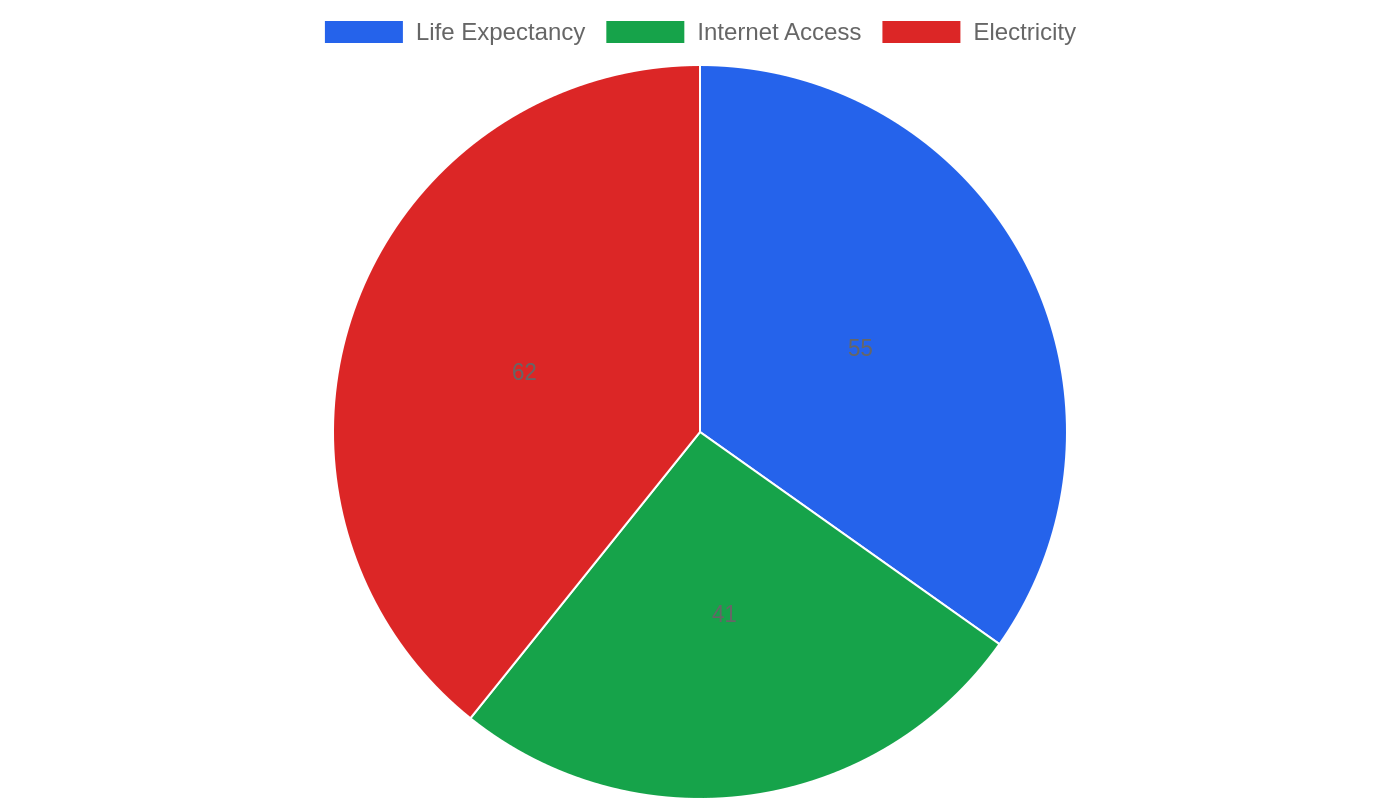
Economic Pulse Net | Sources: World Bank World Development Indicators, Government Sources | 2026
Key Takeaways
* Political Volatility: The constitutional framework was dissolved following the July 2023 coup d’état, placing executive authority under Abdourahamane Tiani and creating an unpredictable governance environment.
Data Void: Critical macroeconomic indicators such as GDP growth, inflation rates, and unemployment figures are currently unavailable, complicating standard economic assessments.
Resource-Driven Economy: The industrial landscape is heavily concentrated in basic materials and energy, dominated by key players like SOMAIR, COMINAK, and SONIDEP.
Service Sector Presence: Consumer services form a significant part of the corporate identity, with entities ranging from telecommunications (Dounia TV) to transportation and utilities.
Safety Concerns: With crime and safety indices marked as N/A, potential investors and residents face heightened uncertainty regarding personal security and operational risks.
Economic Structure and Industrial Base
The economic profile of Niger presents a complex picture defined more by its industrial assets than by fluid macroeconomic metrics. According to World Bank data, specific figures for GDP growth, inflation CPI, and unemployment remain unavailable, leaving analysts to rely on structural analysis rather than quantitative trends. Despite this data gap, the country’s industrial foundation remains robust, anchored by extractive industries that drive much of the formal economy.
The presence of major entities in the basic materials sector, such as SOMAIR and COMINAK, suggests that uranium mining continues to be a pivotal component of national output. Similarly, SONIDEP’s role in the oil and gas sector indicates a diversified energy portfolio that supports both domestic consumption and potential export revenues.
While the lack of current GDP per capita or GNI per capita figures prevents a precise assessment of individual wealth, the concentration of these large-scale industrial operations implies a capital-intensive economic model. This structure often correlates with limited immediate job creation for the broader population, a dynamic that may contribute to the unavailability of reliable unemployment statistics.
Understanding Niger requires looking past the missing percentage points and focusing on the tangible assets controlled by state-linked and private enterprises. The stability of these core industries will likely dictate the country’s fiscal health in the absence of transparent national accounting.
Cost of Living and Daily Expenses
Assessing the cost of living in Niger involves navigating a landscape where official price indices are not currently reported. Without specific CPI data or detailed housing market reports, it is difficult to quantify the exact financial burden on residents or expatriates. However, the existence of established utility providers like NIGELEC and postal services through Niger Poste suggests a structured, albeit potentially costly, infrastructure network.
In many similar economies, the reliance on imported goods and limited local manufacturing can drive up daily expenses, particularly for consumer services. Companies like Arik Niger and Dounia TV operate within a consumer services framework that caters to a growing middle class, implying a demand for entertainment and communication services that carries a price premium. For those considering relocation or business expansion, the absence of clear rent-vs-buy comparisons or regional average data necessitates caution.
One must assume that costs may be higher due to logistical challenges and import dependencies, even if exact numbers are not provided. The daily experience of living in Niger is thus shaped less by published inflation rates and more by the practical realities of accessing essential services through the few available corporate channels.
Investment and Business Climate
The investment landscape in Niger is characterized by a handful of dominant corporations that shape the business environment. Major players such as Escadrille Nationale du Niger and the Sociéte Nigerienne de Transports de Voyageurs highlight the importance of logistics and mobility in facilitating commerce. For foreign investors, the dominance of these specific firms means that partnerships or market entry strategies must navigate established corporate hierarchies.
The basic materials sector, led by SOMAIR and COMINAK, offers opportunities in upstream supply chains but also presents regulatory complexities given their strategic importance to the state. Meanwhile, the oil and gas sector represented by SONIDEP provides another avenue for investment, though typically requiring significant capital and technical expertise.
The consumer services sector, including Office of Radio and Television of Niger, indicates a media landscape that is partly state-influenced, which can impact advertising and information flow businesses. Entrepreneurs should note that while the corporate registry lists these entities, the broader SME ecosystem remains opaque without further statistical breakdowns. Success in this market likely depends on aligning with the existing industrial pillars rather than disrupting them.
Safety, Politics, and Quality of Life
The political and safety environment in Niger has undergone a dramatic shift that significantly impacts quality of life. Since the July 2023 coup d’état, the constitution has been dissolved, removing the legal safeguards previously established by the 2010 referendum. Executive power is now centralized under Abdourahamane Tiani, replacing the semi-presidential system that had governed the nation since the Fifth Republic era began in 1999.
This abrupt change in governance creates a high degree of political risk, as policy continuity is no longer guaranteed by institutional frameworks. Compounding this uncertainty are the missing crime and safety indices, which leave residents and visitors without objective measures of personal security. The dissolution of the constitution means that the rule of law, as previously codified, is in flux, potentially affecting contract enforcement and property rights.
For expatriates and international organizations, the combination of political upheaval and undefined safety metrics requires rigorous contingency planning. The quality of life is thus heavily influenced by the stability of the military-led administration and its ability to restore civil order.
What’s Happening Now: The Post-Coup Reality
The most critical development defining Niger today is the aftermath of the July 2023 coup d’état, which has fundamentally altered the nation’s trajectory. The government is currently led by Abdourahamane Tiani, operating without the constraints of the previous constitutional order. This period is marked by a transition away from the democratic norms established by the 2010 referendum, which had restored a semi-presidential system with universal suffrage.
The dissolution of the constitution signifies a break from the political stability that characterized the earlier years of the Fifth Republic. As a result, the business and social environments are adapting to a new set of unwritten rules and power dynamics. International observers and local stakeholders are closely monitoring how Tiani’s administration manages economic obligations and internal security in the absence of formal legislative oversight.
This political reset creates a unique window of opportunity and risk, where traditional diplomatic and economic channels may function differently. The immediate future of Niger hinges on how this new leadership consolidates power and addresses the underlying socioeconomic pressures that contributed to the unrest.
The Bottom Line
Niger presents a challenging but potentially rewarding environment for those willing to navigate significant political and informational risks. Investors and researchers must prioritize understanding the influence of key industrial players like SOMAIR and SONIDEP over traditional macroeconomic indicators. The dissolution of the constitution and the rise of the Tiani administration require a flexible approach to compliance and risk management.
Those who can successfully integrate into the existing corporate structures may find opportunities in the resource and service sectors, provided they account for the heightened uncertainty.
Sources & Methodology
This article is authored by Economic Pulse Net for informational and research purposes. Economic Pulse Net sources its data from multilateral institutions, national statistics bureaus, and proprietary databases. All data is believed to be current as of the date of publication.
Published: October 08, 2026 | Category: Research — Niger
Use these signals in your own platform
Economic Pulse publishes its live signal feed through a documented, read-only API. Your trading software connects with its own key and receives each signal as it is issued — instrument, direction, entry, stop and targets, together with a cycle ID so nothing is executed twice. The feed is independent of this website and cannot change it.
Signals are informational only and are not financial advice.