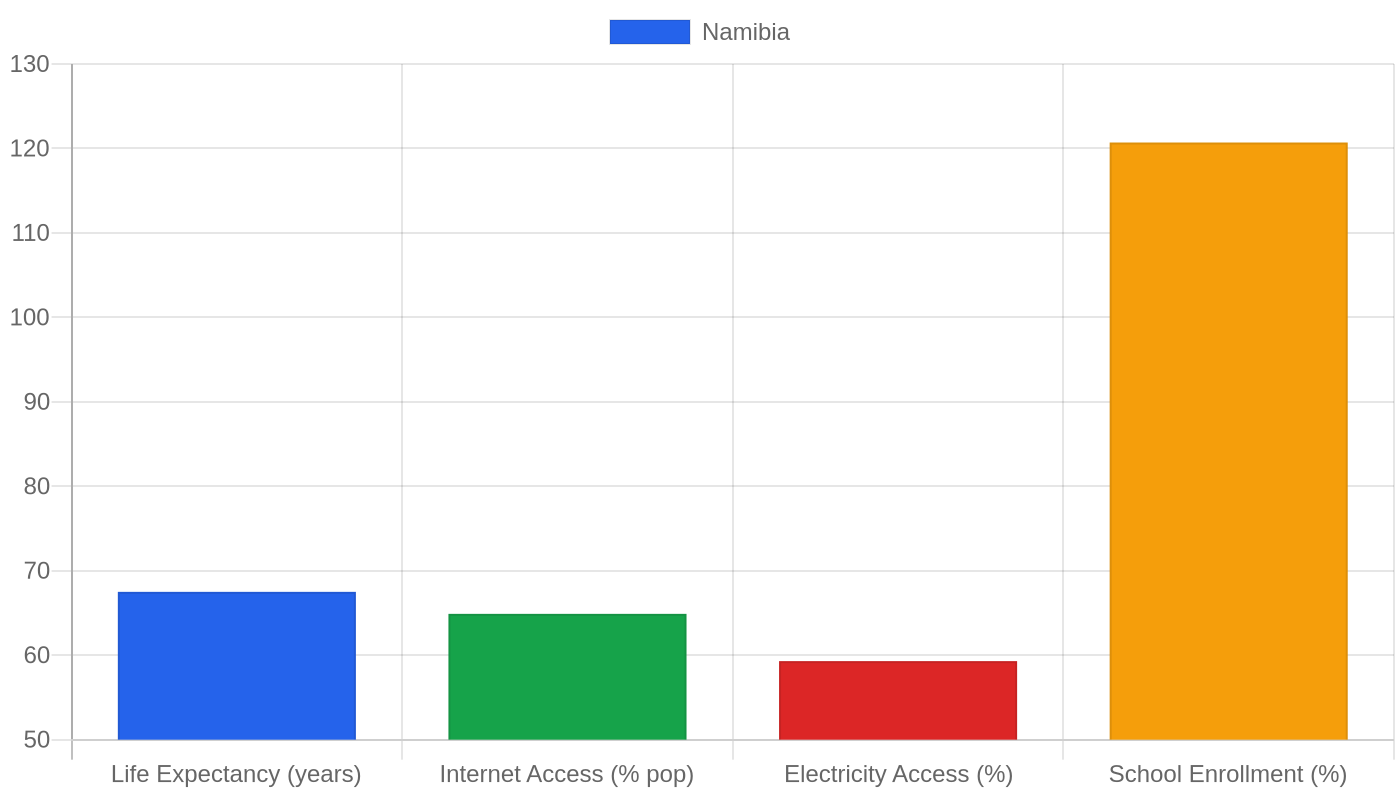
Economic Pulse Net | Sources: World Bank World Development Indicators, Government Sources | 2026
🇳🇦 Namibia 2024 — The Quiet Giant: Navigating Structural Resilience in a Data-Scarce Era
Key Takeaways
- Data Transparency Gap: Current World Bank metrics for GDP growth, inflation, and unemployment are not available, signaling a critical period for economic visibility and data collection.
- Financial Sector Dominance: The corporate landscape is heavily weighted toward financial services, with multiple major banks operating as key pillars of the economy.
- Political Stability: Namibia maintains a stable unitary semi-presidential representative democratic republic, providing a consistent governance framework for long-term planning.
- Diverse Corporate Base: Beyond finance, significant players exist in telecommunications, consumer goods, and specialized services, indicating a diversified private sector.
- Investment Caution: Without current real-time indicators on safety or cost of living, investors and residents must rely on structural fundamentals and established institutional frameworks.
The Economic Void: Why Missing Numbers Matter
In the realm of global economics, data is the oxygen that allows analysts to breathe life into market predictions.
For Namibia, the current absence of specific World Bank figures for GDP growth, inflation (CPI), and unemployment presents a unique challenge.
While the lack of these specific percentage points might seem like a minor administrative gap, in reality, it represents a significant hurdle for international investors who rely on precise metrics to gauge risk and opportunity.
The World Bank, which typically serves as the primary source for such macroeconomic indicators, currently lists these values as unavailable, suggesting either a lag in data reporting or a transition period in economic measurement.
This opacity makes it difficult to assess the immediate health of the domestic labor market or the purchasing power of the average Namibian citizen.
Without knowing the current inflation rate, businesses cannot accurately price their goods, and consumers cannot plan their savings.
Consequently, the economic narrative for Namibia right now is less about specific performance figures and more about the structural integrity of its institutions.
The fact that we cannot cite a specific GDP figure does not mean the economy is inactive; rather, it underscores the need for robust, transparent economic reporting to attract the kind of foreign direct investment that drives long-term prosperity.
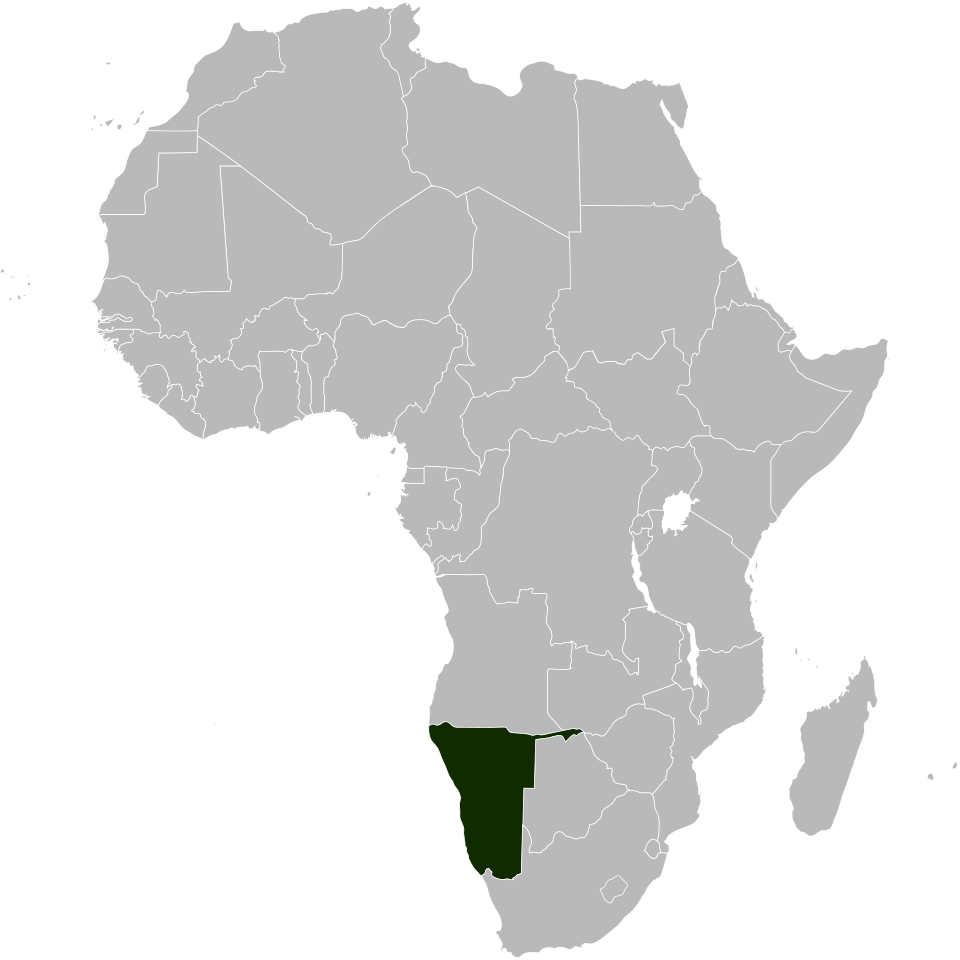
Living in the Kalahari: The Cost of Existence
Determining the exact cost of living in Namibia is currently an exercise in estimation rather than calculation, as specific data on housing costs, rent versus buy dynamics, and daily expenses is not provided in the available dataset.
In many African nations, the cost of living is heavily influenced by the availability of affordable housing and the price of basic utilities, but without concrete figures, we must look to the broader economic context.
The presence of major consumer goods companies like Bidvest Namibia suggests a robust retail sector that caters to a wide range of income levels, from luxury to essential goods.
However, without specific data on regional averages or housing affordability indices, it is impossible to make a definitive comparison to neighboring countries.
What can be inferred is that the cost structure is likely supported by a stable currency and a formalized banking sector, which helps in managing household debt and savings.
For prospective residents or expatriates, the lack of specific cost-of-living data necessitates a thorough on-the-ground assessment, relying on local market conditions rather than global averages.
The economic reality of daily life in Namibia is shaped by the interplay of these major corporate players and the broader labor market, even if the specific price tags remain elusive in this dataset.
Titans of Industry: The Financial and Telecommunications Backbone
The corporate landscape of Namibia is distinctly defined by its strength in financial services and telecommunications.
A review of the top companies reveals a heavy concentration in the financial sector, with the Bank of Namibia, Bank Windhoek, Development Bank of Namibia, and FIDES Bank Namibia all holding prominent positions.
This dominance suggests that the flow of capital within the country is well-managed and that the banking system is a critical driver of economic activity.
Beyond finance, MTC Namibia stands out as a key player in telecommunications, highlighting the importance of digital connectivity in the modern Namibian economy.
The inclusion of consumer services and goods companies such as Air Namibia, Kalahari Express Airlines, Gazza Music Productions, and Mshasho Productions indicates a vibrant private sector that extends beyond traditional industries.
These entities contribute to the cultural and logistical fabric of the nation, ensuring that Namibia is not just a hub for finance but also a center for cultural and consumer activity.
The diversity of these top companies, ranging from consumer services to heavy financial institutions, provides a buffer against sector-specific shocks, creating a more resilient business environment.
For investors, this mix offers multiple entry points into the Namibian market, whether through financial instruments, digital services, or consumer goods.
Stability in the Saddle: Politics, Safety, and Governance
Namibia’s political structure is characterized by stability, operating as a unitary semi-presidential representative democratic republic.
This form of government ensures that the President of Namibia, elected to a five-year term, serves as both the head of state and the head of government, providing a clear chain of command and accountability.
All members of the government are individually and collectively responsible to the legislature, a system that promotes transparency and democratic oversight.
While specific crime and safety indices are not available in the current data, the established political framework suggests a society with strong institutional foundations.
The consistent nature of this political system provides a predictable environment for both local and international actors, reducing the risks associated with political volatility.
In the absence of specific safety data, the focus shifts to the quality of governance and the rule of law, which are pillars of the Namibian democratic process.
This political stability is a key asset for the country, as it encourages long-term planning and investment, even in the face of economic data gaps.
The Current Pulse: Navigating Uncertainty in Real-Time
The current economic and political landscape of Namibia is marked by a period of transition where structural stability meets data scarcity.
With recent news and live indicators not providing specific updates on reforms, elections, or inflation trends, the focus remains on the enduring strength of its institutions.
The business climate is currently defined by the resilience of its top companies, which continue to operate effectively despite the lack of real-time macroeconomic data.
This situation calls for a cautious approach from policymakers and investors alike, emphasizing the need for improved data collection and reporting mechanisms.
The absence of specific recent news on policy shifts suggests a period of steady state, where the existing frameworks are being maintained rather than radically overhauled.
As Namibia moves forward, the key challenge will be to bridge the gap between its strong institutional foundations and the need for transparent, accessible economic data.
This period of quiet stability offers an opportunity for Namibia to strengthen its economic reporting, ensuring that future investors and residents have the clarity they need to make informed decisions.
The Bottom Line
Namibia presents a compelling case for those who value structural stability and institutional strength over short-term economic metrics.
The country’s well-established financial sector and diverse corporate base provide a solid foundation for economic activity, even in the absence of current World Bank data on growth and inflation.
For investors and analysts, the key takeaway is the importance of due diligence in data-scarce environments, where structural fundamentals must be weighed heavily.
Namibia’s political stability and robust governance framework make it a reliable partner in the global economy, offering a safe harbor for long-term investments.
As the country continues to develop, the improvement in economic data transparency will be the critical factor that unlocks its full potential.
Sources & Methodology
This article is authored by Economic Pulse Net for informational and research purposes.
Economic Pulse Net sources its data from multilateral institutions, national statistics bureaus, and proprietary databases.
All data is believed to be current as of the date of publication. Published: September 04, 2026 |
Category: Research — Namibia
Use these signals in your own platform
Economic Pulse publishes its live signal feed through a documented, read-only API. Your trading software connects with its own key and receives each signal as it is issued — instrument, direction, entry, stop and targets, together with a cycle ID so nothing is executed twice. The feed is independent of this website and cannot change it.
Signals are informational only and are not financial advice.