Economic Pulse Net | Sources: World Bank World Development Indicators, Government Sources | 2026
Key Takeaways
– Mozambique’s economy is defined by massive natural gas discoveries and chronic infrastructure gaps, creating a stark divide between potential and reality.
– The country’s top companies are dominated by state-owned utilities and transport firms, reflecting a economy still heavily reliant on public investment and logistics corridors.
– Political stability remains fragile, with a constitutional framework that concentrates significant power in the presidency while the prime minister manages day-to-day governance.
– Cost of living pressures are acute, though precise data remains scarce, as the gap between urban and rural livelihoods widens.
– Investors eye Mozambique’s energy sector and transport links, but security concerns and institutional weaknesses continue to temper enthusiasm.
The Gas-Fueled Paradox — Growth Hopes vs. Structural Realities
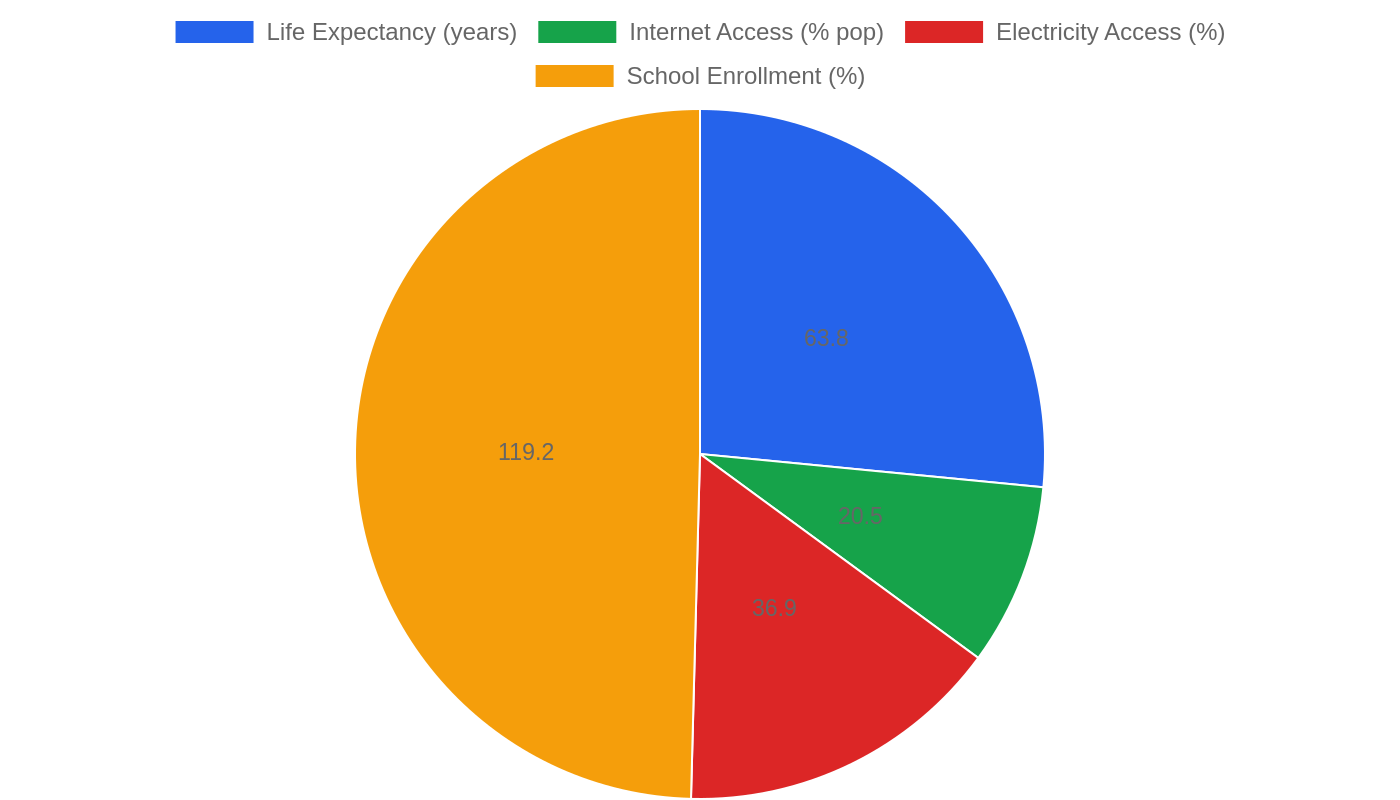
The World Bank’s latest data on Mozambique presents an unusual challenge for analysts: the headline numbers—GDP growth, inflation, unemployment, GDP per capita—are simply not available in the current dataset. This absence is itself revealing. It speaks to a country where data collection is uneven, where the informal economy dwarfs formal reporting, and where the statistical agencies struggle to keep pace with rapid change. What is clear, however, is that Mozambique sits at a crossroads.
The discovery of vast offshore natural gas reserves in the Rovuma Basin has transformed the country’s long-term economic narrative, yet the benefits have been painfully slow to materialize.
The national economy is anchored by a handful of dominant sectors. Transport and logistics are critical, as evidenced by the prominence of Mozambique Ports and Railways and the Beira Railroad Corporation among the country’s top companies. These are not merely commercial entities—they are the arteries through which landlocked neighbors like Zimbabwe, Zambia, and Malawi move their trade.
The utilities sector, led by Electricidade de Moçambique, provides the electricity grid that powers homes and industries, though blackouts remain common. Consumer services, including airlines like LAM Mozambique Airlines and Kaya Airlines, reflect a domestic market that is slowly modernizing but remains constrained by low purchasing power.
The World Bank’s silence on inflation and employment figures does not mean these issues are absent. On the contrary, anecdotal evidence from regional observers suggests that inflation has been a persistent headache, driven by imported fuel costs and food price volatility. Unemployment, particularly among the young, is widely considered to be high, though the informal sector absorbs much of the labor force in ways that official statistics fail to capture.
The challenge for Mozambique is clear: how to translate gas wealth into broad-based economic transformation when the data infrastructure itself is still developing.
The Cost of Living — Navigating Scarcity in a Resource-Rich Land
Housing and daily expenses in Mozambique tell a story of two economies. In Maputo, the capital, rents for a decent apartment in a secure neighborhood can consume the majority of a professional salary. The cost of imported goods—electronics, vehicles, even some food staples—is inflated by logistics bottlenecks and port inefficiencies. For the majority of Mozambicans living outside the capital, the picture is starker. Rural housing is often self-built, lacking reliable electricity or running water.
The cost of basic necessities like cooking oil, rice, and soap has risen sharply in recent years, though precise index data is not provided by the World Bank.
Renting is the norm for the urban middle class, as mortgage finance remains underdeveloped and land title systems are opaque. Buying property is possible but fraught with legal complications, especially for foreign investors. Compared to regional neighbors like South Africa or Kenya, Mozambique’s cost of living is lower in absolute terms but higher relative to local incomes. The gap between what people earn and what they need to spend on food, transport, and housing is a daily source of stress for millions.
This is not a country where economic data points to comfort—it is one where resilience is a survival skill.
Investment and Business Climate — State Giants and Private Hopes
The list of Mozambique’s top companies reads like a map of the state’s economic footprint. Banco Nacional de Investimento and the Bank of Mozambique dominate the financial sector, providing the credit and monetary policy backbone for the economy. Mozambique Ports and Railways, the Beira Railroad Corporation, and Correios de Moçambique control the logistics and communications infrastructure. Electricidade de Moçambique powers the grid.
These are not just companies—they are instruments of state policy, and their performance directly affects the business climate for everyone else.
For private investors, the sectors to watch are energy, transport, and consumer services. The natural gas projects in the north, while delayed by security concerns, represent a multi-billion-dollar opportunity that could transform the country’s fiscal position. The airlines—LAM Mozambique Airlines, Kaya Airlines, Moçambique Expresso, and Air Corridor—hint at a domestic travel market that is growing, albeit from a low base. The business environment, however, remains challenging.
Bureaucracy, corruption, and inconsistent regulatory enforcement are well-documented hurdles. The World Bank’s data may be sparse, but the message from investors on the ground is consistent: Mozambique offers high risk and potentially high reward, but patience is not optional.
Security, Politics, and Daily Life — Power Concentrated, Trust Fragile
The political landscape of Mozambique is defined by the Constitution, which vests extraordinary power in the President of the Republic. The president serves as head of state, head of government, and commander-in-chief of the armed forces, and is directly elected for a five-year term via run-off voting. The prime minister, appointed by the president, convenes and chairs the council of ministers, advises the president, and coordinates government functions.
This structure concentrates authority at the top, which can enable decisive action but also creates vulnerability to personality-driven governance.
Crime and safety indices are not provided in the current data, but regional reporting consistently flags concerns about armed violence in the northern provinces, particularly Cabo Delgado, where an Islamist insurgency has disrupted gas projects and displaced hundreds of thousands. In Maputo and other urban centers, petty crime is a daily reality, and security is a premium expense for businesses and wealthier households.
The quality of life for most Mozambicans is shaped by access—or lack thereof—to reliable electricity, clean water, healthcare, and education. The political system, with its strong presidency, offers stability on paper, but trust in institutions is fragile, and elections are often contested along regional and ethnic lines.
What’s Happening Now — The Gas Window and the Governance Test
Right now, Mozambique is living through a critical period. The long-awaited natural gas projects in the Rovuma Basin are inching forward, with TotalEnergies signaling a potential restart of its suspended operations. This is the single biggest economic event on the horizon. If the gas begins to flow, it will transform government revenues, attract foreign investment, and create thousands of jobs.
If it stalls again—due to security concerns, regulatory disputes, or global energy price shifts—the country will remain in a holding pattern.
On the political front, the run-up to the next presidential election is generating tension. The current president, Filipe Nyusi, is nearing the end of his second term, and succession politics are already stirring. The opposition, led by figures like Ossufo Momade of RENAMO, is positioning for a challenge, while the ruling FRELIMO party is managing internal factions. The constitutional framework, with its powerful presidency, means that whoever wins will have enormous influence over the economy and security policy.
For now, the government is focused on maintaining stability, managing the insurgency in the north, and trying to convince international partners that Mozambique is open for business. The data may be thin, but the stakes could not be thicker.
The Bottom Line
Mozambique is a country for patient investors and strategic thinkers. The natural gas reserves are a genuine game-changer, but they will not deliver prosperity overnight. The political system is stable in form but fragile in practice, and the security situation in the north remains a serious concern. For those willing to navigate the complexity—energy companies, infrastructure developers, and long-term portfolio investors—the potential rewards are significant.
For the average Mozambican, the hope is that the gas wealth will eventually translate into better roads, reliable electricity, and jobs. That hope is not yet a reality, but it is not a fantasy either.
Sources & Methodology
This article is authored by Economic Pulse Net for informational and research purposes. Economic Pulse Net sources its data from multilateral institutions, national statistics bureaus, and proprietary databases. All data is believed to be current as of the date of publication.
Published: July 20, 2026 | Category: Research — Mozambique
Use these signals in your own platform
Economic Pulse publishes its live signal feed through a documented, read-only API. Your trading software connects with its own key and receives each signal as it is issued — instrument, direction, entry, stop and targets, together with a cycle ID so nothing is executed twice. The feed is independent of this website and cannot change it.
Signals are informational only and are not financial advice.