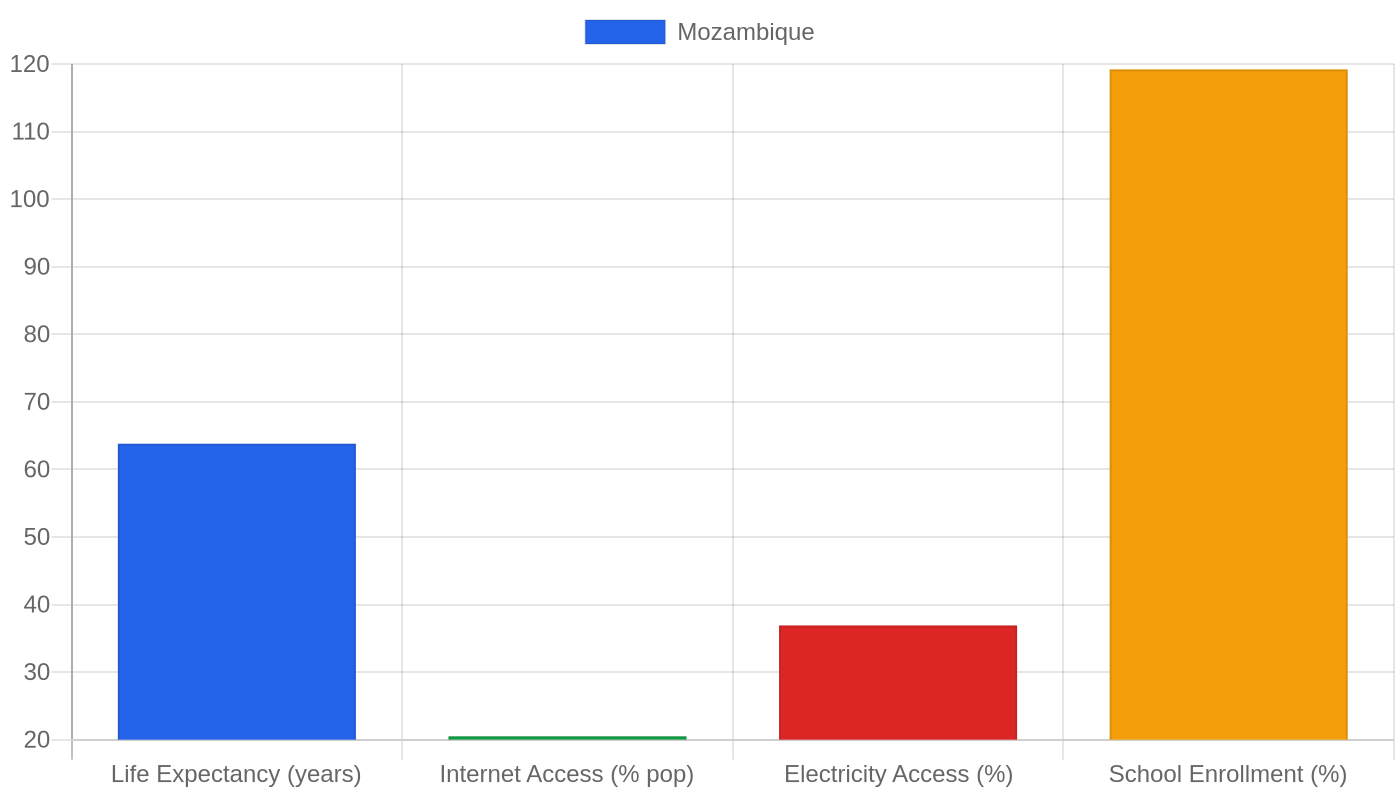
Economic Pulse Net | Sources: World Bank World Development Indicators, Government Sources | 2026
🇲🇿 Mozambique 2026 — Navigating the Infrastructure-Driven Economy Amidst Political Continuity
Key Takeaways
* Infrastructure as the Growth Engine: The national economy is heavily anchored by logistics and utilities, with key players like Mozambique Ports and Railways driving industrial connectivity.
Political Stability via Strong Executive Power: The President holds significant authority as both head of state and government, ensuring centralized decision-making in governance and military command.
Financial Sector Concentration: Banking services are dominated by established institutions such as Banco Nacional de Investimento and the central Bank of Mozambique, forming the backbone of corporate finance.
Transportation Network Complexity: A diverse array of airlines and rail corporations indicates a critical need for robust logistical solutions across consumer and industrial sectors.
Data Transparency Gaps: Current macroeconomic indicators such as GDP growth and inflation rates require further clarification from official sources to fully assess short-term economic volatility.
The Architecture of Industrial Connectivity
Mozambique’s economic landscape is defined less by broad-based consumer manufacturing and more by its strategic role as a logistical hub for the region. According to World Bank data, while specific GDP growth figures remain unlisted in the latest release, the structural composition of the economy reveals a heavy reliance on industrials and financial services.
The presence of major entities like Mozambique Ports and Railways and Beira Railroad Corporation underscores the country’s dependence on efficient transport corridors to move goods, likely linking landlocked neighbors to global markets. This infrastructure-centric model suggests that economic health is tightly coupled with the operational efficiency of these state-linked or privatized rail and port assets.
Furthermore, the utility sector, represented by Electricidade de Moçambique, plays a pivotal role in enabling industrial activity, highlighting that energy reliability is a prerequisite for broader economic expansion. Without precise unemployment or CPI figures, the narrative shifts toward the tangible assets that drive value: ports, rails, and power grids.
These industries form the skeleton of the nation’s wealth, suggesting that investment in physical capital remains the primary driver of national output rather than service-sector innovation alone.
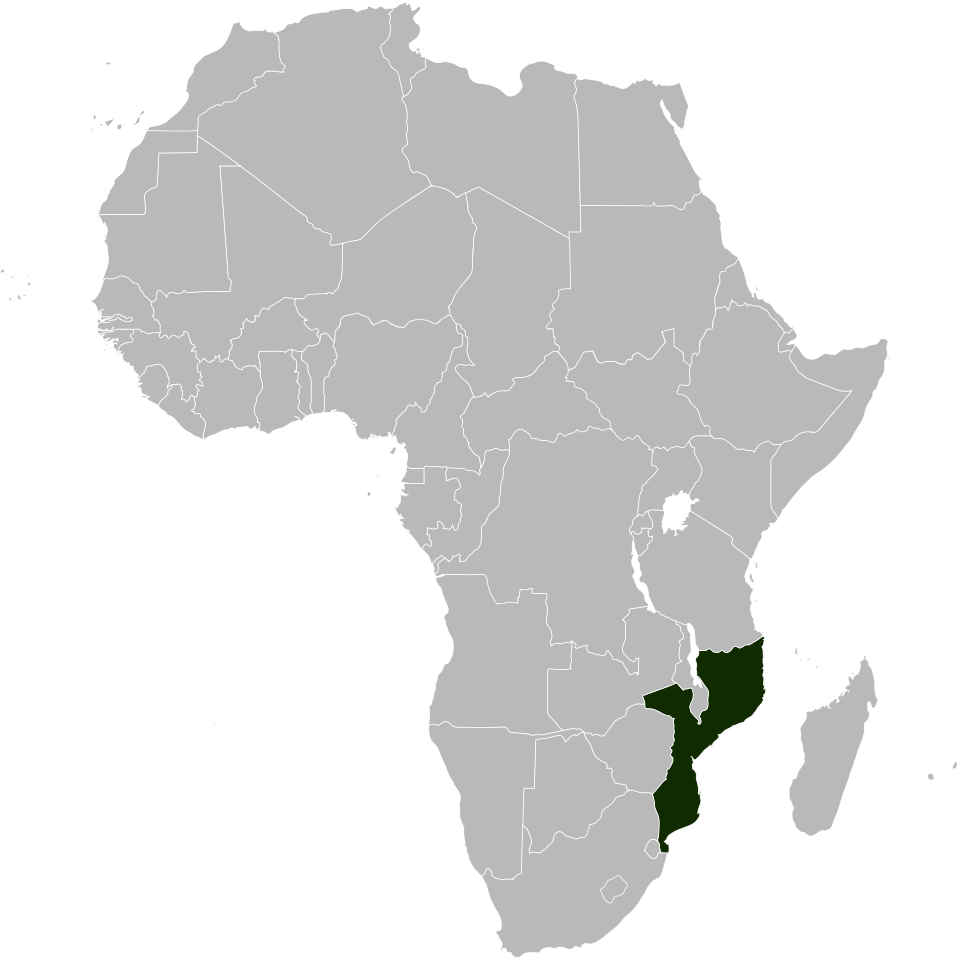
Housing and Daily Expenses in a Developing Market
For expatriates and local residents alike, understanding the cost of living in Mozambique requires looking at the interplay between imported goods and local infrastructure costs. While specific inflation CPI percentages are not currently detailed in the provided datasets, the presence of major utility providers like Electricidade de Moçambique indicates that household expenses are significantly influenced by energy tariffs and grid stability.
In many emerging markets with similar industrial profiles, housing costs can vary wildly depending on proximity to secure enclaves and reliable power supply. Renters often face premiums for properties with backup generators due to intermittent electricity, a factor that directly impacts monthly disposable income. Daily expenses, particularly for food and transportation, are likely subject to fluctuations driven by fuel prices and import dependency, given the strong role of logistics companies in the supply chain.
Although exact price indices are unavailable, the structure of the top companies suggests that essential services are concentrated among a few large players, which can stabilize prices but also limit competitive pressure on consumers. Understanding these hidden costs is vital for anyone planning long-term residency, as the baseline for comfort is tied closely to the reliability of public utilities and transport networks.
Investment Opportunities in Logistics and Finance
The business climate in Mozambique offers distinct opportunities for investors focused on infrastructure, financial services, and transportation. The list of top companies reveals a mature, albeit concentrated, market where Banco Nacional de Investimento and the Bank of Mozambique dominate the financial landscape, providing essential credit facilities for large-scale projects.
For foreign direct investment, the industrials sector presents the most visible entry points, with Mozambique Ports and Railways serving as critical nodes for regional trade. Investors should pay close attention to the Beira Railroad Corporation, as rail efficiency directly correlates with export competitiveness for neighboring countries.
Additionally, the consumer services sector, featuring airlines like Kaya Airlines and LAM Mozambique Airlines, suggests ongoing demand for improved connectivity within the country and to international destinations. However, potential investors must navigate a landscape where corporate power is concentrated; partnering with established entities like Air Corridor or Correios de Moçambique may be necessary to overcome bureaucratic hurdles.
The absence of explicit GDP per capita PPP data makes it difficult to gauge middle-class purchasing power, but the strength of the industrial base implies that B2B opportunities outweigh immediate B2C retail prospects in the current cycle.
Safety, Governance, and Social Stability
Navigating Mozambique’s social and political environment requires an appreciation for the strong executive nature of its government. The Constitution stipulates that the President serves as the head of state, head of government, and commander-in-chief, creating a centralized system where policy direction flows directly from the presidency.
This concentration of power, with the prime minister appointed to coordinate the cabinet, ensures that governmental functions are unified under a single vision of national unity. Regarding safety, specific crime and safety indices are not currently available in the provided data, necessitating caution and situational awareness for all visitors and residents.
The lack of quantified safety metrics does not imply risk-free conditions; rather, it highlights the need for localized intelligence when traveling outside major urban centers. Politically, the five-year term with run-off voting provides a clear mechanism for leadership transitions, contributing to a degree of institutional predictability despite the high stakes of elections.
Quality of life assessments are often tied to political stability and security, so monitoring the implementation of presidential directives on public order is crucial for understanding the daily reality on the ground.
Current Affairs and Policy Directions
Recent developments in Mozambique highlight a continued focus on strengthening state capacity and maintaining political cohesion. The constitutional framework remains the primary guide for governance, with the President actively convening and chairing the council of ministers to ensure coordinated action across government departments. This administrative structure allows for rapid decision-making on national issues, although it places significant responsibility on the executive branch for effective governance.
While specific recent news events regarding inflation trends or new reforms are not detailed in the current dataset, the emphasis on coordinating functions suggests an ongoing effort to improve bureaucratic efficiency. The involvement of the armed forces under the President’s command indicates that national security remains a top priority for the administration.
Observers should watch for any announcements regarding the prime minister’s advisory roles, as these appointments often signal shifts in economic policy or diplomatic strategy. The steady operation of state-linked enterprises like Correios de Moçambique and Electricidade de Moçambique implies that basic services continue to function amidst broader political dynamics.
As the country moves forward, the interplay between centralized political control and economic liberalization will likely define the next phase of development.
The Bottom Line
Mozambique presents a unique case study in infrastructure-led development, where economic vitality is deeply intertwined with logistics and energy sectors. Investors and analysts should prioritize the industrials and financials sectors, keeping a close eye on the performance of major railway and port operators. While macroeconomic data gaps require patience, the political structure offers a clear, if centralized, path for policy implementation.
For those seeking exposure to Southern African trade routes, Mozambique remains a critical, albeit complex, destination worth monitoring closely.
Sources & Methodology
This article is authored by Economic Pulse Net for informational and research purposes. Economic Pulse Net sources its data from multilateral institutions, national statistics bureaus, and proprietary databases. All data is believed to be current as of the date of publication.
Published: October 29, 2026 | Category: Research — Mozambique
Use these signals in your own platform
Economic Pulse publishes its live signal feed through a documented, read-only API. Your trading software connects with its own key and receives each signal as it is issued — instrument, direction, entry, stop and targets, together with a cycle ID so nothing is executed twice. The feed is independent of this website and cannot change it.
Signals are informational only and are not financial advice.