Economic Pulse Net | Sources: World Bank World Development Indicators, Government Sources | 2026
Key Takeaways
– Mauritius operates as a stable parliamentary republic with a multi-party system, positioning it as one of Africa’s most consistent democratic frameworks.
– The economy is anchored by a diverse mix of consumer services, financial institutions, and utilities, with major players spanning hospitality, telecommunications, and conglomerates.
– Tourism and financial services remain the twin engines of the economy, reflected in the dominance of companies like Air Mauritius and Beachcomber Resorts & Hotels.
– The country’s political structure—with a President as head of state and a Prime Minister as head of government—provides institutional continuity that investors often cite as a key advantage.
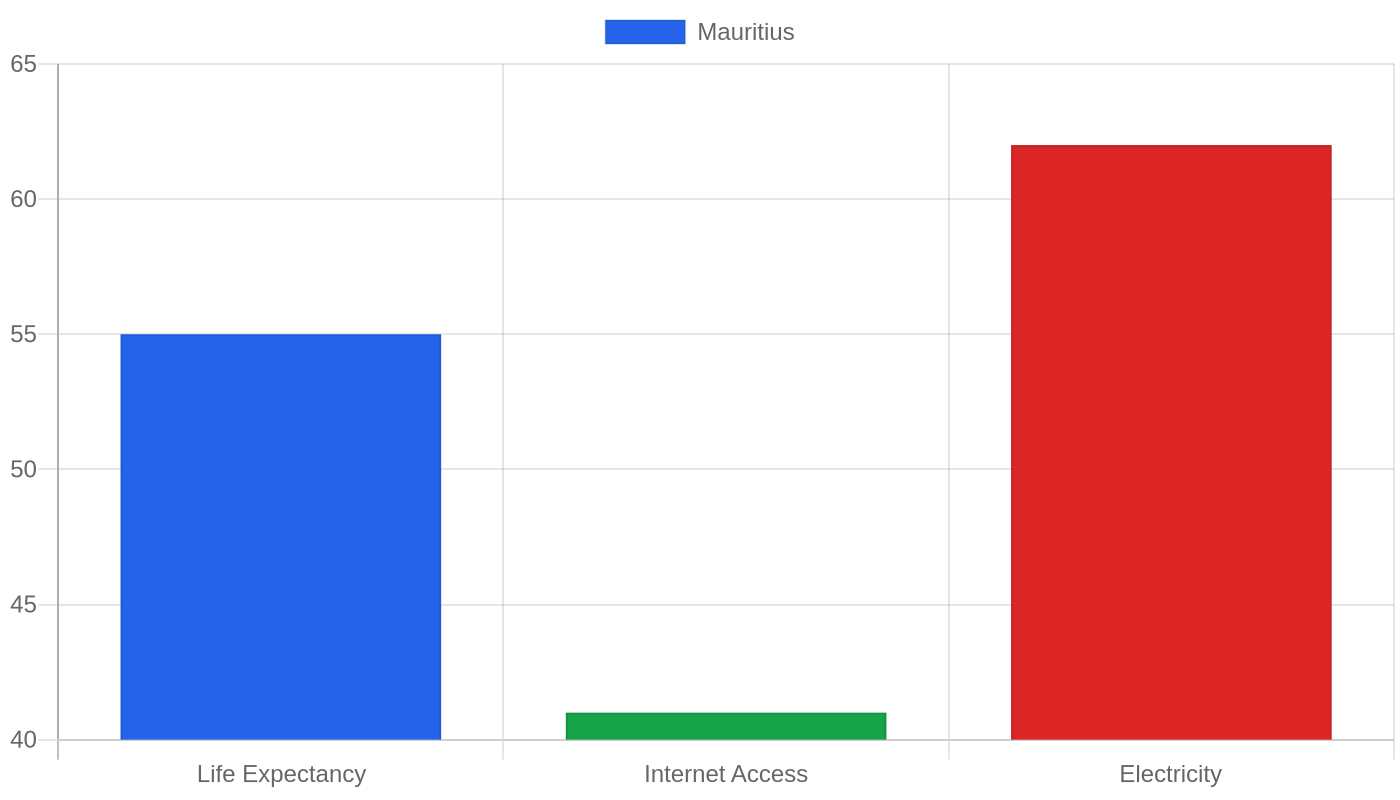
– While specific World Bank economic indicators are currently unavailable, the composition of leading companies suggests a mature, service-oriented economy with significant regional influence.
The Economic Engine: Services, Stability, and Strategic Positioning
Mauritius has long been regarded as one of Africa’s most sophisticated economic success stories, and the available data reinforces that narrative even without precise GDP figures from the World Bank. The country’s economic landscape is dominated by consumer services, financial institutions, and utilities—a profile that speaks to a mature, post-industrial economy rather than one dependent on raw commodity extraction.
The presence of the Bank of Mauritius among the top companies underscores the centrality of the financial sector, which has positioned the island as a gateway for investment into Africa and Asia. Air Mauritius, the national carrier, and Beachcomber Resorts & Hotels highlight the continued importance of tourism and connectivity, sectors that generate foreign exchange and sustain thousands of jobs.
The Central Electricity Board’s inclusion among major companies signals ongoing investment in infrastructure and energy security, which are critical for any economy aiming to attract long-term foreign direct investment. Emtel’s presence in telecommunications reflects the digital transformation underway, a sector that will likely drive productivity gains in the coming years.
The conglomerates—ENL Group and Ireland Blyth Limited—demonstrate the diversified business interests that have historically allowed Mauritian firms to weather global economic shocks. Taken together, these companies paint a picture of an economy that has successfully transitioned from sugar dependency to a knowledge-and-services hub, though the absence of current inflation and unemployment data from the World Bank leaves room for careful monitoring of near-term pressures.
Cost of Living: The Price of Island Life
For residents and expatriates alike, the cost of living in Mauritius reflects its status as a middle-income economy with a high level of service sector development. Housing in prime areas, particularly around Port Louis and the coastal tourist zones, commands premium prices, while more affordable options exist inland and in less touristed districts.
The rental market is active, driven by expatriate professionals in the financial services sector and by the growing digital nomad community, but the World Bank data provided does not include specific housing cost figures, so precise comparisons to regional averages remain difficult. Daily expenses such as food, transportation, and utilities are generally considered moderate by regional standards, though imported goods carry higher price tags due to the island’s geographic isolation.
The presence of major conglomerates like ENL Group and Ireland Blyth Limited suggests a well-developed retail and distribution network that helps stabilize consumer prices. For the average Mauritian household, the balance between wages and living costs is a central political issue, and it is one that policymakers in Port Louis monitor closely as they calibrate economic policy.
Investment & Business Climate: A Gateway to Two Continents
Mauritius has cultivated a reputation as a reliable, business-friendly jurisdiction, and its corporate landscape reflects a deliberate strategy of diversification and openness. The financial sector, anchored by the Bank of Mauritius, has developed into a regional hub for banking, insurance, and investment funds, attracting capital from across Africa, Europe, and Asia.
The telecommunications sector, represented by Emtel, offers opportunities in digital infrastructure, fintech, and connectivity services as the island seeks to become a technology bridge between Africa and Asia. The hospitality industry, led by Beachcomber Resorts & Hotels, continues to attract investment in luxury tourism, eco-resorts, and experience-based travel, aligning with global trends toward sustainable tourism.
The presence of media groups like La Sentinelle and Le Défi Media Group indicates a vibrant, pluralistic business environment where information flows freely—an often-overlooked factor in investment decisions. The Central Electricity Board’s role in the energy sector points to ongoing opportunities in renewable energy, grid modernization, and utility-scale projects, areas that are increasingly attractive to international investors.
For businesses considering entry into the Mauritian market, the country’s political stability and legal framework, rooted in its parliamentary democratic system, provide a reassuring foundation. The conglomerates ENL Group and Ireland Blyth Limited serve as examples of how diversified business models can thrive in this environment, offering potential partners or competitors insight into local market dynamics.
Safety, Politics & Quality of Life: Democracy in the Indian Ocean
Mauritius stands out in its region for its political stability and democratic governance, operating as a parliamentary representative democratic republic with a multi-party system. The President serves as head of state, while the Prime Minister, assisted by a Council of Ministers, exercises executive power—a structure that ensures checks and balances and broad political participation.
Legislative power is vested in both the Government and the National Assembly, creating a robust framework for policymaking and public accountability. While specific crime and safety indices are not provided in the current World Bank data, the country’s long-standing reputation for social cohesion and low levels of violent crime is well established in regional discourse.
The quality of life in Mauritius is enhanced by its natural environment, cultural diversity, and the availability of services ranging from healthcare to education, all of which contribute to a generally high level of social well-being. For investors and expatriates, the combination of political stability, a functioning legal system, and a welcoming society makes Mauritius an attractive base for both business and family life.
The political landscape, while dynamic, is characterized by peaceful transitions of power and a vibrant civil society, factors that reinforce the country’s resilience.
What’s Happening Now: Navigating Global Headwinds with Local Strengths
As the global economy contends with shifting trade patterns, inflationary pressures, and geopolitical uncertainty, Mauritius is leveraging its strategic position to remain a relevant and resilient player. The continued prominence of Air Mauritius among the country’s top companies signals an ongoing focus on connectivity and the recovery of tourism, which remains a cornerstone of the economy.
The Bank of Mauritius is likely navigating complex monetary conditions, balancing the need to control inflation with the imperative to support growth and employment. The energy sector, represented by the Central Electricity Board, is at the forefront of the island’s transition toward more sustainable and reliable power sources, a priority that resonates with both domestic needs and international climate commitments.
The telecommunications industry, led by Emtel, is expanding as digital services, remote work, and e-commerce become increasingly integral to everyday life. The media landscape, including La Sentinelle and Le Défi Media Group, remains active, reflecting a society engaged in public discourse about the country’s direction. The conglomerates ENL Group and Ireland Blyth Limited are likely repositioning their portfolios to capture emerging opportunities in renewable energy, technology, and regional trade.
For observers, the immediate question is how Mauritius will balance its traditional strengths—stability, services, and connectivity—with the demands of a rapidly changing global economy.
The Bottom Line
Mauritius deserves the attention of investors, policymakers, and analysts looking for a stable, service-driven economy in the Indian Ocean region. Its parliamentary democracy, diversified corporate base, and strategic location between Africa and Asia make it a compelling case study in economic transformation. While precise World Bank data on GDP, inflation, and unemployment is currently unavailable, the structural composition of the economy suggests resilience and adaptability.
For those watching the next chapter of African economic development, Mauritius offers a model of how small states can punch above their weight through smart policy, openness, and institutional strength.
Sources & Methodology
This article is authored by Economic Pulse Net for informational and research purposes. Economic Pulse Net sources its data from multilateral institutions, national statistics bureaus, and proprietary databases. All data is believed to be current as of the date of publication.
Published: August 15, 2026 | Category: Research — Mauritius
Use these signals in your own platform
Economic Pulse publishes its live signal feed through a documented, read-only API. Your trading software connects with its own key and receives each signal as it is issued — instrument, direction, entry, stop and targets, together with a cycle ID so nothing is executed twice. The feed is independent of this website and cannot change it.
Signals are informational only and are not financial advice.