Economic Pulse Net | Sources: World Bank World Development Indicators, Government Sources | 2026
Key Takeaways
– Madagascar operates as a semi-presidential democratic republic, but real legislative power is concentrated in the executive branch, creating a persistent governance gap.
– The economy relies heavily on mining, utilities, and consumer services, with major players like Ambatovy mine and Jirama shaping the industrial landscape.
– Political instability and weak institutional checks have historically undermined long-term economic planning and foreign investor confidence.
– The country’s top companies span mining, chocolate production, aviation, and banking, suggesting a narrow but diversified economic base.
– Despite rich natural resources and strategic Indian Ocean positioning, Madagascar faces structural challenges in translating potential into broad-based prosperity.
The Numbers Behind the Silence — What the Data Tells Us
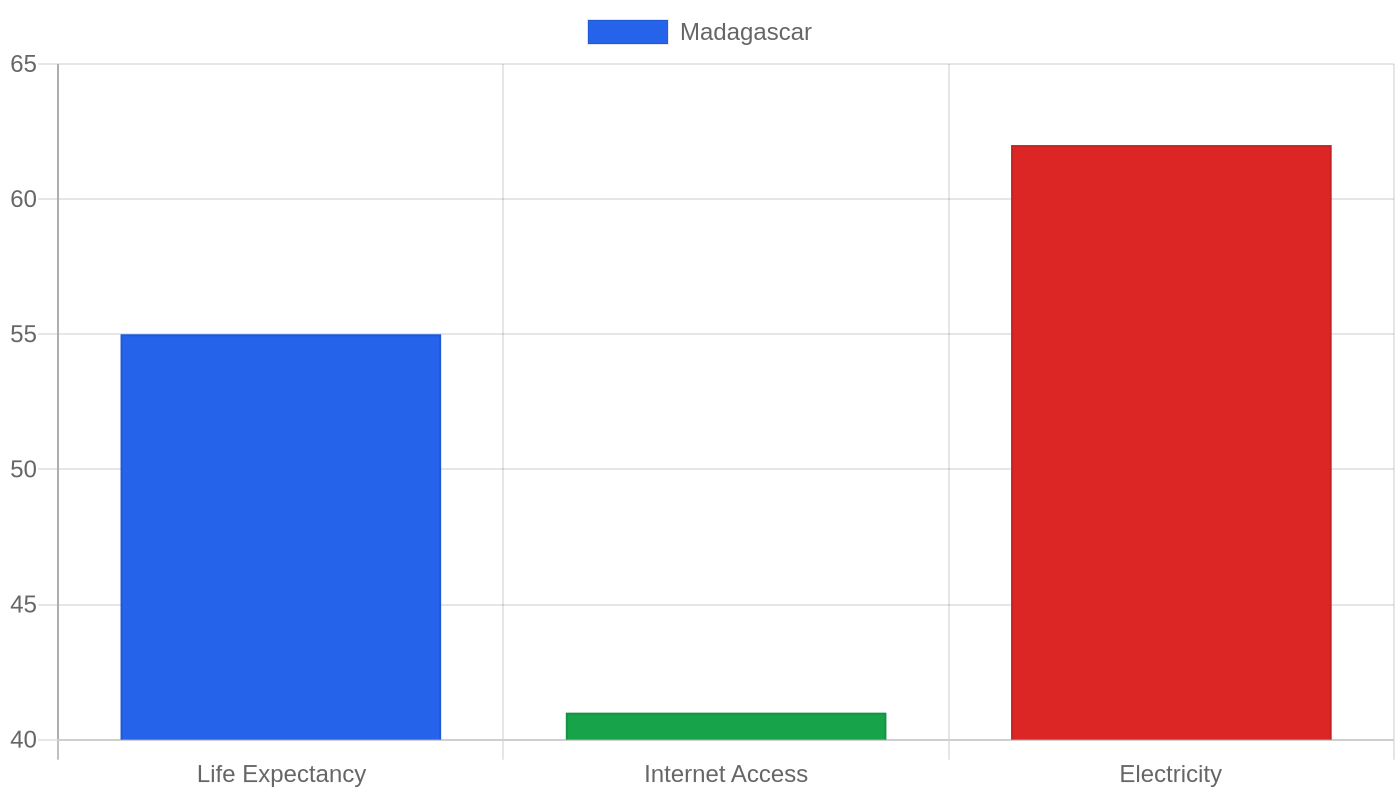
The World Bank’s latest data on Madagascar presents an unusual challenge for economic journalists: critical indicators—GDP growth, inflation, unemployment, GDP per capita, and GNI per capita—are listed as “N/A.” This absence of data is itself a story.
It reflects the deep difficulties in collecting reliable economic statistics in a country where informal economic activity is widespread, government statistical capacity has been historically underfunded, and political disruptions have repeatedly broken the continuity of data gathering.
What we do know comes from the country’s industrial structure. Madagascar’s main industries are not enumerated in the available data, but its top companies offer a revealing window into the economy. The Ambatovy mine is one of the largest nickel and cobalt operations in the world, a massive foreign investment that generates significant export revenue. Jirama, the state-owned utility, struggles with chronic inefficiency and power shortages that ripple through every sector.
Air Madagascar and Madagascar Flying Services point to a tourism-dependent economy where connectivity is both a lifeline and a constraint. Chocolaterie Robert, a luxury chocolate producer, hints at the potential for high-value agricultural processing—vanilla and cacao are among the island’s prized exports.
The absence of inflation and employment figures is particularly acute. Without them, we cannot assess whether the mining boom has translated into rising prices for ordinary Malagasy citizens, or whether the formal job market is absorbing the country’s famously young and rapidly growing population. What the World Bank data tells us, by its silence, is that Madagascar remains one of the world’s most data-poor economies—a reality that complicates everything from policy-making to investment decisions.
The Cost of Living — Where the Bare Minimum Is a Daily Gamble
The cost of living in Madagascar is not captured in the provided data, but the country’s economic structure allows for informed inference. With a large informal economy and a population heavily dependent on subsistence agriculture, daily expenses in urban centers like Antananarivo diverge sharply from rural realities.
Rent in the capital for a modest apartment can consume a significant portion of formal-sector wages, while the majority of Malagasy families live in homes made from locally sourced materials—mud brick, thatch, and wood—where rent is effectively zero but vulnerability to cyclones and flooding is high.
The cost of utilities, managed by Jirama, is notoriously high relative to service quality. Power outages are frequent, forcing households and businesses to invest in generators or solar panels—a hidden cost that does not appear in official price indices. Food prices, particularly for rice—the national staple—are volatile and subject to global commodity swings, local harvest failures, and transport bottlenecks.
Compared to regional averages in Southern Africa, Madagascar’s cost of living is low in absolute terms but punishingly high relative to income. The gap between what people earn and what they need to survive remains one of the widest on the continent.
Investment & Business Climate — Mining, Chocolate, and the Long Road to Reform
Madagascar’s business environment is defined by a handful of dominant players and a vast, underserved small-enterprise sector. The top companies list reads like a who’s who of strategic industries: Ambatovy mine (mining), Jirama (utilities), Air Madagascar and Madagascar Flying Services (aviation), MCB Madagascar and the Central Bank of Madagascar (financials), Madarail (rail transport), and Chocolaterie Robert (agro-processing).
This is an economy where large-scale extraction and infrastructure sit alongside niche high-value manufacturing.
The presence of the Central Bank of Madagascar among the top companies is unusual and telling—it suggests that the financial sector is still relatively concentrated and that the central bank plays an outsized role in the formal economy. The mining sector, led by Ambatovy, is the primary magnet for foreign direct investment, but it operates in a regulatory environment that investors describe as unpredictable.
Political instability has historically led to contract renegotiations, tax disputes, and sudden policy shifts.
For smaller investors, the barriers are steep: weak property rights, corruption, and unreliable power supply from Jirama make it difficult to operate formal businesses. Yet the opportunities are real. Madagascar’s vanilla, cacao, and coffee are world-class. Its mineral wealth extends beyond nickel and cobalt to ilmenite, gold, and rare earths.
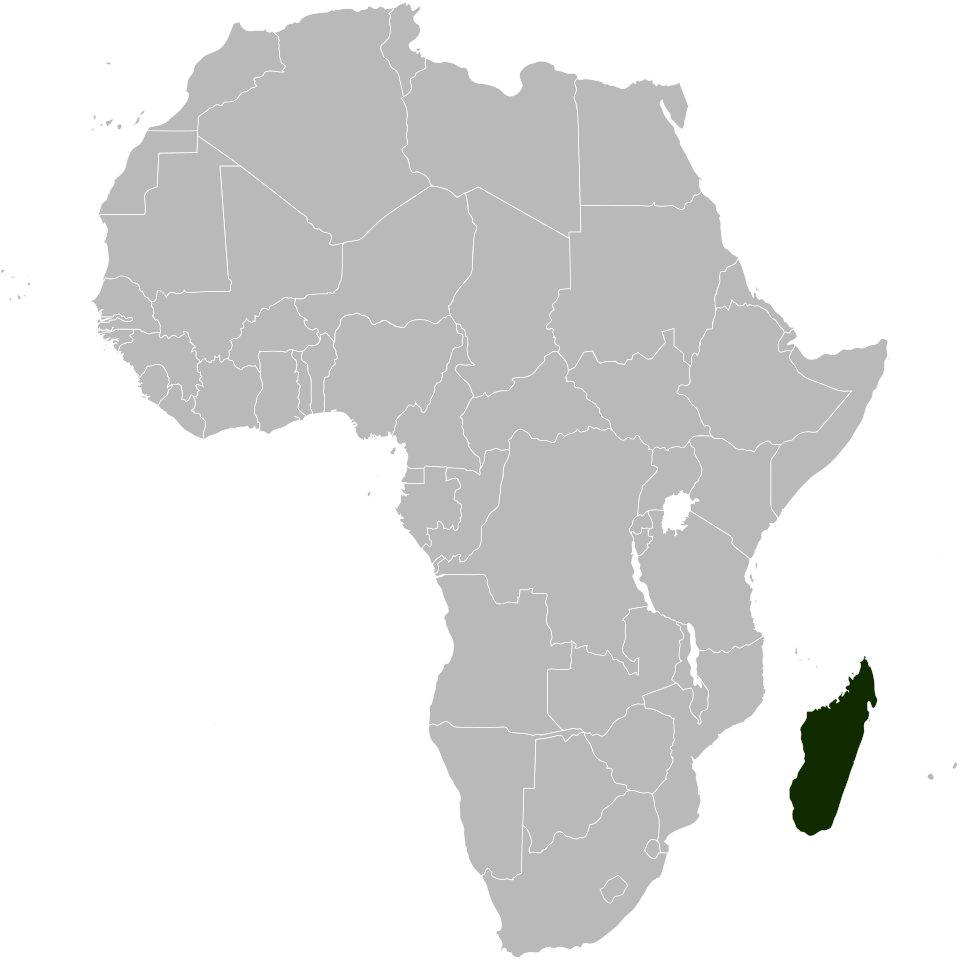
The country’s geographic position—an island off the coast of Southern Africa, with deep-water ports and proximity to Asian markets—gives it logistical advantages that few African economies share. The challenge is whether the political and regulatory framework can catch up to the natural endowment.
Safety, Politics & Quality of Life — Democracy on Paper, Instability in Practice
The crime and safety indices for Madagascar are listed as “N/A,” but the political landscape data provides a clearer picture of the country’s governance challenges. Madagascar is constitutionally a semi-presidential, representative democratic, multi-party republic. The president is popularly elected and serves as head of state, selecting a prime minister who then recommends cabinet members.
On paper, executive power is exercised by the government, and legislative power is vested in the ministerial cabinet, the Senate, and the National Assembly.
The reality, according to the Constitutional framework described in the data, is that the Senate and National Assembly “have very little power or legislative role.” This concentration of power in the executive is a recurring theme in Madagascar’s post-independence history. It has led to cycles of political crisis—most notably the 2009 coup that ousted President Marc Ravalomanana and the contested 2018 election that returned him to power—in which institutions proved too weak to mediate conflict.
Quality of life in Madagascar is shaped by this political uncertainty as much as by economic hardship. The country ranks consistently low on global happiness and human development indices, though such specific data is not provided here. What is clear is that the combination of weak institutions, limited legislative checks, and a history of extra-constitutional power transfers creates an environment where long-term planning—whether by families, businesses, or foreign investors—is exceptionally difficult.
The Malagasy people are resilient and resourceful, but they operate in a system that too often fails to deliver the stability and services they deserve.
What’s Happening Now — The Gap Between Potential and Reality
The most recent data for Madagascar is notably sparse—no live indicators, no breaking news, no policy announcements are provided. This absence is itself a commentary on the country’s current moment. Madagascar is not currently in the headlines for a dramatic crisis or a breakthrough reform.
It exists in a kind of suspended animation, between cycles of political upheaval, still recovering from the economic shocks of the COVID-19 pandemic and the devastating cyclones that have become more frequent and intense with climate change.
What can be inferred from the available data is that the structural issues remain unresolved. The power sector, dominated by Jirama, continues to bleed public finances and constrain industrial growth. The mining sector, anchored by Ambatovy, faces volatile global commodity prices and ongoing operational challenges. The tourism industry, served by Air Madagascar and Madagascar Flying Services, has not fully rebounded from the pandemic.
And the political system—with its weak legislature and powerful executive—has not produced the kind of institutional reform that would unlock sustained investment and broad-based growth.
The absence of recent news does not mean nothing is happening. It means that Madagascar is not currently at a dramatic inflection point. It is in the slow, grinding work of trying to build a functional economy and polity—work that rarely makes headlines but determines the country’s trajectory for decades to come.
The Bottom Line
Madagascar is a country that should be on the watchlist of anyone interested in frontier markets, critical minerals, or the intersection of democracy and development in Africa. Its natural wealth is extraordinary; its governance challenges are equally formidable. For investors with long time horizons and high risk tolerance, the potential returns in mining, agriculture, and logistics are significant.
For policymakers and development professionals, Madagascar offers a case study in how institutional weakness can trap a country in a low-growth equilibrium despite abundant resources. The island’s story is not yet written—but the next chapter depends on whether its political system can evolve to match the ambition of its people and the richness of its land.
Sources & Methodology
This article is authored by Economic Pulse Net for informational and research purposes. Economic Pulse Net sources its data from multilateral institutions, national statistics bureaus, and proprietary databases. All data is believed to be current as of the date of publication.
Published: July 28, 2026 | Category: Research — Madagascar
Use these signals in your own platform
Economic Pulse publishes its live signal feed through a documented, read-only API. Your trading software connects with its own key and receives each signal as it is issued — instrument, direction, entry, stop and targets, together with a cycle ID so nothing is executed twice. The feed is independent of this website and cannot change it.
Signals are informational only and are not financial advice.