Economic Pulse Net | Sources: World Bank World Development Indicators, Government Sources | 2026
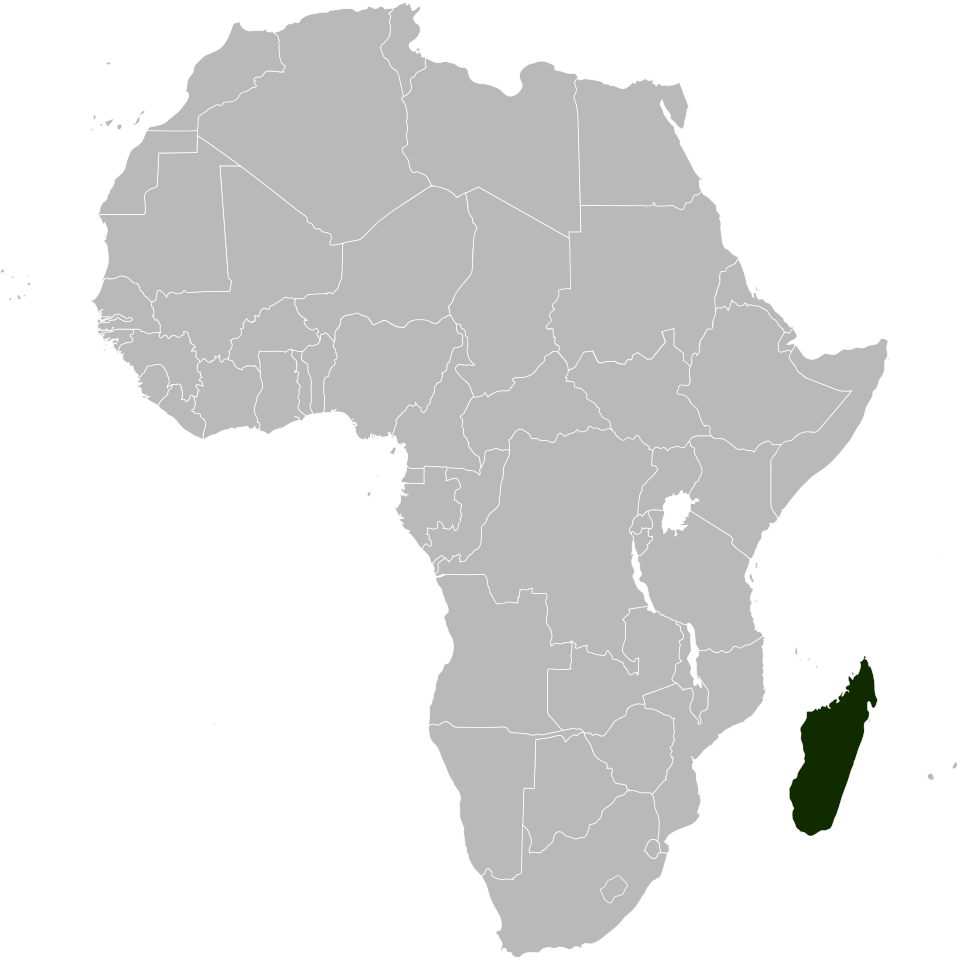
Madagascar is a land of superlatives — the world’s fourth-largest island, a biodiversity hotspot unlike any other, and a nation perpetually poised on the edge of economic transformation. Yet for all its natural wealth — from vanilla orchids to nickel deposits — the country remains one of the world’s most intriguing economic paradoxes.
The World Bank’s latest data dashboard offers little in the way of hard numbers, but the qualitative picture is unmistakable: a nation with deep structural challenges, a fragile political settlement, and a business community that has learned to navigate chronic uncertainty. This is a story about potential perpetually deferred, and the quiet resilience of a people who have built an economy on the margins of global attention.
Key Takeaways
– A services and mining-driven economy: Madagascar’s top companies span airlines, mining, chocolate production, utilities, and financial services — but the formal economy remains narrow and vulnerable to external shocks.
– Political stability is the watchword: The country operates as a semi-presidential, multi-party republic, but legislative bodies hold limited power in practice, with executive dominance shaping the business climate.
– Infrastructure is both a constraint and an opportunity: From national carriers to rail operators and postal services, the corporate landscape is dominated by firms that depend on connectivity — a sector with enormous upside if investment flows.
– A tale of two economies: Formal sector players like Ambatovy mine and Chocolaterie Robert coexist with a vast informal economy that the World Bank data does not capture but which sustains millions.
– Watch the policy signals: For investors, the direction of travel matters more than the current snapshot — Madagascar’s trajectory depends on reform momentum, not headline numbers.
The Numbers That Aren’t There — And What They Tell Us
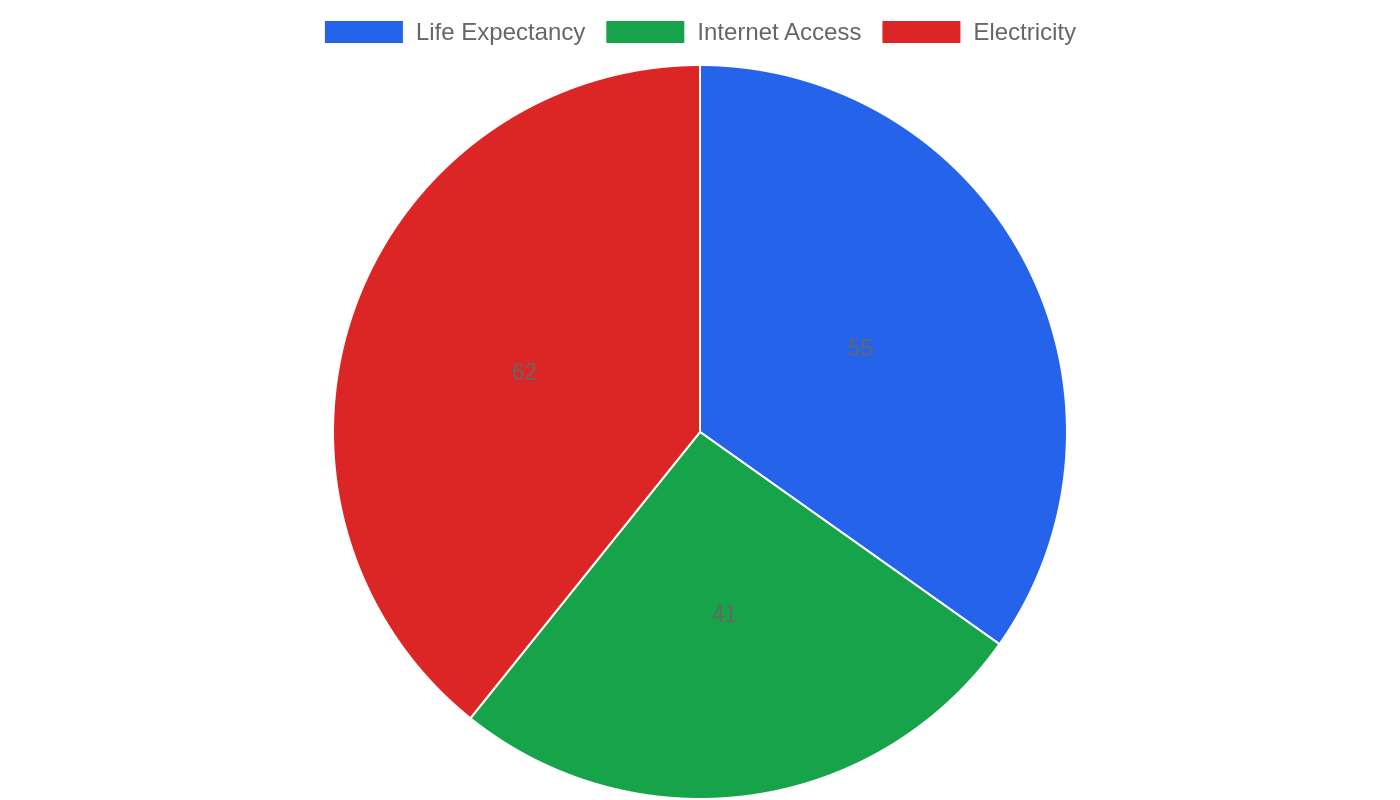
The World Bank’s latest data release for Madagascar is striking for what it omits: GDP growth, inflation, unemployment, GDP per capita, and even population figures are all listed as unavailable. This absence is itself a story. It speaks to a statistical infrastructure that struggles to keep pace with a sprawling island nation of dispersed settlements and a significant informal sector. But the lack of hard data does not mean a lack of economic activity.
Madagascar’s economy is anchored in agriculture, extractive industries, and a growing services sector — even if the official metrics lag behind reality.
What we do know is the shape of the formal economy. The corporate landscape is dominated by a mix of state-linked entities and private enterprises that have weathered decades of political turbulence. Air Madagascar and Madagascar Flying Services represent the aviation sector, which is critical for an island nation where internal connectivity is both a logistical challenge and an economic lifeline.
The Ambatovy mine — one of the largest nickel and cobalt operations in the world — anchors the extractive sector, while Chocolaterie Robert has carved out a niche in premium chocolate exports, leveraging Madagascar’s world-renowned vanilla and cacao. The Central Bank of Madagascar and MCB Madagascar provide the financial infrastructure, while Jirama (the national utility) and Madarail (the rail operator) represent the infrastructural backbone — and, often, the most visible bottlenecks.
Without reliable GDP or inflation figures, analysts must read the economy through these corporate actors. The presence of a national airline, a mining giant, and a chocolate exporter tells us that Madagascar is plugged into global value chains — but the thinness of the industrial base tells us that this integration remains shallow. The economy is likely growing at a modest pace, constrained by infrastructure deficits, limited access to credit, and a business environment that rewards patience over short-term gains.
Cost of Living — The Price of Paradise Is Steep
For those living in Antananarivo, the capital, the cost of living is a daily negotiation between aspiration and constraint. While the World Bank does not provide specific housing or consumer price data in this release, the broader picture is well understood: imported goods carry a significant premium, fuel prices are politically sensitive, and food security is a persistent concern for a population heavily dependent on rain-fed agriculture.
The cost of living in Madagascar is generally lower than in mainland African economies, but so are average incomes — meaning that the purchasing power of ordinary citizens remains extremely limited.
Housing in Antananarivo ranges from modest brick homes in the city’s outskirts to modern apartments in the diplomatic quarter, but the gap between the two is vast. For the emerging middle class — professionals in banking, mining, and logistics — renting is the norm, with property ownership concentrated among the wealthy and the politically connected. The informal housing market is vibrant but unregulated, and access to utilities like electricity and clean water is erratic.
The result is a cost-of-living squeeze that is less about absolute prices and more about the structural inefficiencies that inflate the cost of daily life — from generator fuel to bottled water — for those who can afford them, and impose crushing burdens on those who cannot.
Investment & Business Climate — Patience Is a Strategy
Madagascar’s investment climate is not for the faint-hearted. The corporate roster tells the story of a market where long-term commitment is essential: Ambatovy, a multi-billion-dollar mining project, has navigated political crises, commodity price swings, and operational challenges; Chocolaterie Robert has spent decades building a global brand from a fragile agricultural supply chain.
These are businesses that have learned to operate in a context where the rule of law is uneven, infrastructure is unreliable, and policy shifts can occur without warning.
Yet the opportunities are real. Mining and extractives remain the most bankable sectors, with Madagascar’s mineral wealth — nickel, cobalt, graphite, and rare earths — attracting global attention as the world transitions to green energy. Agriculture, particularly vanilla and cacao, offers export potential, though it is vulnerable to price volatility and climate shocks.
The services sector, including finance and logistics, is underdeveloped relative to demand, presenting opportunities for regional banks and investors willing to take a long view. The key for any investor is understanding that Madagascar rewards those who build relationships, navigate complexity, and accept a longer payback horizon than they might tolerate elsewhere.
Safety, Politics & Quality of Life — Fragile Institutions, Resilient People
Madagascar’s political system is a study in controlled turbulence. The country is a semi-presidential, representative democratic, multi-party republic, with a president who selects a prime minister and cabinet. On paper, executive power is exercised by the government, and legislative power is vested in the ministerial cabinet, the Senate, and the National Assembly.
In practice, however, the two latter bodies have very little power or legislative role — a reality that concentrates authority in the presidency and creates an environment where political stability depends heavily on the individual at the top.
This concentration of power has implications for governance and accountability. Political crises in Madagascar have historically been resolved through extra-constitutional means — coups, protests, and mediated transitions — rather than through robust legislative processes. For ordinary citizens, this means that quality of life is shaped more by local realities than national policy.
Crime and safety indices are not available in this data release, but anecdotal reporting suggests that petty crime and urban insecurity are concerns in Antananarivo, while rural areas face different challenges related to land tenure and resource access. The quality of life, for many, is defined by resilience — a capacity to thrive despite, rather than because of, the institutional environment.
What’s Happening Now — The Reform Window
The most important question for Madagascar right now is not where the economy stands, but where it is heading. The country is at a juncture where the global demand for critical minerals, the post-pandemic recovery in tourism, and a renewed focus on climate resilience could converge to create a genuine economic opening.
The presence of firms like Ambatovy and Chocolaterie Robert suggests that international capital remains engaged, but the absence of fresh World Bank data points to persistent challenges in measurement, transparency, and policy coherence.
The government’s ability to stabilise the utility sector — Jirama remains a fiscal drain and a constraint on business — will be a key test of reform credibility. Similarly, the future of Air Madagascar and Madarail will signal whether the state is serious about enabling connectivity or content to preside over decay.
For the financial sector, the Central Bank of Madagascar and MCB Madagascar are well-positioned to support investment, but they operate in a context where credit penetration is low and the informal economy dominates. The coming years will reveal whether Madagascar can translate its natural advantages into structural gains — or whether it remains, as it has for decades, a country of immense potential perpetually awaiting its moment.
The Bottom Line
Madagascar is a market for the patient, the committed, and the genuinely curious. It offers extraordinary natural resources, a unique brand in global agriculture, and a strategic position in the Indian Ocean — but it also demands a tolerance for ambiguity and a willingness to operate without the comfort of reliable data. For mining companies, agricultural exporters, and regional financial institutions, the island represents a frontier opportunity that could yield outsized returns.
For everyone else, it is a reminder that economic development is rarely linear, and that the absence of numbers does not mean the absence of activity. Watch Madagascar for its minerals, its chocolate, and its people — and for the moment when potential finally meets policy.
Sources & Methodology
This article is authored by Economic Pulse Net for informational and research purposes. Economic Pulse Net sources its data from multilateral institutions, national statistics bureaus, and proprietary databases. All data is believed to be current as of the date of publication.
Published: August 08, 2026 | Category: Research — Madagascar
Use these signals in your own platform
Economic Pulse publishes its live signal feed through a documented, read-only API. Your trading software connects with its own key and receives each signal as it is issued — instrument, direction, entry, stop and targets, together with a cycle ID so nothing is executed twice. The feed is independent of this website and cannot change it.
Signals are informational only and are not financial advice.