Economic Pulse Net | Sources: World Bank World Development Indicators, Government Sources | 2026
Key Takeaways
– Libya remains a deeply fragmented state more than a decade after the 2011 uprising, with two rival governments and persistent factional violence undermining any semblance of economic stability.
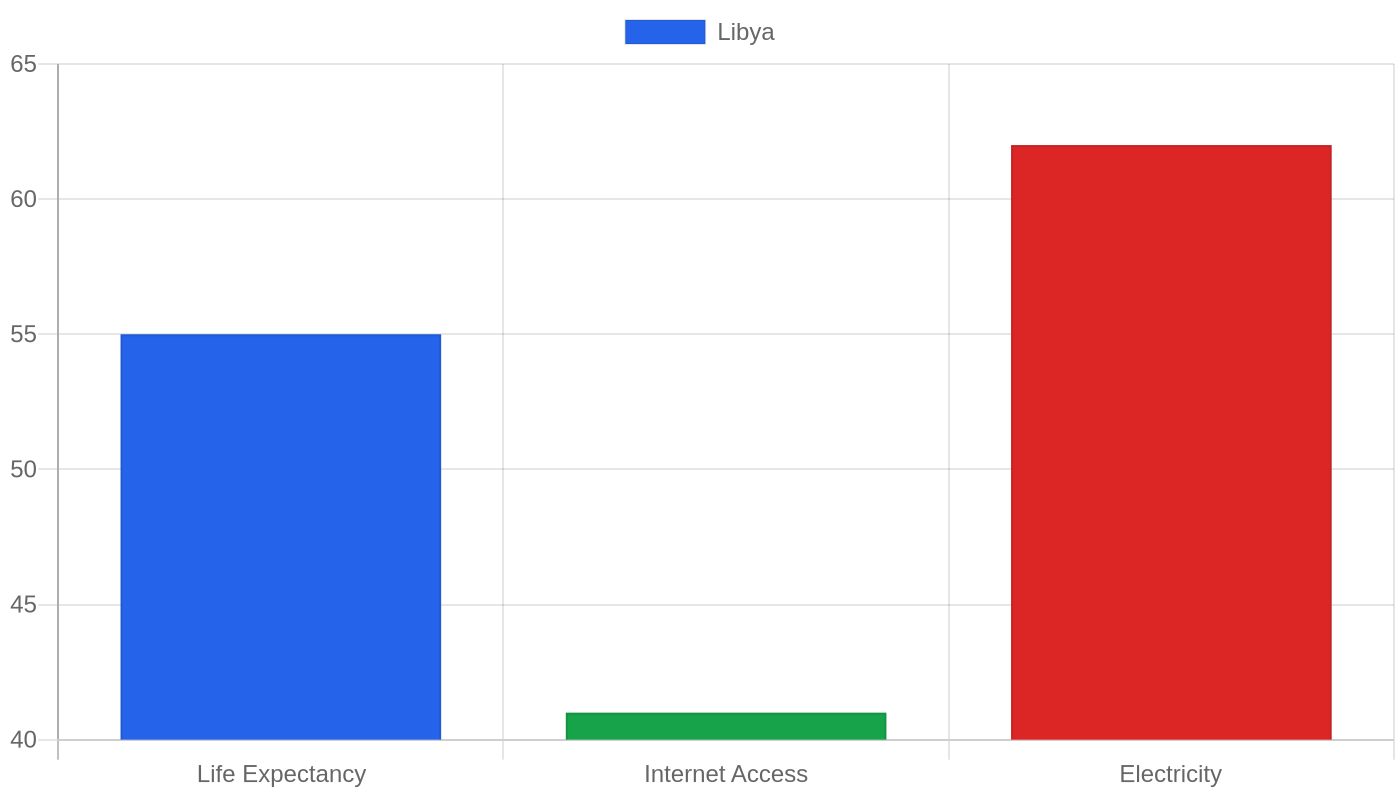
– The World Bank provides virtually no macroeconomic data for Libya, a telling indicator of how far the country has fallen from its pre-civil war status as a middle-income oil exporter.
– Despite the political chaos, Libya’s state-owned oil companies and a handful of airlines and financial institutions continue to operate, suggesting pockets of resilience in an otherwise broken economy.
– The political landscape is defined by the legacy of the Arab Spring and NATO intervention, followed by two civil wars, leaving the country without a unified national government or coherent economic policy.
– For investors and analysts, Libya represents a high-risk, high-uncertainty environment where the absence of reliable data is itself the most important piece of information.
Sources & Methodology
This article is authored by Economic Pulse Net for informational and research purposes. Economic Pulse Net sources its data from multilateral institutions, national statistics bureaus, and proprietary databases. All data is believed to be current as of the date of publication.
Published: July 23, 2026 | Category: Research — Libya
Use these signals in your own platform
Economic Pulse publishes its live signal feed through a documented, read-only API. Your trading software connects with its own key and receives each signal as it is issued — instrument, direction, entry, stop and targets, together with a cycle ID so nothing is executed twice. The feed is independent of this website and cannot change it.
Signals are informational only and are not financial advice.