Economic Pulse Net | Sources: World Bank World Development Indicators, Government Sources | 2026
Key Takeaways
– Lesotho operates as a parliamentary constitutional monarchy, with Prime Minister Sam Matekane holding executive authority while King Letsie III serves a ceremonial role
– The country’s economy is anchored by key industries including consumer goods, financial services, telecommunications, and aviation
– Major companies like Basutoland Ink, Central Bank of Lesotho, and Telecom Lesotho form the backbone of formal economic activity
– Political stability under the current constitutional framework provides a foundation for gradual economic development
– Lesotho’s strategic position within Southern Africa makes it a unique case study in small-state economic resilience
The Elusive Economic Picture — Reading Between the Lines
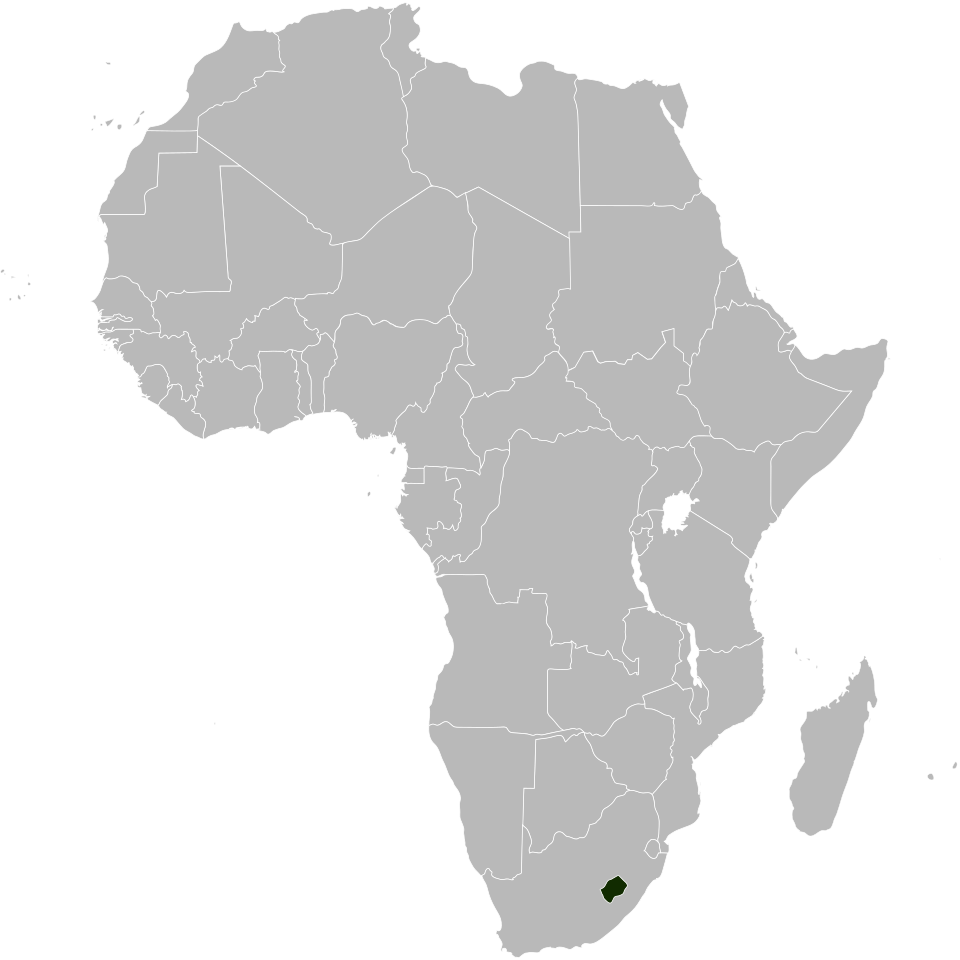
The World Bank’s data on Lesotho presents an unusual challenge for economic analysis: key indicators including GDP growth, inflation, unemployment, and GDP per capita remain unreported in the latest available figures. This absence of data is itself a story worth examining. For a country of Lesotho’s size — landlocked entirely within South Africa — economic measurement often lags behind larger neighbours, and data collection infrastructure faces significant constraints.
The lack of a reported GDP figure from the World Bank does not mean the economy is stagnant; rather, it reflects the difficulties of capturing economic activity in a nation where informal trade, remittances from workers in South Africa, and subsistence agriculture play substantial roles.
What can be discerned from the available information is that Lesotho’s economic structure is built around a handful of key sectors. The consumer goods industry, represented by companies like Basutoland Ink, suggests a domestic manufacturing base serving local demand. The presence of Telecom Lesotho indicates a telecommunications sector that is sufficiently developed to support a publicly listed company.
Lesotho Airways and Maluti Sky point to aviation and tourism-related services that connect the mountain kingdom to the broader region. The Central Bank of Lesotho, listed among the top companies, underscores the importance of financial sector governance in a small economy that relies heavily on the Southern African Customs Union (SACU) revenues and the Common Monetary Area peg to the South African rand.
The absence of inflation and employment data from the World Bank makes it impossible to provide precise figures on the cost pressures facing households or the state of the labour market. However, the very fact that these numbers are missing speaks to broader challenges in statistical capacity and economic formalisation. Lesotho’s economy is characterised by high levels of informal employment, particularly in agriculture and cross-border trade, which often escapes official measurement.
For international investors and policymakers, the key takeaway is that Lesotho operates with a level of economic opacity that requires on-the-ground due diligence rather than reliance on standardised datasets.
The Cost of Living — Mountains and Margins
Without specific cost-of-living data from the World Bank, constructing a detailed picture of household expenses in Lesotho requires a different approach. The country’s mountainous terrain and dispersed population mean that transportation costs for goods are inherently higher than in flatter, more accessible regions. Basic commodities such as maize meal, cooking oil, and fuel must be transported over winding mountain roads, adding significant markups to prices in remote areas.
Housing costs vary dramatically between the capital Maseru and rural villages, where traditional stone and thatch homes remain common.
Rent versus buy decisions in Lesotho are shaped by land tenure systems that differ from Western norms. Much of the land is held under customary tenure, meaning ownership is communal rather than individual, and housing construction often involves family labour and local materials. In urban areas, formal rental markets exist but are limited in supply, pushing prices higher for quality accommodation.
Daily expenses for items like bread, vegetables, and paraffin are influenced by South African price levels, given the open border and currency union. The cost of living in Lesotho is thus a hybrid: partly tied to regional South African prices, partly shaped by local logistical challenges, and partly determined by traditional subsistence patterns that reduce cash expenditure for rural households.
Investment and Business Climate — Small Market, Big Potential
The corporate landscape of Lesotho is dominated by a small number of significant players. Basutoland Ink operates in the consumer goods space, suggesting opportunities in manufacturing for local consumption. The Central Bank of Lesotho provides regulatory stability for the financial sector, which is critical for a country that uses the South African rand as its primary currency.
Telecom Lesotho represents the telecommunications sector, a vital enabler for business in a mountainous country where physical infrastructure is difficult to build. Lesotho Airways and Maluti Sky serve the aviation sector, connecting Maseru to regional hubs and supporting tourism and business travel.
For investors, Lesotho offers a unique proposition: a stable political environment under a constitutional monarchy, a currency pegged to the South African rand, and membership in SACU, which provides predictable revenue flows. However, the small domestic market size — the population figure from the World Bank is unreported, but estimates place it around 2.3 million — means that businesses must often look beyond Lesotho’s borders for growth.
The textile and garment sector, historically significant, has faced competition from Asian manufacturers. The water and hydropower sector, centred on the Lesotho Highlands Water Project, provides export revenue through water sales to South Africa. Agriculture, particularly livestock and horticulture, offers potential for niche exports if infrastructure and market access improve.
The business environment is shaped by the constitutional framework described in the political landscape data: a parliamentary system with a ceremonial monarch and an executive prime minister. This structure provides policy continuity, but bureaucratic inefficiencies and infrastructure gaps remain challenges.
Companies like Telecom Lesotho and Lesotho Airways demonstrate that private and state-linked enterprises can operate successfully, but scaling up requires addressing constraints in electricity supply, transport connectivity, and skills availability.
Safety, Politics, and Quality of Life — Stability in a Ceremonial Crown
Lesotho’s political landscape is defined by its unique constitutional arrangement. The country is a parliamentary constitutional monarchy, with Prime Minister Sam Matekane serving as head of government and holding executive authority. King Letsie III serves as head of state in a largely ceremonial capacity, prohibited from active political participation.
This division of powers provides a layer of stability that many African nations lack: the monarchy offers symbolic continuity and cultural legitimacy, while the elected government handles day-to-day governance.
The crime and safety indices from the World Bank are unreported, making it difficult to quantify security conditions. However, Lesotho has historically faced challenges with property crime and occasional political instability, including periods of military intervention in the past. The current constitutional framework is designed to prevent such disruptions by clearly separating ceremonial and executive functions.
For residents and visitors, safety conditions vary between urban and rural areas, with Maseru experiencing typical urban crime patterns while rural villages maintain strong community-based security.
Quality of life in Lesotho is shaped by the country’s natural beauty — the Maloti Mountains, the Senqu River, and high-altitude plateaus — as well as by significant development challenges. Healthcare access, educational attainment, and infrastructure quality are areas where Lesotho lags behind regional averages, though targeted investments have been made in recent years.
The absence of happiness or wellbeing data from the provided sources means that subjective quality of life cannot be quantified, but the resilience and cultural richness of Basotho society are well documented. The political stability provided by the constitutional monarchy creates an environment where long-term development planning is possible, even if progress is gradual.
What’s Happening Now — The Matekane Era Takes Shape
Prime Minister Sam Matekane’s government represents a relatively new political chapter for Lesotho. His assumption of office signals a continuation of the constitutional framework while potentially opening space for economic reform. The current political landscape, as described in the data, shows a functioning parliamentary system with clear lines of authority.
This stability is crucial for a country that has experienced periods of political turbulence in the past, including coup attempts and coalition instability.
The presence of companies like Telecom Lesotho and Lesotho Airways in the top corporate rankings suggests that the government is focused on maintaining strategic state-linked enterprises while also allowing private sector growth. The consumer goods sector, represented by Basutoland Ink, indicates that domestic manufacturing continues to play a role in the economy despite competition from South African imports.
The Central Bank of Lesotho’s prominence highlights the importance of monetary stability in a country that shares its currency with South Africa — any shifts in South African monetary policy have direct implications for Lesotho’s inflation and interest rate environment.
Looking ahead, Lesotho’s economic trajectory will depend on several factors: the health of SACU revenues, which are influenced by South African customs collections; the performance of the Lesotho Highlands Water Project, which provides a steady stream of export earnings; and the government’s ability to attract investment in sectors beyond textiles and water.
The current data gaps from the World Bank underscore the need for improved statistical capacity, which would in turn make Lesotho more attractive to international investors who rely on reliable data for decision-making. For now, the country moves forward with a stable political foundation, a small but functional corporate sector, and the quiet determination that characterises life in the mountain kingdom.
The Bottom Line
Lesotho deserves the attention of investors and policymakers interested in small-state resilience within Southern Africa. The country’s constitutional monarchy provides political stability, its SACU membership offers predictable revenue, and its water resources provide a strategic export. However, the lack of basic economic data from the World Bank is a red flag that signals significant challenges in formalisation and statistical capacity.
Those watching Lesotho should focus on the government’s ability to improve data transparency, attract investment beyond traditional sectors, and maintain the political stability that the current constitutional framework promises. The mountain kingdom may not make global headlines, but its quiet evolution offers lessons in governance and adaptation for small economies everywhere.
Sources & Methodology
This article is authored by Economic Pulse Net for informational and research purposes. Economic Pulse Net sources its data from multilateral institutions, national statistics bureaus, and proprietary databases. All data is believed to be current as of the date of publication.
Published: July 20, 2026 | Category: Research — Lesotho
Use these signals in your own platform
Economic Pulse publishes its live signal feed through a documented, read-only API. Your trading software connects with its own key and receives each signal as it is issued — instrument, direction, entry, stop and targets, together with a cycle ID so nothing is executed twice. The feed is independent of this website and cannot change it.
Signals are informational only and are not financial advice.