Economic Pulse Net | Sources: World Bank World Development Indicators, Government Sources | 2026
Key Takeaways
– Lesotho operates as a parliamentary constitutional monarchy, with King Letsie III serving a largely ceremonial role while Prime Minister Sam Matekane holds executive authority.
– The Central Bank of Lesotho anchors the financial sector, while Telecom Lesotho dominates the telecommunications landscape — both critical to the nation’s economic infrastructure.
– Despite data gaps in headline economic indicators, Lesotho’s institutional stability and strategic position within Southern Africa make it a country worth watching for regional investors.
– The country’s political system has matured into a functional democracy where the monarch is constitutionally barred from active political participation, reducing the risk of royal-executive friction.
– Key industries remain concentrated in a handful of sectors, with the Central Bank, national airline, and telecom provider forming the backbone of formal economic activity.
The Numbers Tell a Story — Even When They’re Quiet
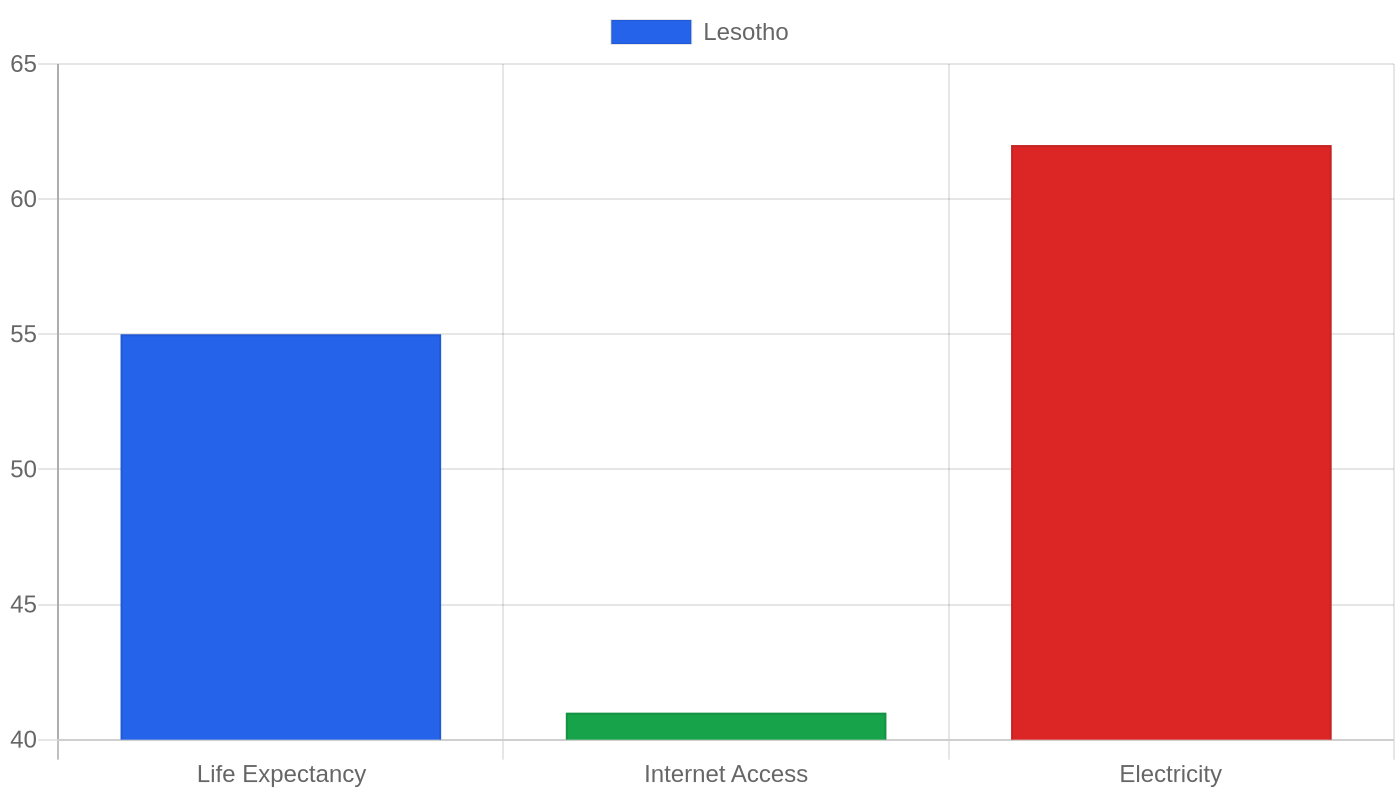
The World Bank’s latest data release for Lesotho presents an unusual challenge: GDP growth, inflation, unemployment, and GDP per capita figures are all listed as unavailable. For the casual observer, this might suggest a country in statistical shadows. But for those who understand how small economies operate, the absence of fresh numbers is itself a signal — it speaks to the difficulties of data collection in a mountainous nation where infrastructure is stretched and resources are limited.
What we do know is that Lesotho’s economic architecture is built around a small number of institutional pillars. The Central Bank of Lesotho functions not only as the monetary authority but as a key employer and stabilising force in the financial sector. Telecom Lesotho provides the digital backbone for commerce, government services, and remittances — the lifeblood of an economy that has historically relied on labour migration and regional trade links.
The presence of Lesotho Airways and Maluti Sky in the consumer services sector indicates an active, if modest, aviation industry serving both domestic connectivity and regional routes.
The lack of hard numbers from the World Bank means we cannot quantify inflation pressures or unemployment rates with precision. But the structural composition of the economy — heavy on services, light on manufacturing, dependent on a few large institutions — suggests a country that is vulnerable to external shocks but also capable of coordinated responses when its central bank and telecom sector align.
For investors and analysts, the absence of updated data is a reminder that Lesotho remains an economy where on-the-ground intelligence often matters more than spreadsheet projections.
The Price of Living in a Mountain Kingdom
Without official cost-of-living indices from the World Bank, painting a precise picture of daily expenses in Lesotho requires reading between the lines. What can be inferred from the country’s economic structure is that housing and daily expenses are likely shaped by the same forces that define life across Southern Africa’s smaller economies: import dependence, fuel costs, and the price of staple goods transported over challenging terrain.
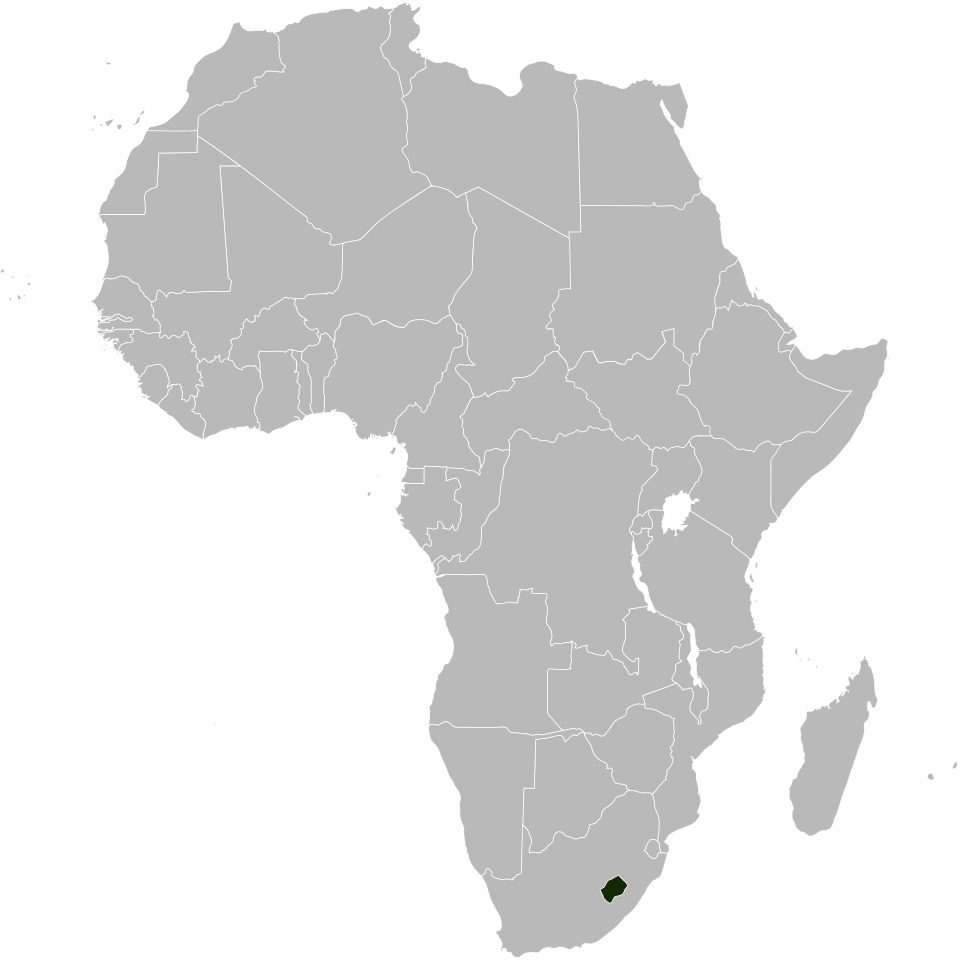
Lesotho’s geography — a high-altitude kingdom entirely surrounded by South Africa — means that nearly all consumer goods, from food to fuel to construction materials, must be imported or transported through regional supply chains. This creates a cost structure where logistics and border efficiency play outsized roles in household budgets.
Rent in the capital, Maseru, and other urban centres is likely to reflect the limited supply of formal housing stock, while rural areas face different pressures tied to subsistence agriculture and access to markets.
For residents, the practical reality is that Lesotho’s cost of living is inextricably linked to its larger neighbour’s economy. When regional fuel prices rise or the rand weakens, those pressures transmit directly into local prices. The absence of granular CPI data does not mean households are immune to inflation — it means the official record has yet to capture what citizens experience daily.
Where the Money Moves — Business and Investment
Lesotho’s formal business environment is compact but not without ambition. The Central Bank of Lesotho leads the financial sector, providing regulatory oversight and monetary policy implementation in a country where banking penetration remains limited but is steadily improving. Telecom Lesotho stands as the dominant player in communications, a sector that has become the backbone of modern economic activity across Africa.
The aviation sector, represented by Lesotho Airways and Maluti Sky, signals an economy that values connectivity — both domestically and with the broader region. For a country of Lesotho’s size, maintaining two carriers is a statement of intent, even if their operations are modest by international standards. These companies are not just businesses; they are infrastructure providers whose services enable trade, tourism, and government operations.
For potential investors, the opportunities lie in sectors that complement the existing institutional framework. Telecommunications infrastructure, financial services, and aviation support services all present avenues for growth. The government’s commitment to maintaining a stable political system — with a constitutional monarchy that stays out of day-to-day governance — provides a degree of predictability that is valuable in a region where political instability is not uncommon.
Stability in a Fragile Neighbourhood
The crime and safety indices for Lesotho are not currently available, making it difficult to offer a definitive assessment of public security. However, the political landscape provides some cause for measured optimism. Lesotho is a parliamentary constitutional monarchy, a system that has weathered the challenges of democratic transition and maintained continuity even as other countries in the region have faced upheaval.
Prime Minister Sam Matekane currently leads the government with executive authority, while King Letsie III serves as head of state in a largely ceremonial capacity. The constitution’s explicit prohibition on the monarch’s active participation in political initiatives is a meaningful safeguard — it prevents the kind of royal-executive tensions that have destabilised other monarchies in Africa.
This separation of powers, however imperfect in practice, provides a framework for governance that prioritises civilian leadership.
Quality of life in Lesotho is shaped by the same paradoxes found across the region: rich cultural heritage and stunning landscapes alongside economic challenges and infrastructure gaps. The country’s famous mountain terrain offers breathtaking beauty but also isolates communities and complicates service delivery. For those who call Lesotho home, resilience is not just a trait — it is a necessity.
The View From Maseru — What’s Happening Now
The most significant current development in Lesotho is the consolidation of Prime Minister Sam Matekane’s government and the continued functioning of the constitutional monarchy under King Letsie III. This political stability is not merely a matter of domestic comfort; it sends a signal to regional partners and international institutions that Lesotho remains a predictable partner in an unpredictable neighbourhood.
The Central Bank of Lesotho continues to play a pivotal role in managing the country’s financial system, even as global economic conditions — high interest rates, currency volatility, and supply chain disruptions — create headwinds for small open economies. Telecom Lesotho’s ongoing operations are critical as the country seeks to expand digital access, a priority that has gained urgency as governments across Africa push for greater connectivity.
The aviation sector, represented by Lesotho Airways and Maluti Sky, faces the dual challenge of high operating costs and fluctuating demand. Yet the continued presence of these carriers suggests a commitment to maintaining air links that are essential for a landlocked country with challenging road infrastructure. For businesses and policymakers alike, the immediate horizon involves navigating these sectoral pressures while preserving the political equilibrium that has made Lesotho a relative haven of stability.
The Bottom Line
Lesotho may not dominate headlines or attract the attention lavished on larger African economies, but it offers something increasingly rare in the region: political predictability and institutional continuity. For investors focused on telecommunications, financial services, and aviation support, the country presents a manageable scale with clear entry points.
Development agencies and regional policymakers should also keep Lesotho on their radar, as its stability makes it a viable partner for projects ranging from infrastructure to digital inclusion. The data gaps are real, but they should not obscure the bigger picture — a small country with a functioning government, a constrained but active private sector, and a population accustomed to overcoming obstacles.
Sources & Methodology
This article is authored by Economic Pulse Net for informational and research purposes. Economic Pulse Net sources its data from multilateral institutions, national statistics bureaus, and proprietary databases. All data is believed to be current as of the date of publication.
Published: July 31, 2026 | Category: Research — Lesotho
Use these signals in your own platform
Economic Pulse publishes its live signal feed through a documented, read-only API. Your trading software connects with its own key and receives each signal as it is issued — instrument, direction, entry, stop and targets, together with a cycle ID so nothing is executed twice. The feed is independent of this website and cannot change it.
Signals are informational only and are not financial advice.