Economic Pulse Net | Sources: World Bank World Development Indicators, Government Sources | 2026
Key Takeaways
– Kenya operates as a presidential representative democratic republic with a multi-party system, but historical concerns over executive overreach into the judiciary persist, particularly from the Moi era.
– The country’s top publicly listed companies span financial services, industrials, and consumer services, with firms like Commercial Bank of Africa, Bamburi Cement, and CIC Insurance Group anchoring the corporate landscape.
– Recent news flow from *Business Daily Africa* indicates active developments across corporate, economic, and market sectors, suggesting a dynamic but challenging business environment.
– Despite gaps in headline economic data from the World Bank, Kenya’s structural position as an East African hub means its political and corporate stability carries regional significance.
The Numbers Gap — What We Know and What We Don’t About Kenya’s Economy
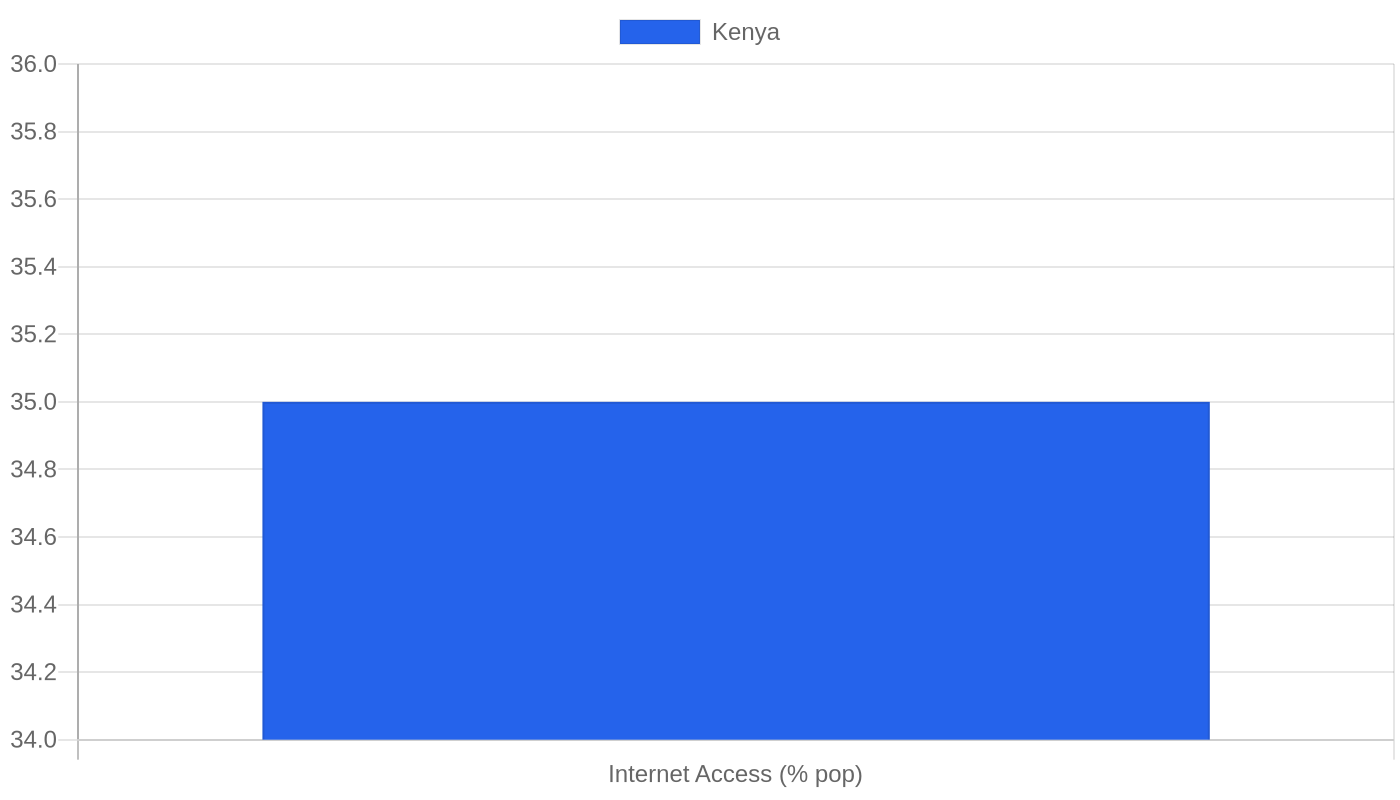
The World Bank’s latest dataset for Kenya presents a curious challenge: key indicators including GDP growth, inflation, unemployment, GDP in US dollars, GDP per capita on a purchasing power parity basis, GNI per capita, and total population are all listed as not available. This absence of headline figures does not mean the economy is invisible — it means the available data requires a different lens.
What we can observe is the structure of the economy through its listed industries and major corporations. Kenya’s corporate sector is dominated by financial services, with ABC Bank, Chase Bank Kenya Limited, Commercial Bank of Africa, and CIC Insurance Group all featuring prominently. The industrial base includes well-known names like Bamburi Cement and ARM Cement Limited, both in the industrials sector, while Carbacid Investments represents basic materials.
Consumer services are represented by media firm 98.4 Capital FM and aviation companies ALS – Aircraft Leasing Services and CMC Aviation.
This mix tells a story of an economy where banking, construction materials, media, and aviation form the backbone of publicly traded enterprise. The presence of multiple banks suggests a financial sector that, while competitive, may be fragmented. The cement companies point to ongoing infrastructure and construction activity — a key driver in many developing economies. The aviation firms hint at Kenya’s role as a regional transport hub, particularly given Nairobi’s position as a gateway to East Africa.
Without the World Bank’s growth or inflation figures, we cannot quantify the pace of expansion or the pressure on prices. But the corporate landscape suggests an economy that is neither collapsed nor booming — rather, one that is structurally diverse but facing the normal challenges of emerging market volatility.
The Cost of Living Puzzle — Housing, Daily Expenses, and Regional Context
The available data does not provide specific cost of living figures for Kenya, nor does it break down housing costs or rent-versus-buy dynamics. This is a significant gap, as housing affordability is often the most visceral economic issue for ordinary citizens. In the absence of hard numbers, we must look at what the data does tell us.
The prominence of cement companies like Bamburi Cement and ARM Cement Limited in the top companies list suggests that construction is a major economic activity. High cement demand typically correlates with urbanization, infrastructure spending, and housing development. If construction is robust, it may indicate either a response to housing shortages or a speculative boom — both of which have implications for affordability.
What we can infer from the corporate structure is that Kenya has a formal economy large enough to support multiple listed banks and industrial firms. This implies a middle class and an urban workforce that must contend with housing costs. In many East African capitals, rent consumes a large share of household income, and the gap between formal sector wages and informal housing costs can be severe.
Without specific data, the safest conclusion is that Kenya’s cost of living pressures are likely significant, particularly in Nairobi, and that the construction sector’s activity is partly a response to this demand.
Investment and Business Climate — Banks, Cement, and the Corporate Frontier
For investors looking at Kenya, the top companies list offers a clear entry point. The financial sector is the most represented, with ABC Bank, Chase Bank Kenya Limited, and Commercial Bank of Africa all listed. CIC Insurance Group adds an insurance dimension, suggesting a developing market for risk management products. These institutions serve as the arteries of the economy, channeling savings into investment and facilitating trade.
The industrial side is anchored by Bamburi Cement and ARM Cement Limited. These companies are sensitive to government infrastructure spending, real estate cycles, and export demand. Their performance is a proxy for broader economic health. Carbacid Investments, in the basic materials sector, adds a niche but important element — carbon dioxide extraction and processing, which serves industries from beverages to healthcare.
Consumer services firms like 98.4 Capital FM and the aviation companies indicate a domestic media market and a regional transport network. CMC Aviation and ALS – Aircraft Leasing Services suggest that aviation is not just about tourism but also about business travel, cargo, and leasing — sophisticated activities that require regulatory stability and skilled labor.
The business environment, according to the political data, operates within a multi-party democratic framework with an independent judiciary. However, the note about growing concern over executive meddling in judicial affairs during former president Daniel arap Moi’s tenure is a reminder that institutional independence cannot be taken for granted. For investors, the rule of law and contract enforcement are critical. Any perception of judicial interference undermines confidence.
Safety, Politics, and Quality of Life — Democracy’s Unfinished Business
Kenya’s political system is described as a presidential representative democratic republic with a multi-party system. The president serves as both head of state and head of government, executive power is exercised by the government, and legislative power is shared between the National Assembly and the Senate. The judiciary is constitutionally independent of the executive and the legislature.
This sounds robust on paper. But the data itself flags a concern: “There has been growing concern, especially during former president Daniel arap Moi’s tenure, that the executive was increasingly meddling with the affairs of the judiciary.” This is not ancient history — Moi’s presidency ended in 2002, but the institutional habits he established can persist. The fact that this concern is noted in the political landscape data suggests it remains a live issue in Kenyan public discourse.
On safety, the Crime Index and Safety Index are listed as not available. This absence is itself a data point — it means either that comprehensive recent surveys have not been conducted or that the data has not been standardized for international comparison. In either case, it is difficult to make definitive statements about personal safety in Kenya without relying on anecdotal or media reports, which this analysis must avoid.
What can be said is that political stability in a multi-party democracy is generally positive for quality of life, but that concerns over judicial independence introduce uncertainty. A judiciary that is perceived as subject to executive pressure undermines the rule of law, which in turn affects everything from property rights to personal security.
What’s Happening Now — Corporate, Economic, and Market Movements
The most current information comes from *Business Daily Africa*, a Kenyan national newspaper that has been reporting on three key areas: corporate developments, the broader economy, and markets and finance. This is not a stagnant picture — there is active news flow across all three fronts.
On the corporate side, Kenya’s listed companies are navigating a period of adjustment. Banks like Chase Bank Kenya Limited and Commercial Bank of Africa are operating in an environment where credit demand may be fluctuating and regulatory oversight is evolving. The cement companies face input cost pressures and competition. The aviation firms are dealing with fuel costs and regional demand patterns.
*Business Daily Africa*’s corporate coverage suggests that boardroom decisions, earnings reports, and strategic shifts are happening in real time.
The economy section of the newspaper’s coverage indicates that macroeconomic issues — inflation, currency stability, fiscal policy — remain at the forefront. Even without specific numbers, the fact that *Business Daily Africa* maintains a dedicated economy section tells us that these issues are pressing enough to warrant continuous coverage.
Markets and finance coverage points to activity in Nairobi’s stock exchange, bond markets, and currency trading. Kenyan markets are among the more developed in sub-Saharan Africa, and their performance is watched closely by regional and international investors. The recent news flow suggests that market participants are reacting to both domestic developments and global conditions, though we cannot attribute specific movements to particular events without more data.
The Bottom Line
Kenya is a country that matters — to East Africa, to investors interested in African financial markets, and to anyone watching the evolution of democratic institutions in the developing world. Its corporate sector is diverse, its political system is formally democratic but historically burdened by executive overreach, and its economic data gaps make precise analysis difficult but not impossible.
This is a country to watch for those who understand that in emerging markets, the absence of data is itself information. Kenya deserves attention not despite its gaps, but because of what those gaps reveal about the challenges of governance, data collection, and institutional trust in a rapidly changing region.
Sources & Methodology
This article is authored by Economic Pulse Net for informational and research purposes. Economic Pulse Net sources its data from multilateral institutions, national statistics bureaus, and proprietary databases. All data is believed to be current as of the date of publication.
Published: July 18, 2026 | Category: Research — Kenya
Use these signals in your own platform
Economic Pulse publishes its live signal feed through a documented, read-only API. Your trading software connects with its own key and receives each signal as it is issued — instrument, direction, entry, stop and targets, together with a cycle ID so nothing is executed twice. The feed is independent of this website and cannot change it.
Signals are informational only and are not financial advice.