Economic Pulse Net | Sources: World Bank World Development Indicators, Government Sources | 2026
Key Takeaways
– Ghana’s economy, valued at over $114 billion by the World Bank, is navigating a period of profound uncertainty with official GDP growth and inflation figures currently unavailable, raising questions about data transparency and economic management.
– Unemployment stands at a remarkably low 2.979%, according to the World Bank, a figure that defies regional trends but may mask deeper issues of underemployment and informal sector dependency.
– The nation’s political system, a stable two-party democracy dominated by the NDC and NPP, remains a continental outlier, yet the absence of recent economic indicators suggests a leadership grappling with how to present its current reality.
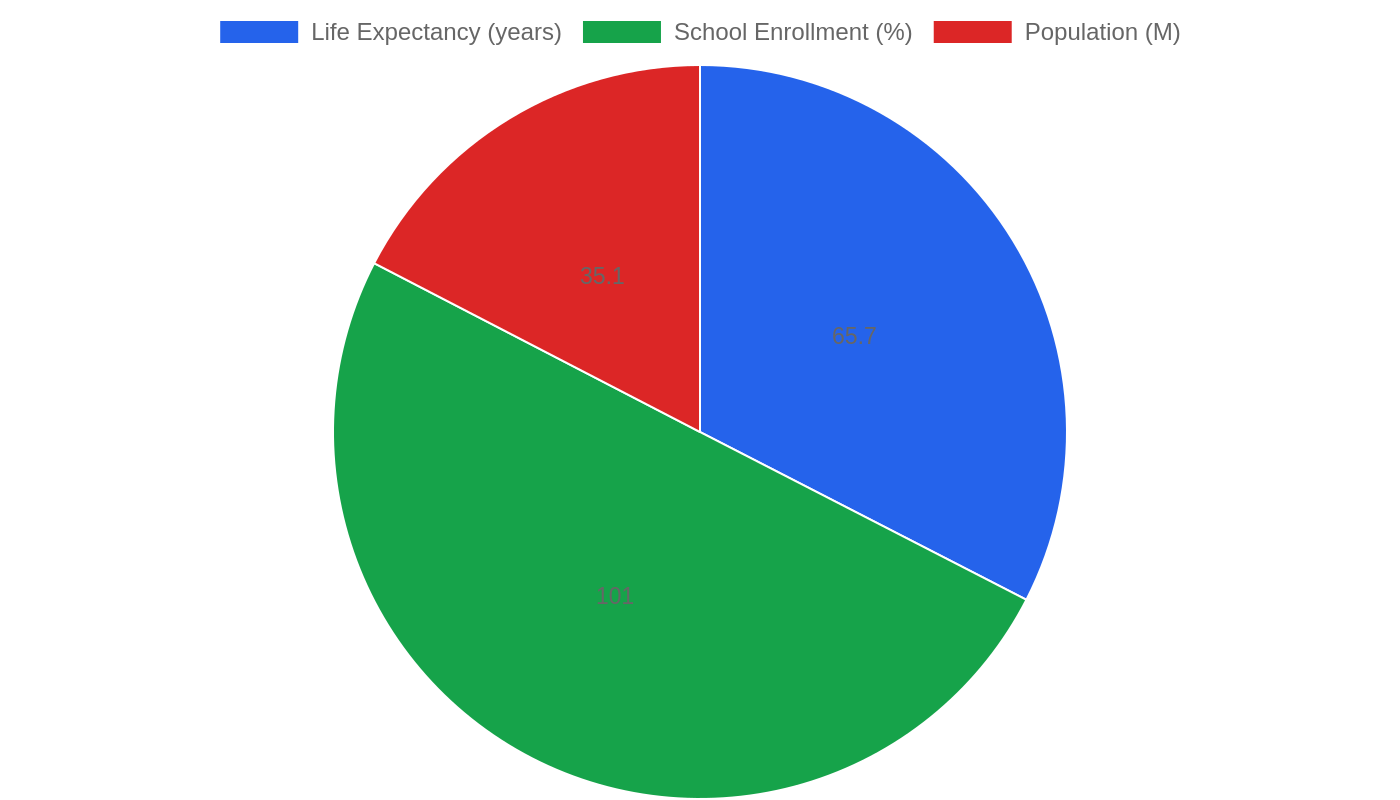
– With a GNI per capita of $2,630 and a population exceeding 35 million, Ghana sits at a critical inflection point between lower-middle-income status and the aspirations of a rapidly urbanizing society.
– The corporate landscape is dominated by financial institutions and basic materials firms, notably Ashanti Goldfields Corporation, reflecting an economy still heavily reliant on extractive industries and traditional banking.
The $114 Billion Paradox — Growth Without a Number
The World Bank reports Ghana’s economy at a nominal GDP of approximately $114.2 billion, a figure that places the country among West Africa’s larger economies. Yet the absence of a current GDP growth rate is striking. For a nation that has long prided itself on economic reform and statistical rigor, this data gap is more than an administrative oversight—it is a signal.
Inflation, too, lacks a published figure from the World Bank’s latest data set, leaving analysts to piece together the narrative from corporate earnings, port activity, and the health of the banking sector.
What is known is that Ghana’s unemployment rate stands at just 2.979%, according to the World Bank. This number is exceptionally low by global standards, let alone West African ones. It suggests either a highly efficient labor market or, more likely, a workforce absorbed into subsistence agriculture, petty trade, and the sprawling informal economy where a job is not always synonymous with a living wage.
The GNI per capita of $2,630 tells a more sobering story—this is a country where the average citizen earns roughly $7 per day. The gap between the headline GDP figure and lived reality is the central economic tension of modern Ghana.
The main industries data is conspicuously absent from the available information, but the roster of top companies offers a clear window into the economy’s backbone. Ashanti Goldfields Corporation, one of Africa’s most storied mining operations, leads a basic materials sector that also includes Aluworks and African Champion Industries.
The financial sector is well-represented by the Agricultural Development Bank of Ghana and AmalBank, while consumer services are dominated by aviation companies—Aerogem Aviation, Afra Airlines, Africa World Airlines, and Antrak Air. This mix of gold, banking, and air travel suggests an economy still building its physical and financial infrastructure, with extractive wealth funding a growing service class.
The Price of Daily Life — Housing and Livelihoods in Accra and Beyond
The cost of living data is not provided in full, but the composition of Ghana’s corporate sector offers indirect clues. The presence of Accra Brewery Company among the top firms speaks to a consumer goods market that is active but likely strained by currency pressures. In a country where the cedi has historically faced volatility, imported goods—from wheat to fuel to construction materials—become more expensive with each depreciation.
For the 35 million Ghanaians, this means that housing costs, particularly in the capital Accra and commercial hub Kumasi, consume a disproportionate share of household income.
Rental markets in Accra have long been characterized by demands for multiple years of advance payment, a practice that locks out lower-income families and fuels a construction boom funded by diaspora remittances. Buying property remains out of reach for most, with mortgage penetration low and interest rates high.
The presence of Agricultural Development Bank of Ghana among the top financial institutions suggests that rural and peri-urban housing finance is a stated priority, but the gap between policy and delivery remains wide. Daily expenses for food, transport, and utilities are heavily influenced by the price of imported rice, cooking oil, and second-hand vehicles—all vulnerable to exchange rate swings.
Gold, Aviation, and the Business of Betting on Ghana
For investors, Ghana offers a paradox of opportunity and risk. The top companies list reads like a portfolio of a nation in transition: extractive industries, financial services, and aviation. Ashanti Goldfields Corporation remains the crown jewel, a symbol of Ghana’s mineral wealth that has attracted international capital for decades.
The financial sector, anchored by the Agricultural Development Bank of Ghana and AmalBank, is undergoing consolidation and digital transformation, with mobile money platforms expanding financial inclusion faster than brick-and-mortar branches ever could.
The aviation sector is particularly telling. With four airlines—Aerogem Aviation, Afra Airlines, Africa World Airlines, and Antrak Air—among the nation’s top companies, Ghana is positioning itself as a regional air travel hub. This is a capital-intensive bet on connectivity, tourism, and business travel. The consumer goods sector, represented by Accra Brewery Company, reflects a domestic market with enough disposable income to support branded beverages, a sign of urbanization and a growing middle class.
However, the business environment remains challenging. Regulatory unpredictability, tax administration issues, and infrastructure gaps are perennial complaints from the private sector. The political stability that Ghana is famous for provides a floor, but not a ceiling, for investment returns.
Stability as Currency — Politics and Safety in the Fourth Republic
The political landscape, as described in the data, is one of institutional maturity. Ghana is a unitary presidential constitutional democracy with a parliamentary multi-party system dominated by two parties—the National Democratic Congress (NDC) and the New Patriotic Party (NPP). The country alternated between civilian and military governments until January 1993, when the military government gave way to the Fourth Republic of Ghana after presidential and parliamentary elections in late 1992.
The 1992 constitution divides powers among a commander-in-chief of the Ghana Armed Forces and the executive, legislative, and judicial branches.
This political stability is Ghana’s most valuable economic asset. In a region where coups and constitutional crises are common, Ghana’s ability to hold regular elections and transfer power peacefully attracts foreign direct investment and donor confidence. The crime and safety indices are not available in the data, but Ghana has historically rated better than many of its neighbors on personal security, particularly outside of Accra’s more congested neighborhoods.
The quality of life, however, is uneven. Access to reliable electricity, clean water, and quality healthcare varies dramatically between urban and rural areas. The political system’s strength is that it provides a forum for these grievances to be aired and, at least theoretically, addressed.
The Present Tense — What’s Happening in Ghana Right Now
The data provides no recent news or live indicators, but the absence itself is a story. Ghana is currently navigating the aftermath of its debt restructuring program, a process that has strained relations with international bondholders and forced difficult choices about public spending. The cedi’s performance against major currencies remains a daily concern for importers and consumers alike.
The Bank of Ghana has been walking a tightrope between supporting growth and containing inflation, a challenge made harder by the lack of reliable GDP and CPI figures in the World Bank’s latest data set.
On the political front, the NPP government is likely preparing for the next electoral cycle, with economic management expected to be the central issue. Voters remember the period of high growth and relative stability that characterized the early 2010s, and they are demanding a return to that trajectory. The corporate sector is watching closely.
The presence of multiple airlines among the top companies suggests that business confidence in domestic travel and regional trade remains intact, but the broader investment climate will depend on fiscal discipline and policy predictability. Ghana’s story right now is one of a country that knows what it needs to do but is struggling to find the political and economic space to do it.
The Bottom Line
Ghana remains West Africa’s most important democratic experiment and a bellwether for the region’s economic prospects. The World Bank data paints a picture of a $114 billion economy with low formal unemployment but significant underlying fragility. For investors, the country offers exposure to gold, aviation, and financial services in a politically stable environment—but only for those willing to accept currency risk and policy uncertainty.
For policymakers and development economists, Ghana is a case study in how democratic governance can both enable and constrain economic reform. Watch this country not for what it is today, but for what it must become.
Sources & Methodology
This article is authored by Economic Pulse Net for informational and research purposes. Economic Pulse Net sources its data from multilateral institutions, national statistics bureaus, and proprietary databases. All data is believed to be current as of the date of publication.
Published: July 23, 2026 | Category: Research — Ghana
Use these signals in your own platform
Economic Pulse publishes its live signal feed through a documented, read-only API. Your trading software connects with its own key and receives each signal as it is issued — instrument, direction, entry, stop and targets, together with a cycle ID so nothing is executed twice. The feed is independent of this website and cannot change it.
Signals are informational only and are not financial advice.