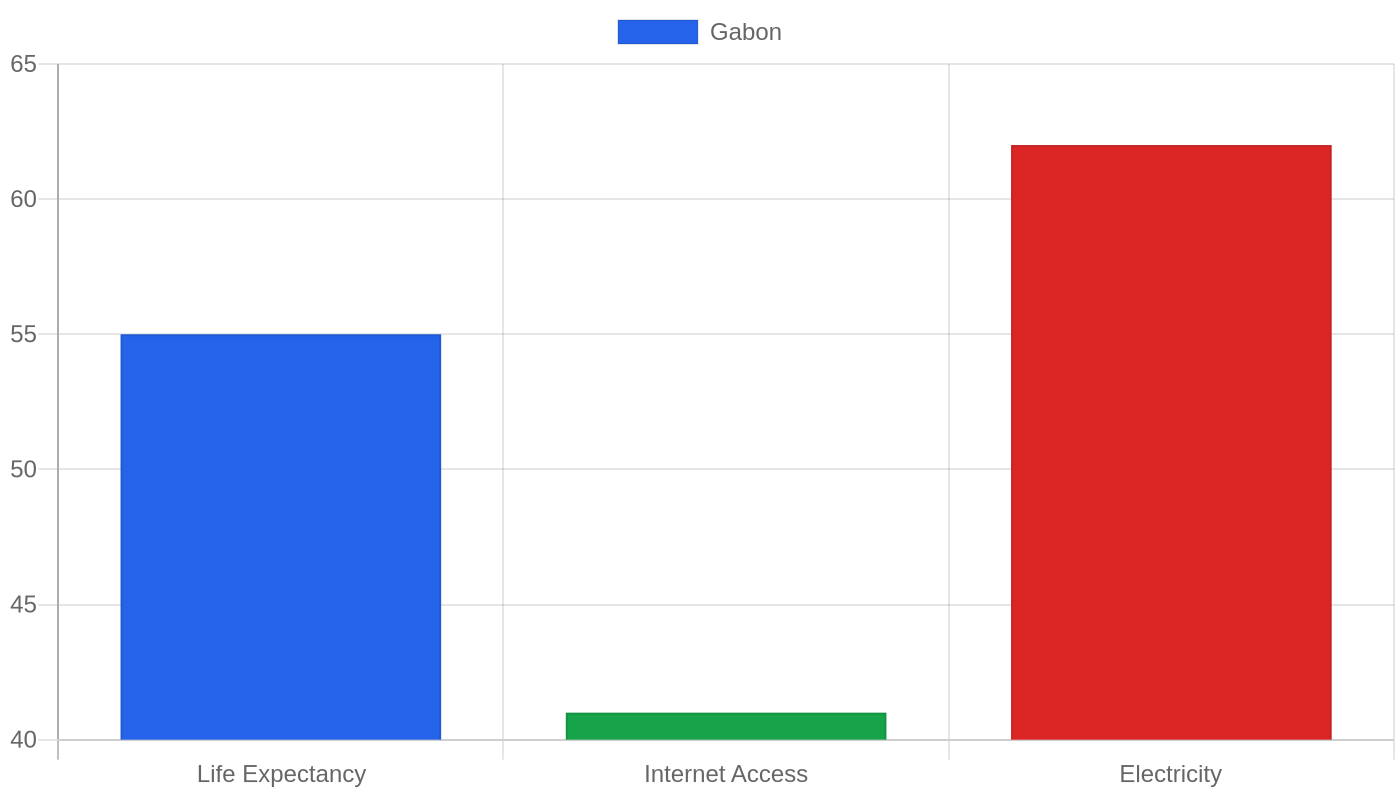
Economic Pulse Net | Sources: World Bank World Development Indicators, Government Sources | 2026
Key Takeaways
– Gabon’s economy remains heavily dependent on its oil sector, but the government has struggled to diversify despite decades of rhetoric.
– Political power has been concentrated in the presidency for decades, with term limits removed in 2003 and opposition voices frequently marginalized.
– The country’s top companies are dominated by aviation and financial services, reflecting a narrow economic base that serves elite and regional needs.
– Crime and safety data is unavailable, but the political landscape suggests a controlled environment where dissent carries risks.
– Gabon’s future hinges on whether it can translate its natural resource wealth into sustainable development before the oil runs out.
The Oil-Dependent Paradox — Growth Without Transformation
Gabon’s economic story is one of riches and stagnation. According to the World Bank, the country’s GDP growth, inflation, and unemployment figures are not currently available, but the structural picture is clear from decades of data: Gabon is a classic petro-state. Oil has dominated exports and government revenues since the 1970s, creating a narrow economy vulnerable to global price shocks.
The absence of recent World Bank figures itself tells a story — data gaps often signal weak institutional capacity or political opacity.
The country’s main industries are not listed in the available data, but the list of top companies reveals a telling pattern. Of the eleven major firms identified, seven are in consumer services — specifically aviation. Afric Aviation, Air Excellence, Air Gabon, Air Inter Gabon, Air Max Africa, Air Service Gabon, and Gabon Airlines dominate the corporate landscape. This is unusual for a country of Gabon’s size.
The heavy presence of airlines suggests a economy built on connecting a relatively small, wealthy elite to regional hubs, rather than a broad-based industrial or manufacturing base. BGFIBank Group, the sole financials company on the list, indicates that banking serves this elite-driven economy. Gabon Poste, the only industrial firm, hints at a state-dominated logistics sector.
The World Bank’s missing inflation and unemployment figures are particularly concerning. In a country where oil revenues have historically cushioned the state, the absence of this data may mask growing informal employment and rising costs. Gabon’s GDP per capita has long been among the highest in sub-Saharan Africa, but that wealth is notoriously unevenly distributed.
The economy has failed to generate enough formal jobs for its growing population, and the oil sector — capital-intensive by nature — employs relatively few people directly.
Living in Libreville — The Cost of Elite Comfort
Cost of living data for Gabon is not provided, but regional context and the structure of the economy offer clues. Libreville, the capital, is consistently ranked among Africa’s most expensive cities for expatriates, driven by high import dependence and a currency — the CFA franc — pegged to the euro. Basic goods from food to fuel are costly because so little is produced locally.
Housing in desirable neighborhoods of Libreville, such as Batterie IV or the city center, commands premium rents that rival those in European capitals, while the majority of Gabonese live in less formal housing on the periphery.
The disconnect between elite consumption and everyday reality is stark. The aviation companies dominating Gabon’s corporate roster serve a small fraction of the population who can afford to fly. For most Gabonese, transport means shared taxis or bush taxis on poorly maintained roads. Rent versus buy calculations are academic for the vast majority who cannot access mortgages.
The cost of living in Gabon is a tale of two cities — one for the political and business elite who fly Afric Aviation, and another for the urban majority who struggle with high prices and low wages.
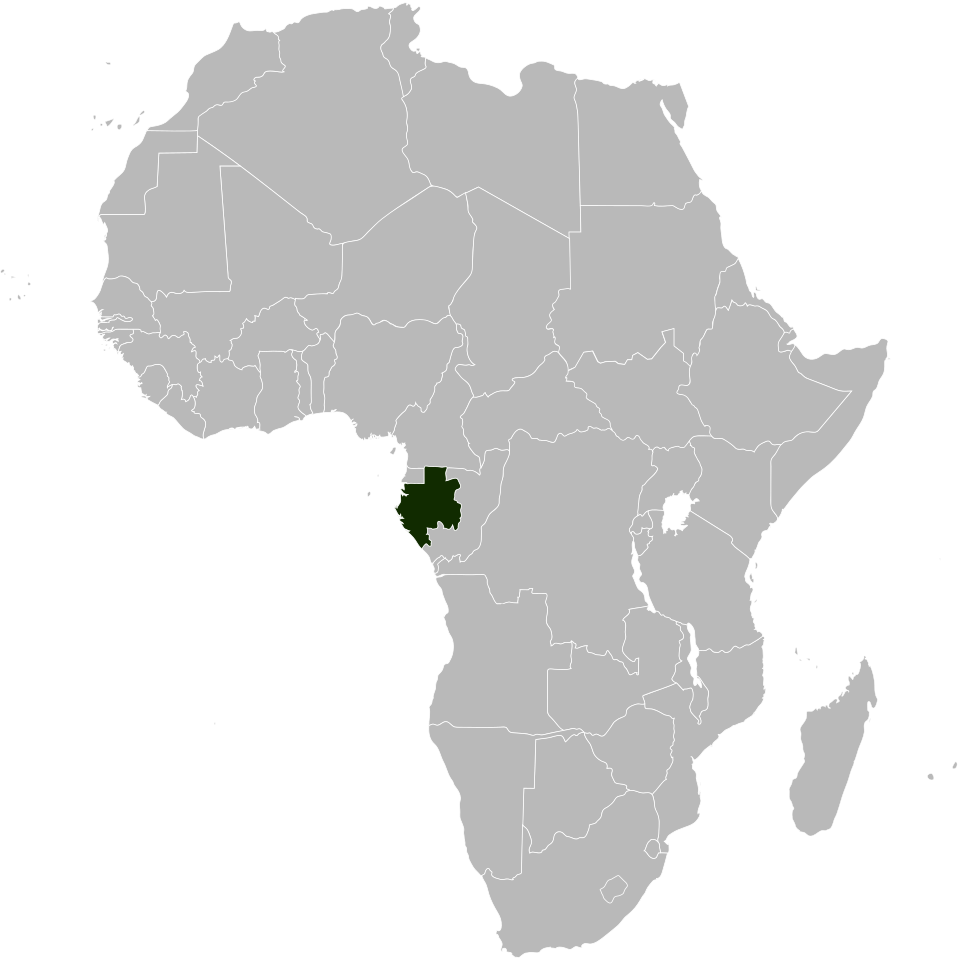
Investing in Gabon — Aviation, Banking, and the State’s Long Shadow
For investors, Gabon presents a narrow but potentially lucrative set of opportunities. The top companies list is dominated by aviation, which suggests that regional connectivity is a growth area — but one tied to government contracts and elite travel. BGFIBank Group, the financial giant, is a regional player with operations across Central Africa, offering exposure to the broader CEMAC zone.
Gabon Poste, the state postal service, represents the industrial side of the economy, but its inclusion among top companies says more about the lack of private sector dynamism than about its profitability.
The political landscape, as described in the available data, is a critical factor for any investor. The president is elected for seven-year terms with no term limits since 2003. The president appoints and dismisses the prime minister, the cabinet, and Supreme Court judges. He can dissolve the National Assembly and declare a state of emergency. This concentration of power means that the business environment is highly dependent on political connections. A change in presidential favor can make or break a company.
Sectors to watch include aviation, banking, and any industry tied to natural resources — but investors must be prepared for a system where the rules can change at the president’s discretion.
Safety, Politics, and Life Under a Powerful Presidency
Crime and safety indices for Gabon are not available in the data, but the political structure provides a framework for understanding daily life. The 1961 constitution, revised multiple times, concentrates authority in the presidency. The 2003 amendment removing term limits effectively created the possibility of a president-for-life system. This political reality shapes quality of life in profound ways. Political expression is constrained, and opposition figures have historically faced harassment or worse.
The state’s security apparatus is strong, which can mean low street crime in wealthy areas but also limited political freedom.
The absence of happiness or quality of life data from the provided sources is itself telling. In a country where oil wealth has not translated into broad-based prosperity, many Gabonese live with the paradox of a rich nation and poor population. The political system offers stability of a sort — no civil wars, no coups in recent decades — but at the cost of genuine democratic accountability.
For the average citizen, life in Gabon means navigating high costs, limited economic opportunity, and a political system that offers few avenues for change.
The Bongo Era and What Comes Next — Gabon’s Political Stasis
The most pressing current reality in Gabon is the political succession question. The 2003 constitutional amendment removing presidential term limits was widely seen as a move to allow the late President Omar Bongo Ondimba to remain in power indefinitely. Bongo ruled for 42 years until his death in 2009, and his son Ali Bongo Ondimba succeeded him. The 2018 stroke that left Ali Bongo incapacitated for months triggered a failed coup attempt and exposed the fragility of the system.
The 2023 presidential election was marred by allegations of fraud, delays, and a disputed result that kept Ali Bongo in power.
The political landscape, as described in the data, remains unchanged: a presidential republic where one family has held power for over half a century. The absence of term limits means there is no institutional mechanism for a peaceful transition. The recent news of coup attempts and electoral controversies points to a system under strain. For the economy, this political uncertainty is a drag on investment and diversification. Why build a factory or start a business when the rules of the game could change overnight?
Gabon’s current affairs are dominated by the question of what happens when the Bongo era finally ends — and whether the country’s institutions can survive the transition.
The Bottom Line
Gabon is a country for the patient and the well-connected investor who understands petro-states. The aviation and banking sectors offer opportunities tied to elite consumption and regional trade, but the political risk is high. The absence of term limits and the concentration of power in the presidency mean that any investment is a bet on the current regime’s stability.
For observers of African politics, Gabon is a case study in how oil wealth can entrench a family dynasty while failing to build a diversified economy. Watch this country for signs of political transition — when it comes, it will reshape everything.
Sources & Methodology
This article is authored by Economic Pulse Net for informational and research purposes. Economic Pulse Net sources its data from multilateral institutions, national statistics bureaus, and proprietary databases. All data is believed to be current as of the date of publication.
Published: July 20, 2026 | Category: Research — Gabon
Use these signals in your own platform
Economic Pulse publishes its live signal feed through a documented, read-only API. Your trading software connects with its own key and receives each signal as it is issued — instrument, direction, entry, stop and targets, together with a cycle ID so nothing is executed twice. The feed is independent of this website and cannot change it.
Signals are informational only and are not financial advice.