Economic Pulse Net | Sources: World Bank World Development Indicators, Government Sources | 2026
Key Takeaways
– Ethiopia’s economy is undergoing a profound structural shift, with state-owned enterprises gradually yielding ground to private sector players, though the pace of reform remains uneven.
– The financial sector dominates the corporate landscape, with major banks like Commercial Bank of Ethiopia and Awash International Bank leading a cautious liberalisation process.
– Ethiopian Airlines stands as the country’s most visible global success story, anchoring the consumer services sector and projecting Ethiopian commerce worldwide.
– Political stability remains the central variable for economic progress, as the federal parliamentary republic navigates ethnic tensions and regional power-sharing within its bicameral system.
– Despite data gaps in key economic indicators, Ethiopia’s trajectory is being shaped by its ability to balance reform momentum with the practical challenges of infrastructure development and institutional capacity.
The Paradox of Progress — Growth Without Data
The World Bank’s latest figures for Ethiopia present an economist’s frustration: GDP growth, inflation, unemployment, and GDP per capita are all listed as unavailable. This absence of data is itself a story. It speaks to a country where statistical infrastructure has struggled to keep pace with the scale of transformation. Ethiopia’s economy, long one of Africa’s fastest-growing before recent disruptions, operates in a space between formal measurement and informal reality.
The agricultural sector, which employs the vast majority of Ethiopians, remains notoriously difficult to capture in national accounts. Meanwhile, the service sector has expanded dramatically, driven by transport, telecommunications, and financial services.
What can be said with confidence is that Ethiopia’s economic model is in transition. The state-led development paradigm that delivered double-digit growth for much of the 2000s and 2010s has given way to a more market-oriented approach, albeit one with significant state fingerprints. The government has pursued partial privatisation of major state-owned enterprises, including in telecommunications and logistics, while retaining control over strategic assets.
Inflation has been a persistent challenge, eroding household purchasing power and complicating monetary policy. The central bank has struggled to contain price pressures while also managing a foreign exchange shortage that has constrained imports and investment. Without precise World Bank data, the picture must be painted in broad strokes: an economy that is modernising unevenly, with pockets of dynamism alongside deep structural rigidities.
The High Cost of Living in Addis Ababa — Housing and Daily Survival
For the millions of Ethiopians living in Addis Ababa, the cost of living tells a story of widening inequality. Housing costs have surged as the capital’s population has swelled, driven by rural-to-urban migration and a construction sector that has struggled to keep pace with demand. Renting in desirable neighbourhoods such as Bole or Kazanchis commands premiums that place homeownership out of reach for most middle-class families.
The rental market is highly fragmented, with informal arrangements common and formal leases often requiring full-year payment upfront. Buying property is even more daunting, with land ownership still largely controlled by the state and leasehold systems creating uncertainty for investors.
Daily expenses for food, transport, and utilities consume a large share of household income. Inflation in staple goods like teff, the grain used to make injera, has been particularly painful for low-income families. While regional comparisons are difficult without comprehensive data, anecdotal evidence suggests that Addis Ababa’s cost of living has risen faster than wages, squeezing the urban middle class.
The Anbessa City Bus Service Enterprise, a state-owned transport company, provides essential but often overcrowded mobility for workers who cannot afford private vehicles or ride-hailing services. For many Ethiopians, the gap between aspiration and daily reality is measured in the rising price of bread and the long queues for public transport.
Banking on Ethiopia — The Financial Sector and Business Climate
Ethiopia’s corporate landscape is dominated by financial institutions. The Commercial Bank of Ethiopia, the country’s largest bank, sits alongside Awash International Bank, Cooperative Bank of Oromia, and Dedebit Credit and Saving Institution as pillars of the financial system. This concentration reflects both the historical dominance of state banking and the cautious liberalisation that has allowed private banks to grow.
The Ethiopia Commodity Exchange plays a crucial role in agricultural trade, providing price discovery and market access for farmers and traders. For investors, the business environment remains a mixed picture. Foreign direct investment has been hampered by foreign exchange shortages, bureaucratic red tape, and concerns about political stability.
Yet opportunities are emerging. Ethiopian Airlines, a globally respected carrier, continues to expand its network and serves as a flagship for Ethiopian commerce. BGI Ethiopia PLC, a brewer, represents the consumer discretionary sector, tapping into a growing urban population with rising disposable income. The Ethio-Engineering Group signals the government’s continued interest in heavy industry, though private sector participation remains limited.
For international businesses, the key question is whether Ethiopia can sustain its reform momentum. The opening of the telecoms sector to foreign operators was a landmark moment, but implementation has been slower than hoped. The financial sector remains largely closed to foreign banks, though discussions about liberalisation continue. The business climate is improving, but it is not yet transformed.
Politics, Safety, and the Fragile Social Contract
Ethiopia’s political landscape is defined by its federal parliamentary republic structure, where the Prime Minister serves as head of government and the President holds largely ceremonial powers. The bicameral legislature, comprising the House of Federation with 108 seats and the House of Peoples’ Representatives with 547 seats, reflects the country’s ethnic federalism.
This system was designed to manage diversity but has also created tensions, as regional governments assert autonomy and ethnic identities become politicised. The political environment has been volatile in recent years, with internal conflicts in Tigray, Amhara, and Oromia regions disrupting lives and livelihoods.
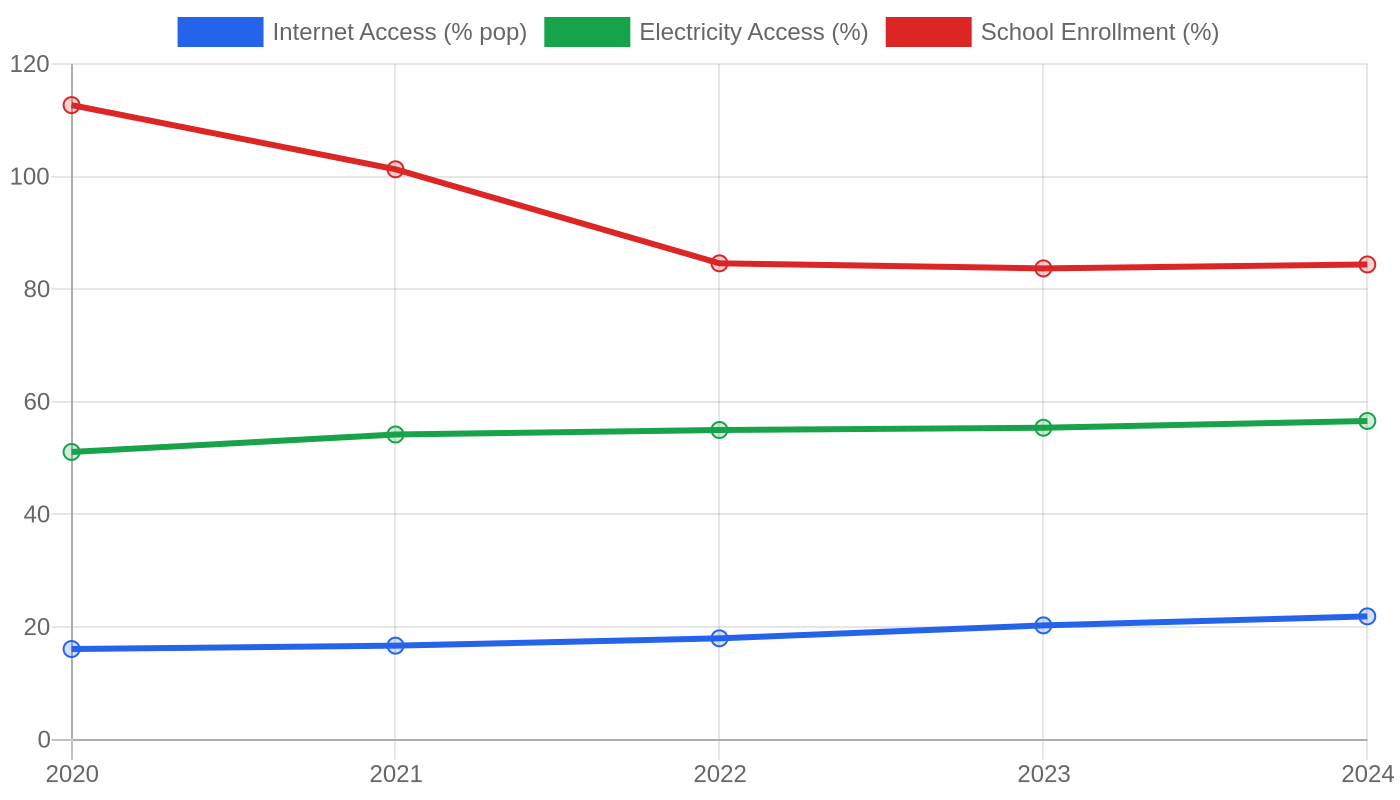
Crime and safety indices are unavailable, but the lived reality for many Ethiopians is shaped by the security situation in their specific region. In Addis Ababa, street crime and petty theft are concerns, particularly in crowded markets and transport hubs. The quality of life varies dramatically between urban and rural areas, with access to healthcare, education, and electricity improving but still inadequate. The political stability that underpins economic progress remains fragile.
The government’s ability to manage ethnic tensions, deliver public services, and maintain security will determine whether Ethiopia can attract the investment it needs to create jobs and reduce poverty. The social contract is under strain, and rebuilding trust is the country’s most urgent political task.
The Reform Agenda — What’s Happening Now in Ethiopia
Right now, Ethiopia is navigating a delicate moment of economic reform amid ongoing political challenges. The government has been pushing forward with macroeconomic adjustments, including efforts to unify the exchange rate and address the chronic foreign currency shortage that has choked imports and investment. These reforms are part of a broader programme supported by international financial institutions, though implementation has been uneven.
The central bank has been working to tighten monetary policy to bring inflation under control, but the task is complicated by fiscal pressures from security spending and debt servicing.
On the business front, the partial privatisation of Ethio Telecom has opened the door to foreign investment, and discussions continue about further liberalisation of the financial sector. The Ethiopian Airlines expansion continues, with new routes and increased cargo capacity positioning the carrier as a continental powerhouse. However, the political situation remains tense. Regional conflicts have displaced millions and disrupted agricultural production, contributing to food insecurity.
The government’s ability to maintain a reform trajectory while managing these crises will define Ethiopia’s near-term economic prospects. For now, the country is in a race between reform and instability, and the outcome is far from certain.
The Bottom Line
Ethiopia is a country of immense potential and profound challenges. Its youthful population, strategic location, and emerging private sector make it one of Africa’s most important frontier markets. But the data gaps, political fragility, and structural economic rigidities mean that investors and policymakers must proceed with caution. For those willing to take a long-term view, Ethiopia offers opportunities in banking, aviation, agriculture, and telecommunications.
For the Ethiopian people, the hope is that reform delivers not just growth, but inclusive prosperity. The world should watch Ethiopia not for what it is today, but for what it could become.
Sources & Methodology
This article is authored by Economic Pulse Net for informational and research purposes. Economic Pulse Net sources its data from multilateral institutions, national statistics bureaus, and proprietary databases. All data is believed to be current as of the date of publication.
Published: July 18, 2026 | Category: Research — Ethiopia
Use these signals in your own platform
Economic Pulse publishes its live signal feed through a documented, read-only API. Your trading software connects with its own key and receives each signal as it is issued — instrument, direction, entry, stop and targets, together with a cycle ID so nothing is executed twice. The feed is independent of this website and cannot change it.
Signals are informational only and are not financial advice.